
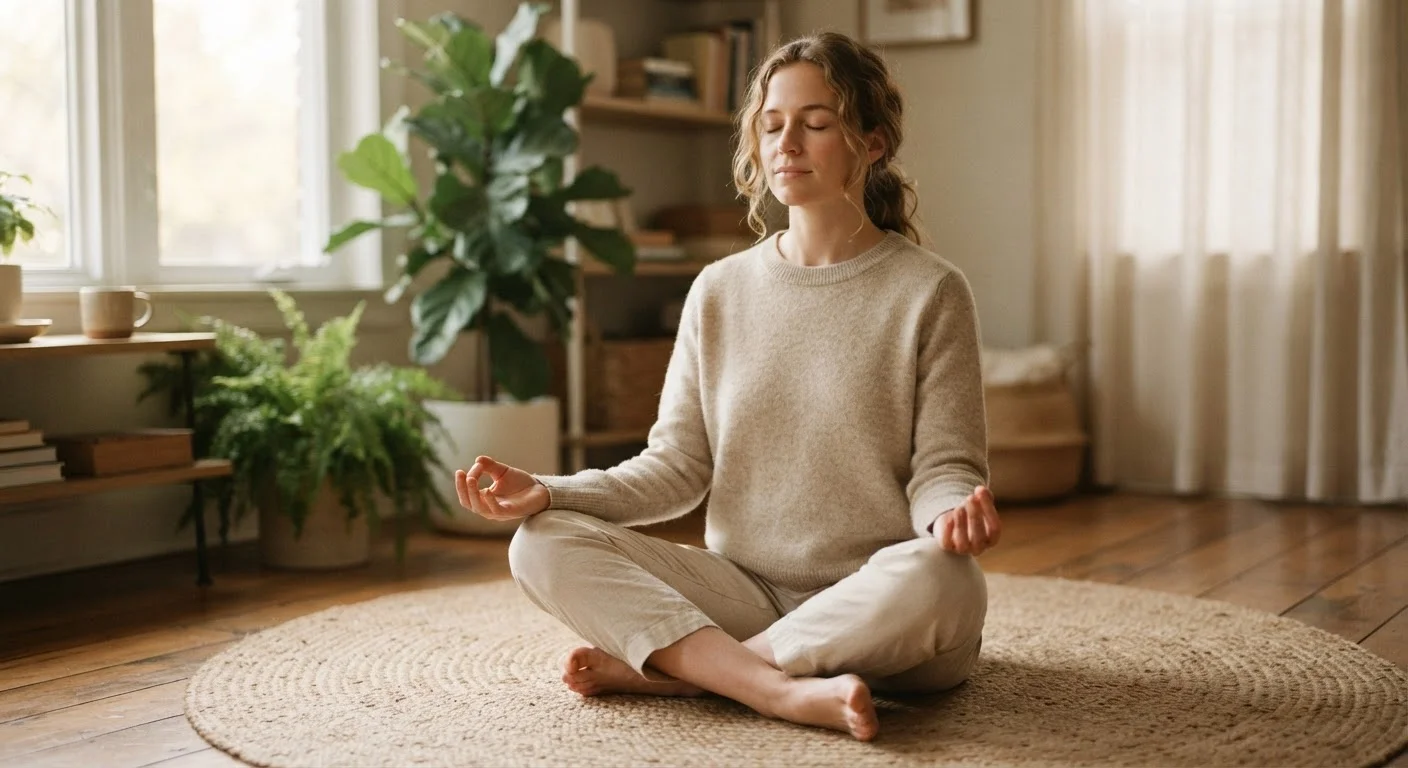
How Controlled Breathing Affects the Body
When you slow your breathing intentionally, you're not just relaxing - you're triggering a physiological shift. Slow, deep breaths stimulate the vagus nerve, which activates the parasympathetic nervous system (often called the "rest and digest" response). Heart rate slows, blood pressure eases, and stress hormones like cortisol begin to drop.
This connection between breath and the autonomic nervous system is well-established in physiology. To understand why stress so quickly becomes physical in the first place, read about the biology behind stress's physical symptoms - it helps put breathwork in useful context.
Techniques vary widely. Diaphragmatic (belly) breathing, box breathing (inhale-hold-exhale-hold in equal counts), and the 4-7-8 pattern all aim to slow respiratory rate and shift the body's arousal state. The underlying mechanism is similar across most methods.
A Note on "Breathwork" as a Broad Term
"Breathwork" covers a wide spectrum - from gentle diaphragmatic breathing backed by clinical research to more intense practices (like holotropic breathwork) that have far less scientific support and carry greater risk. This article focuses on the evidence for slow, controlled breathing techniques, which represent the most studied and broadly accessible category. Intense or rapid breathing practices are a different subject and should not be approached without qualified guidance.
What the Research Actually Supports
The evidence for breathing exercises is real - but it's worth being precise about what's proven and what isn't.
~6 BPM
Optimal paced breathing rate in studies
Research on slow breathing typically identifies around 5-6 breaths per minute as the range associated with the strongest parasympathetic response in healthy adults.
~5-10 min
Session length showing measurable anxiety reduction
Several clinical studies have observed statistically significant reductions in state anxiety following single sessions of diaphragmatic or paced breathing lasting 5 to 10 minutes.
Well-supported: Multiple randomized controlled trials show that slow, paced breathing (typically 5-6 breaths per minute) reduces self-reported anxiety and physiological markers of stress in healthy adults. Diaphragmatic breathing has also shown promise for reducing anxiety in clinical populations, including people with anxiety disorders, as an adjunct to established therapies.
Promising but limited: Some studies suggest regular breathwork may support blood pressure management and improve heart rate variability - a marker of nervous system flexibility. However, many of these trials are small, short-term, and lack standardized protocols, making broad conclusions premature.
Overstated claims to watch for: Breathwork is sometimes marketed as a treatment for depression, trauma, or chronic illness. Current evidence doesn't support using it as a primary or standalone intervention for these conditions. It may be a useful complement to professional treatment - but that's a meaningful distinction.
The Real Advantages of Breathwork
Even with a measured view of the evidence, breathing exercises offer several genuine strengths that make them worth incorporating into daily life.
Immediately accessible - no equipment or cost needed
Breathing exercises can be done anywhere, anytime, with no special training or tools. This makes them one of the most practical stress-management options available.
Produces measurable short-term calming effects
Research consistently shows that slow, controlled breathing reduces heart rate and perceived anxiety within minutes, offering reliable acute relief during stressful moments.
Low risk for most healthy adults
Unlike medication or intensive therapies, breathing exercises carry minimal side effects for most people. The barrier to trying them is exceptionally low.
Builds a sense of personal agency over stress
Having a concrete technique to turn to during anxious moments can itself reduce distress. The act of choosing a response - rather than feeling helpless - has psychological value.
Complements established therapies effectively
Breathwork is frequently integrated into cognitive behavioral therapy (CBT) and mindfulness-based programs, where it supports the work being done in structured treatment.
For a broader look at how breathwork fits alongside other habits like journalling and movement, see our evidence-based review of stress-relief habits.
The Honest Limitations
Balanced information means being equally clear about where breathwork falls short.
Evidence for long-term benefits remains limited
Most studies measure short-term outcomes immediately after a session. Rigorous long-term data - showing durable changes in anxiety, mood, or health - is still sparse.
Not a replacement for clinical care
For diagnosed anxiety disorders, depression, PTSD, or other conditions, breathwork alone is insufficient. Treating it as a substitute for professional help can delay necessary care.
Technique variation makes comparison difficult
Dozens of named breathing techniques exist, each with different protocols. This inconsistency across studies makes it hard to say definitively which method is best for which purpose.
Can cause lightheadedness if done incorrectly
Breathing too rapidly or deeply (hyperventilation) can trigger dizziness or tingling. Following evidence-based, measured protocols - rather than unguided intensity - minimizes this risk.
Not appropriate without guidance for some conditions
People with asthma, COPD, cardiovascular conditions, or a history of panic disorder should speak with a healthcare provider before beginning structured breathwork programs.
None of these limitations make breathing exercises a bad idea - they just clarify its role. Think of it as one useful tool in a broader toolkit, not a solution on its own.
This article is for general informational purposes only and is not a substitute for professional medical or mental health advice. If you are experiencing persistent anxiety, depression, or any health condition, please consult a qualified healthcare provider.