Understanding the Two Approaches
Deciding how much space to give your dog at home is one of the first - and most practical - questions new owners face. Crate training and free-roaming are the two main philosophies, and both have legitimate places in dog care. The decision isn't about which is universally better; it's about which suits your dog right now.
If you're just getting started, our guide on bringing a dog home for the first time covers the broader settling-in picture. For space management specifically, read on.
| Criterion | Crate Training | Free-Roaming |
|---|---|---|
| Best life stage | Puppies, newly adopted dogs | Trained adult dogs |
| Housetraining support | Strong - limits accident opportunities | Relies on existing training |
| Setup requirements | Appropriate crate, gradual introduction | Thorough dog-proofing of home |
| Time investment | Requires consistent training routine | Lower once dog is reliable |
| Dog's freedom of movement | Limited during crating periods | High - natural exploration possible |
| Anxiety management | Can help mildly anxious dogs | May worsen anxiety if dog is unsettled |
| Suitability for travel/vet stays | Excellent - crate-comfortable dogs adapt easily | Adjustment period may be needed |
The Case for Crate Training
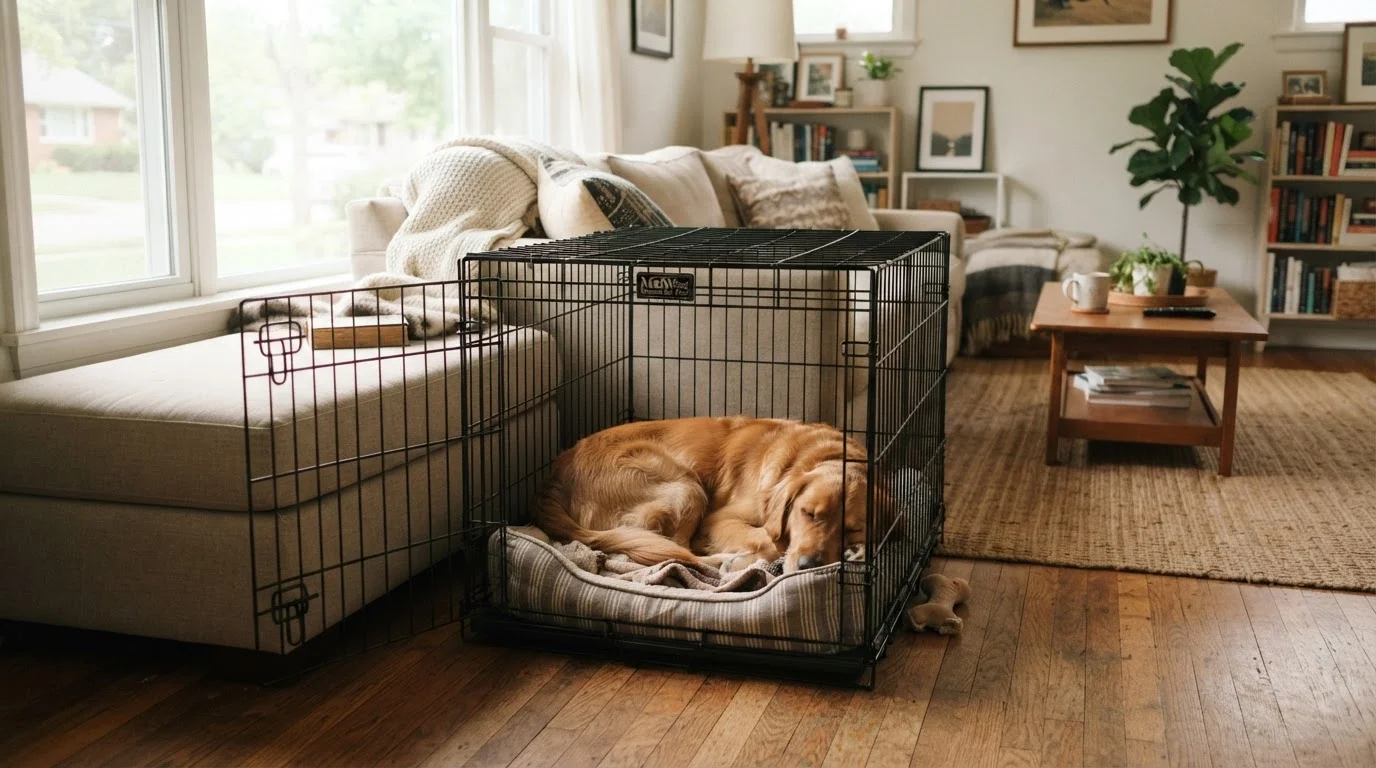
Dogs are naturally den animals. A properly introduced crate gives them a dedicated retreat - somewhere that belongs entirely to them. According to the American Kennel Club, when introduced with patience and positive reinforcement, most dogs come to view their crate as a safe haven rather than a punishment.
Crate training is especially useful during the puppy stage, when unsupervised access to the house can lead to chewed furniture, swallowed hazards, or housetraining setbacks. It also helps during recovery from illness or surgery, when restricted movement is medically necessary.
Key crate training principles to follow:
- Choose a crate size that allows your dog to stand, turn around, and lie down comfortably - but not so large that one corner becomes a bathroom.
- Introduce the crate gradually with treats, meals, and calm praise - never force entry.
- Avoid using the crate as punishment; the goal is a positive association.
- Puppies generally shouldn't be crated for more hours than their age in months, plus one - for example, a three-month-old puppy for a maximum of four hours.
~13 weeks
Typical minimum age to begin crate training
Most animal welfare organizations recommend waiting until a puppy has basic bladder control before beginning structured crate routines.
4-6 months
Average time to reliable house-training
The American Veterinary Society of Animal Behavior notes that consistent positive reinforcement is the key variable in house-training timelines.
The Case for Free-Roaming
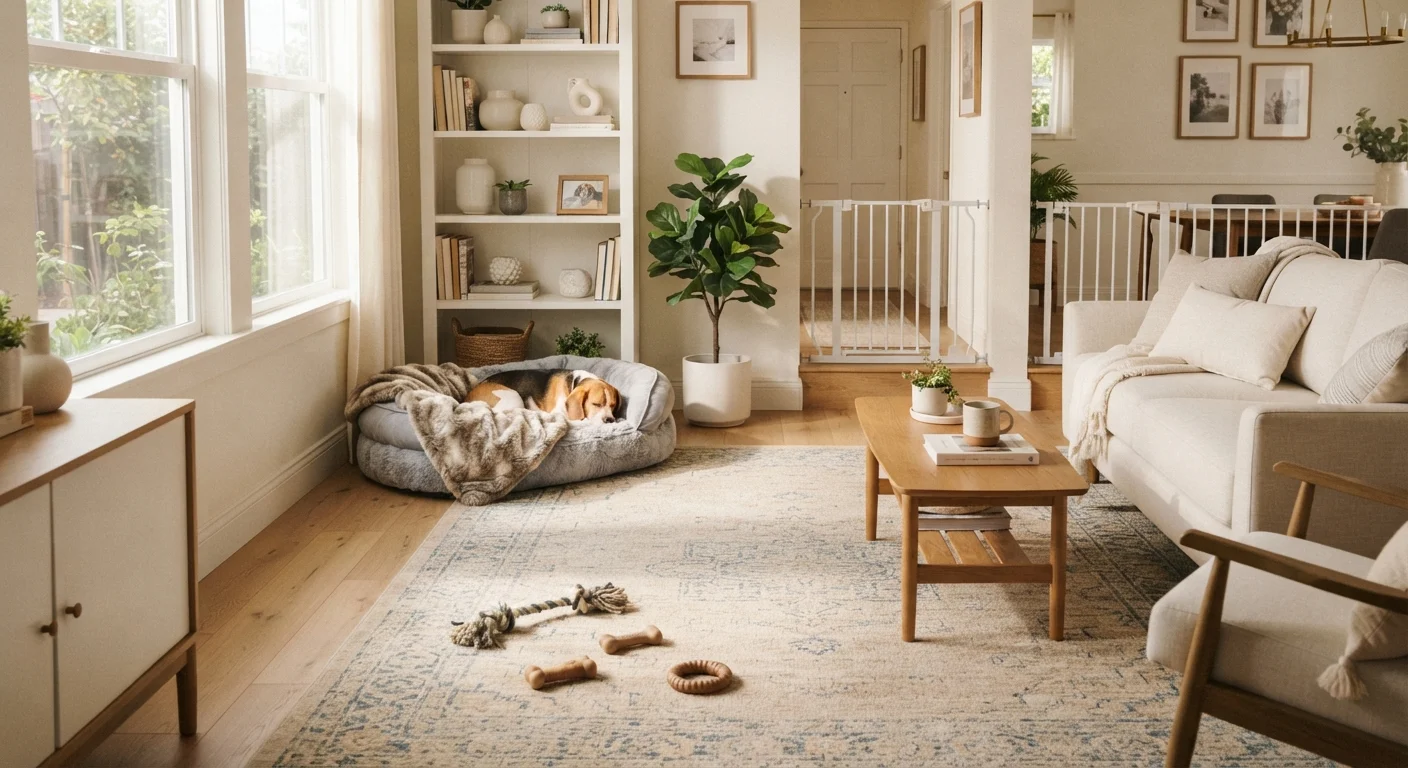
Free-roaming means your dog has unrestricted or semi-restricted access to parts of your home - typically after they've demonstrated reliable house manners. Many experienced dog owners and trainers consider this the long-term goal: a dog trustworthy enough to move freely through a safe home.
The biggest prerequisite is a genuinely dog-proofed environment. Before expanding your dog's freedom, setting up a dog-friendly home is an important step - covering hazards like toxic plants, unsecured trash, and accessible medications.
Free-roaming can support a dog's mental wellbeing by allowing natural movement and exploration. It also removes the logistical demands of crate management, which suits owners with unpredictable schedules. The tradeoff is that it requires a solid foundation of training and a home that's been audited for risks.
When to Consult a Professional
If your dog shows persistent distress in a crate - excessive whining, drooling, or attempts to escape - or destructive behavior when free-roaming, these may signal separation anxiety or other behavioral concerns beyond basic training. A certified applied animal behaviorist or veterinary behaviorist can assess the situation and recommend an appropriate plan. Avoid attempting to manage severe anxiety through confinement alone.
Combining Both Approaches
Many dog owners find the most practical path is a phased combination: starting with crate training for structure and safety, then gradually expanding access as the dog earns trust. This progression is common in formal obedience programs and aligns with guidance from veterinary behaviorists.
You might begin with the crate for overnight sleep and unsupervised periods, then graduate your dog to a single dog-proofed room, and eventually to broader home access. The pace depends entirely on your individual dog - breed tendencies, energy level, and history all play a role.
For a fuller picture of what dog ownership involves - including training commitments - see our overview on what owning a dog really involves.
This article provides general educational information for dog owners and is not a substitute for personalized guidance from a qualified veterinarian or certified animal behaviorist.