Why a Room-by-Room Approach Works for Beginners
Home maintenance can feel like a mountain when you look at it all at once. The trick is to stop thinking about your home as one giant project and start treating each room as its own small territory with its own checklist. This mental shift alone makes the workload manageable - and far less likely to be ignored until something breaks.
New homeowners often underestimate how much routine upkeep goes into a house. Unlike renting, there's no landlord to call. Every dripping faucet, tripping breaker, or drafty window becomes your responsibility. The good news: most everyday maintenance tasks are simple, low-cost, and require no specialized skills. What they do require is consistency.
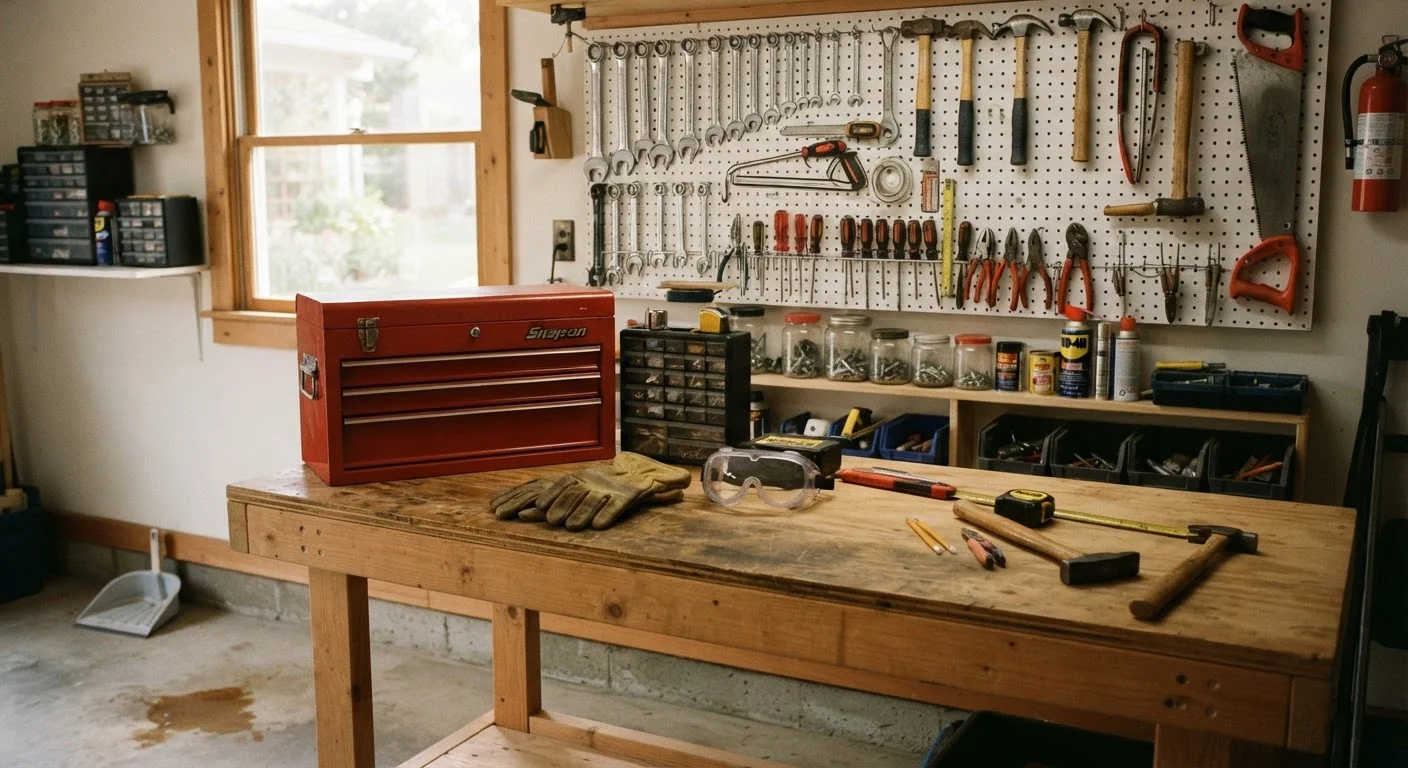
Before you pick up any tools, it's worth building good habits from the start. See our pre-project safety check to make sure your workspace and tools are ready before you dive in. Pair this schedule with your household budget - the Budgeting Basics hub offers straightforward strategies for setting aside funds for repairs before they become emergencies.
Flashlight or headlamp
Essential for inspecting dark corners in basements, crawl spaces, and under sinks.
Screwdriver set (flathead and Phillips)
Used for tightening hardware, removing outlet covers, and general small repairs.
Caulk gun with silicone or latex caulk
Needed for sealing gaps around tubs, windows, and exterior trim.
Voltage tester (non-contact)
Lets you safely confirm whether an outlet or wire is live before touching it.
Wet/dry vacuum
Useful for cleaning dryer vents, refrigerator coils, and basement floor drains.
Ladder (6-foot step ladder)
Needed for reaching gutters, ceiling fans, and high exterior areas safely.
Replacement air filters (correct MERV rating for your system)
Keeping a small supply on hand makes it easy to stay on a regular filter-change schedule.
The Room-by-Room Maintenance Checklist
The checklist below covers every major zone of your home, organized so you can work through one area at a time. Items are labeled by priority: must (non-negotiable for safety or function), should (strongly recommended to prevent damage), and nice to have (worthwhile enhancements when time allows). Aim to run through each group at least once per season, or set calendar reminders for the frequency noted.
Kitchen
Bathrooms
Bedrooms & Living Areas
Basement & Utility Areas
Exterior & Roof
Smoke and CO Detector Testing Is Non-Negotiable
Working smoke detectors and carbon monoxide detectors are your home's primary early-warning system for two of the most preventable causes of residential fatalities. Test each unit monthly by pressing the test button, replace batteries at least once every six months, and replace the entire unit according to the manufacturer's expiration guidance - typically every 8-10 years. Never remove batteries to silence a nuisance alarm; address the source instead.
As you work through interior rooms, don't forget that decluttering and organizing go hand-in-hand with maintenance. A tidy space makes it easier to spot early warning signs like water stains, pest activity, or mold. Our seasonal declutter checklist walks you through sorting each room in sync with this maintenance schedule.
Older homes may also benefit from targeted improvements beyond routine upkeep. The article on small upgrades for older homes highlights eight high-impact fixes - like weatherstripping and outlet covers - that improve comfort and efficiency without a full renovation.
Knowing When to Call a Professional
One of the most important skills a first-time homeowner can develop is knowing where DIY ends and professional work begins. Electrical panels, gas lines, load-bearing walls, and roof structures fall firmly in the professional category - attempting these without proper licensing and training creates serious safety and legal risks.
Never DIY These Specific Tasks
Work involving your electrical panel, gas lines, structural beams, or roof repairs beyond surface-level inspection should always be handled by a licensed contractor. Attempting these without the right credentials can void your homeowner's insurance, violate local building codes, and create serious safety hazards. When in doubt, get a professional assessment before picking up a tool.
If you're still getting comfortable with your home's electrical layout, the Beginner's Map to Home Electrical Systems is an excellent starting point. It explains circuit breakers, outlets, and wiring basics in plain language - and clearly flags when it's time to put down the screwdriver and pick up the phone.
For bathroom projects that go beyond caulking or fixing a running toilet, permits and licensed plumbers are often required. Our bathroom renovation guide covers planning, plumbing, ventilation, and permit requirements in full. Always verify local code requirements with your municipality before starting any permitted work.
Home maintenance is a long game. No single season's checklist will cover everything, and that's perfectly fine. What matters most is building the habit of looking, checking, and acting before small issues grow into costly repairs.