How Your Braking System Actually Works
Every time you press the brake pedal, you're triggering a chain reaction that converts your car's forward motion into heat. Here's the basic sequence:
- You press the pedal. This pushes a piston inside the master cylinder - a small reservoir filled with brake fluid.
- Hydraulic pressure builds. Brake fluid, which doesn't compress, transmits that pressure instantly through steel lines and rubber hoses to each wheel.
- Calipers or wheel cylinders clamp. At each wheel, the pressurized fluid forces brake pads (on disc brakes) or shoes (on drum brakes) against a rotating surface, creating friction.
- Friction slows the wheel. That friction converts kinetic energy into heat, and the car decelerates.
It's a straightforward system, but it relies on every link in the chain being in good condition. A weak link - low fluid, worn pads, a failing caliper - reduces stopping power in ways that may not be obvious until you need to brake hard.
The Parts That Do the Work
Most modern passenger vehicles use disc brakes on the front wheels and either disc or drum brakes on the rear. Understanding these components helps you follow along when a mechanic explains what needs attention.
Disc Brake Components
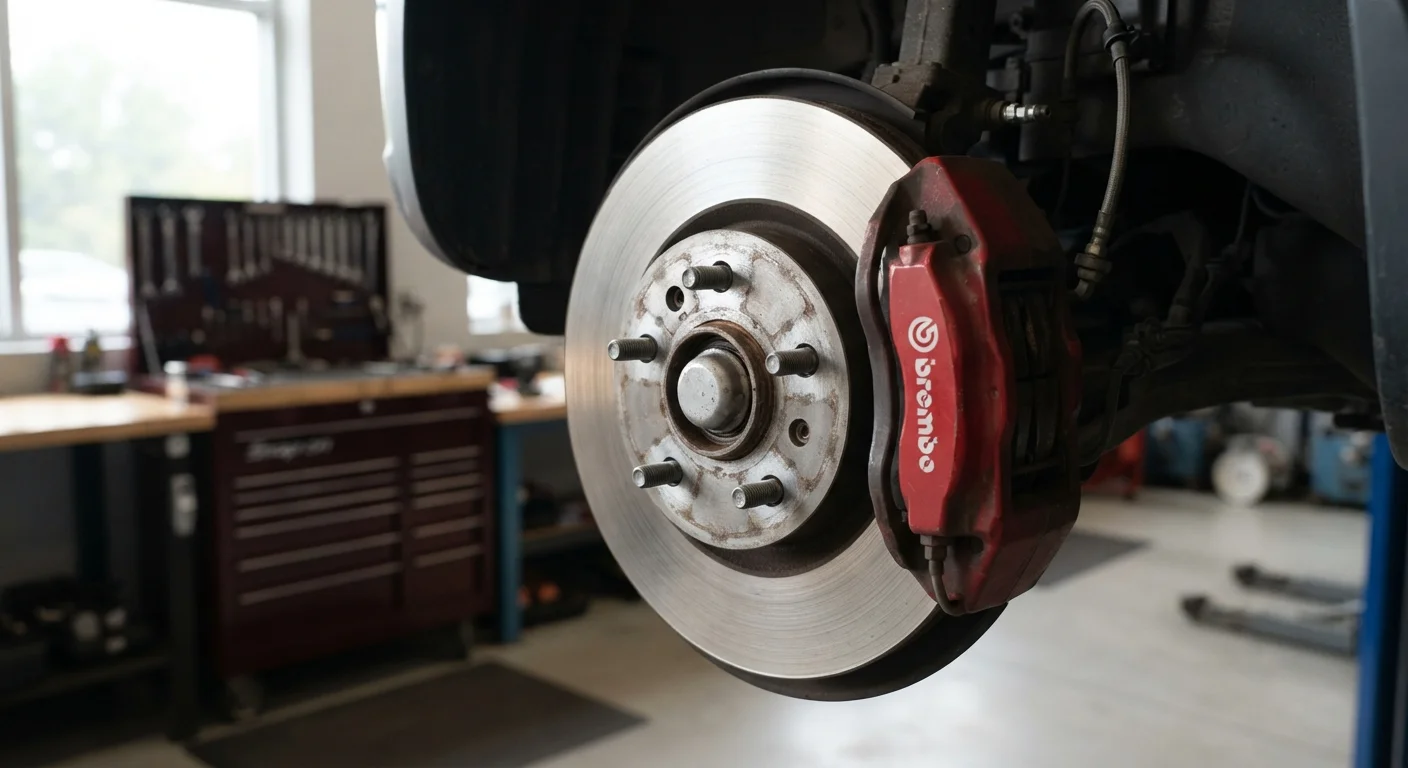
- Rotor - the flat metal disc that spins with the wheel. The brake pads clamp against it to create friction.
- Brake pads - replaceable friction material housed in a metal bracket. They press against the rotor when you brake. Most pads include a small metal tab called a wear indicator that produces a squealing sound when the pad is nearly worn out.
- Caliper - the hydraulic clamp that squeezes the pads against the rotor. Calipers contain one or more pistons and can seize over time, causing uneven brake wear.
Drum Brake Components
- Drum - a round metal housing that rotates with the wheel. Shoes press outward against the inside surface.
- Brake shoes - curved friction material that expands to contact the drum when you brake.
- Wheel cylinder - the hydraulic component that pushes the shoes outward.
The entire system is fed by brake fluid stored in a reservoir under the hood. Fluid absorbs moisture over time, which lowers its boiling point and can reduce braking effectiveness - which is why periodic fluid checks and changes matter. See our DIY car checks guide for how to locate and read the brake fluid reservoir safely.
Warning Signs You Should Never Ignore
Your brakes are usually good at communicating when something is wrong. These are the signals worth knowing:
Sounds
- High-pitched squeal while braking - often the wear indicator tab. Pads are getting thin; schedule an inspection soon.
- Grinding or metal-on-metal scraping - the pad material is likely gone. The metal backing is now contacting the rotor. This is urgent; continued driving can damage the rotor and reduce stopping ability.
- Clicking or rattling - can indicate loose caliper hardware or a pad that has shifted out of position.
Feel
- Soft or spongy pedal - the pedal compresses easily or sinks toward the floor. Possible causes include air in the lines or a brake fluid leak. Don't drive the car; have it inspected immediately.
- Pedal vibration or pulsing - often a sign of warped rotors. You may also feel it in the steering wheel.
- Car pulling to one side when braking - can indicate a seized caliper, uneven pad wear, or a fluid issue.
Visual Clues
- Brake fluid on the ground - a clear or slightly yellow puddle near a wheel or under the hood could be a leak in the hydraulic system.
- Thin pads visible through wheel spokes - if the pad looks thinner than about a quarter inch against the rotor, it's time for a replacement.
A Soft Pedal Means Stop Driving
A brake pedal that suddenly feels soft, spongy, or sinks to the floor is a serious safety concern - not something to monitor and revisit later. Pull over when it's safe to do so, and arrange for the vehicle to be inspected before driving it again. Do not attempt to diagnose or fix a hydraulic brake fault yourself.
Paying attention to these signals is part of safe driving. The pre-drive safety routine is a good place to build the habit of noticing how your car feels before you're on a busy road.
When to See a Mechanic
Some brake-related checks you can do yourself - a visual peek at pad thickness, checking the fluid level in the reservoir - but the actual repair work belongs with a qualified mechanic. Brake systems are safety-critical, and errors during servicing can have serious consequences.
Ask for Written Measurements
When a mechanic inspects your brakes, ask them to write down the pad thickness and rotor thickness for each wheel. This gives you a concrete baseline to compare against at your next service visit, making it easier to spot wear trends before they become urgent.
Plan for at least an annual brake inspection, or every 12,000 miles - whichever comes first. Many shops include a visual brake check as part of an oil change service, which is a convenient way to stay on top of it without a separate trip. Ask your mechanic to note pad and rotor measurements in writing so you have a baseline for the next visit.
If any of the warning signs described above appear - especially a soft pedal, grinding noise, or fluid leak - don't delay. Brakes that need attention don't get better on their own, and the cost of a brake repair is almost always less than the cost of repairing damage caused by driving on failed brakes. For context on what delayed maintenance can actually lead to, see what happens when you skip routine servicing.
Brake work is also a good topic to discuss when you're building a broader maintenance routine. The complete maintenance overview for new drivers covers how brakes fit alongside other systems that need regular attention.
This article is for general informational purposes only. For an assessment of your specific vehicle's braking system, consult a licensed, qualified mechanic.