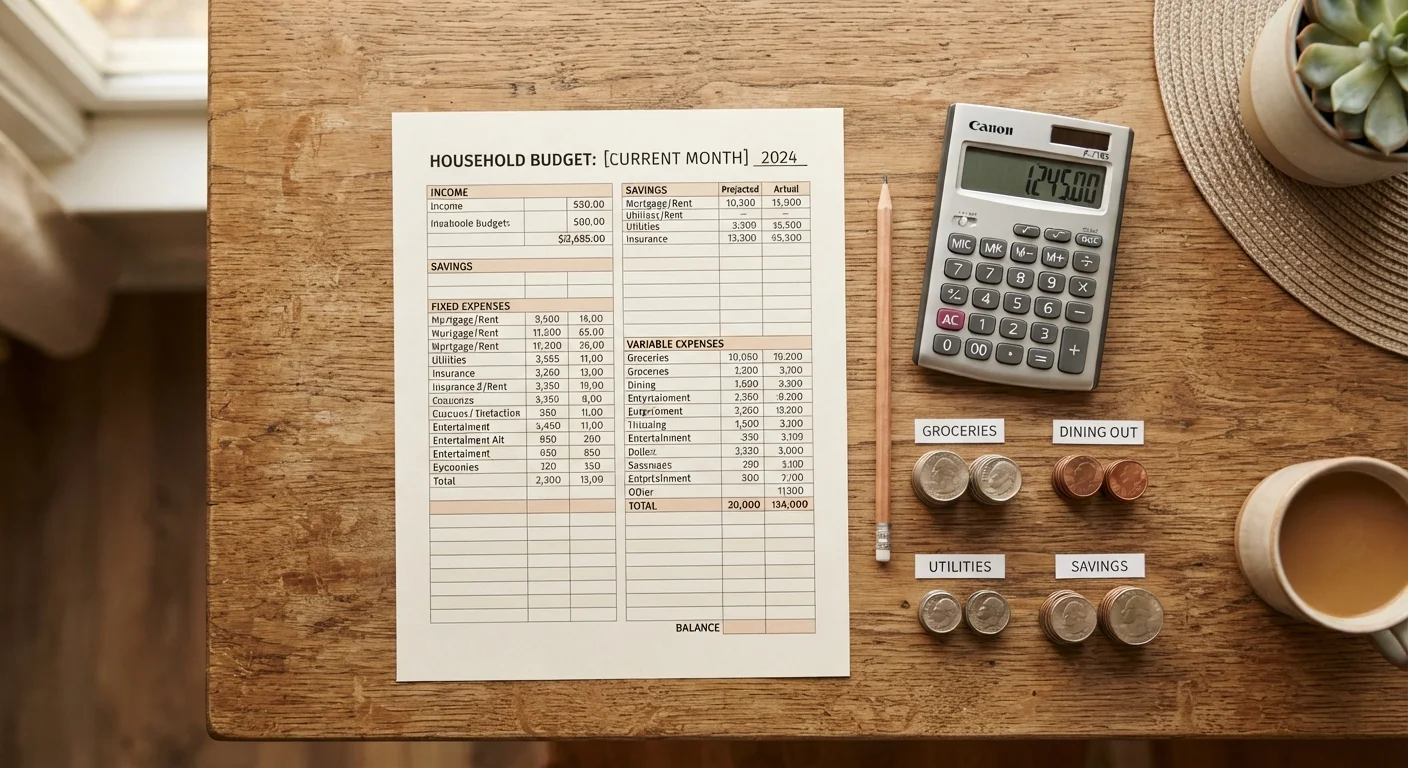
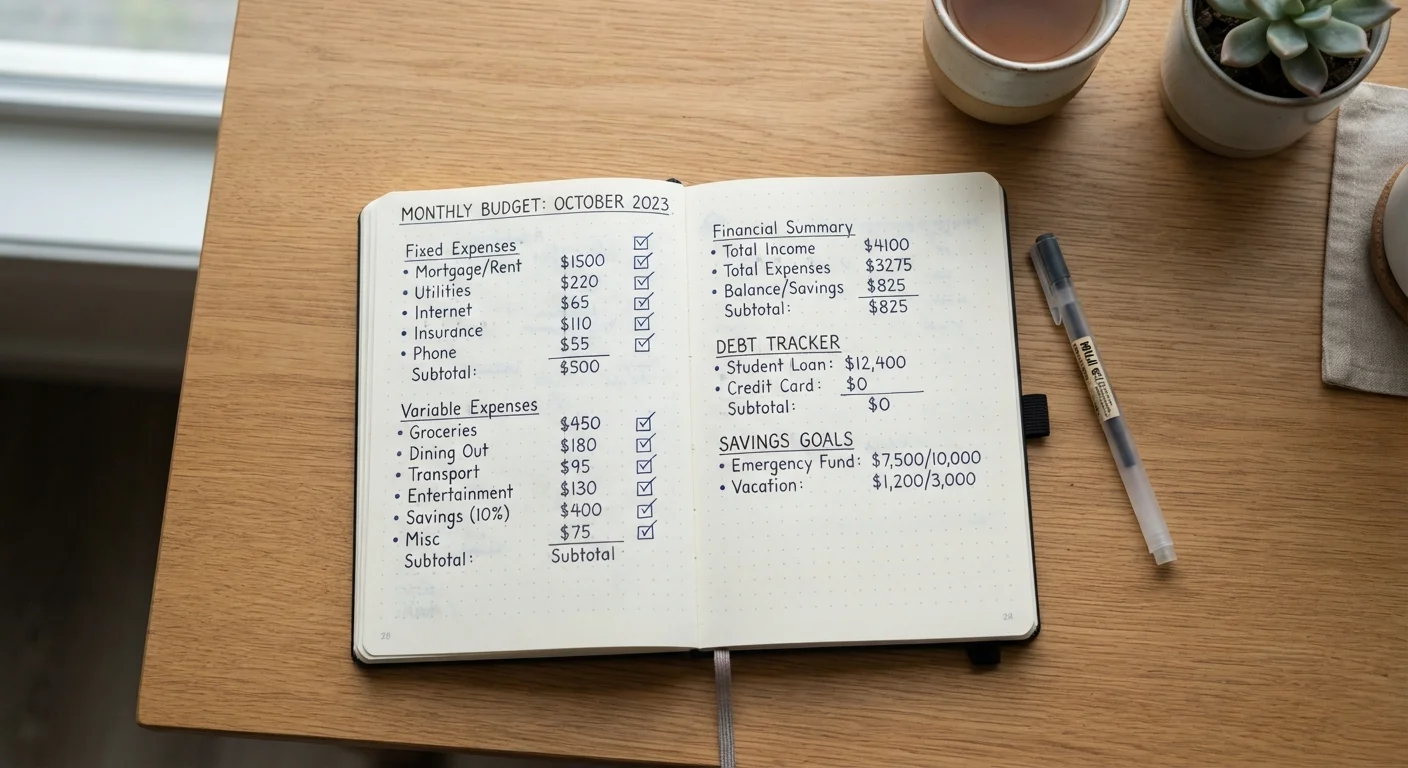
Why Budgeting Vocabulary Matters
When you sit down to make a budget for the first time, you'll run into words that seem simple but carry specific meanings - words like net pay, discretionary income, or zero-based budget. Misunderstanding even one of these can cause your plan to fall apart before you start spending.
This reference covers the core terms you'll encounter most often. Bookmark it and come back whenever a phrase stumps you. If you're ready to go beyond definitions and actually build a plan, see Building a Budget From Zero for a step-by-step walkthrough. And if you want to clear up broader confusion about what budgeting actually involves, What a Personal Budget Actually Is is a good companion read.
Gross Pay
The total amount you earn before any deductions are taken out, including taxes, insurance, or retirement contributions. This is the figure on your employment contract, but not what you actually take home.
Net Pay
The amount deposited into your account after all deductions are subtracted from gross pay. Also called take-home pay. This is the number to use as the foundation of any budget.
Fixed Expense
A recurring cost that stays the same amount each month, such as rent or a loan payment. Fixed expenses are predictable and easier to plan around.
Variable Expense
A cost that changes in amount from month to month, such as groceries, fuel, or utilities. Variable expenses require closer tracking because they can drift upward without notice.
Discretionary Income
The money remaining after taxes and essential living costs have been paid. It represents spending you have genuine choice over, such as dining out, entertainment, or hobbies.
Zero-Based Budget
A budgeting method where every dollar of income is assigned to a specific category - expenses, savings, or debt - so that income minus all allocations equals zero. Nothing is left unaccounted for.
50/30/20 Rule
A budgeting guideline suggesting roughly 50% of net income go toward needs, 30% toward wants, and 20% toward savings and debt repayment. It is a starting framework, not a strict requirement.
Emergency Fund
A dedicated pool of savings reserved for unexpected, necessary expenses such as job loss, medical costs, or urgent repairs. It is kept separate from regular spending accounts.
Sinking Fund
Savings set aside in small amounts over time for a known future expense. Unlike an emergency fund, a sinking fund targets predictable costs - like a car registration or annual vacation.
Budget Deficit
When your total expenses exceed your total income in a given period. Running a deficit consistently means you are spending more than you earn, which typically leads to debt.
Budget Surplus
When your income exceeds your total expenses in a given period. A surplus gives you room to save more, pay down debt faster, or adjust your spending goals.
Cash Flow
The movement of money in and out of your accounts over a period of time. Positive cash flow means more is coming in than going out; negative cash flow is the reverse.
The Core Terms, Explained
Below is a closer look at how these terms connect in practice - because knowing definitions in isolation is less useful than understanding how they work together in a real budget.
| Budget starting point | Always use net (take-home) pay, not gross salary |
| Fixed vs. variable | Fixed costs stay the same; variable costs change month to month |
| Emergency fund general guidance | Commonly suggested target: 3-6 months of essential expenses (Widely cited personal finance guideline; individual needs vary) |
| 50/30/20 rule split | 50% needs / 30% wants / 20% savings & debt (General framework; not a regulatory standard) |
| Zero-based budget goal | Income minus all allocations = $0 |
| Sinking fund purpose | Planned savings for a known future cost |
Income Terms
Gross pay is what your employer agrees to pay you before any deductions. Net pay - often called take-home pay - is what actually lands in your bank account after taxes, health insurance premiums, and retirement contributions are withheld. Always build your budget around net pay, not gross. Many first-timers make the mistake of budgeting based on their salary figure, then wondering why the numbers never add up.
Expense Terms
Fixed expenses stay the same every month - rent, a car loan payment, or a subscription at a set rate. Variable expenses shift month to month, like groceries, gas, or utilities. Understanding which is which matters because variable expenses are where most of your day-to-day flexibility lives. For a detailed breakdown of common household costs in each category, see A Household Cost Reference.
Discretionary income is what's left after you've covered taxes and essential living costs. This is the money you have genuine choices about - entertainment, dining out, hobbies, or extra savings. It is not the same as leftover money at the end of the month, which may reflect unplanned spending rather than deliberate choices.
Budget Frameworks
A zero-based budget assigns every dollar of your income a specific job - expenses, savings, or debt payments - so that income minus all assigned amounts equals zero. Nothing floats unaccounted for. The 50/30/20 rule is a simpler guideline: roughly 50% of net income toward needs, 30% toward wants, and 20% toward savings and debt payoff. Neither is a rule you must follow - they're frameworks to help you get started. Budgeting Myths That Keep People From Starting covers why rigid rules sometimes discourage people unnecessarily.
No Single Framework Fits Everyone
The 50/30/20 rule and zero-based budgeting are tools, not mandates. Your actual needs, income, and obligations will vary - especially if you carry significant debt, live in a high-cost area, or have irregular income. Treat any framework as a starting point and adjust it to reflect your real situation. For questions about your specific circumstances, a nonprofit credit counselor or financial advisor can offer personalized guidance.
Savings and Emergency Concepts
An emergency fund is money set aside specifically for unplanned, necessary expenses - a car repair, a medical bill, or a gap in income. It lives separately from your regular spending money and is not intended for predictable costs. A sinking fund works differently: you save a set amount each month toward a known future expense, like a vacation or annual insurance premium, so the cost doesn't surprise you. For related savings vocabulary, see Key Savings Terms Every Beginner Should Know.
If you're planning a trip and want to apply these concepts practically, Setting a Travel Budget shows how budgeting terms translate into real travel planning. For ongoing saving strategies beyond the basics, the Saving Money hub and Debt & Credit hub offer additional guidance.
This article is for general informational and educational purposes only. It is not personalized financial advice. For guidance specific to your situation, consider speaking with a qualified financial professional.