Why Hydration Advice Gets So Confusing
Hydration is one of those wellness topics where simple rules - drink more water, thirst means you're already behind - get repeated so often they start to feel like established science. Some of them are partially true. Others don't hold up at all under scrutiny. The problem is that acting on bad hydration advice can leave you anxiously gulping water you don't need, or dismissing perfectly good beverages and foods that are genuinely keeping you hydrated.
The goal here isn't to make hydration more complicated. It's the opposite: once you understand what the evidence actually shows, building healthy fluid habits becomes simpler and less stressful. You may already be doing better than you think. For a broader look at how similar myths crop up in nutrition, our guide to persistent nutrition myths covers comparable territory.
Myth
Everyone needs exactly eight 8-ounce glasses of water per day.
Fact
Fluid needs vary by body size, activity level, climate, and diet - there is no universal eight-glass requirement.
The "8x8" rule (eight glasses, eight ounces each) is widely repeated, but it lacks a strong evidence base. Research published in the American Journal of Physiology found no scientific studies supporting this specific figure. Individual fluid needs depend on your body weight, how much you exercise, how hot the environment is, and what you eat. A sedentary person in a cool climate needs far less water than an athlete training in summer heat. Rather than chasing a fixed number, pay attention to your body's own signals and overall diet.
Myth
If you feel thirsty, you're already dehydrated.
Fact
For most healthy adults, thirst is an early and reliable signal to drink - not a sign that dehydration has already set in.
This idea leads many people to force fluids even when their bodies don't need them. In reality, your body's thirst mechanism is well-calibrated and triggers well before meaningful fluid loss occurs. Exceptions exist: older adults can have a blunted thirst response, and during intense exercise the window is narrower - but for everyday life, drinking when you're thirsty and stopping when you're not is sound guidance. Forcing down water beyond thirst doesn't deliver extra benefits and can, in rare cases, cause problems.
Myth
Coffee and tea don't count toward your daily fluid intake because they're diuretics.
Fact
Caffeinated beverages do contribute to hydration; their mild diuretic effect is offset by the water they contain.
Research consistently shows that moderate caffeine consumption - roughly up to 400 mg per day for healthy adults - does not cause net fluid loss. Studies reviewed by hydration researchers at Loughborough University found that coffee consumed in normal amounts hydrates comparably to water. Very high caffeine intake can have a stronger diuretic effect, but typical cup-a-day or two-cups-a-day habits? They count. This doesn't mean coffee is the ideal hydration choice, but there's no need to drink an extra glass of water to compensate for every cup of tea or coffee.
Myth
Your urine should be completely clear if you're properly hydrated.
Fact
Pale yellow urine - not colorless - is the target; consistently clear urine may mean you're over-drinking.
Color charts used in clinical nutrition generally show pale straw-yellow as the ideal hydration marker. Completely colorless urine can indicate excess fluid intake, which dilutes electrolytes like sodium. In extreme cases, this can contribute to a condition called hyponatremia (low blood sodium), which can cause symptoms like nausea, headache, and in severe situations, more serious complications. Dark yellow or amber urine, on the other hand, does suggest you need to drink more. Pale yellow is the sweet spot most people should aim for.
Myth
You can only hydrate by drinking water - food doesn't help much.
Fact
Food contributes roughly 20-30% of most people's daily fluid intake, with fruits and vegetables being especially rich sources.
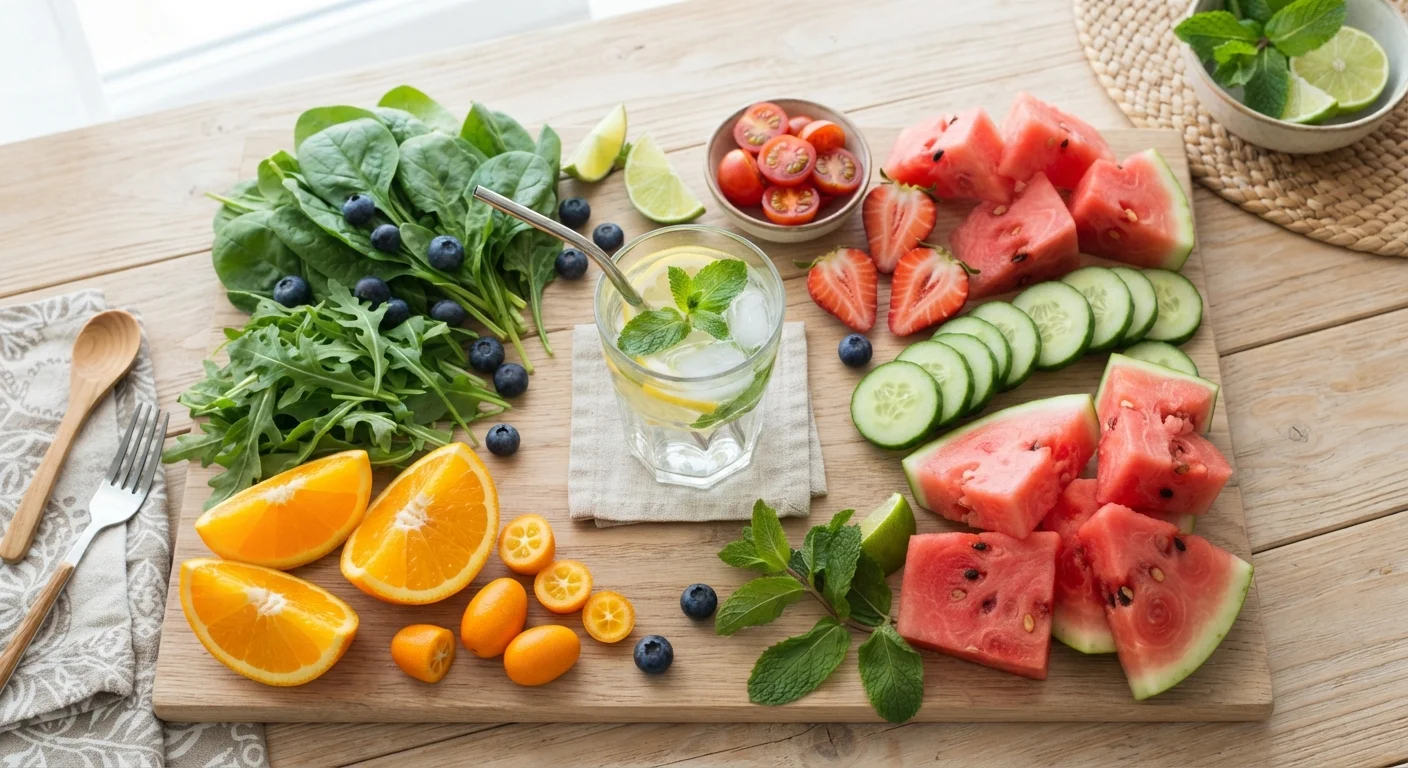
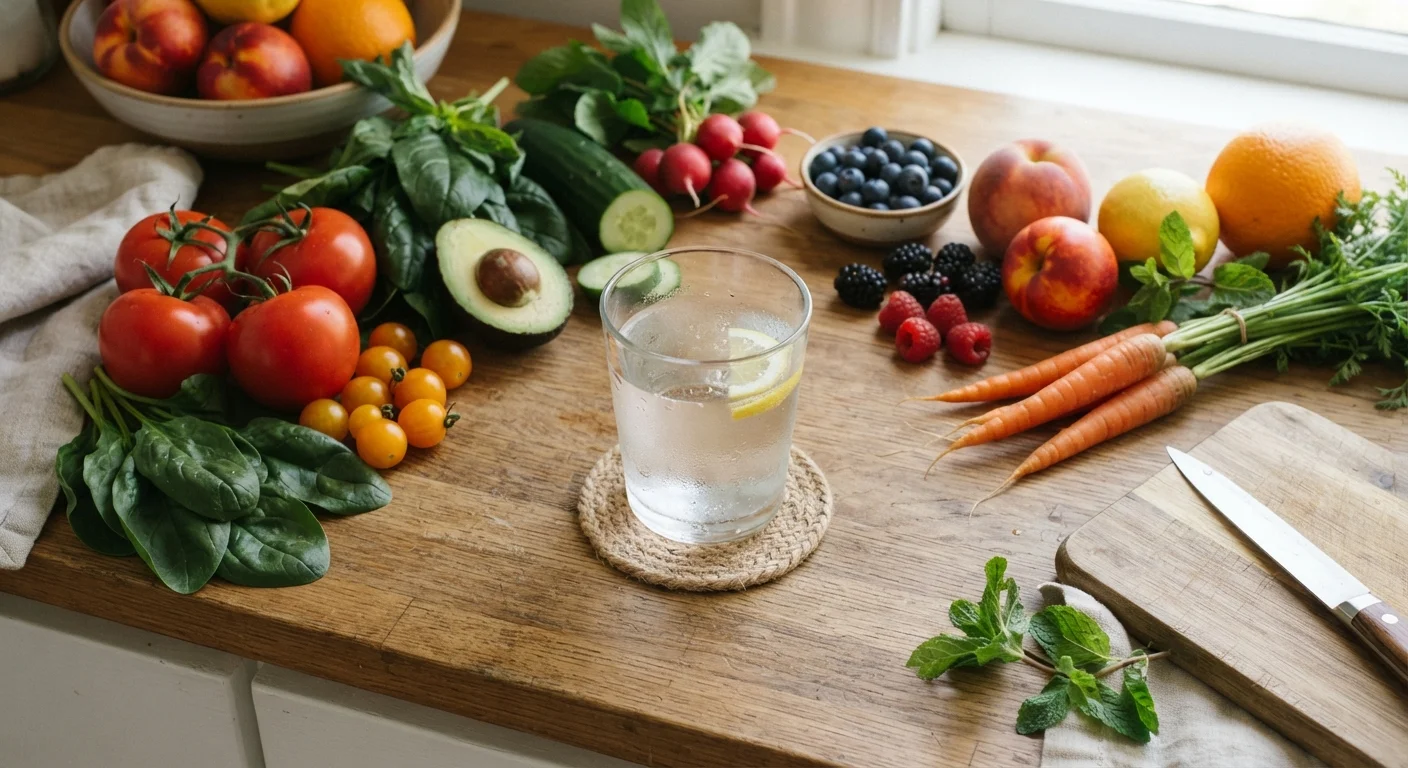
Cucumbers, watermelon, strawberries, lettuce, and soups are all high in water content and actively contribute to your hydration throughout the day. This is one reason why people who eat plenty of whole fruits and vegetables often meet their fluid needs without tracking water intake. What you eat shapes how hydrated you are just as much as what you drink - a fact that's easy to overlook when hydration advice focuses exclusively on water bottles.
What Healthy Hydration Actually Looks Like
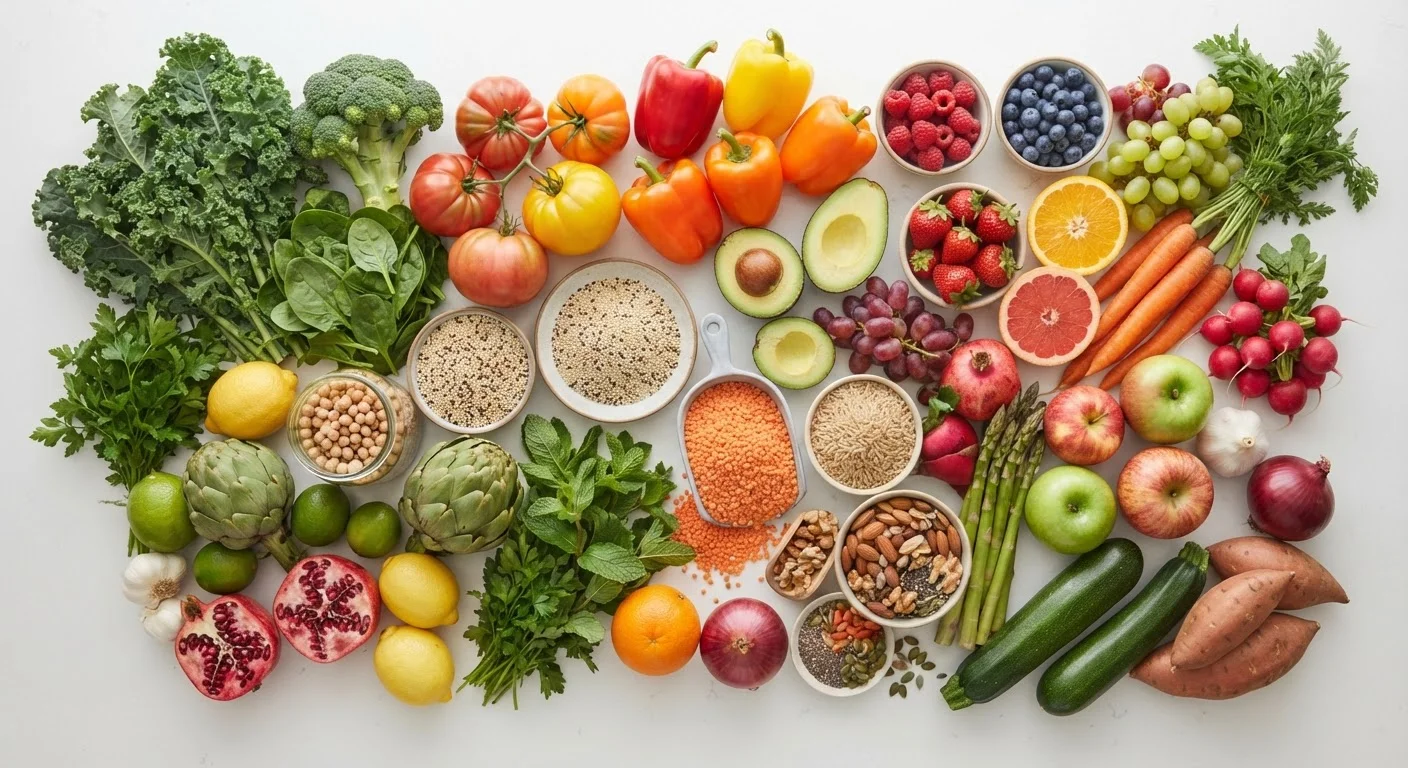
Once the myths are out of the way, practical hydration comes down to a few consistent habits rather than rigid rules. Drink when you're thirsty. Eat a diet rich in fruits and vegetables, which contribute meaningful fluid alongside fiber and micronutrients - a connection explored in depth in our article on fiber's role in everyday health. Use urine color as a simple, free feedback tool - pale yellow is your target.
~20-30%
Daily fluid intake from food
According to estimates from the European Food Safety Authority, roughly 20-30% of total fluid intake typically comes from food rather than beverages.
400 mg
Caffeine threshold before notable diuretic effect
Research reviewed by hydration scientists generally places the threshold for significant diuretic effects at caffeine amounts well above typical daily consumption for most adults.
Your needs genuinely shift with exercise, heat, illness, and life stage. Pregnant and breastfeeding individuals, older adults, and people with certain health conditions have different fluid requirements and should discuss specifics with a qualified healthcare provider. For everyone else, paying attention to your body and eating a varied diet will serve you far better than chasing an arbitrary daily number.
This article is for general informational purposes only and is not a substitute for professional medical advice. Consult a qualified healthcare provider for guidance tailored to your individual health needs.