
Why Budgeting Myths Do Real Damage
Misconceptions about budgeting don't just cause confusion - they stop people from taking a first step that could genuinely improve their financial lives. When someone believes a budget is only for people in debt, or that it requires giving up everything they enjoy, they're likely to skip it entirely. That hesitation has a real cost: missed savings, unplanned debt, and a persistent feeling that money is out of control.
The good news is that most of these myths fall apart quickly once you look at what budgeting actually involves. Before diving in, it helps to get familiar with some common terms - budgeting terms every beginner should know offers a plain-language reference if anything sounds unfamiliar.
Myth
Budgets are only for people who are in debt or struggling financially.
Fact
A budget is useful at every income level and financial stage - including when things are going well.
This is one of the most widespread misconceptions about budgeting, and it stops a lot of people before they even begin. The truth is that a budget is simply a plan for your money. It tells your dollars where to go instead of wondering where they went. People with comfortable incomes use budgets to build savings, fund goals, and avoid lifestyle creep - the gradual rise in spending that can quietly erase financial progress. You don't need to be in crisis to benefit from knowing where your money is going.
If you want a plain-language explanation of what budgeting actually involves, see what a personal budget really is.
Myth
You need a high or stable income before budgeting makes sense.
Fact
Budgeting is especially valuable on a tight or unpredictable income, because every dollar has more riding on it.
When money is limited, the cost of not having a plan is higher, not lower. A budget on a modest income helps you cover essentials, avoid overdrafts, and carve out even small amounts toward savings. It also works for people whose income changes month to month - freelancers, shift workers, and seasonal earners can use income-averaging or baseline approaches to build a workable plan. You don't need a predictable paycheck to make budgeting worth your time. See budgeting strategies for irregular income for practical approaches.
Myth
Budgeting means you can never spend money on things you enjoy.
Fact
A realistic budget deliberately includes spending on things you value - that's what makes it sustainable.
A budget that bans every coffee, streaming service, or dinner out isn't a realistic financial plan - it's a recipe for frustration and abandonment. The whole point of building a budget is to make intentional choices about your spending, including the things that bring you genuine enjoyment. Most beginner-friendly approaches specifically set aside money for discretionary spending so that fun isn't treated as a failure. When your budget reflects your actual life, you're far more likely to stick with it past the first month.
Myth
Budgeting requires complicated spreadsheets or expensive software.
Fact
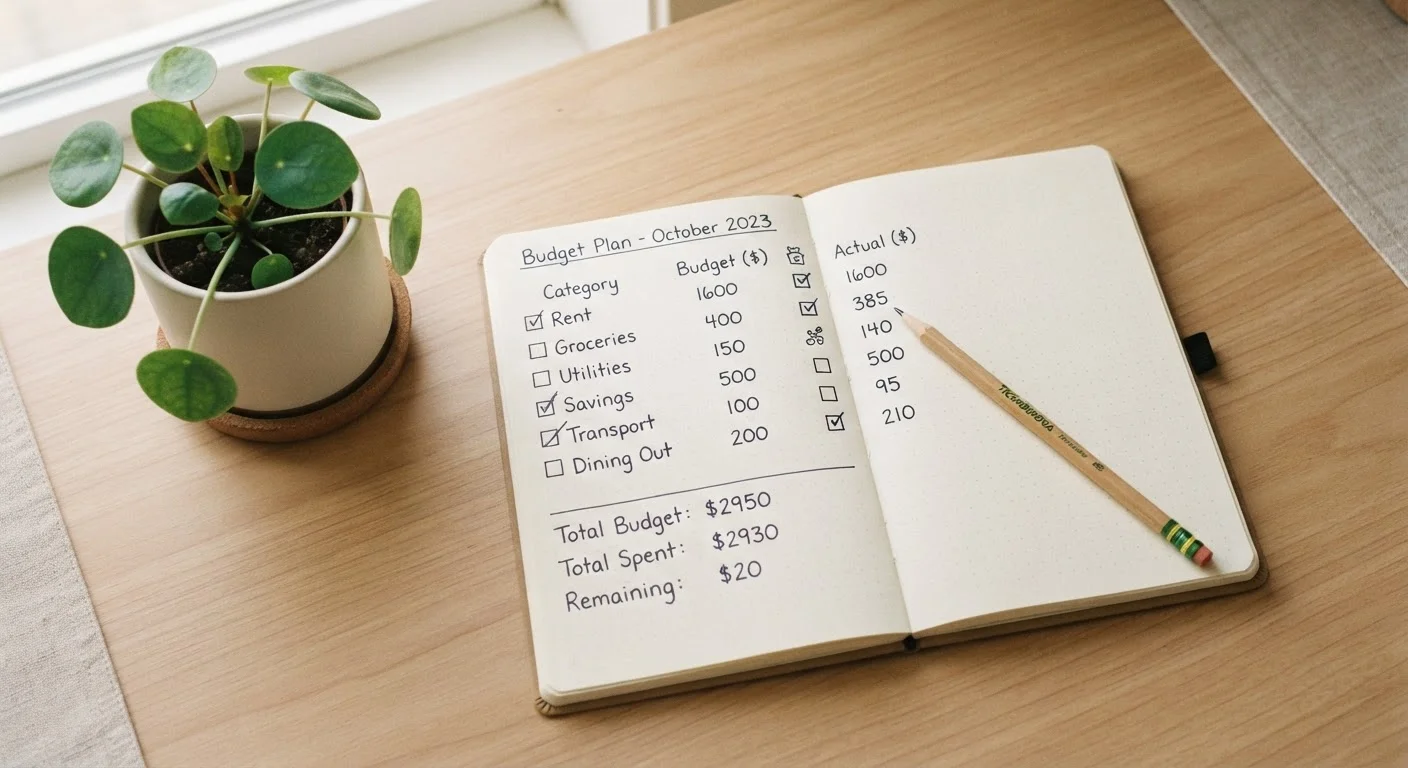
A pencil and a piece of paper are enough to start an effective budget.
Digital tools and apps can be genuinely helpful, but they're not a prerequisite. Many people start - and maintain - effective budgets using nothing more than a notebook or a basic printed template. The method matters far less than the habit of actually tracking your income and spending. If you're new to budgeting and feeling overwhelmed by the options, start as simply as possible. You can always add tools later once the habit is established. For a beginner-friendly walkthrough, your first budget guide covers every step in plain terms.
Myth
If you go over budget once, the whole plan is ruined.
Fact
Overspending in one category is normal and correctable - it's not a reason to abandon the budget entirely.
A budget is a living document, not a pass/fail test. Unexpected expenses happen: a car repair, a medical bill, a price increase. Going over in one area simply means adjusting elsewhere that month, or acknowledging that a particular budget line needs updating. The goal isn't perfection - it's awareness and adjustment over time. Research in behavioral finance consistently shows that people who treat budgeting as an all-or-nothing endeavor are more likely to give up after a setback. Treating it as a flexible guide keeps you in the game. Learn more about why early budgets often derail and how to avoid those pitfalls.
What Realistic Budgeting Actually Looks Like
Once the myths are cleared away, budgeting looks a lot less intimidating. At its core, it means listing what comes in, listing what goes out, and making deliberate decisions about the gap. It doesn't demand a finance degree, a six-figure income, or a perfectly predictable life.
Don't Wait for the 'Perfect' Time to Start
Many people delay budgeting until after a raise, a move, or some other life change. The problem is that a better moment rarely arrives on its own. Starting with imperfect numbers today gives you real information to work with - waiting gives you nothing.
If you're ready to build your first plan from scratch, building a budget from zero is a practical next step. And if you're also working on growing your savings alongside your budget, the saving money hub covers strategies at every level. The goal isn't a flawless budget - it's an honest one that you'll actually use.
~1 in 3
U.S. adults who track spending in detail
According to Gallup polling, fewer than a third of Americans report keeping a detailed household budget, suggesting most people haven't started - not that budgeting doesn't work.
Month 2
When most first budgets break down
Behavioral research suggests the second month is the most common failure point for new budgeters, typically because the plan was too rigid to absorb real-life variation.
This article is for general informational and educational purposes only and does not constitute personalized financial advice. For guidance specific to your situation, consider consulting a qualified financial professional.