Before Your Dog Arrives: What to Have Ready
Preparation is the single biggest factor in a smooth first day. Before pickup, run through this essential checklist so you're not scrambling once your dog is already home.
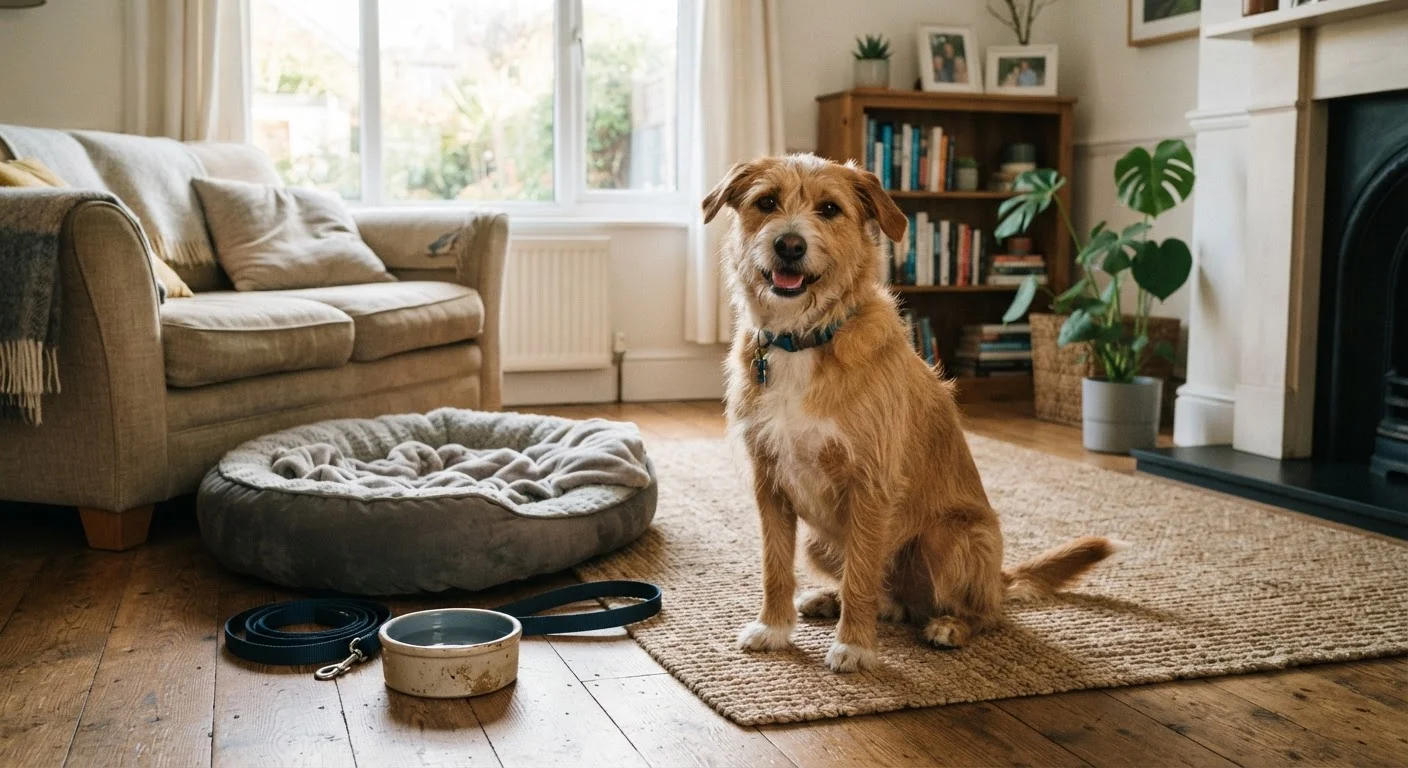
- Collar and ID tag: Your dog should be wearing identification the moment it leaves the shelter or breeder. Include your phone number at minimum.
- Leash and harness or flat collar: Have both ready; some dogs respond better to a harness if they pull.
- Food and water bowls: Stainless steel or ceramic are easy to clean and durable.
- Age-appropriate food: Ask the shelter or breeder what food the dog has been eating and continue with that initially to avoid stomach upset. Transition to a new food gradually over 7-10 days if you plan to change it.
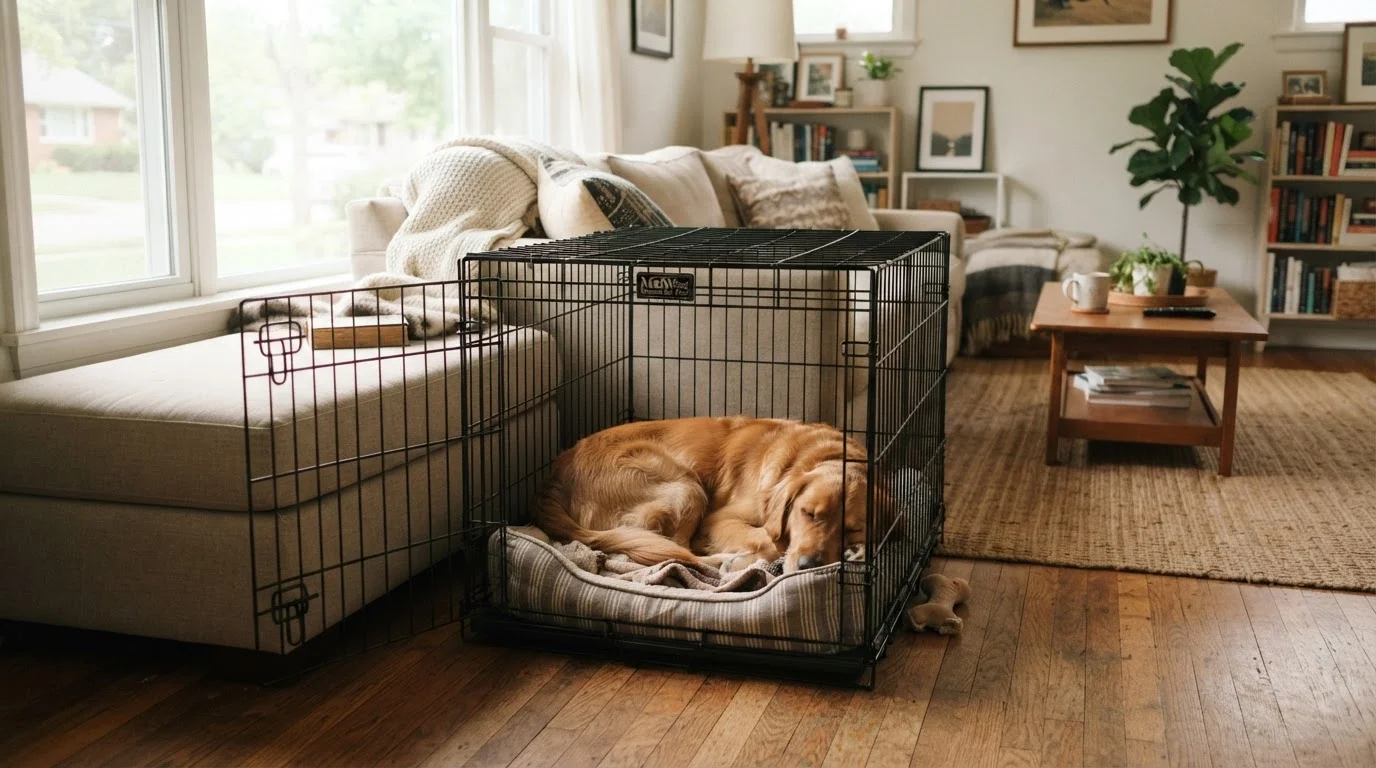
- Bed or crate: See our guide to crate training vs. free-roaming for help deciding which suits your household.
- Enzymatic cleaner: Accidents will happen. This type of cleaner breaks down odor compounds that standard cleaners leave behind.
- Poop bags, treats, and a basic toy: Small comforts that signal this space is safe.
For a deeper look at making your living space genuinely dog-safe, read our guide to setting up a dog-friendly home, which covers hazardous plants, secure fencing, and more.
Housetraining
The process of teaching a dog to toilet only in approved outdoor areas. It relies on consistent schedules, positive reinforcement, and close supervision indoors.
Enzymatic cleaner
A cleaning product that uses enzymes to break down the organic compounds in pet urine and feces, eliminating odor rather than masking it.
Socialization
The gradual, positive introduction of a dog to different people, animals, sounds, and environments so it learns to respond calmly rather than with fear or aggression.
Decompression period
The initial days or weeks a dog needs to adjust to a new home, during which it may be quieter, withdrawn, or unsettled as it processes the change.
Core vaccines
Vaccinations that veterinary guidelines recommend for all dogs regardless of lifestyle, such as rabies and distemper, because the diseases they prevent are serious and widespread.
The First 24 Hours: Setting the Right Tone
The temptation is to show your new dog everything at once - every room, every family member, every toy. Resist it. Dogs arriving in a new environment are processing an enormous amount of sensory information simultaneously, and too much stimulation can spike stress levels rather than build excitement.
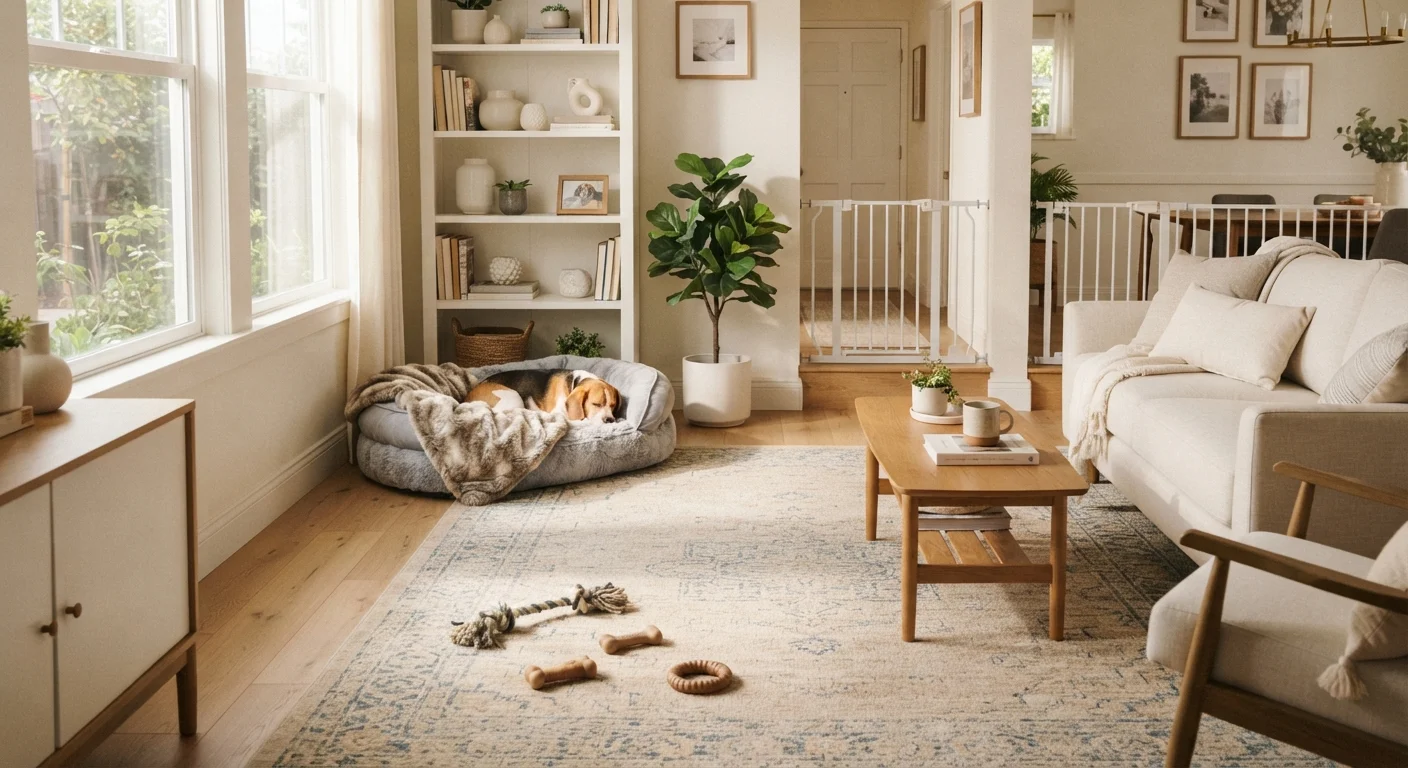
When you first arrive home, take the dog to the outdoor toileting area before going inside. This sets an early habit and gives the dog a chance to relieve travel anxiety. Then bring them into one or two rooms only, ideally where their bed and water bowl are already set up.
Let the Dog Lead the Greeting
Rather than approaching your new dog directly, crouch down and let it come to you. Offering the back of your hand at nose level gives the dog a chance to gather information on its own terms. This small act of patience builds trust much faster than well-meaning but overwhelming attention.
Keep the first evening low-key. Limit visitors, avoid loud music or TV, and let the dog approach family members at its own pace. Sit on the floor, move slowly, and let curiosity lead. Most dogs will begin to investigate once they feel the situation is safe.
If you have children, brief them beforehand: no chasing, no loud squealing, and always let the dog sniff a hand before reaching over its head to pet it. These small adjustments prevent early fear responses from forming.
Establishing a Daily Routine
Dogs are creatures of habit. A predictable schedule for feeding, walking, and sleep is one of the most effective tools you have for reducing anxiety and accelerating housetraining. Aim to feed your dog at the same times each day - most adult dogs do well with two meals, while puppies typically need three or four smaller meals.
Walks should follow a consistent pattern too: morning, midday if possible, and evening. Every outing is also an opportunity to work on loose-leash walking and basic commands like sit and stay - short, positive sessions are far more effective than long, exhausting ones.
Designate a sleep area from the start and encourage your dog to use it each night. Changing the sleeping arrangement after a week creates confusion. If you're undecided, our crate training vs. free-roaming comparison lays out the tradeoffs clearly.
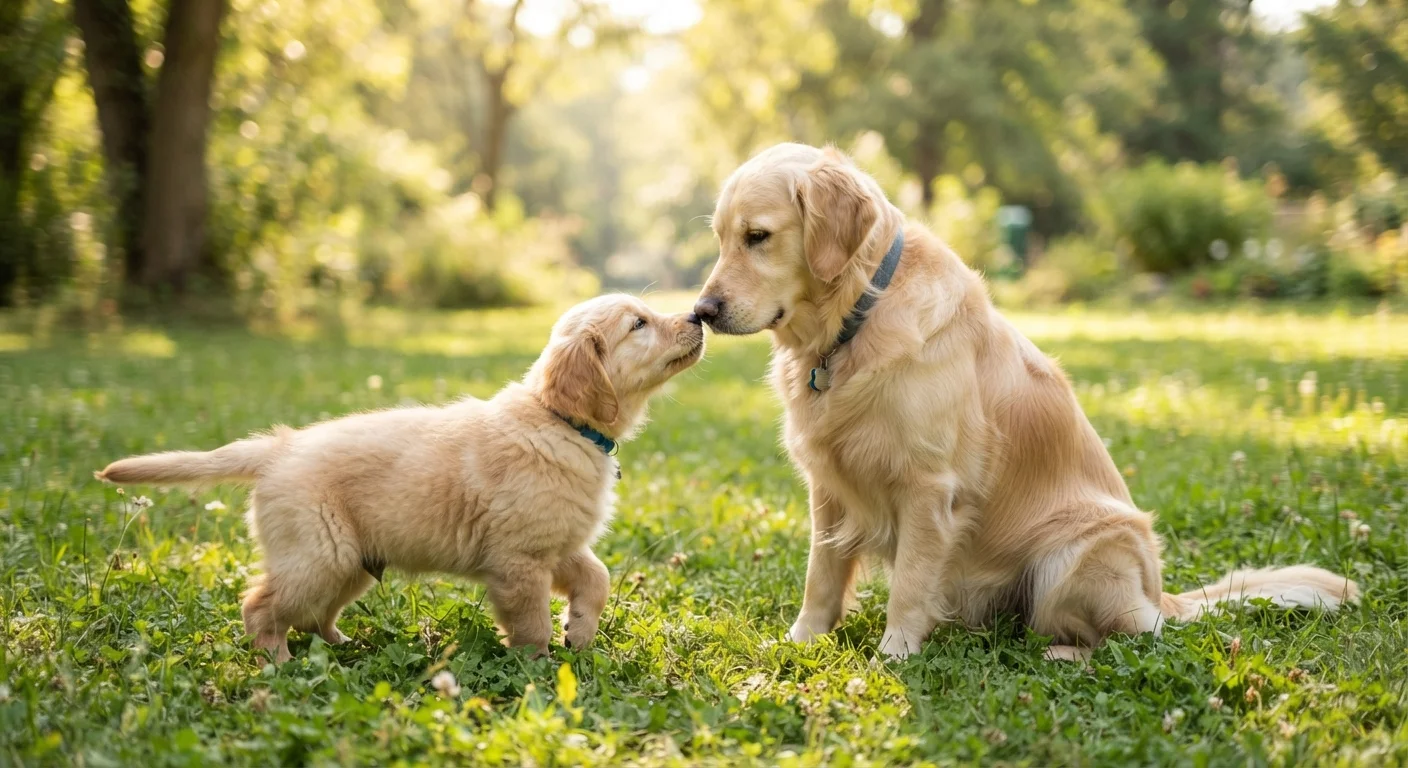
If you're bringing home a puppy specifically, early socialization is especially important during the first weeks. Our article on socializing a puppy explains the critical developmental window and what to expose young dogs to during that time.
Health Basics Every New Owner Should Know
Schedule a veterinary appointment within the first week - even if your dog appears healthy. The vet will review vaccination records, screen for internal and external parasites, assess weight and overall condition, and help you plan for spay or neuter if that hasn't already been done.
For a clear overview of which vaccines dogs need and when, our dog vaccination guide covers core and non-core vaccines, typical schedules, and what to ask at each visit.
Don't Skip the First Vet Visit
Rescue dogs and even dogs from reputable breeders may arrive with parasites, incomplete vaccines, or undetected health issues. A vet check in the first week is not optional - it protects both your new dog and any other pets in your home. Do not wait until something looks wrong.
Establish a monthly parasite prevention routine - your vet can recommend appropriate products based on your region and the dog's age and weight. Keep a simple health log noting dates of vaccinations, parasite treatments, and any behavioral or physical changes you observe. This record becomes invaluable at future vet visits.
Learn the early warning signs that something may be wrong. Our guide on signals that your dog may need a vet visit helps you tell the difference between minor adjustment behaviors and symptoms that warrant prompt attention.
Common First-Week Mistakes to Avoid
Even well-prepared owners fall into a handful of predictable traps in the first days. Being aware of them in advance saves a lot of stress.
- Giving full house access immediately: Overwhelming a dog with too much space too soon makes housetraining harder and can increase anxiety. Start with one or two rooms and expand gradually.
- Skipping the vet visit: It's easy to put off when everything seems fine. Don't. Early baselines matter.
- Inconsistent rules: If the dog isn't allowed on the couch, everyone in the household needs to agree on that from day one. Mixed signals are confusing and slow down learning.
- Punishing accidents: Scolding a dog after the fact does not teach the behavior you want - the dog cannot connect the punishment to something that happened minutes earlier. Clean up calmly and focus on reinforcing outdoor toileting.
- Assuming the dog knows its name: Practice name recognition with short, positive sessions using treats. Don't assume the dog has any prior training unless the shelter or breeder has confirmed it.
If you're still weighing whether dog ownership is the right fit for your household, our article covering the full picture of dog ownership offers a balanced look at the time, cost, and lifestyle demands involved before you commit.