What Are Debt and Credit, Really?
Credit is the ability to borrow money on the understanding that you'll pay it back - usually with interest. Debt is the amount you actually owe after borrowing. Every credit card swipe, car loan, or student loan creates debt. Your track record of managing that debt builds your credit history.
Lenders - banks, credit unions, and other financial institutions - use your credit history to decide whether to lend you money and on what terms. A stronger history generally means more options and lower interest rates; a weaker one can mean higher costs or denied applications.
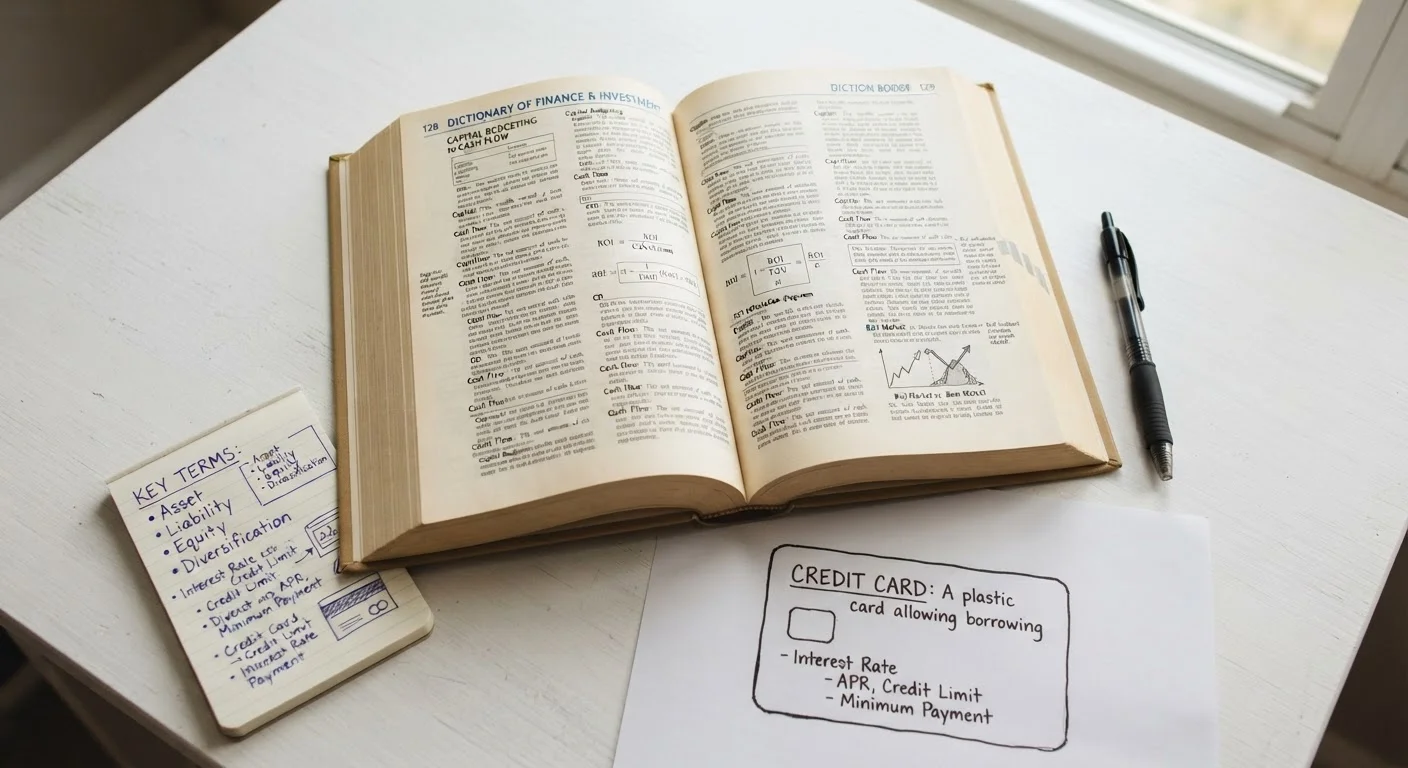
For a deeper look at the vocabulary you'll encounter, see the plain-English debt and credit glossary - it covers terms like APR, hard inquiry, and credit utilization in plain language.
Credit
The ability to borrow money now with a promise to repay it later, usually with added interest.
Debt
Money you owe to a lender after borrowing. It grows if you don't make payments because interest accumulates.
Credit score
A three-digit number (300-850) that summarizes how reliably you've managed borrowed money. Higher scores generally mean better borrowing terms.
Interest rate
The cost of borrowing money, expressed as a percentage of the amount owed. A higher rate means you pay more over time.
Credit utilization
The percentage of your available credit limit that you're currently using. Keeping it low generally helps your credit score.
Credit report
A detailed record of your borrowing and repayment history, maintained by credit bureaus. Lenders review it when you apply for credit.
How Your Credit Score Works
Your credit score is a three-digit number - typically ranging from 300 to 850 - that summarizes how reliably you've managed borrowed money. The most widely used scoring models weight five main factors:
- Payment history (~35%): Have you paid on time? This is the single biggest factor.
- Credit utilization (~30%): How much of your available credit are you using? Lower is generally better; staying under 30% of your limit is a common guideline.
- Length of credit history (~15%): How long have your accounts been open?
- Credit mix (~10%): Do you have a variety of account types (cards, loans)?
- New credit (~10%): Have you applied for several new accounts recently?
Your score is calculated from information in your credit report - a detailed record maintained by the three major U.S. credit bureaus: Equifax, Experian, and TransUnion. Errors on that report can drag your score down, so it's worth reviewing yours periodically.
Check Your Report for Errors
Mistakes on credit reports - like payments wrongly marked late or accounts that aren't yours - do happen. Disputing and correcting an error can raise your score without any other changes. Make it a habit to review your report from each bureau at least once a year.
Good Debt vs. Bad Debt: A Practical Take
Not all debt works against you. A common way to think about it: good debt is borrowing that may help you build value or increase earning potential over time - like a student loan for a marketable degree or a mortgage. Bad debt typically refers to high-interest borrowing used for things that don't hold value, such as carrying a balance on a high-rate credit card to fund everyday spending.
That said, even "good" debt carries risk. Any borrowed money must be repaid, and circumstances change. The key questions to ask before borrowing are: Can I realistically afford the payments? What does this cost me in total interest? What happens if my income drops?
High-Interest Debt Adds Up Fast
Carrying a balance on a high-interest credit card can cost you significantly over time - interest charges can sometimes exceed the original purchase amount if you only make minimum payments. Before taking on any debt, understand the full cost and have a realistic plan to pay it off.
For a fuller picture of how debt fits into your overall financial life, the article Debt, Credit, and Your Financial Life walks through repayment strategies and long-term habits in detail.
Your First Steps Toward Better Credit and Less Debt
Starting from scratch - or trying to recover - can feel daunting. A few concrete actions make a real difference:
- Know where you stand. Pull your free credit reports at AnnualCreditReport.com. Look for errors, unfamiliar accounts, or overdue balances.
- Pay on time, every time. Set up autopay for at least the minimum payment so you never miss a due date. Payment history is the most influential factor in your score.
- Keep card balances low. If you have a credit card, try to use only a small portion of the limit each month and pay it off fully when possible.
- Build a budget first. You can't reliably pay down debt without knowing where your money goes. See Budgeting Basics for simple strategies, or work through Building a Budget From Zero if you've never made one before.
- If you have no credit history yet, there are low-risk ways to get started - Building Credit When You're Starting from Zero covers practical options.
Progress with credit and debt is measured in months and years, not days. Small, consistent habits compound into meaningful results. If you feel overwhelmed by debt or have questions specific to your situation, consider speaking with a nonprofit credit counselor or a licensed financial adviser who can give guidance tailored to your circumstances.
This article is for general informational and educational purposes only and does not constitute personalized financial, legal, or tax advice. Consult a qualified financial professional for guidance specific to your situation.