Why the Method Matters as Much as the Plan
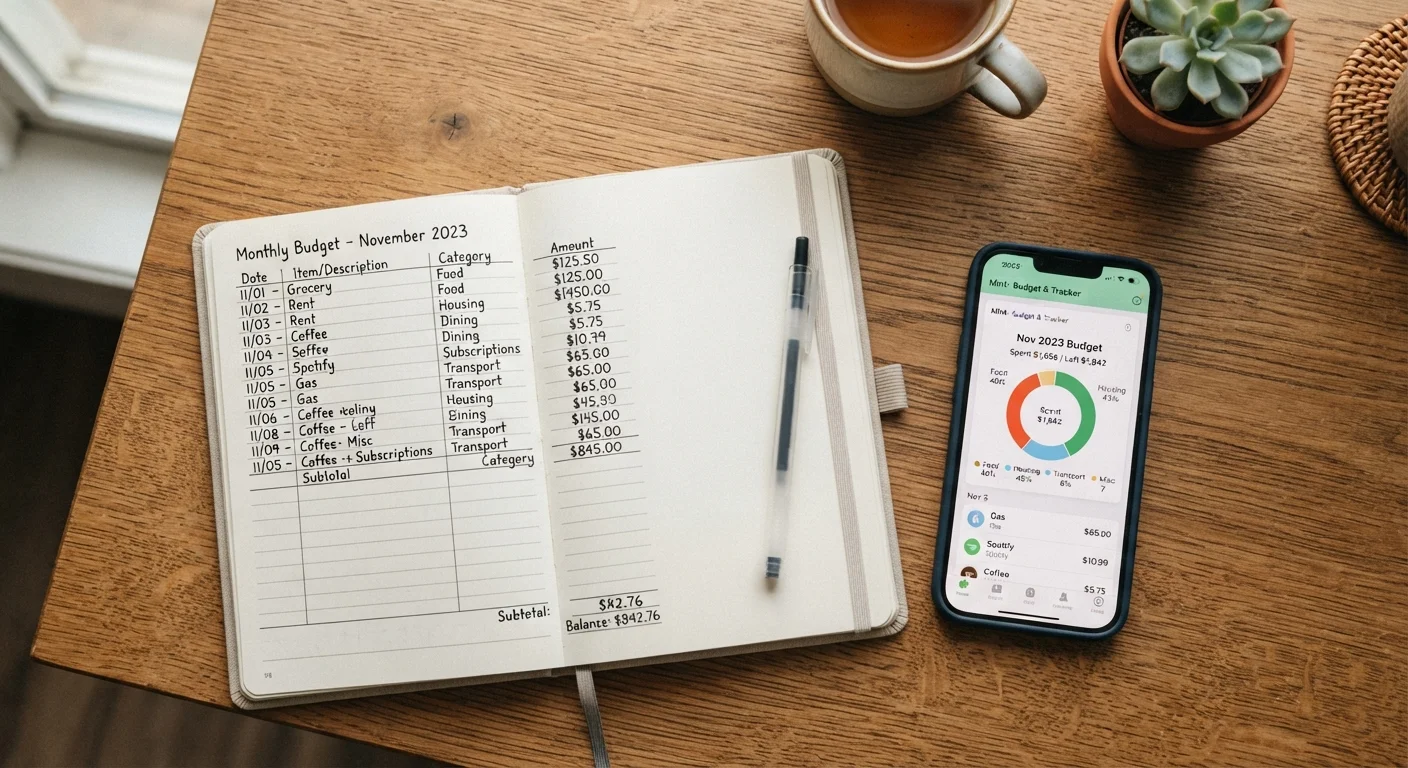
A budget only works if you actually follow it - and that means picking a format you'll return to week after week. For some people, that's a spiral notebook on the kitchen counter. For others, it's a quick tap on their phone before checkout. Neither approach is wrong, but they suit different personalities and habits.
If you're just getting started, see our first budget guide for a plain-language walkthrough before deciding which tool to use. Once you have a sense of your income and expenses, choosing a format becomes much easier.
| Paper Budgeting | Budgeting App | |
|---|---|---|
| Setup effort | Low - pen and paper only | Moderate - account setup required |
| Transaction tracking | Manual, every purchase | Automatic with bank sync |
| Privacy | Fully private, no data sharing | Data shared with app provider |
| Overspending alerts | None - you must check yourself | Push notifications available |
| Best for households | Solo or simple budgets | Couples and shared accounts |
| Tech required | None | Smartphone or computer |
| Habit reinforcement | Strong - writing builds awareness | Varies - easy to ignore |
The Case for Budgeting on Paper
Writing your budget by hand creates a level of intentionality that digital tools can't fully replicate. Research in learning and memory suggests that physically writing information helps people retain and process it more deeply - and the same principle applies to money. When you write down that you spent $47 on takeout, it registers differently than a line item that auto-populated overnight.
Paper budgets are also completely private, require no account logins, and work without Wi-Fi or a smartphone. They're especially useful for people who feel anxious about connecting financial accounts to third-party apps.
Start Simpler Than You Think You Need To
If you're new to paper budgeting, resist the urge to create a perfectly designed template. A single sheet with four columns - income, fixed expenses, variable expenses, and what's left - is enough to start. You can add detail as you get comfortable with the habit. Complexity is easy to add later; quitting because it felt like too much is harder to reverse.
The main drawback is effort. You have to manually record every transaction - every coffee, every online purchase. Miss a few days and your numbers fall apart. Paper also doesn't send you alerts when you're close to overspending in a category.
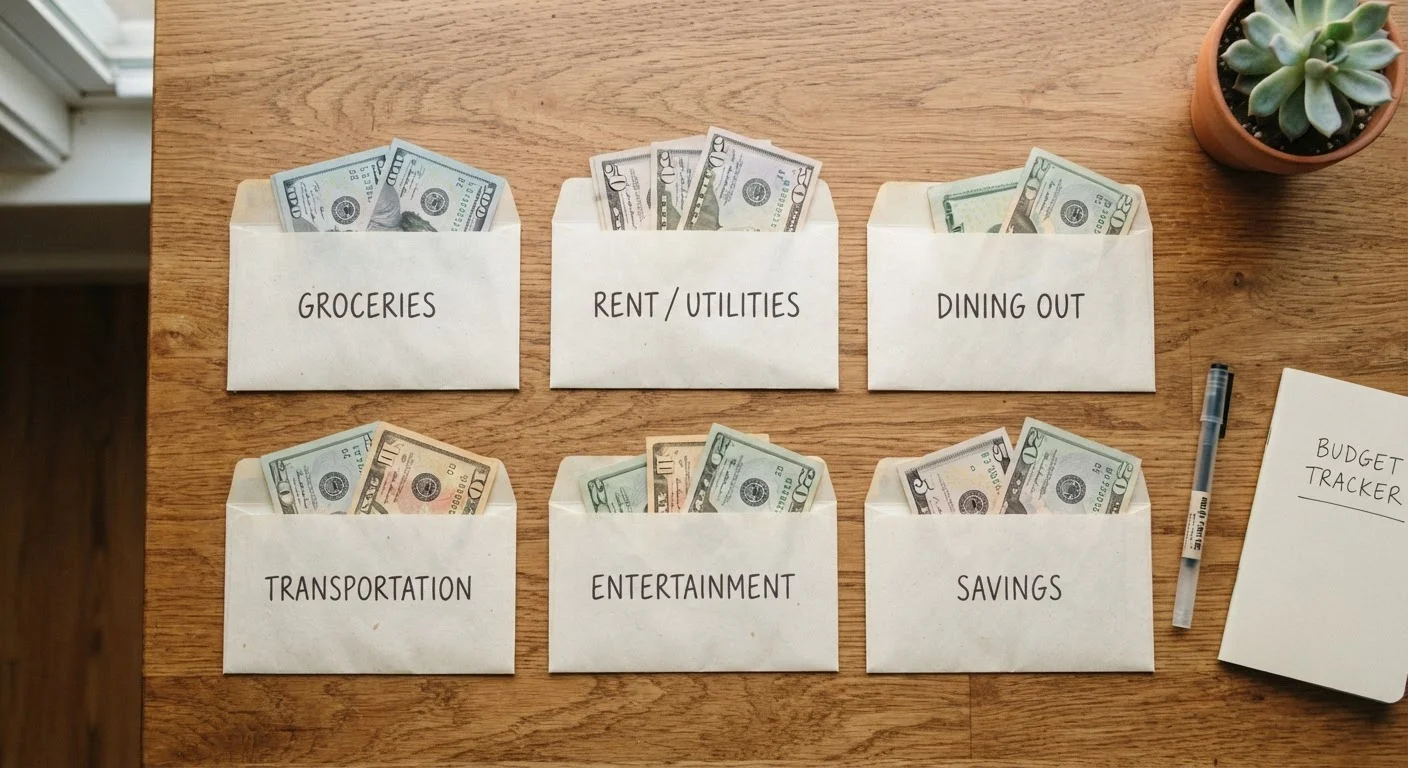
If you use the envelope method, paper budgeting pairs naturally with it, since both rely on physical, hands-on money management.
The Case for Using a Budgeting App
Budgeting apps eliminate most of the manual data entry. Many can connect to your bank and credit card accounts and categorize spending automatically. That convenience lowers the barrier to tracking - especially for people with busy schedules who won't realistically sit down with a notebook every evening.
Apps also make it easier to budget as a household. If you and a partner share finances, a shared app account keeps everyone looking at the same numbers. For more on that, see our overview of budgeting as a couple.
The trade-offs are real, though. Connecting financial accounts to any third-party app involves a degree of data sharing - read privacy policies carefully. Apps can also create a false sense of security: just because the app is tracking your spending doesn't mean you're actually reviewing it. Notifications are only useful if you act on them.
Don't Assume the App Is Doing the Work for You
A budgeting app that syncs your transactions is a tool, not a plan. Many people download an app, connect their accounts, and then never look at it again. Set a recurring weekly time - even ten minutes - to actually review your numbers. The automation is only useful if you're paying attention to what it shows you.
How to Decide What's Right for You
Ask yourself a few honest questions before committing to either approach:
- Do I actually check my phone to manage things, or does it become noise? If your to-do list app collects dust, a budgeting app might too.
- Am I comfortable connecting bank accounts to a third-party service? If not, paper or a local spreadsheet is a safer fit.
- How irregular is my income? People with variable income often benefit from apps that can recalculate projections on the fly. Our guide on budgeting with irregular income covers that in more depth.
Once you have a method, make sure your spending categories are manageable. Too many categories make any budget - paper or digital - hard to maintain. See our guide on organising spending categories for a practical framework.
You might also find that your budgeting method choice matters less than the underlying framework you use. Compare popular structures in our breakdown of zero-based vs. 50/30/20 budgeting.
This article is for general informational purposes only and does not constitute personalised financial advice. Consider speaking with a qualified financial professional about decisions specific to your situation.