Why the Nitrogen Cycle Matters Before You Add Fish
One of the most common beginner mistakes in fishkeeping is filling a new tank, letting it run for a day or two, and then adding fish - only to watch them become sick or die within weeks. The culprit is almost always new tank syndrome: a toxic spike of ammonia and nitrite in water that has not yet developed the beneficial bacteria needed to process fish waste.
Fish continuously release ammonia through their gills, urine, and decomposing waste. In an established aquarium, two colonies of bacteria handle this: the first converts ammonia into nitrite, and the second converts nitrite into nitrate. Both ammonia and nitrite are highly toxic even at low concentrations. Nitrate, the end product, is far less harmful and is managed with regular water changes.
The process of building these bacterial colonies is called cycling the tank, and it must happen before fish are introduced. Think of it as preparing the biological filter - not just the mechanical one - so the tank can sustain living animals.
Tap Water and Dechlorination
Most municipal tap water contains chlorine or chloramine, both of which kill the beneficial bacteria you're trying to grow. Always treat tap water with a dechlorinator (sodium thiosulfate-based products are common) before adding it to the tank. Chloramine requires a product specifically labeled for its removal, as standard dechlorinators may not break it down fully.
The Three Stages of the Nitrogen Cycle
Understanding what's happening at each stage helps you know what to look for when testing your water.
- Stage 1 - Ammonia rises: When an ammonia source is present (fish waste, decaying food, or added pure ammonia), ammonia levels climb. This is the fuel that kick-starts bacterial growth.
- Stage 2 - Nitrite rises, ammonia falls: As Nitrosomonas bacteria establish themselves, they begin consuming ammonia and producing nitrite. You'll see ammonia levels drop while nitrite climbs - sometimes to dangerous levels. This stage can last several weeks.
- Stage 3 - Nitrate appears, nitrite falls: A second bacterial group converts nitrite into nitrate. When both ammonia and nitrite read zero and nitrate is detectable, your cycle is complete.
4-8 weeks
Typical time to cycle a new freshwater tank
This is the widely accepted range cited by aquarium hobbyist organizations and fishkeeping resources for a fishless nitrogen cycle.
0 ppm
Target ammonia and nitrite in a cycled tank
A fully cycled aquarium should register zero ammonia and zero nitrite; any detectable level indicates the cycle is incomplete or has been disrupted.
< 40 ppm
Safe nitrate level for most freshwater fish
Most freshwater fish species tolerate nitrate well below 40 ppm; levels above this range are associated with chronic stress and health decline.
Testing the water every 2-3 days with a liquid test kit (more reliable than strip tests) lets you track each stage and catch problems early.
How to Cycle Your Tank: The Fishless Method
The fishless cycling method is strongly recommended for beginners. It avoids exposing any animals to harmful water conditions while the bacterial colonies grow.
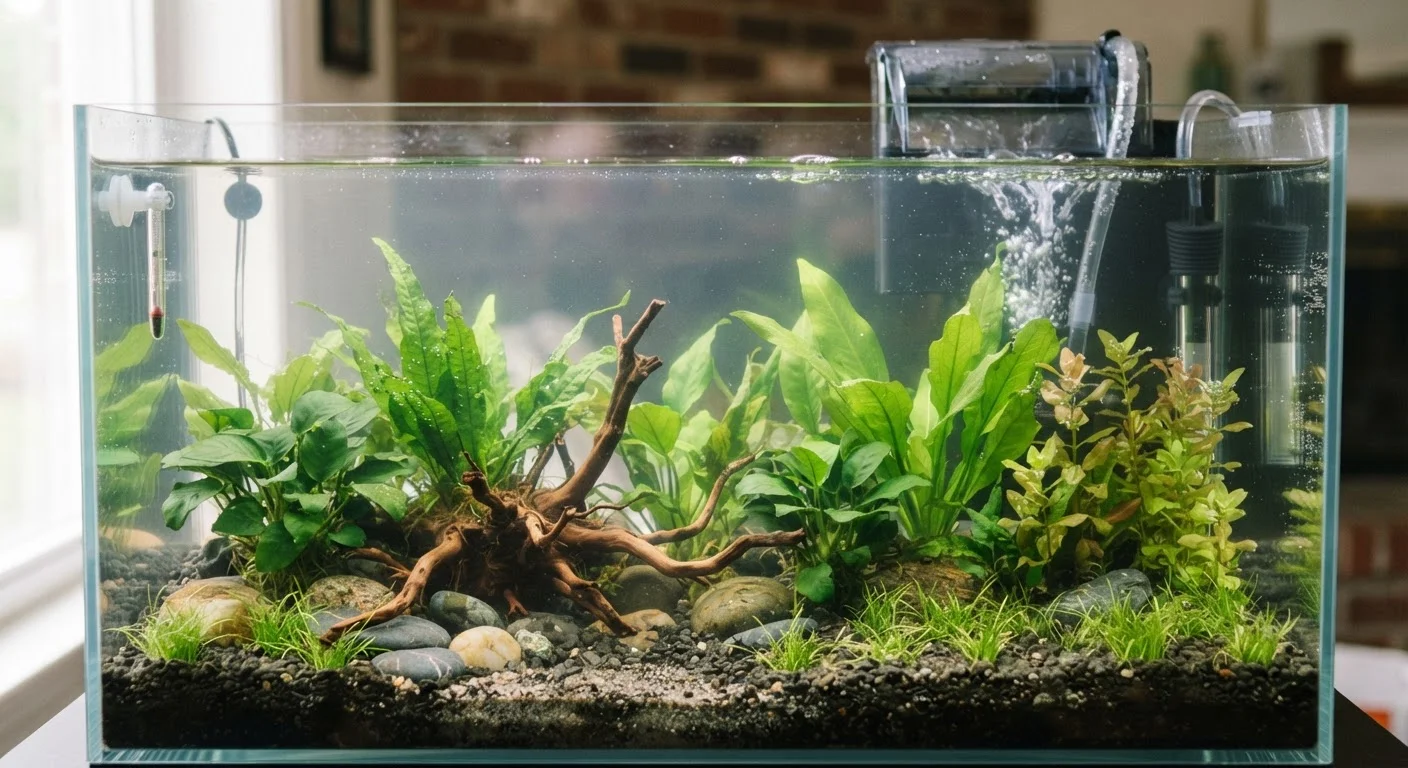
- Set up the tank fully - fill it with dechlorinated water, run the filter, heater, and any air stones, and allow the temperature to stabilize.
- Add an ammonia source - pure liquid ammonia (without surfactants) is the most controllable option. Target a reading of 2-4 ppm using a test kit to confirm the level.
- Wait and test regularly - test ammonia, nitrite, and nitrate every two to three days. Keep a simple log so you can see the progression.
- Re-dose ammonia as needed - when ammonia drops below 1 ppm, add more to keep the bacterial colonies fed throughout the cycle.
- Confirm the cycle is complete - once ammonia and nitrite both read zero after a full ammonia dose, and nitrate is present, the tank has cycled. Do a 50% water change to lower nitrate before adding fish.
Speed Up Cycling With Established Media
Borrowing a used sponge filter, a handful of substrate, or a piece of filter media from an established, disease-free tank introduces live bacterial colonies immediately. This 'seeding' method can cut weeks off your cycling time. Ask a trusted local fish store or a fellow hobbyist if they can spare some established media.
Once your tank is cycled and stocked, a consistent maintenance routine keeps the bacteria thriving. See our fish tank maintenance guide for a practical schedule on water changes, filter care, and algae control.
Common Mistakes That Stall or Reset the Cycle
Several well-intentioned actions can slow or completely restart the nitrogen cycle. Avoid these pitfalls:
- Cleaning filter media with tap water: Chlorine and chloramine in tap water kill beneficial bacteria. Always rinse filter media in a bucket of tank water removed during a water change.
- Changing all the filter media at once: Most of the beneficial bacteria live in the filter. Replacing everything simultaneously removes the colony you've been building. Stagger replacements or keep old media in the filter alongside new media for several weeks.
- Adding too many fish too quickly after cycling: The bacterial colony is sized to match the ammonia load during cycling. Adding large numbers of fish at once can overwhelm it and cause a mini-cycle.
- Using antibacterial decorations or substrates: Some products contain antimicrobial agents that harm bacterial colonies. Check product labels before adding anything to a cycling tank.
Patience is the most important skill in new tank setup. The weeks you invest in cycling pay off in a stable, healthy environment that's far easier to maintain long-term.