Understanding the 3-1-1 Rule
If you've ever had a full-size shampoo confiscated at the checkpoint, you already know the carry-on liquids rule has real teeth. The standard most travelers encounter is the 3-1-1 rule, enforced by the U.S. Transportation Security Administration (TSA) and adopted in similar form by many other countries:
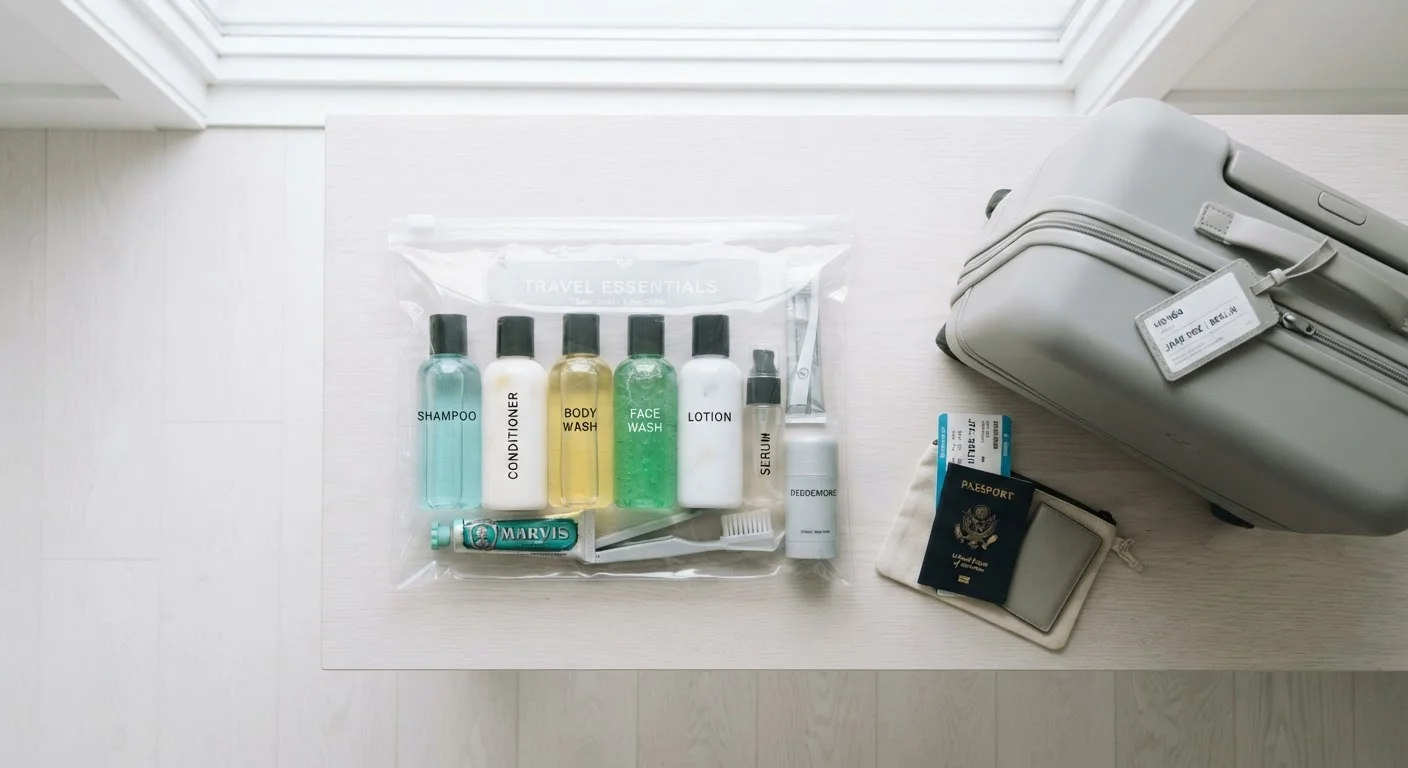
- 3.4 oz (100 ml) or less per container
- 1 quart-sized, clear, zip-top bag for all liquid containers
- 1 bag per passenger, placed in the bin separately at screening
The rule covers more than just liquids. Anything that flows, spreads, squirts, pumps, or is spongy counts: gels, creams, pastes, aerosols, and even peanut butter or jam. If you can squeeze it, assume it's a liquid in security's eyes.
The Rule Covers More Than Bottles
Aerosol deodorant, toothpaste, face moisturizer, lip gloss, mascara, and even spreadable foods all fall under the liquids rule. A common mistake is assuming only obvious liquids like water or shampoo count. When in doubt, apply the "can it spread or pour?" test and pack it in your quart bag or your checked luggage.
International airports outside the U.S. generally follow the same 100 ml/1-liter bag standard set by the International Civil Aviation Organization (ICAO), but specific enforcement can differ. Always check the security authority for your departure country before you travel.
What You'll Need
What you will need
Refillable travel containers
Transfer full-size products into compliant 3.4 oz (100 ml) or smaller portions for carry-on.
Quart-sized clear zip-top bag
Required to hold all carry-on liquids and present separately at the security checkpoint.
Leak-proof bag or pouch (for checked luggage)
Contains spills from liquid toiletries caused by pressure changes in the cargo hold.
Solid toiletry alternatives (shampoo bar, solid sunscreen, toothpaste tablets)
Replaces liquid toiletries entirely, removing them from the 3-1-1 count.
Step-by-Step: Packing Your Liquids the Right Way
Follow these steps to breeze through the security lane without losing any of your favorite products - or your patience.
Audit your full toiletry list
Write down every liquid, gel, or cream you typically pack. Then ask: do you genuinely need full-size versions, or can a travel-sized amount cover your trip? Most toiletries can be replenished at your destination if you run out.
Transfer products into containers 3.4 oz or smaller
Purchase a set of refillable travel containers and decant your full-size products. Label each container clearly - especially if the product isn't obvious by color or texture. Reusable silicone tubes work well for thick creams and conditioners.
Choose a quart-sized, clear zip-top bag
Your bag must be clear (not tinted), zip-top (not twist-tie or fold-over), and no larger than one quart (roughly 6 x 9 inches / 15 x 23 cm). Standard sandwich-style zip bags work perfectly. Reusable silicone bags of the same dimensions are also accepted.
Pack the bag so it zips flat and fully closed
Overstuffed bags that won't seal properly create problems at the checkpoint and risk leaking in transit. If everything doesn't fit flat, pull out lower-priority items and consider switching to solid alternatives or checking a bag for that trip.
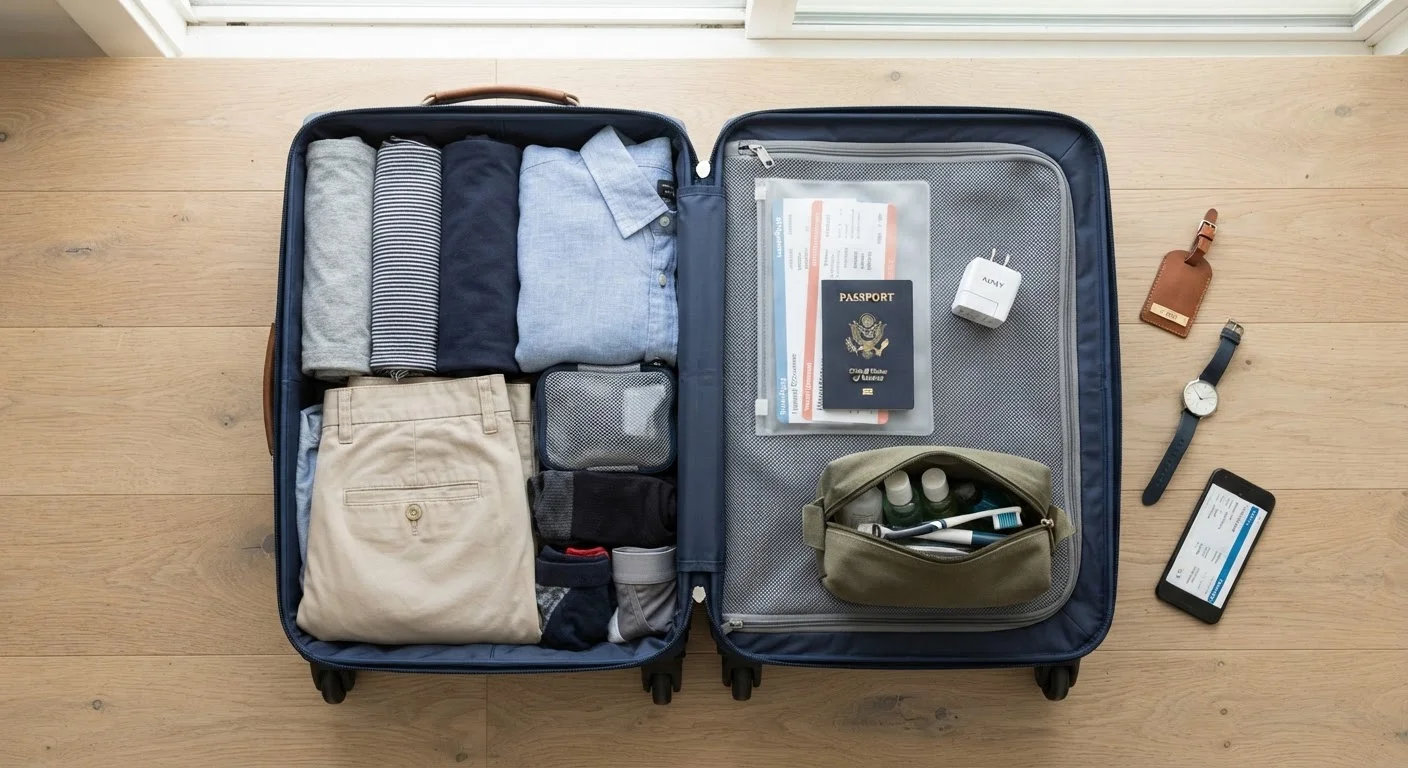
Place the liquids bag at the top of your carry-on
When you reach the security checkpoint, you'll need to remove the bag from your carry-on and place it in a bin by itself. Keeping it at the top of your bag - not buried under clothes - saves time and avoids repacking on the spot.
Declare exempt items proactively
If you're carrying prescription medications, baby formula, or other liquids that exceed the standard limit under an exemption, remove them from your bag before reaching the screening table and let the officer know. Proactive disclosure typically speeds the process up rather than slowing it down.
If you're aiming to travel carry-on only, getting your liquids dialed in is one of the biggest wins. See our carry-on only mindset guide for the broader thinking behind packing light.
Exceptions, Edge Cases, and Checked Baggage
Medications and medical liquids - prescription and over-the-counter medications in liquid form are generally allowed in quantities exceeding 3.4 oz when they are declared to the officer at the checkpoint. Keep them in original packaging where possible and be prepared to show documentation if asked.
Baby formula, breast milk, and juice for infants are also typically exempt from the standard limit. A reasonable quantity for the journey is usually permitted; inform officers when you present your bag.
Duty-free liquids purchased after the security checkpoint are allowed onboard in their sealed, tamper-evident bags, but may be confiscated at connecting flight checkpoints in certain countries. If you have a layover abroad, check that country's rules before buying.
Checked bags give you significantly more freedom - there's no 100 ml container limit. That said, individual containers over 17 oz (500 ml) of flammable items like aerosol hairspray may be restricted, and some countries cap total quantities of certain substances. Pack liquids in sealed plastic bags inside your checked luggage to contain any pressure-related leaks. For a full overview of what fits where, our luggage sizes guide covers the differences between carry-on and checked options.
Consider Going Solid for Shorter Trips
Shampoo bars, conditioner bars, solid sunscreen sticks, and toothpaste tablets have all improved dramatically in recent years. Switching even a few products to solid form frees up significant space in your quart bag - and means one less thing to pull out at the checkpoint. They're also lighter and won't leak, making them a favorite among frequent carry-on travelers.
Security rules can change. Always verify current requirements with the TSA (tsa.gov) or the relevant security authority for your departure country before you fly. This article is for general informational purposes and does not replace official guidance.