Why the Bag Size Is Almost Beside the Point
Most packing advice focuses on technique - rolling vs. folding, packing cubes, compression bags. All useful, but none of it addresses the real challenge: deciding what belongs in the bag in the first place.
The carry-on only mindset starts before you open the closet. It's the decision to treat your bag as a fixed resource rather than an expandable one. When the constraint is real, every item has to justify itself. That single shift changes everything about how you pack.
If you find yourself routinely reaching for a big checked bag just because it's available, it's worth exploring the real trade-offs between carry-on and checked luggage before your next trip. Sometimes a checked bag genuinely makes sense - but often the habit is just inertia.
Airline Rules Vary - Always Check First
Carry-on size limits and personal item policies differ by airline and even by fare class on the same airline. Some budget carriers charge extra for overhead bin access. Before assuming your bag qualifies, verify the specific rules with your carrier for every leg of your journey.
The One Question That Changes How You Pack
Before placing anything in your bag, ask yourself: "Would I genuinely miss this, or am I packing it because I might?" That gap between will use and might use is where most overpacking lives.
A backup outfit for a scenario you can't quite name, a second pair of shoes for an event you haven't planned - these are packing anxiety dressed up as preparation. Much of that anxiety is driven by myths rather than real risk. Our piece on packing myths that keep travelers overpacking breaks down exactly why "just in case" thinking backfires so consistently.
Try the 'Wear It Three Ways' Test
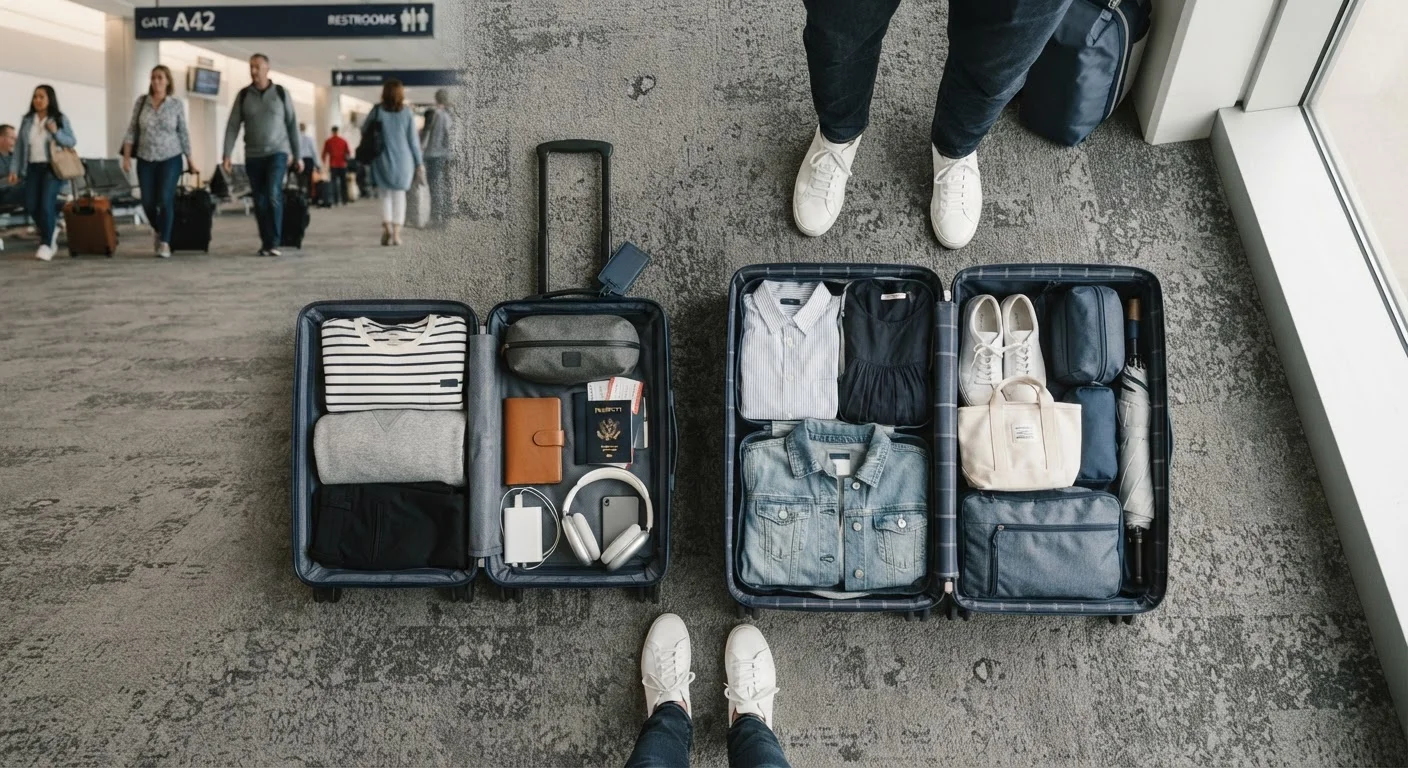
Before packing any clothing item, mentally confirm it works in at least three different combinations with other items you're bringing. If you can't picture three outfits, it probably doesn't earn its place. This single filter alone can cut most people's packing by a third.
A practical exercise: lay out everything you think you need, then remove at least three items before packing. Almost everyone who tries this admits they never missed what they pulled out.
Building a Carry-On That Actually Works
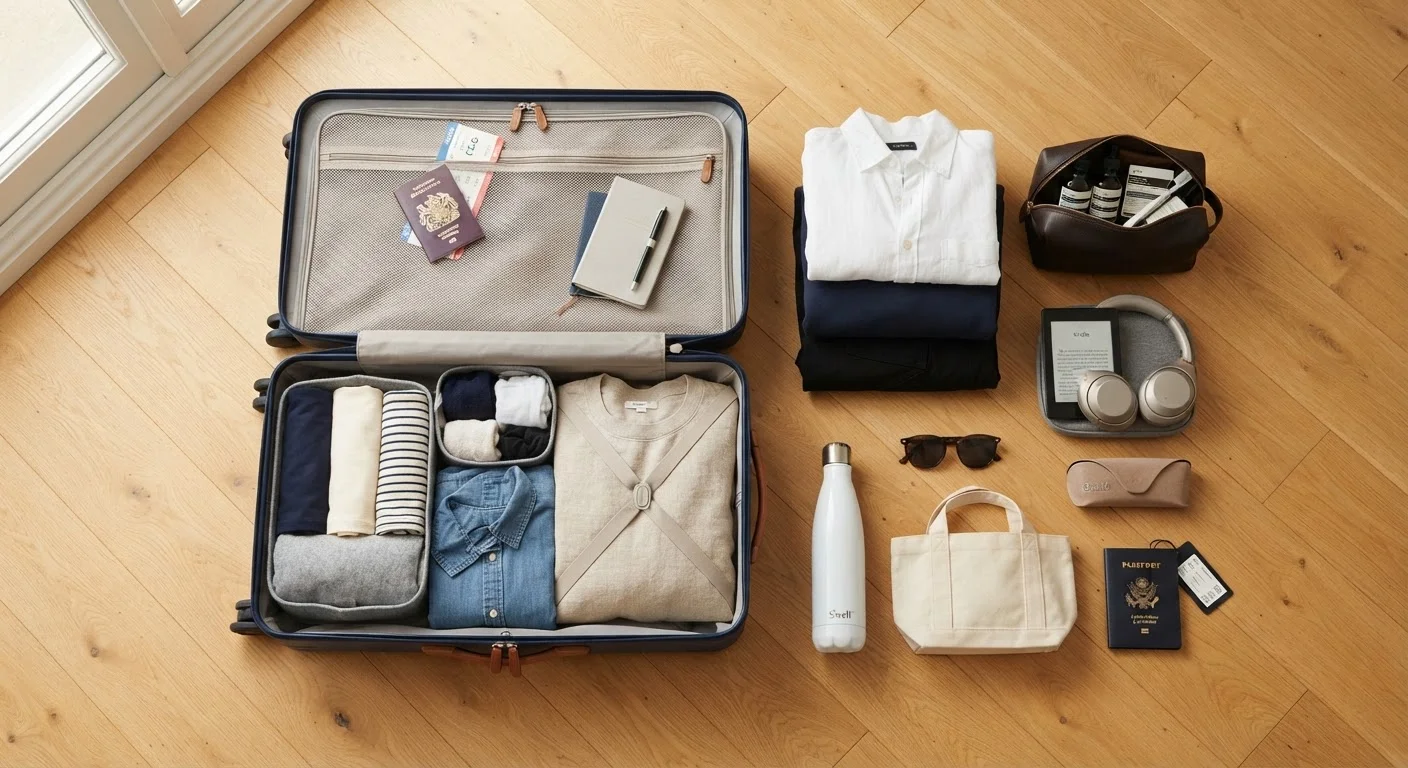
Once the mindset is in place, the practical side becomes much more manageable. A functional carry-on kit for most trips comes down to a few principles:
- Wear your bulkiest items. Boots, a jacket, and chunky layers take up enormous bag space - wear them on travel days instead.
- Choose a neutral color palette. Four or five tops that all work with the same two bottoms multiply your outfit options without multiplying your items.
- Think in outfits, not individual pieces. If a shirt only works with one pair of pants you're not bringing, leave the shirt.
- Consolidate toiletries ruthlessly. Most destinations have pharmacies. You can replace a forgotten shampoo; you cannot replace bag space lost to items you never used.
Choosing the right bag format also matters. Whether a rolling suitcase or a travel backpack suits you better depends on your destinations and habits - see our guide to choosing between a rolling suitcase and a backpack for a side-by-side look.
~$35-$50
Typical checked bag fee per flight leg
Many major US carriers charge per-leg fees for checked bags, meaning a round trip can cost $70-$100+ in baggage fees alone, according to published airline fee schedules.
30+ min
Average time saved skipping baggage claim
Travelers who bypass checked luggage commonly report saving 30 minutes or more per trip at arrival, based on widely cited traveler surveys and airport flow studies.
~2M
Bags mishandled by US airlines annually
The US Department of Transportation's Air Travel Consumer Reports have consistently recorded millions of mishandled baggage reports each year, underscoring the reliability advantage of carry-on travel.
What Carry-On Travel Actually Feels Like
Travelers who switch to carry-on only often describe the same initial reaction: mild anxiety on the way there, followed by relief on the way back. Moving through airports without checking a bag is genuinely faster - no queues at the check-in desk, no waiting at baggage claim, no risk of a delayed or lost bag arriving days after you do.
There's also a less obvious benefit: you stop worrying about your stuff. A single bag you can see and carry yourself is hard to lose. That peace of mind compounds across a long travel day, especially if your itinerary includes airport layovers where dragging extra luggage between terminals is genuinely exhausting.
The Travel Tips hub has more practical guidance on making every part of the journey smoother - from booking to landing.
“The secret of happiness, you see, is not found in seeking more, but in developing the capacity to enjoy less.”
— Socrates, Ancient Greek philosopher, as attributed in various translations