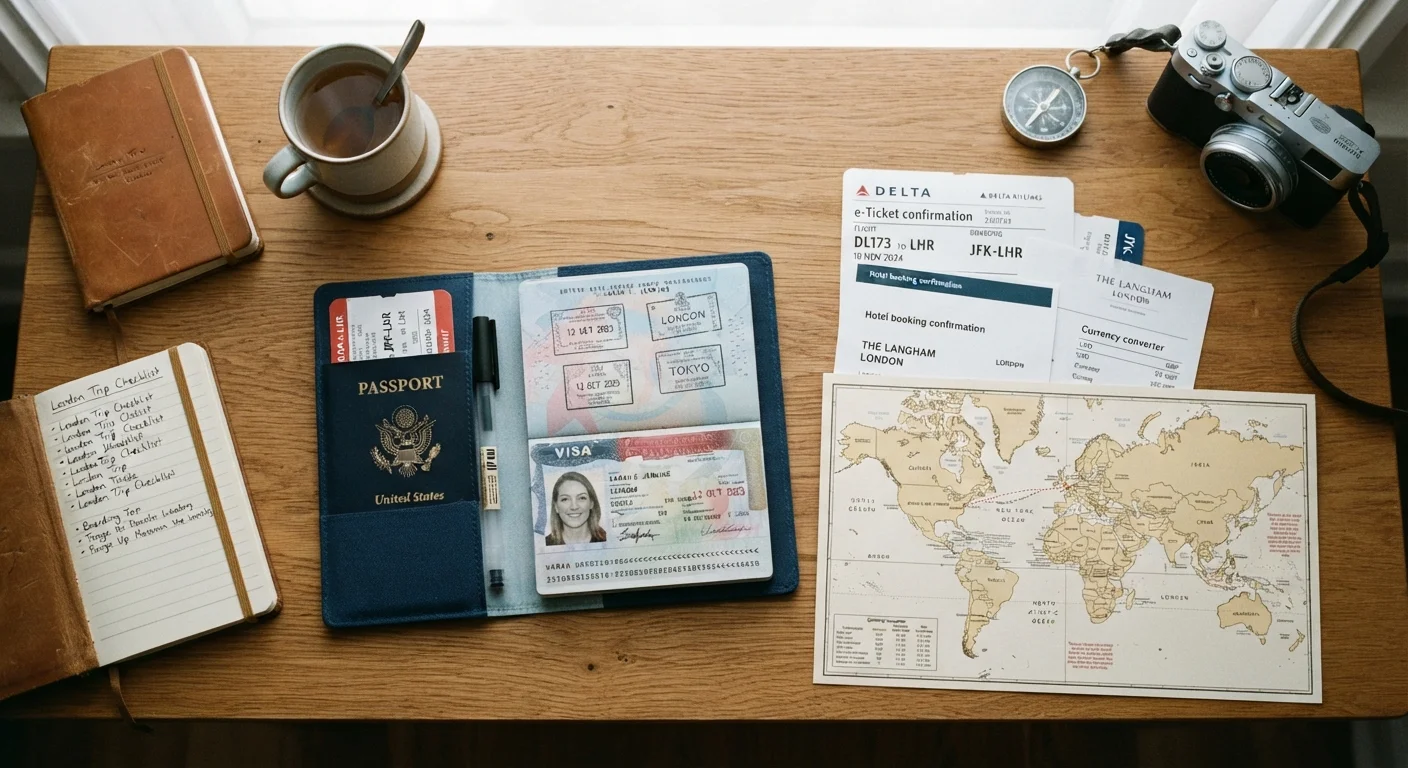

Why Entry Requirements Confuse Travelers - And How to Cut Through the Noise
Entry requirements are one of the most misunderstood parts of international trip planning. The rules aren't set by airlines or travel agencies - they're set by governments, and they apply to you specifically, based on your nationality, your passport, and sometimes even your travel history. That's why a friend who visited the same country last year might have had an entirely different experience at the border.
The confusion often comes from information overload: travel blogs, social media, and booking platforms all repeat secondhand summaries that may be months or years out of date. For something with real legal consequences - including being denied boarding or turned away after landing - you need to go straight to authoritative sources. Our guide to reading official travel guidance walks through exactly which government websites to trust and how to interpret the language they use.
The good news: once you know the framework, checking entry requirements becomes a quick and manageable part of your pre-trip routine. This article breaks that process into six clear steps.
What you will need
What You'll Need Before You Start
Before diving into research, gather a few basics so your lookups are accurate and targeted. You'll need to know your passport nationality, your exact travel dates, and every country you'll pass through - including layover countries where you don't plan to officially enter. Transit visa rules are one of the most common entry-requirement pitfalls, and they're covered in Step 3.
U.S. Department of State - Travel.state.gov
Official source for country-by-country entry requirements, visa information, and current travel advisories for U.S. passport holders.
Destination Country's Official Immigration Website
The authoritative source for the exact rules, fees, and application procedures set by the destination government.
CDC Traveler's Health Website (wwwnc.cdc.gov/travel)
Lists recommended and required vaccinations by destination for travelers departing from the United States.
IATA Travel Centre
A database used by airlines to verify passport, visa, and health document requirements - useful as a secondary cross-check.
Yellow fever vaccination card (Carte Jaune)
International certificate of vaccination required by many countries as proof of yellow fever vaccination.
Having the right tools on hand means you won't need to backtrack or second-guess your research. The sources listed above are official, frequently updated, and free to use.
Step-by-Step: How to Research and Confirm Entry Requirements
Follow these steps in order. Each builds on the last, and skipping ahead can leave gaps - particularly around transit rules and health documentation, which are easy to overlook.
Official Sources Only - Always
Entry requirements are legal conditions set by foreign governments. Relying on outdated blog posts or third-party summaries can result in being denied boarding or turned away at the border. Always verify current rules through official government sources such as the U.S. Department of State's travel website (travel.state.gov) and the destination country's official immigration authority. Conditions can change rapidly, including during public health events or political situations.
Confirm which passport you'll be traveling on
Entry requirements are tied to your nationality - specifically, the passport you present at the border. If you hold dual citizenship, research the rules for both passports. Some countries require you to enter on a specific passport; others grant very different access depending on which one you use. Confirm your passport's expiry date and available blank pages before researching further.
Look up your destination's official entry requirements
Go to travel.state.gov and search for your destination country. Read the full country information page - not just the summary. Then cross-reference by visiting the destination country's own official immigration or foreign affairs website. Look specifically for: visa requirements, passport validity rules, proof of onward travel requirements, and any entry restrictions tied to your travel purpose (tourism vs. business vs. study).
Identify whether you need a visa - and which type
A visa is official government permission to enter a country, typically stamped or affixed in your passport. Common types include:
- Visa on arrival: Granted when you land, often at a small fee. Not available to all nationalities at all destinations.
- e-Visa: Applied for online before travel, approved digitally. Keep a printed copy as backup.
- Visa-exempt entry: No visa needed, but you may still need to meet other conditions (like minimum funds or onward travel proof).
- Embassy visa: Applied for in advance at a consulate, often requiring an in-person appointment and several weeks processing time.
Apply well ahead of your travel date - some embassy visas take 4-8 weeks or longer.
Check vaccination and health entry requirements
Some countries legally require proof of specific vaccinations to enter. The most common is yellow fever, required for entry into several countries in sub-Saharan Africa and South America, especially if you're arriving from a country where yellow fever is present. Proof is provided via an official vaccination certificate - sometimes called the Carte Jaune or Yellow Card.
Visit the CDC Traveler's Health website (wwwnc.cdc.gov/travel) for a full list of required and recommended vaccines by destination. Required vaccines are legal conditions of entry; recommended vaccines are health guidance from medical professionals. Both matter, but required ones can get you turned away at the border if you can't prove compliance.
Understand border rules beyond the visa
A valid visa does not automatically guarantee entry. Border officers can ask for additional evidence that you meet all entry conditions. Common requirements include:
- Proof of onward or return travel: A booked ticket showing you plan to leave the country.
- Proof of sufficient funds: Bank statements, cash, or a credit card demonstrating you can support yourself during the stay.
- Accommodation details: Hotel booking confirmation or a letter from a host.
- Travel insurance: Required by some countries and strongly advised for all international travel.
Keep printed or easily accessible digital copies of all supporting documents.
Re-check requirements closer to your departure date
Entry rules can change between when you book and when you travel. Set a reminder to re-verify all requirements 4-6 weeks before departure and again 1-2 weeks out. Check your government's current travel advisory for the destination - advisories can affect entry conditions, particularly during health emergencies or civil unrest.
Build a Personal Entry Requirements Checklist
Once you've gathered all the requirements for your destination, write them down in one place alongside the action needed and any deadlines. A simple notes document or spreadsheet works well. Include requirements for every country you'll transit through, not just your final destination - transit visa rules catch many travelers off guard.
Common Terms Explained
Entry requirement documents use specific legal and administrative language. Here are the terms you'll encounter most often:
- Visa-free: You can enter without applying for a visa, but you still must meet other entry conditions.
- Visa on arrival (VOA): You apply and pay at the port of entry - check whether your nationality is eligible before assuming you qualify.
- Electronic Travel Authorization (ETA): A lightweight pre-approval linked electronically to your passport. Required by countries like Canada and Australia for visa-exempt travelers.
- Duration of stay: The number of days you're legally permitted to remain, not the validity window of the visa itself.
- Port of entry restrictions: Some visas are only valid for entry at specific airports or border crossings - not all entry points.
Understanding these distinctions helps you avoid misreading a permission as broader than it actually is. For a deeper dive into the full trip planning picture, see our pre-trip planning checklist which covers passports, insurance, and logistics alongside visa steps.
Passport Validity Is Not Just Expiry Date
Many countries require your passport to be valid for at least 6 months beyond your travel dates - even if your trip only lasts a week. Some countries require at least two blank pages for stamps. Check your passport's validity and condition well in advance, as renewal can take several weeks even with expedited processing.
Putting It All Together Before You Fly
Once you've worked through all six steps, you should have a clear picture of exactly what documents you need, what applications must be submitted and by when, and what to carry with you on travel day. Keep digital and printed copies of every approval - e-visas, vaccination certificates, hotel confirmations, and return flight bookings.
Entry requirements are just one layer of smart pre-trip prep. Once you've got your documents sorted, you'll want to think through airport logistics too - our guide to airport security rules for liquids and toiletries is a practical next step. And if this is your first time traveling internationally, our honest first-time international travel guide covers the things most planning resources leave out.
Travel confidently - the research you do now is what makes everything smoother when you arrive.
This article provides general travel information only. Entry requirements are set by foreign governments and can change without notice. Always verify current rules through official government sources before traveling. This is not legal or immigration advice.