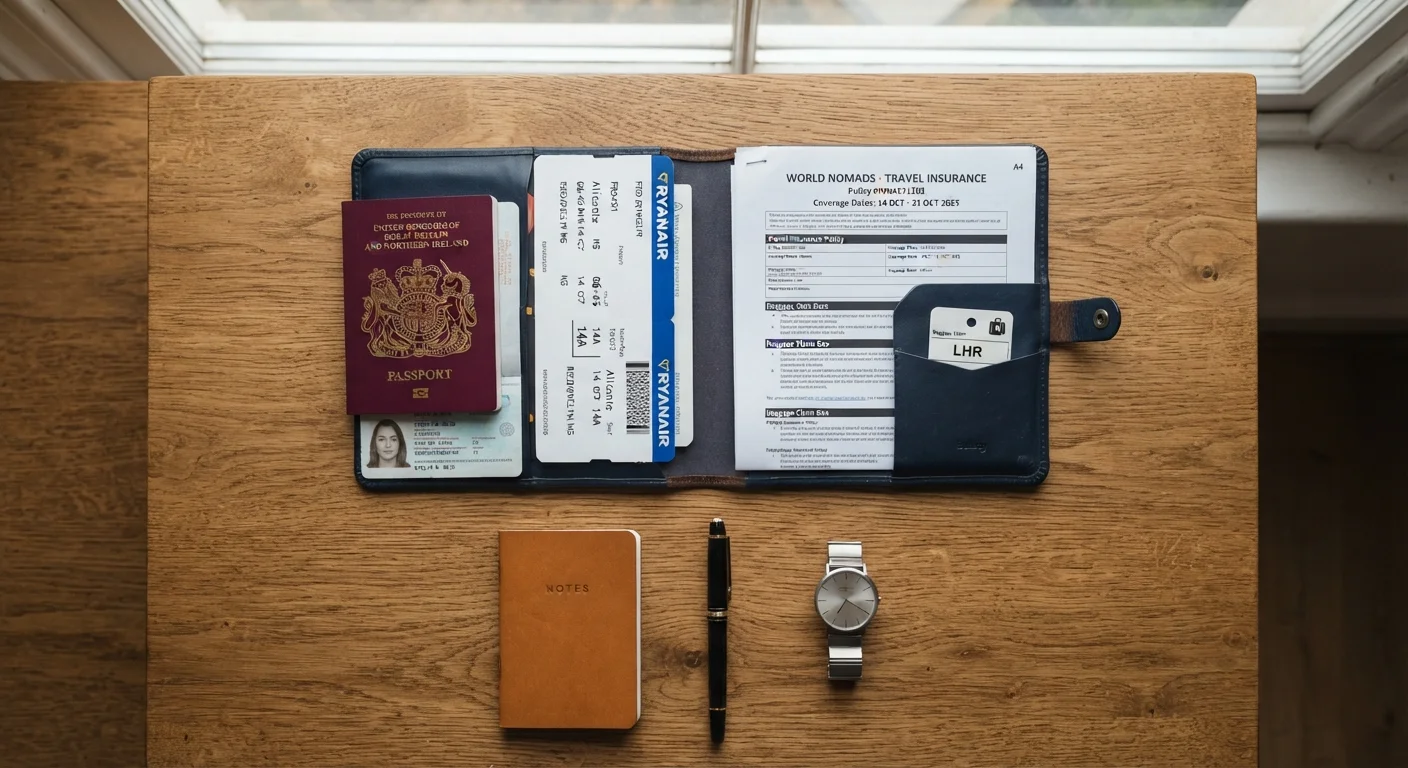
Run through this checklist the evening before your flight to avoid the most common last-minute travel scrambles.
Key Takeaways
Confirming your flight details and check-in status the night before prevents avoidable surprises at the airport.
Charging all devices and packing your chargers before bed eliminates one of the most common morning scrambles.
Having your travel documents organized and accessible - not buried - saves real time at the terminal.
Setting two alarms and pre-arranging your ride or parking removes last-minute decision stress.
Doing a final home walkthrough the night before means you leave with peace of mind, not a nagging feeling.
Why the Night Before Matters More Than the Morning
Most travel hiccups don't happen at the airport - they happen in the frantic hour before you leave the house. A forgotten charger, a misplaced passport, a dead phone, a ride that was never booked: these are the small failures that turn an exciting trip into a stressful one. The fix is straightforward: do the heavy lifting the evening before your flight, when you have time to think clearly.
This checklist covers everything worth checking, packing, and confirming the night before departure. Whether you're flying domestically for a long weekend or heading somewhere international, running through these steps will help you wake up calm, not chaotic. For broader pre-departure prep, our pre-trip planning checklist is worth bookmarking too.
Flight & Booking Confirmation
Pull up your booking confirmation and verify the departure time, terminal, and airline - especially if you received any emails since booking.Must
Complete online check-in if available, and download or screenshot your boarding pass so it's accessible without Wi-Fi.Must
Note your gate information if it's been published, keeping in mind gates can change - plan to recheck at the airport.Should
Documents & ID
Locate your passport or government-issued photo ID and place it in a dedicated, easy-to-reach pocket of your bag - not loose in a purse or backpack.Must
If traveling internationally, confirm your passport expiry date; many destinations require at least six months of remaining validity beyond your travel dates.Must
Pack any required visas, entry authorizations, or vaccination records, and verify requirements with official government sources before assuming you're covered.Must
Make a digital backup of key documents (passport photo page, insurance card, confirmation numbers) stored somewhere accessible offline.Should
Packing Final Check
Do one final pass through your packing list and zip your bag completely - an unzipped bag left for morning is an invitation to forget things.Must
Confirm that any liquids in your carry-on comply with TSA's 3-1-1 rule: containers of 3.4 oz or less, in a single quart-sized clear bag.Must
Pull out the outfit you'll wear to the airport and set it aside so you're not making decisions while half-awake.Should
Pack any prescription medications in your carry-on, not your checked luggage, so they stay with you if bags are delayed.Must
Tuck a few snacks and an empty reusable water bottle into your carry-on for the journey.Nice to have
Tech & Charging
Put every device you're bringing - phone, tablet, earbuds, camera - on the charger overnight.Must
Pack your charging cables, adapters, and portable battery into your bag tonight rather than hunting for them in the morning.Must
Download any offline content you'll want on the flight: maps, shows, playlists, or e-books.Should
Transportation & Timing
Confirm your ride to the airport - whether that's a booked car service, a friend driving, or a pre-purchased transit ticket - and have the details saved.Must
Calculate your departure time from home, factoring in check-in, security, and a buffer for unexpected delays. TSA recommends arriving at least 2 hours early for domestic and 3 hours for international flights.Must
Set two alarms for the morning, ideally on separate devices, so a dead battery doesn't derail your schedule.Must
Home Walkthrough
Put a mail hold or ask someone to collect packages while you're away - a pile-up signals an empty home.Should
Adjust your thermostat, unplug non-essential appliances, and lock all windows and doors before you go to bed.Should
Confirm pet care, plant watering, or any other ongoing home responsibilities are covered.Must
Leave a spare key with a trusted neighbor or friend if you'd like someone to check on the home during a longer trip.Nice to have
What to Have Ready Before You Close Your Eyes
After you've worked through the checklist, do a quick visual sweep of your space. Your bag should be packed and zipped, your documents should be in one designated spot - not scattered across a nightstand - and your phone should be on the charger. If you're flying internationally, double-check that your passport is accessible and that you've reviewed any entry requirements with official government sources, since rules can change.
Keep Documents Reachable, Not Buried
Your passport and boarding pass should be the easiest things to grab in your entire bag - not something you're rummaging for at the security line. Designate a single exterior pocket exclusively for documents and nothing else. This one habit alone reduces a significant amount of airport anxiety.
Good document organization is one of those habits that pays off every single trip. Our guide on organising your travel documents walks through smart storage approaches, including digital backups, that take about 15 minutes to set up. And if you want to make sure your bag itself is truly ready, the weekend trip packing checklist is a solid reference for shorter getaways, while the international travel packing checklist covers the extra layers that longer trips demand.
Don't Leave Packing Until Morning
Packing in a hurry the morning of your flight is where items get forgotten and overstuffing happens. Even if it feels unnecessary, closing and organizing your bag fully the night before means you have time to notice what's missing. Morning packing decisions are almost always ones you'll regret mid-trip.
Travel & Trips Editorial Team is the collective byline for our editorial team and contributor network. Articles published under this byline or an editorial pen name are researched, written, and reviewed according to our editorial standards for clarity, consistency, and independence before publication.
The content provided on our blog site traverses numerous categories, offering readers valuable and practical information. Readers can use the editorial team’s research and data to gain more insights into their topics of interest. However, they are requested not to treat the articles as conclusive. The website team cannot be held responsible for differences in data or inaccuracies found across other platforms. Please also note that the site might also miss out on various schemes and offers available that the readers may find more beneficial than the ones we cover.