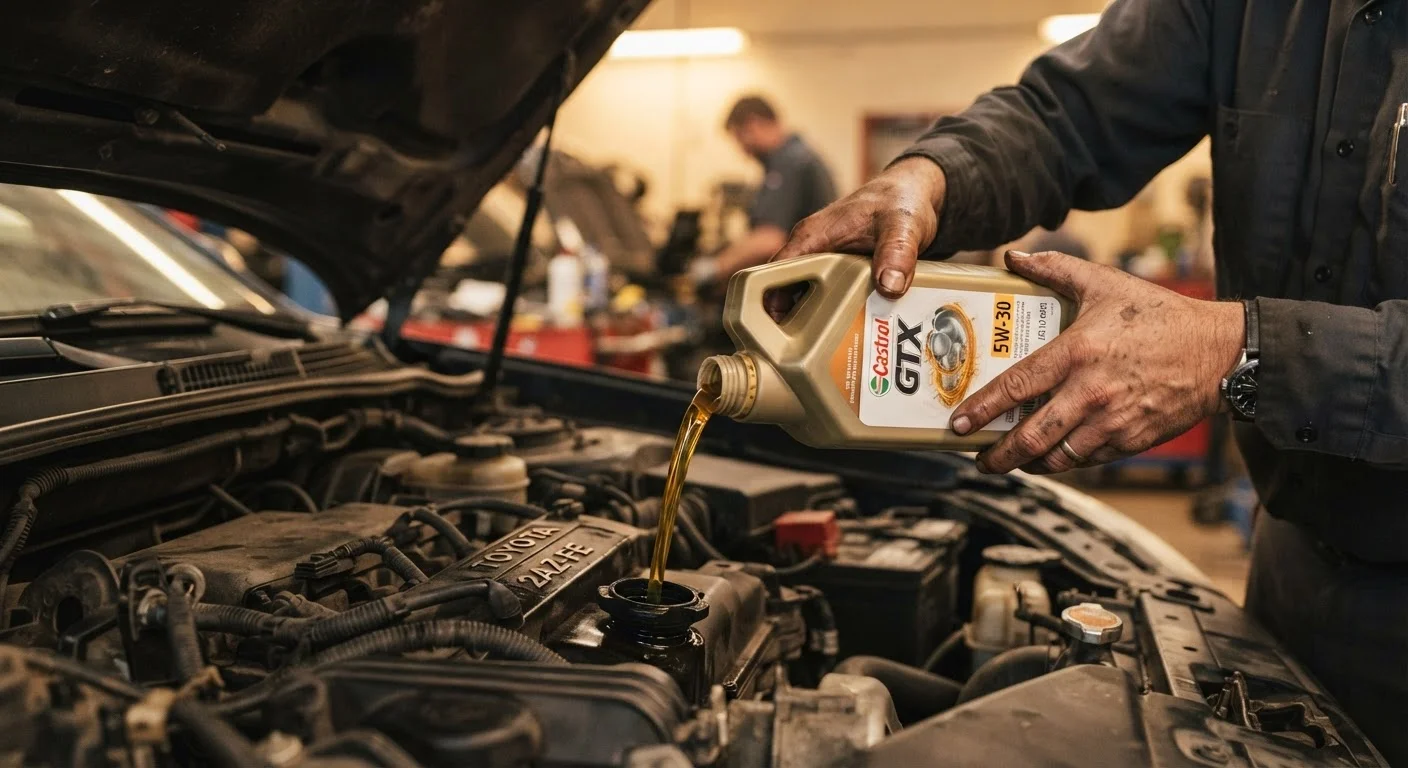
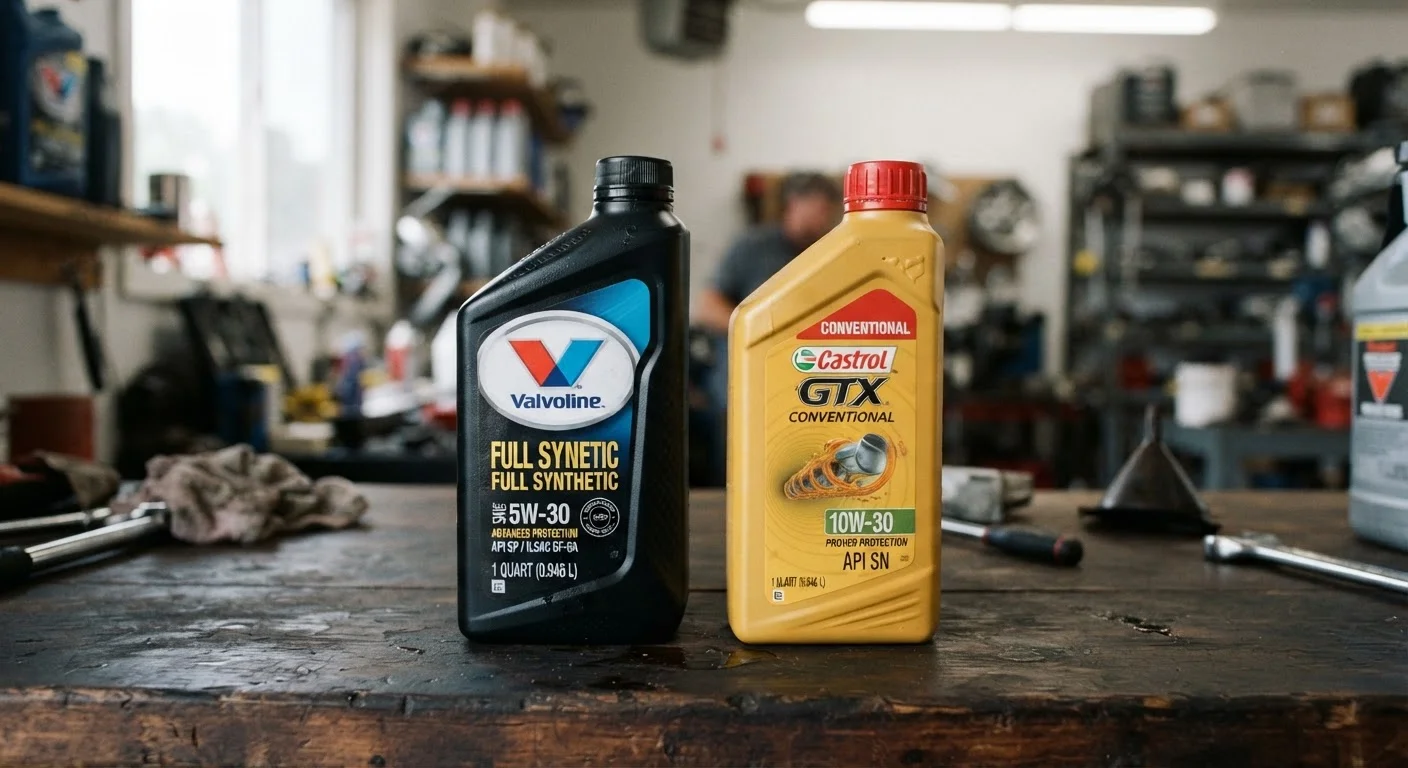
How the Two Oils Are Made
Motor oil's job is straightforward: lubricate your engine's moving parts, reduce friction, carry away heat, and prevent metal-on-metal wear. Where synthetic and conventional oil differ is in how they're produced - and that difference has real consequences for your engine.
Conventional motor oil is refined from crude petroleum. It goes through processing to remove impurities, but molecules in the final product vary in size and shape. Those inconsistencies mean it performs less predictably under extreme temperatures or sustained stress.
Synthetic motor oil is either highly refined to near-uniformity or built from chemical compounds in a lab. The molecules are engineered to be consistent in size and structure, which gives the oil more stable, predictable performance across a wider temperature range.
For a deeper dive into oil grades and what those numbers on the bottle actually mean, see our guide to engine oil grades and types.
| Criterion | Synthetic Oil | Conventional Oil |
|---|---|---|
| Origin | Engineered or highly refined | Refined from crude petroleum |
| Typical change interval | 7,500-15,000 miles | 3,000-5,000 miles |
| Cold-weather performance | Flows faster at low temps | Thickens more in cold |
| Heat resistance | Higher breakdown resistance | Breaks down faster under heat |
| Cost per quart | Higher upfront cost | Lower upfront cost |
| Best engine fit | Modern, turbocharged, or high-mileage engines | Older or simpler engines per spec |
Real-World Performance Differences
The practical gap between these two oils shows up most clearly in three situations: cold starts, high-heat driving, and long change intervals.
Cold starts are hard on engines because oil thickens in low temperatures and takes a moment to circulate fully. Synthetic oil flows more readily in the cold, which means critical engine parts get lubrication faster from the moment you turn the key.
High-heat conditions - towing, stop-and-go traffic in summer, or performance driving - break down conventional oil faster. Synthetic oil resists that breakdown longer, maintaining its protective film under stress.
Change intervals differ significantly. Conventional oil is typically changed every 3,000-5,000 miles, while many synthetics are rated for 7,500-15,000 miles, depending on the oil and your driving conditions. That said, always follow your manufacturer's recommendation - not the sticker on your windshield from a quick-lube shop. As we explain in our car maintenance myths article, the 3,000-mile rule is largely outdated for most modern vehicles.
7,500-15,000 mi
Typical synthetic oil change interval
Many synthetic oil manufacturers rate their products for extended intervals, though your owner's manual sets the authoritative schedule for your vehicle.
~2-4×
Higher cost per quart vs. conventional
Synthetic oil typically costs more per quart, but fewer changes per year can offset that difference for many drivers over time.
What Your Owner's Manual Actually Says
The single most important source of guidance on oil type isn't a mechanic, a TV commercial, or a friend's opinion - it's your vehicle's owner's manual. Manufacturers test their engines extensively and specify the oil type and viscosity grade that delivers the best protection and efficiency for that engine design.
Some vehicles require synthetic oil - many turbocharged engines, for example, run hotter and need the extra heat resistance. Others are designed for conventional oil, and switching to synthetic offers no meaningful benefit while costing more upfront.
Can You Switch Mid-Life?
Switching from conventional to synthetic is generally considered safe for most modern engines - modern synthetics are compatible with conventional oil and engine seals. However, if your car has very high mileage or has used conventional oil its entire life, talk to a qualified mechanic before switching. Some older engines have developed minor seals that benefit from conventional oil's slightly different viscosity characteristics.
If you've lost your owner's manual, most automakers provide digital versions on their websites, or you can ask a dealer's service department for the specification. New to the full picture of routine upkeep? Our complete car maintenance overview for new drivers covers oil alongside every other fluid and service your car needs.
Don't forget that engine oil is just one of several fluids keeping your car running safely. See our guide to coolant, transmission fluid, and other overlooked fluids for a fuller picture.