The Legal Framework in the UK
In the UK, the law requires that all children use an approved child car seat until they reach 135 cm in height or their 12th birthday, whichever comes first. After that point, they must use an adult seat belt. Drivers are legally responsible for ensuring that any child under 14 travelling in their vehicle is properly restrained - not the child, and not the child's parent if they are not in the vehicle.
Failure to comply can result in a fixed penalty notice and penalty points on your licence. There are very limited exceptions - for example, if a child is travelling in a licensed taxi or minicab and no seat is available - but these are narrow and should not be relied upon for everyday journeys.
The rules are set out in the Highway Code and underpinned by the Road Vehicles (Construction and Use) Regulations. For a broader look at how the Highway Code shapes everyday driving decisions, see what the Highway Code means in practice.
| Legal height/age threshold | 135 cm tall or 12th birthday (whichever comes first) (UK Road Vehicles Regulations) |
| Minimum rear-facing age (i-Size seats) | 15 months (ECE R129 (i-Size) standard) |
| Who is legally responsible | The driver of the vehicle (UK Highway Code Rule 100) |
| Current approval standards | ECE R44 (weight-based) and ECE R129 / i-Size (height-based) (UK Government vehicle regulations) |
| Penalty for non-compliance | Fixed penalty notice and licence penalty points (UK Government guidance) |
Choosing and Fitting the Right Seat
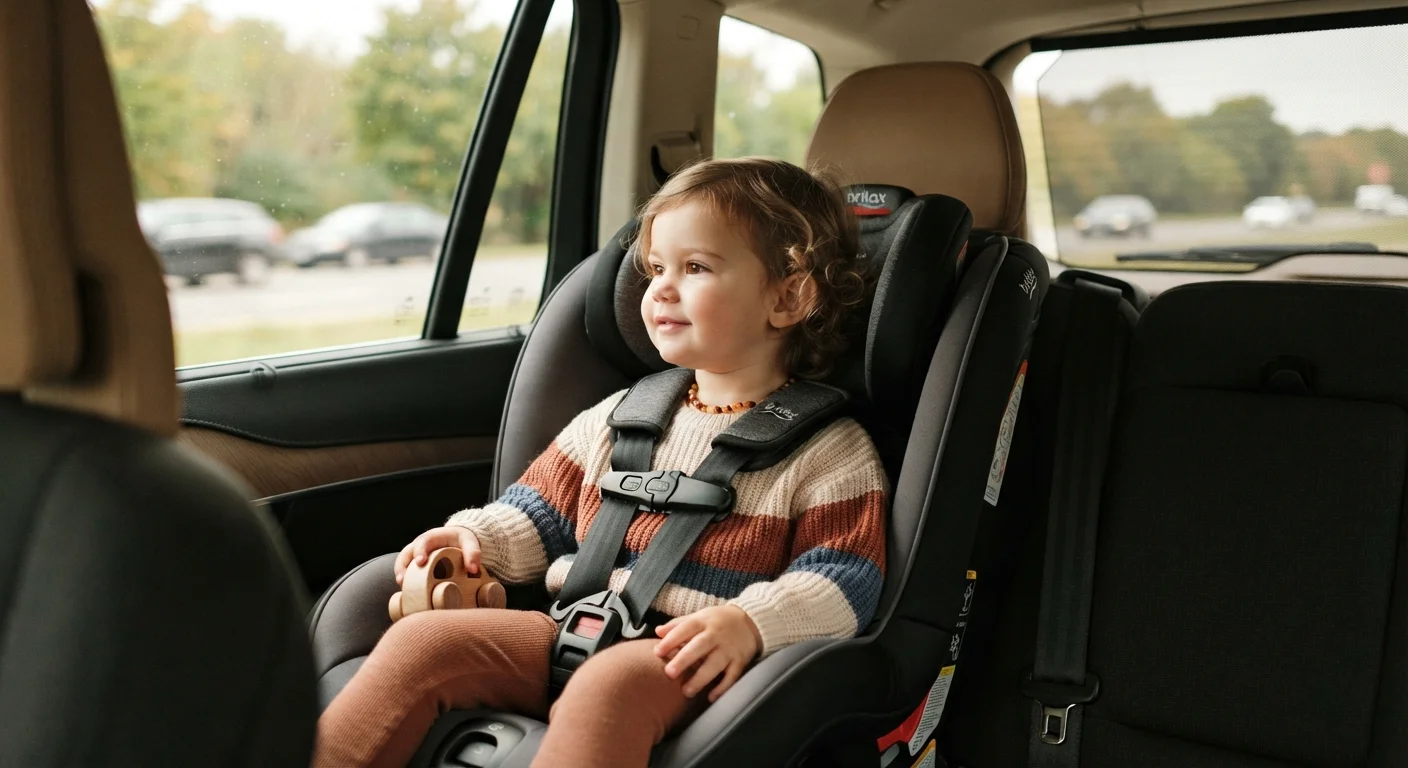
Car seats in the UK are categorised by the child's weight or height, depending on the seat's approval standard. The two main standards you will see are ECE R44 (weight-based groups 0 to 3) and the newer ECE R129, also known as i-Size, which is height-based and mandatory for new seats sold from 2023 onwards. i-Size seats also require rear-facing travel up to at least 15 months of age, which research consistently shows reduces injury risk in frontal collisions.
A correctly fitted seat is as important as the seat itself. The most common fitting mistakes include routing the seat belt through the wrong path, leaving too much slack, and positioning the harness below the child's shoulders on forward-facing seats. Many local fire stations, children's centres, and some retailers offer free seat-checking services - worth using after every new purchase or vehicle change.
If your car has ISOFIX anchor points, using a compatible seat removes several fitting variables and is generally simpler. Check your vehicle handbook to confirm anchor point locations and any weight limits.
ECE R44
An older European car seat safety standard that classifies seats by the child's weight. Seats approved under this standard are divided into groups (0, 0+, 1, 2, 3) based on weight ranges.
ECE R129 / i-Size
A newer European standard that classifies seats by the child's height rather than weight. It also mandates rear-facing travel up to at least 15 months and requires ISOFIX fitting.
ISOFIX
A standardised system of rigid anchor points built into many modern cars that allows compatible car seats to be clipped directly into the vehicle structure, reducing the risk of incorrect installation.
Rear-facing
A seating orientation where the child faces the rear of the vehicle. In a frontal collision - the most common serious crash type - this distributes impact force more evenly across the child's back, head, and neck.
Common Situations Parents Ask About
Second-hand seats: Buying or accepting a used car seat carries risk. Seats that have been in a collision - even one that caused no visible damage - may be compromised. Without knowing a seat's full history, it is difficult to verify its integrity. If you do use a second-hand seat, only do so from someone whose history you can fully confirm, and check that it has not been recalled.
Seat in another person's car: If your child is travelling with a grandparent, childminder, or friend, the driver is still legally responsible for correct restraint. It is worth keeping a portable or loan seat arrangement in place if this happens regularly.
Taxis and private hire vehicles: Children can legally travel without a car seat in a licensed taxi or minicab if no seat is available. However, children under 3 must use a rear seat, and children aged 3 and over must use the adult seat belt if no seat is provided. For routine planned journeys, bringing your own seat is the safer approach.
Coats and bulky clothing: Do not put a child into a harness while wearing a thick coat. The extra bulk compresses in a collision, leaving the harness too loose to restrain the child effectively. Dress them in thinner layers and use a blanket over the harness instead.
When to Replace a Car Seat
Car seats should be replaced after any collision, even a minor one, as internal damage may not be visible. Seats also have manufacturer expiry dates - typically 6 to 10 years from production - after which the materials may degrade. Always check the label on the underside of the seat for the manufacture date and any expiry information.