Why Hand Tools Are the Foundation of DIY
Power tools get a lot of attention, but hand tools are where every confident DIYer begins. They're quieter, safer for beginners, require no power source, and give you direct control over your work. More importantly, they handle the vast majority of everyday household tasks - hanging a picture, tightening a loose hinge, measuring before you cut, or prying up a stubborn nail.
Before picking up any tool, it's worth reviewing your workspace. Our pre-project safety checklist walks through how to prepare before you start any repair. And if you're still deciding which projects to take on yourself, this honest look at DIY trade-offs can help you decide.
| Minimum starter kit size | 8-12 tools cover most household tasks |
| Most-used beginner tool | Tape measure |
| Typical hammer weight for general use | 16 oz |
| Spirit level length for home use | 24 inches (standard) |
| Screwdriver types needed | Flathead and Phillips (multiple sizes each) |
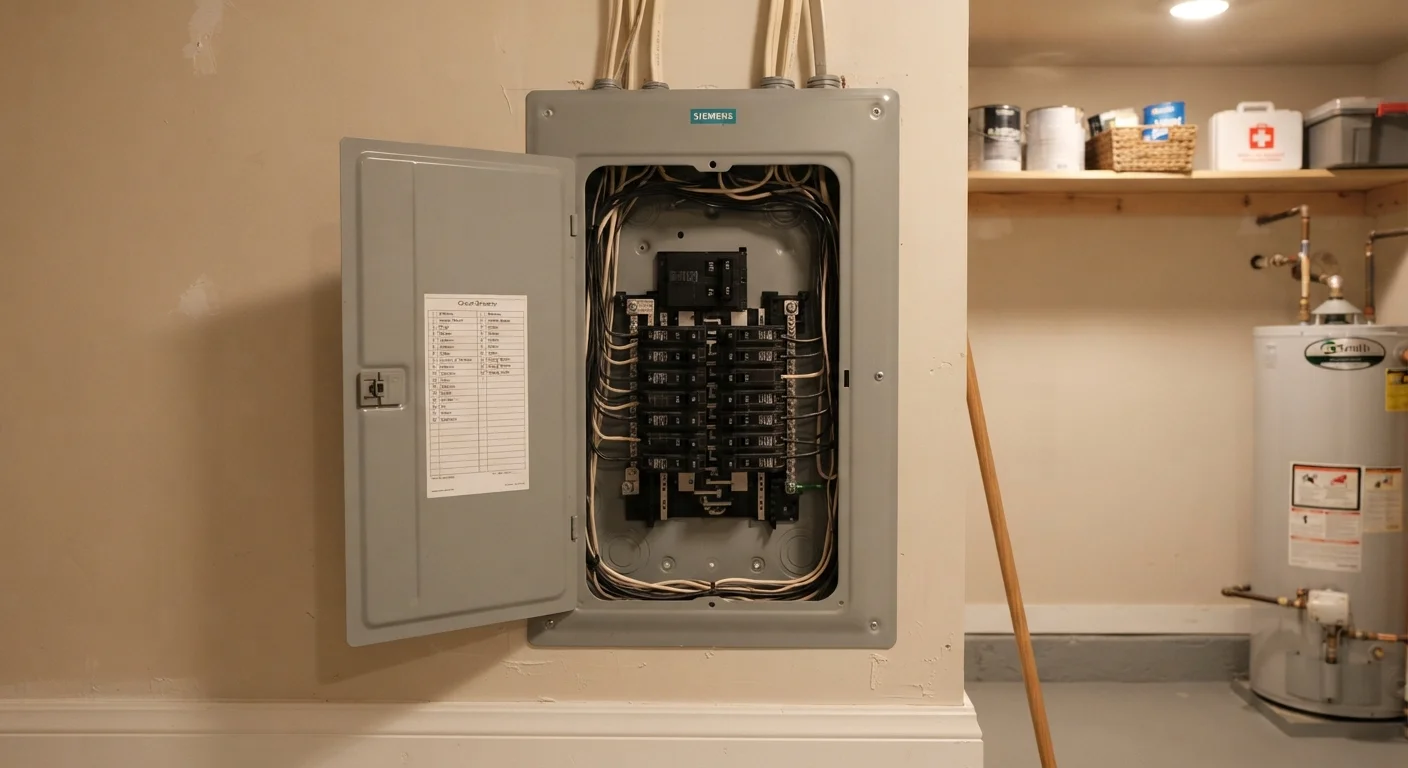
| When to call a licensed professional | Electrical, gas, structural, and plumbing-into-mains work |
The Core Hand Tools and What They Actually Do
Understanding a tool's purpose - not just its name - helps you reach for the right one instinctively. Here's a plain-language breakdown of the tools most beginners will use regularly.
Claw Hammer
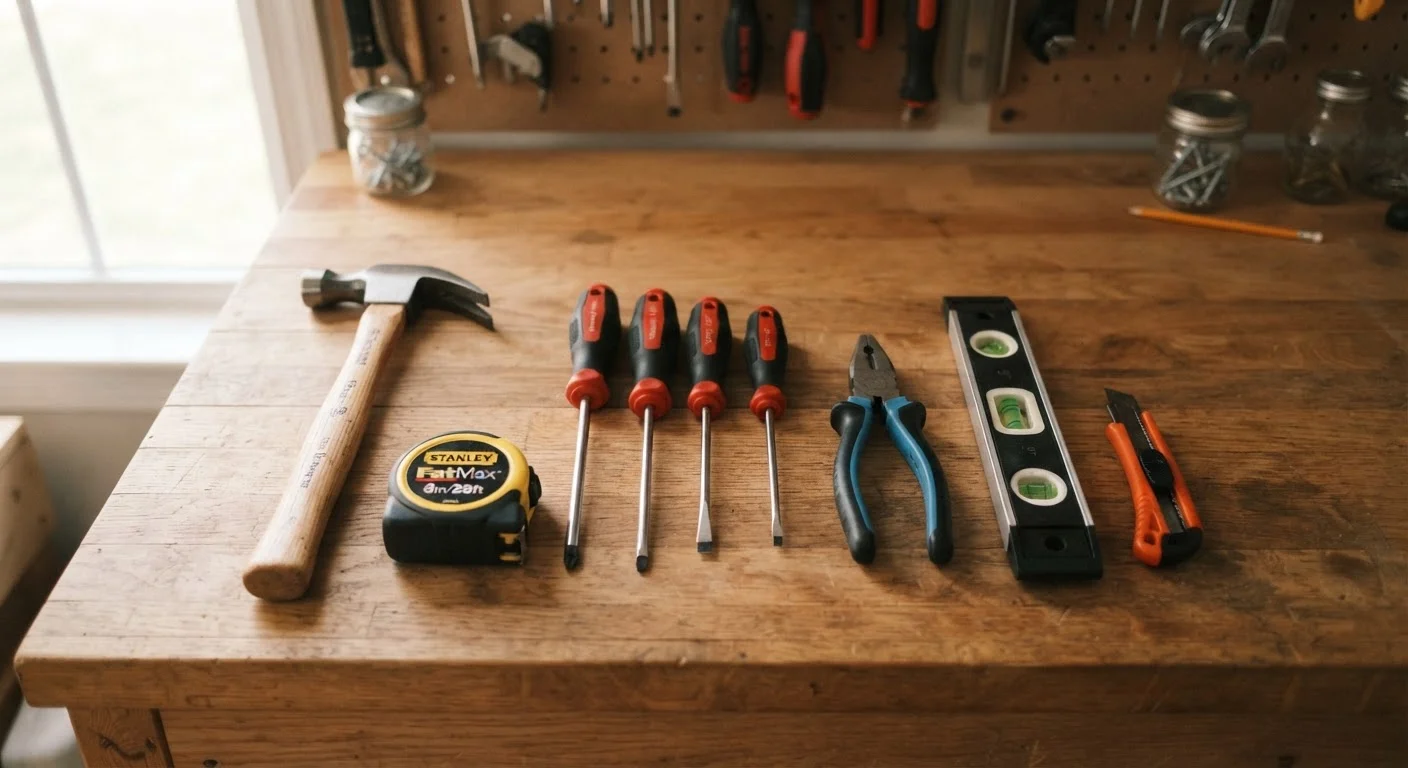
A striking tool with a flat face for driving nails and a curved split end (the claw) for removing them. Typically ranges from 16 to 20 ounces for general home use.
Spirit Level
A tool containing a sealed liquid-filled tube with an air bubble. When the bubble rests between two marked lines, the surface is perfectly level or plumb (vertical).
Utility Knife
A hand-held cutting tool with a retractable, replaceable blade. Used for scoring and cutting soft materials like drywall, vinyl flooring, rope, and cardboard.
Combination Square
A measuring and marking tool that checks 90-degree and 45-degree angles, measures depth, and marks straight lines. Useful for woodworking and shelving projects.
Slip-Joint Pliers
Adjustable pliers with a pivot point that shifts to accommodate different jaw widths. Used for gripping, bending, and turning objects of varying sizes.
Phillips Screwdriver
A screwdriver with a cross-shaped tip designed to fit Phillips-head screws, the most common screw type in modern home hardware and furniture assembly.
Measuring and Marking
A tape measure is your most-used reference tool. Use it before cutting any material, spacing shelves, or centering wall décor. A combination square checks that corners are truly 90 degrees - essential for shelving and simple carpentry.
Fastening and Driving
A claw hammer drives nails and pulls them out with the curved back end. For screws, you'll need both a flathead screwdriver (for single-slot screws) and a Phillips screwdriver (for the cross-pattern screws found in most modern hardware). A manual screwdriver set with multiple head sizes handles nearly every fastener you'll encounter in a home.
Gripping and Bending
Slip-joint pliers adjust to grip different sizes of objects - useful for tightening nuts or bending wire. Needle-nose pliers reach into tight spaces and handle small components with precision.
Cutting
A utility knife with replaceable blades cuts drywall, rope, cardboard, and flooring material cleanly. A handsaw cuts wood without electricity - ideal for small trim pieces or shelving boards.
Leveling
A spirit level (also called a bubble level) tells you whether a surface or fixture is perfectly horizontal or vertical. Even a short 24-inch level is indispensable for hanging shelves and curtain rods straight.
80%+
Common home repairs handled with hand tools alone
Industry estimates suggest the large majority of routine household fixes - tightening hardware, hanging items, minor carpentry - require only basic hand tools.
~$50-$80
Typical cost range of a basic hand tool starter set
General home improvement retailers typically offer entry-level hand tool sets in this price range, though prices vary by region and retailer.
Knowing When a Tool Isn't Enough
Hand tools are well-suited to surface-level repairs, assembly tasks, and light carpentry. But some projects go beyond what any hand tool can safely accomplish on its own. Electrical work, gas lines, structural changes, and load-bearing modifications require licensed professionals - no tool substitutes for that expertise. Our article on understanding your home's electrical system explains where the safe boundary is for homeowners.
Permits are another consideration. Certain home improvements require inspections regardless of how they're done. Review when home improvement permits are required before starting anything structural or mechanical.
Starting with hand tools builds the judgment - not just the skill - to know when to proceed and when to call a pro. That judgment is arguably the most valuable thing a beginner can develop.
Pre-Project Safety Check
Before picking up any tool, use this checklist to confirm your workspace, tools, and plan are ready - reducing the risk of accidents and rework.
DIY vs. Hiring a Pro: An Honest Guide
Not every project is right for DIY. This guide helps beginners honestly assess which home improvements to tackle themselves and which to leave to licensed tradespeople.