
How Each Method Works
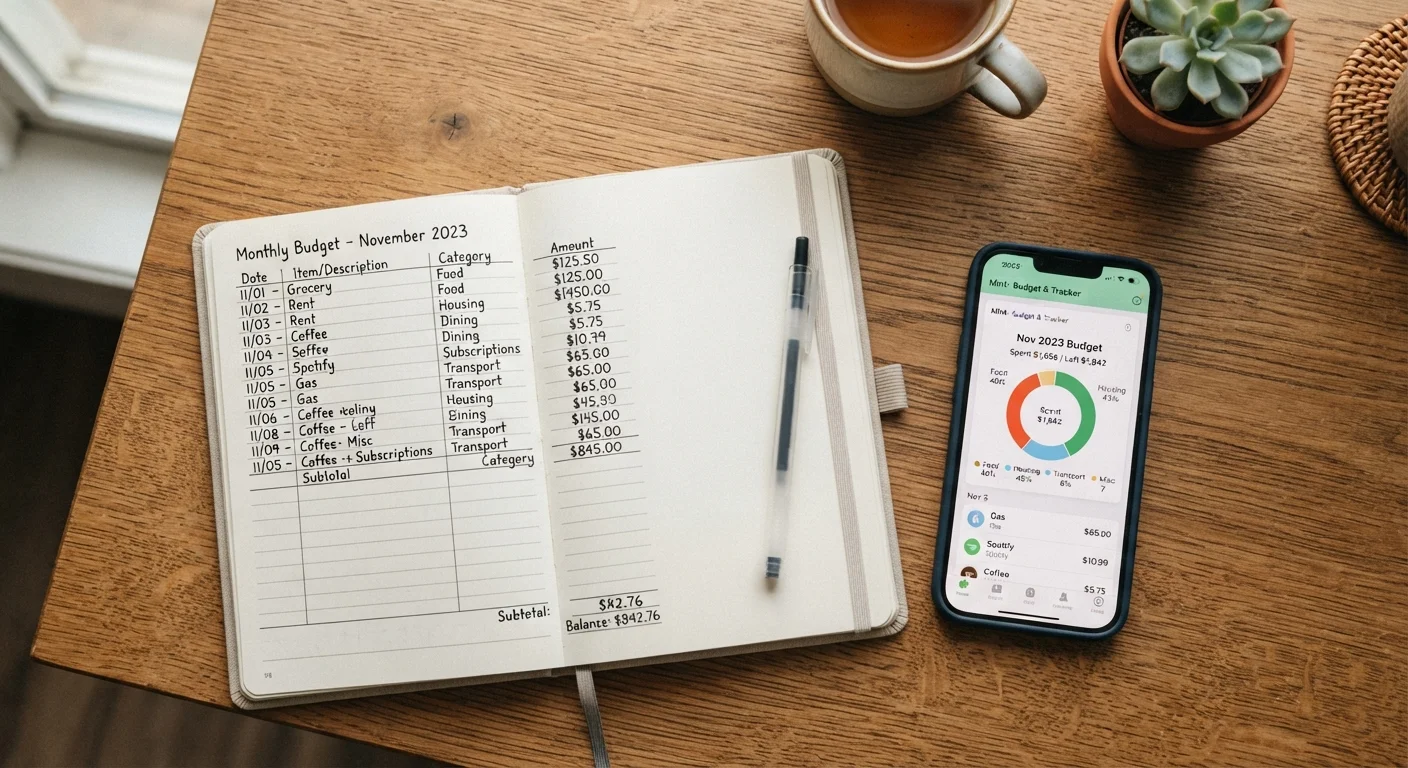
Zero-based budgeting starts with your total monthly income and works downward. You assign every dollar to a category - rent, groceries, transportation, savings, debt payments, and so on - until your income minus your planned spending equals zero. That doesn't mean spending everything; savings and debt payments count as budget categories too. The point is that no dollar sits unaccounted for.
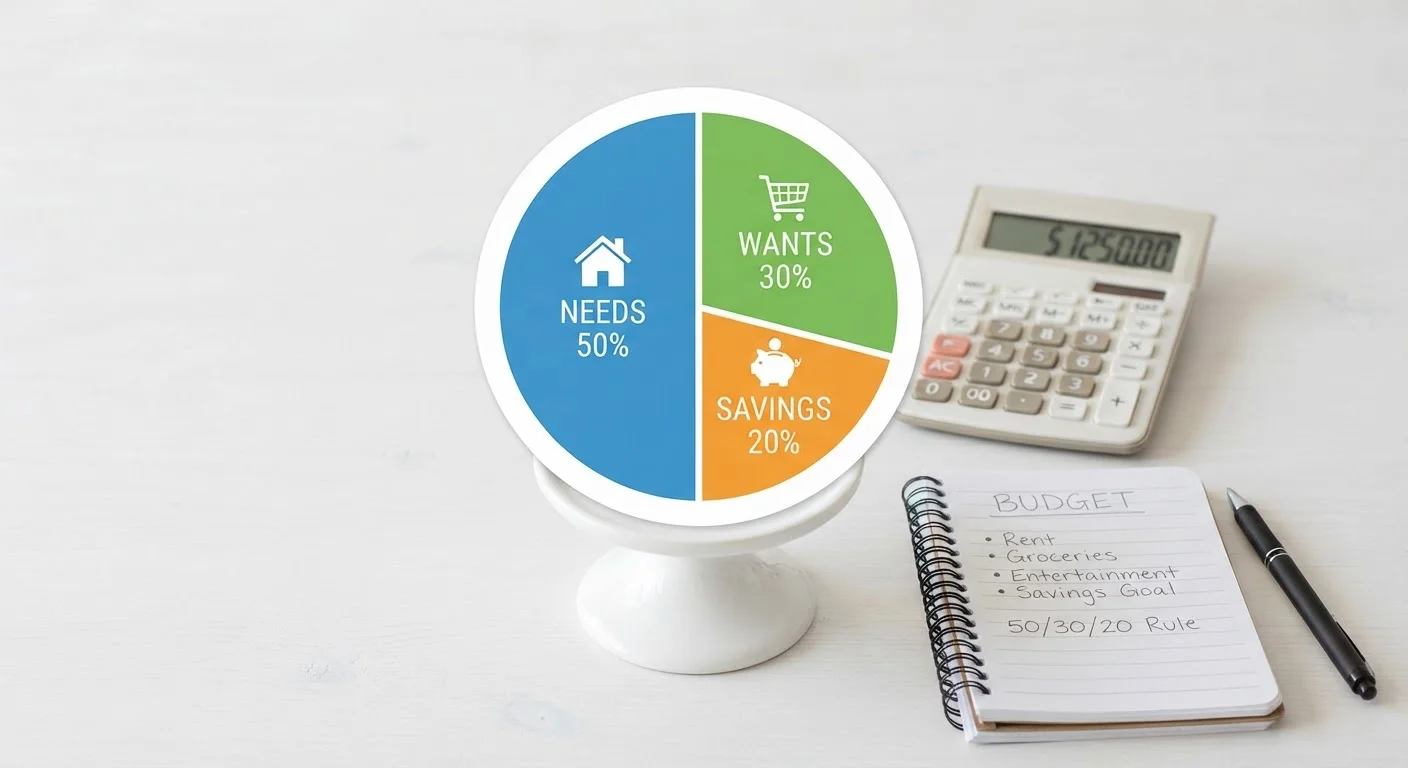
The 50/30/20 rule takes a wider-angle view. You divide your after-tax income into three groups: 50% toward needs (housing, utilities, food, transportation), 30% toward wants (dining out, entertainment, subscriptions), and 20% toward savings and debt repayment. There's no line-by-line detail - you just track which bucket each expense falls into. For a deeper look at the percentage method, see The 50/30/20 Rule Explained.
| Criterion | Zero-Based Budgeting | The 50/30/20 Rule |
|---|---|---|
| Setup time | 30-60 min per month | 5-10 min per month |
| Level of detail | Every expense categorized | Three broad buckets |
| Best income type | Variable or irregular | Steady, predictable |
| Ongoing tracking required | Yes, closely | Light, periodic check-ins |
| Good for debt paydown | Yes - allocates directly | Partially - within 20% bucket |
| Beginner-friendly | Moderate learning curve | Very accessible |
The Real Trade-Offs
Zero-based budgeting's strength is precision. When you know that $47 is going toward a streaming subscription and $120 toward car insurance, you can make sharper decisions. That visibility is especially useful if you're working toward a specific goal - paying off a credit card, building a three-month emergency fund - because you can see exactly where adjustments are possible.
The trade-off is time. Building a zero-based budget from scratch each month can take 30 minutes to an hour, and it requires you to track your spending carefully throughout the month. If life gets busy, it's easy to fall behind.
The 50/30/20 rule is faster. Once you know your monthly take-home pay, the math is three multiplications. The downside is that broad categories can hide problem areas. If your "wants" category consistently runs over 30%, the rule flags the overage - but it doesn't tell you which specific expenses pushed you there.
High Living Costs Can Strain the 50% Rule
In cities where housing alone consumes 40% or more of take-home pay, the 50% needs target may be unrealistic before you've spent a dollar on food or utilities. If that describes your situation, the 50/30/20 rule may need adjustment - or zero-based budgeting may give you more flexibility to prioritize. Neither method overrides the reality of your local cost of living.
If you're not sure how to set up your first budget at all, Building a Budget From Zero offers a plain-language walkthrough for first-timers.
Who Each Method Suits
Zero-based budgeting tends to work well for people with variable incomes - freelancers, hourly workers, or anyone whose paycheck changes month to month. Because you rebuild the budget each month based on actual expected income, the plan reflects reality rather than an average. It also suits people who feel like money disappears without explanation; the process of naming every dollar forces you to see where it goes.
The 50/30/20 rule is a natural starting point for anyone who has never budgeted before. The simplicity lowers the barrier to entry, and that matters - a simple system you actually use beats a detailed system you abandon after two weeks. It also works reasonably well for people with steady salaries and uncomplicated finances who just want a basic framework in place.
~33%
Americans with a detailed monthly budget
Gallup polling has consistently found that fewer than half of U.S. adults maintain a detailed household budget, suggesting most people operate without a formal system.
$0
Unallocated income in a zero-based budget
The defining rule of zero-based budgeting is that income minus all assigned categories equals zero - every dollar has an explicit purpose before the month starts.
Some people combine elements of both approaches: they use the 50/30/20 percentages as guardrails and apply zero-based detail only within their "needs" or "wants" category to spot specific problem areas. There's no rule that says you must pick one exclusively. The right tools for budgeting can also shape which method feels sustainable for you.
This article is for general informational and educational purposes only and does not constitute personalized financial advice. For guidance tailored to your specific situation, consider speaking with a qualified financial professional.