
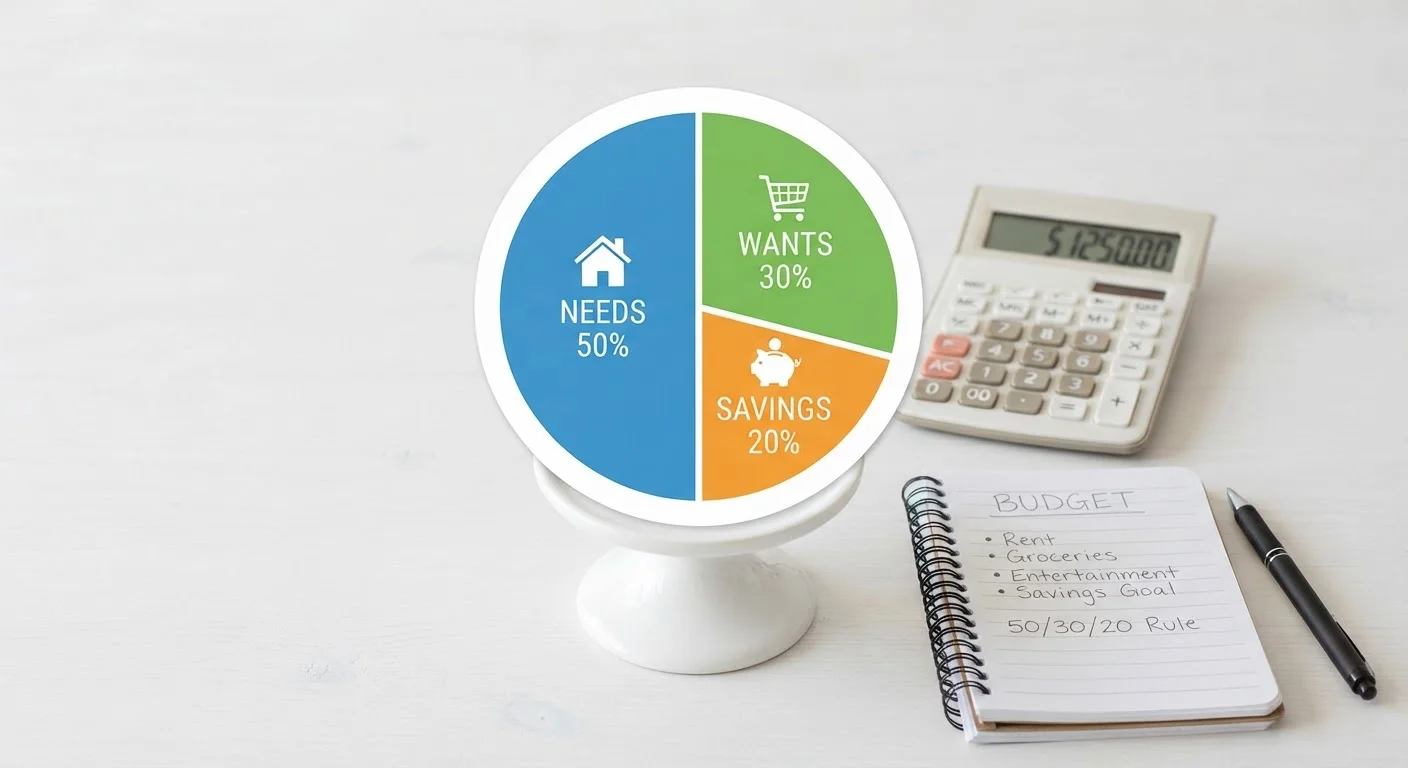
How the Three Categories Work
The 50/30/20 rule splits every dollar of your take-home pay into three buckets. Here's what goes in each one.
50% - Needs
Needs are the expenses you must pay to maintain a basic, functional life. This includes rent or mortgage payments, utilities, groceries, health insurance premiums, minimum loan or credit card payments, and transportation costs required to get to work. A useful test: if skipping it would put your housing, health, or job at serious risk, it's a need.
30% - Wants
Wants are the extras that make life more enjoyable but aren't essential to survive. Dining out, streaming subscriptions, gym memberships, travel, and shopping for non-essential clothing all fall here. The line between needs and wants can feel blurry - a car may be a need, but a premium car payment is often a want.
20% - Savings and Debt Repayment
This bucket covers building an emergency fund, contributing to a retirement account, and making extra payments above the minimum on high-interest debt. Think of this category as paying your future self. Even a small, consistent amount in this bucket compounds meaningfully over time.
Start With One Month of Real Numbers
Before setting targets, look at what you actually spent last month. Pull up your bank or credit card statement and sort each transaction into needs, wants, or savings. This one exercise reveals more than any budget template can predict - and it only takes about 20 minutes.
For a deeper look at how to organize spending within these buckets, see our guide on spending categories.
Putting It Into Practice
Start with your monthly take-home pay - the amount deposited in your bank account after taxes. Multiply that figure by 0.50, 0.30, and 0.20 to find your target dollar amounts for each category.
For example, if your take-home pay is $3,500 per month:
- Needs: $1,750 (50%)
- Wants: $1,050 (30%)
- Savings/Debt: $700 (20%)
Next, list your actual monthly expenses in each category. If your needs total $2,100 and your wants total $900, you're overspending on needs and underspending on wants - which tells you something useful: your fixed costs may need renegotiating, or your category boundaries need adjusting.
57%
Americans living paycheck to paycheck
According to a 2023 LendingClub report, more than half of U.S. consumers reported spending essentially all of their monthly income, underscoring the need for structured budgeting frameworks.
20%
Recommended savings rate under this rule
The 20% savings target aligns closely with general guidance from many nonprofit financial counselors for building both an emergency fund and long-term retirement savings.
Tracking for just one month is enough to spot patterns. You don't need a spreadsheet - a notes app or even pen and paper works fine when you're starting out. For a structured month-by-month review, the monthly savings health check is a helpful next step.
Where the Rule Works Well - and Where It Doesn't
The 50/30/20 rule is a genuinely useful starting point because it removes the need to categorize every purchase. It's forgiving, flexible, and hard to mess up. For someone who has never budgeted before, it provides structure without overwhelming detail.
That said, it has real limitations worth understanding before you commit to it.
Where it can fall short
- High-cost areas: In cities where rent alone exceeds 40% of take-home pay, squeezing needs into 50% may be impossible without significant lifestyle trade-offs.
- Variable income: Freelancers or gig workers with inconsistent monthly income may find fixed percentages hard to apply month to month.
- Aggressive debt payoff: If you're carrying high-interest debt, directing only 20% toward repayment may slow your progress more than a stricter method would.
- Beginners who need detail: Broad categories can mask problem areas. If you're unsure exactly where money is going, a more granular approach like zero-based budgeting might reveal more.
The Percentages Are Flexible
The 50/30/20 split is a starting guideline, not a financial law. If your needs genuinely exceed 50% due to housing costs or medical expenses, adjust the other categories proportionally rather than giving up on the framework. What matters is that all three categories get funded in some proportion.
The 50/30/20 percentages are guidelines, not requirements. Many personal finance educators suggest treating them as targets to aim toward rather than strict rules to follow every month. Adjusting to a 60/20/20 or 50/20/30 split based on your situation is entirely reasonable.
This article is for general informational and educational purposes only. It is not personalized financial advice. For guidance specific to your financial situation, consider speaking with a qualified financial professional.