What Makes Debt 'Secured' or 'Unsecured'?
When you borrow money, the lender is taking a risk that you might not pay it back. The way they manage that risk determines whether your debt is secured or unsecured.
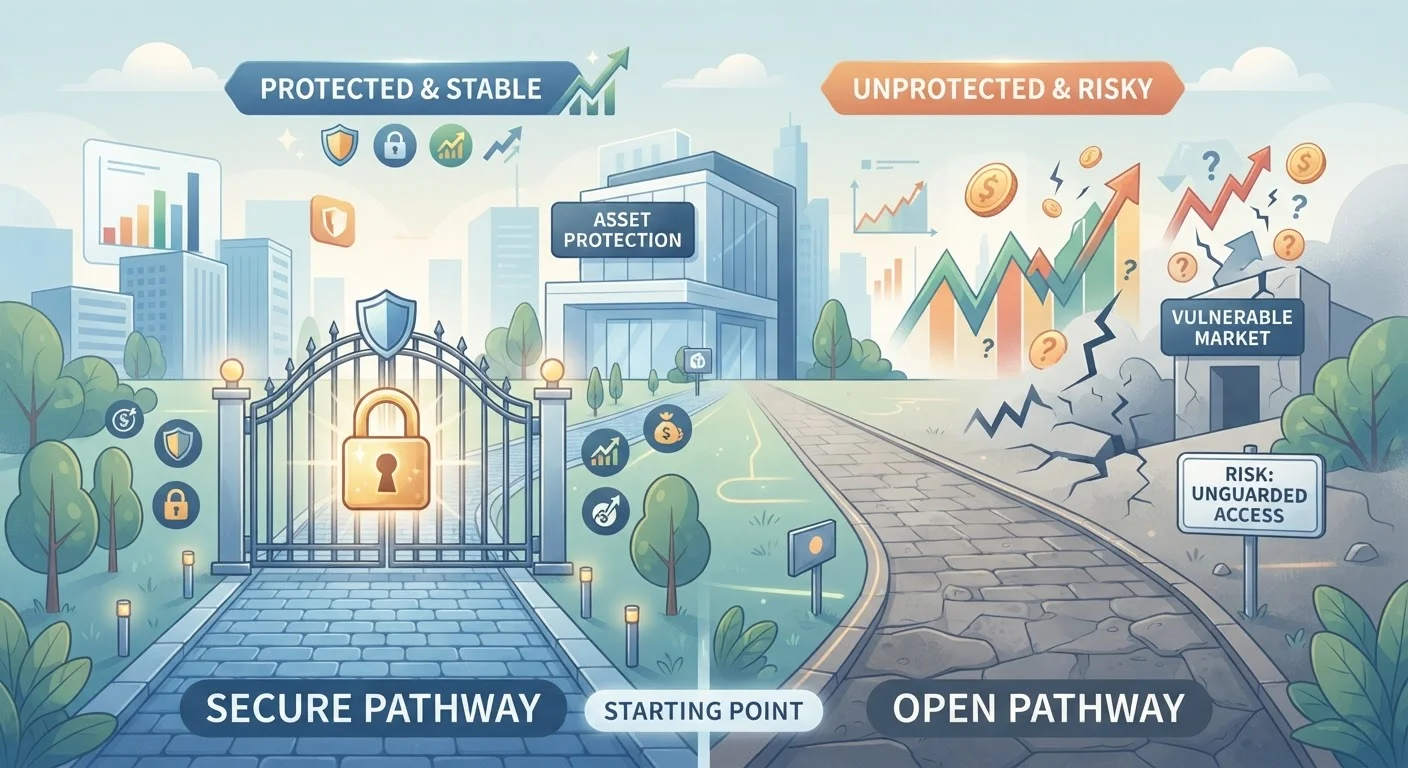
Secured debt means you've pledged a specific asset - called collateral - as a guarantee. If you stop making payments, the lender has the legal right to take that asset. A mortgage is the most familiar example: your home is the collateral. If you default, the lender can foreclose and sell the home to recover their money. Auto loans work the same way - your car is the collateral.
Unsecured debt carries no such pledge. The lender is extending credit based solely on your creditworthiness - your credit score, income, and repayment history. Credit cards, personal loans, and medical bills are common examples. If you stop paying, the lender can't immediately seize property, but they do have options: reporting the delinquency to credit bureaus, sending your account to collections, or pursuing a lawsuit to garnish wages.
For a broader grounding in how debt works, see our introduction to debt and credit.
| Criterion | Secured Debt | Unsecured Debt |
|---|---|---|
| Collateral required | Yes - a specific asset | No - credit-based only |
| Common examples | Mortgage, auto loan | Credit cards, personal loans |
| Typical interest rates | Generally lower | Generally higher |
| Risk if you default | Asset repossession or foreclosure | Credit damage, collections, possible lawsuit |
| Approval criteria | Asset value + creditworthiness | Credit score + income |
| Loan amounts | Often larger | Often smaller to mid-range |
How Each Type Affects Interest Rates and Approval
Because secured lenders have collateral to fall back on, they take on less risk - and that lower risk is usually reflected in lower interest rates. A mortgage rate is typically far lower than the rate on a personal loan or credit card, partly because of this security arrangement.
Unsecured lenders, on the other hand, price their risk into the interest rate. With nothing to repossess, they charge more in case borrowers default. That's why credit card APRs (Annual Percentage Rates - the yearly cost of carrying a balance) are often significantly higher than secured loan rates.
Approval standards also differ. Lenders offering secured loans may be more willing to approve applicants with modest credit scores, because the collateral reduces their exposure. Unsecured lenders lean more heavily on your credit score and debt-to-income ratio (how much of your monthly income goes toward existing debt payments).
~$11,000
Average US credit card balance per household
According to Federal Reserve data, Americans carry significant unsecured revolving debt, highlighting the widespread reliance on credit cards.
3-5x
Rate difference: credit cards vs. mortgages
Credit card APRs have historically been several times higher than 30-year fixed mortgage rates, illustrating the cost gap between unsecured and secured borrowing.
What Happens When You Can't Pay
The consequences of falling behind depend heavily on which type of debt you hold.
With secured debt, the stakes are direct and tangible. Miss enough mortgage payments and you face foreclosure - losing your home. Fall behind on a car loan and the vehicle may be repossessed, sometimes with little warning. These outcomes can happen in addition to credit score damage, not instead of it.
With unsecured debt, the lender can't immediately take property, but the fallout is still serious. Your credit score takes a significant hit. The debt may be sold to a collection agency, which can pursue you aggressively. In some cases, a creditor can sue you in court and, if they win a judgment, request wage garnishment - where a portion of your paycheck is withheld to satisfy the debt.
Neither path is consequence-free. Before taking on any new obligation, it's worth reviewing our pre-borrowing checklist to make sure you're prepared.
Secured Credit Cards: A Special Case
A secured credit card is a type of unsecured credit card that requires a cash deposit upfront - that deposit typically becomes your credit limit. Despite the deposit, the card itself functions as unsecured revolving credit. It's a common tool for people building or rebuilding credit, and the deposit is usually refundable when the account is closed in good standing or upgraded. Don't confuse the deposit requirement with collateral in the traditional sense - the lender isn't holding a vehicle or property title.
Paying Down Secured and Unsecured Debt Strategically
Once you understand what type of debt you're carrying, you can make smarter decisions about how to pay it off. Many people hold a mix - a mortgage (secured) alongside credit card balances (unsecured), for example.
Generally, high-interest unsecured debt - like credit cards - costs you the most money over time and is worth prioritizing in most repayment plans. Secured debts with lower rates may make sense to pay off steadily over their scheduled term rather than aggressively early.
If you're weighing repayment strategies, our comparison of the debt snowball and debt avalanche methods can help you decide which approach fits your situation. For a complete picture of how debt and credit interact over your financial life, the end-to-end debt and credit overview is a useful next step.
This article is for general informational and educational purposes only, and does not constitute personalised financial or legal advice. Consider consulting a licensed financial professional for guidance specific to your circumstances.