
Why a Monthly Check-In Matters
Most people only look closely at their finances when something goes wrong - an overdraft, a surprising credit card bill, or a savings goal that never quite arrives. A monthly savings health check flips that script. It takes 30 to 60 minutes and gives you a structured moment to see where your money actually went, whether your savings are on track, and what quiet drains you may have missed.
Think of it like checking your tire pressure before a long drive rather than after you hear a thud. Small problems are cheap to fix early. This checklist walks you through the full audit in a logical order: income in, spending out, savings progress, and recurring charges. Work through it at the end of each month - or the first weekend of a new one - and it quickly becomes a habit that pays for itself.
If you want a companion resource for resetting your plan each month, the Monthly Budget Reset Checklist pairs well with this audit.
Income Review
Spending Audit
Savings Progress Check
Subscriptions and Recurring Charges
Automation and Account Health
What You'll Need Before You Start
Gather these tools before you sit down so the review stays focused rather than fragmented.
Bank and credit card statements
Provides the full transaction record needed to categorise spending and spot unfamiliar charges.
Budgeting spreadsheet or notebook
Gives you a place to record category totals, compare month-over-month, and track savings progress.
List of all active subscriptions
Makes it faster to cross-reference your statement and confirm which recurring charges are intentional.
Your savings goal targets
Lets you measure actual progress against the specific amounts and timelines you've already set.
Budgeting app (any general-purpose option)
Can automatically import and categorise transactions, reducing the manual effort of the spending audit step.
You don't need a fancy spreadsheet to get value from this process. Even a simple notebook and your bank's mobile app is enough to run through the full checklist. The goal is honest information, not polished presentation.
Don't Skip Statements You Rarely Use
It's easy to only check the accounts you use daily and overlook a store card, a PayPal balance, or a rarely-touched savings account. Charges and fees can accumulate on accounts you've mentally filed away. Pull statements from every active account, even ones you consider dormant.
Annual Subscriptions Are Easy to Miss
Many services charge annually rather than monthly, making them invisible in most monthly reviews. Set a calendar reminder when you sign up for any annual plan so the renewal doesn't catch you off guard.
Common Trouble Spots to Watch
Two categories trip people up most consistently: subscription creep and savings automation gaps.
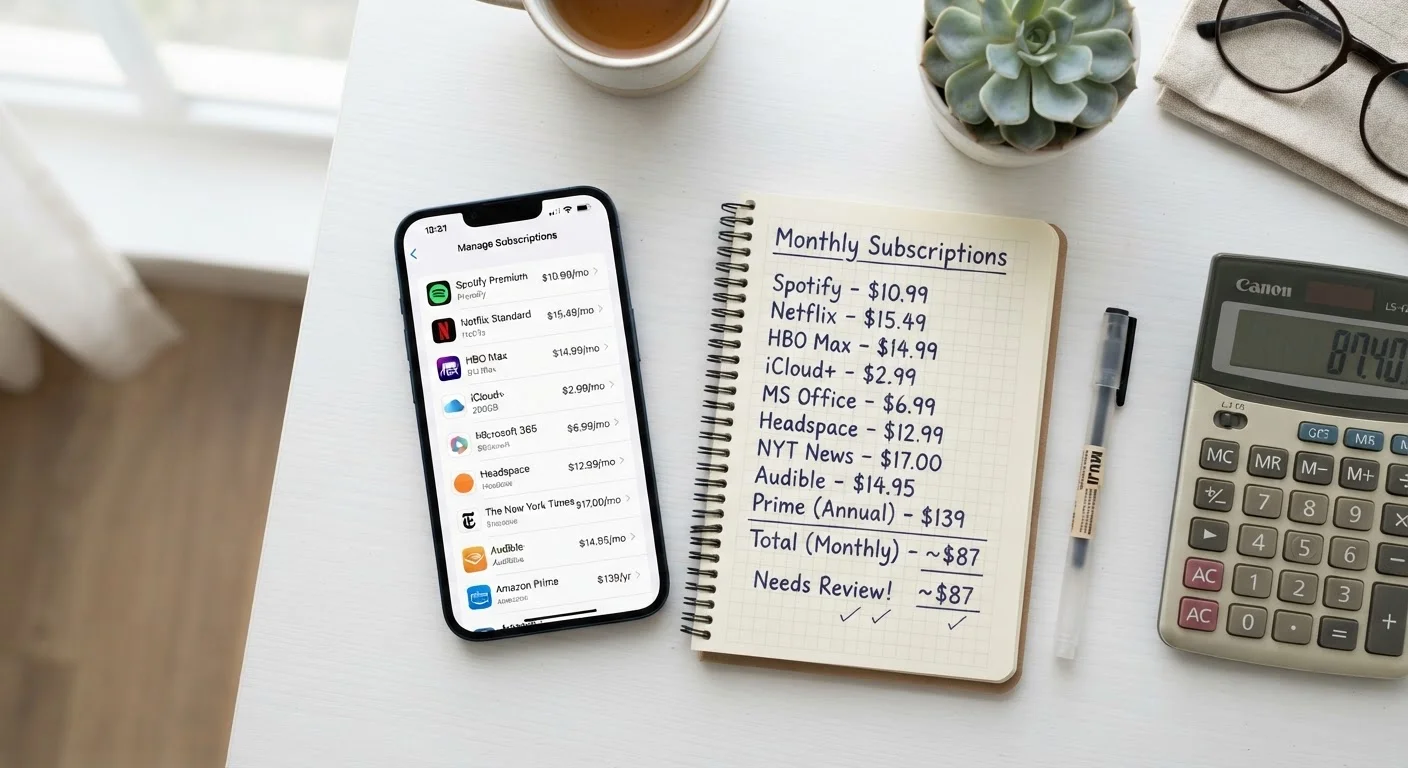
Subscription creep is what happens when small recurring charges accumulate quietly across months or years. A streaming service here, a premium app there - individually forgettable, collectively significant. The Subscription Creep audit guide walks through exactly how to find and evaluate these charges. A related deeper look at memberships and recurring payments can help you decide which ones are genuinely worth keeping.
Savings automation gaps occur when you intend to save but rely on willpower rather than structure. If your transfer to savings is manual, it competes with every other spending decision that month. Automating it - even a modest fixed amount - removes that friction entirely.
For a broader look at day-to-day saving across groceries, utilities, and discretionary spending, see Stretching Your Budget Further.
Automate Savings Before Anything Else
If your savings transfer is manual, it will consistently lose out to other spending decisions. Schedule an automatic transfer to your savings account on payday - even a small fixed amount - so the money moves before you have a chance to spend it. This single habit has more impact on long-term savings than almost any other behaviour change.
Finally, don't overlook your emergency fund as part of this review. Many people set one up and then stop monitoring it. The Emergency Funds Explained guide covers how much you actually need and why one month's savings is rarely sufficient. Track it monthly just like any other savings goal.
This article provides general financial information for educational purposes only and is not personalised financial advice. For guidance specific to your situation, consider consulting a qualified financial professional.