Why 'Harmless' Spending Is Worth a Closer Look
Most people who struggle to save aren't making one dramatic financial mistake - they're making dozens of small ones, repeatedly. The habits that quietly undermine saving goals rarely feel significant in isolation. A streaming subscription here, a convenience purchase there, a round-up at the checkout. None of it feels like a problem until you look at your account balance and wonder where the month went.
This isn't about cutting everything enjoyable from your budget. It's about recognising patterns that chip away at savings without you consciously choosing them. Once you can see the habit, you can decide whether it's worth the cost - and that's a much better position to be in than simply not noticing.
For a broader foundation, see our guide to building a saving habit from scratch - it covers the underlying principles that make any of the adjustments below more likely to stick.
Subscriptions you've forgotten you're paying for
Subscription services are designed to be easy to sign up for and easy to forget. Streaming platforms, app upgrades, cloud storage plans, gym memberships, and delivery passes can stack up to a surprising monthly total - often $80-$150 or more for households that haven't audited their accounts recently.
The fix isn't necessarily cancelling everything. It's reviewing your bank and credit card statements once every few months, identifying what you actually use, and cancelling what you don't. A recurring charge you don't remember authorising is money leaving your account with no benefit in return.
A forgotten subscription is money leaving your account with nothing in return.
Paying for convenience more often than you realise
Convenience spending covers a wide range: food delivery fees and tips, last-minute purchases at markup prices, pre-packaged items that cost significantly more than their unprocessed equivalents, or parking in an expensive lot because you didn't plan ahead. Each individual instance feels minor - but convenience spending is one of the most common categories that surprises people when they actually tally it.
This isn't an argument against ever using a delivery app. It's a reminder that habitual convenience spending is often invisible because it blends into daily life. Tracking it for even one month tends to change how people make these small decisions going forward.
Habitual convenience spending often goes unnoticed because it blends into daily life.
Lifestyle creep after a raise or windfall
Lifestyle creep - also called lifestyle inflation - is what happens when spending rises in step with income, leaving savings rates unchanged. You earn more, but you also spend more on a nicer apartment, a newer car, more dining out, or upgraded versions of things you already had. The raise felt like progress, but the bank balance tells a different story.
The most effective counter is directing a fixed portion of any income increase to savings before adjusting spending. Even routing half of a raise to savings and keeping the other half for lifestyle improvements is far better than absorbing the entire increase into expenses. The concept of compound interest makes clear why getting that extra amount into savings earlier - rather than later - matters.
When spending rises in step with income, savings rates stay flat regardless of how much you earn.
Treating sale prices as savings
Buying something on sale feels like a financial win - and it can be, if it's something you needed and would have bought anyway. But buying something primarily because it's discounted, or buying more than you need because the unit price is lower, isn't saving. It's spending money you hadn't planned to spend.
This pattern is easy to fall into because the framing around sales encourages it. Promotional language is designed to create a sense of gain. Why 'saving' on a sale item isn't always saving at all examines this dynamic in more detail. A practical rule: if you wouldn't have sought it out at full price, buying it on sale isn't saving - it's just spending less than you could have.
Spending money you hadn't planned to spend is not saving, regardless of the discount.
Making minimum payments and calling it 'handled'
Minimum payments keep accounts in good standing, but they're designed to extend the repayment period - often significantly. Carrying a balance month to month means interest charges accumulate quietly, functioning as an ongoing cost that directly reduces what you can save. Many people treat minimum payments as a resolved situation when they're actually a slow drain.
If debt repayment is part of your financial picture, it's worth understanding how interest compounds against you - just as it can work for you when saving. For more on what slows debt progress, see why good intentions stall debt repayment. Even modest additional payments above the minimum can shorten repayment timelines and reduce total interest paid.
Minimum payments keep accounts current but allow interest to quietly compound against you.
Spending without tracking - even loosely
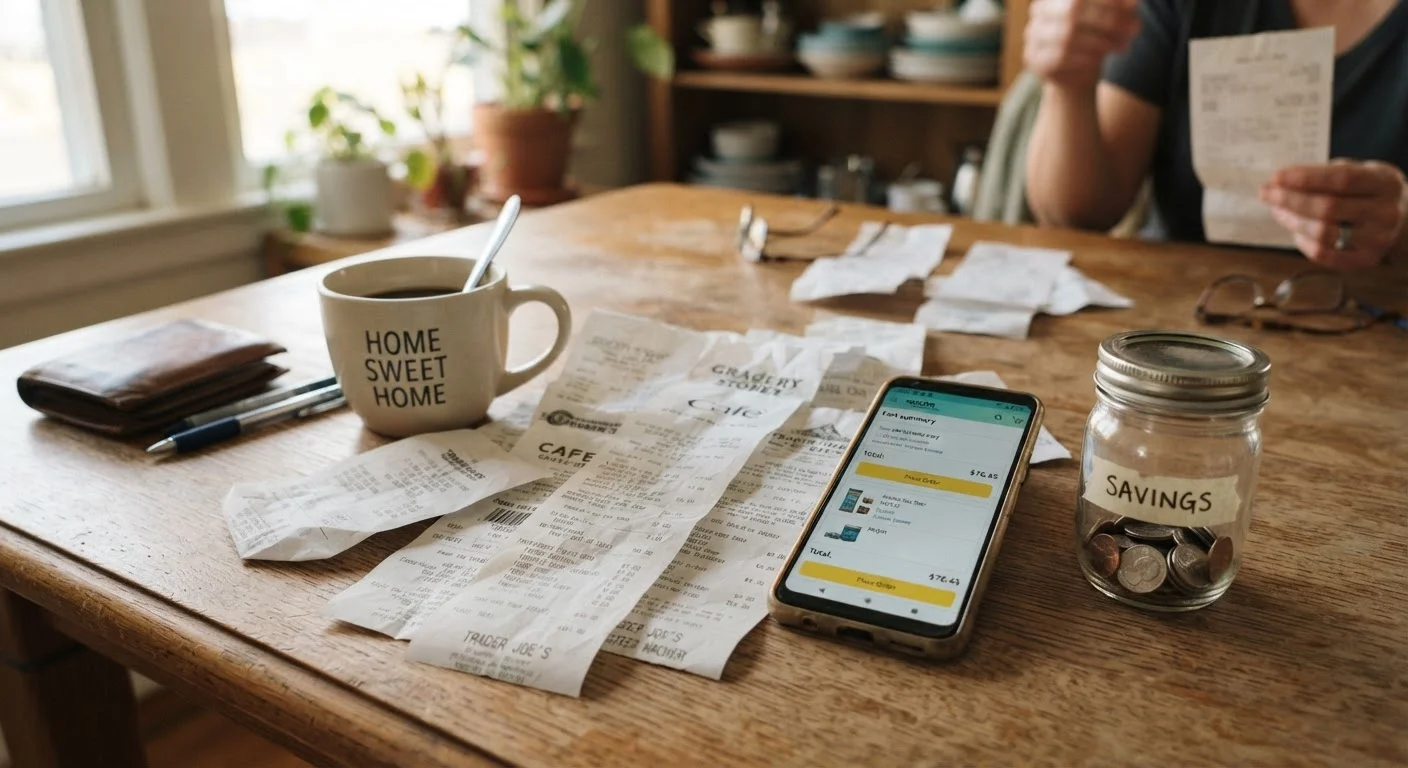
You don't need a complex spreadsheet or a budgeting app to track spending - but having no sense of where money goes makes it nearly impossible to improve. People who don't track spending often underestimate their discretionary costs by a significant margin, which means their mental budget and their actual budget are different documents.
Loose tracking - even just reviewing your bank app weekly or categorising purchases monthly - is enough to surface patterns. The goal isn't perfection; it's awareness. The budgeting basics hub has practical entry points for anyone who finds formal budgeting systems overwhelming. Understanding where money actually goes is the prerequisite for making any lasting change to it.
Without any tracking, your mental budget and your actual spending are often very different.
How to Start Shifting These Habits
You don't need to overhaul everything at once. Choosing one or two habits from the list above and making a modest change - cancelling one unused subscription, cooking one extra meal at home per week - is more sustainable than a dramatic budget reset that collapses within a fortnight.
Start with a single-month spending audit
Pull up three months of bank and credit card statements and categorise every charge - subscriptions, food, convenience, entertainment, debt payments. You don't need to act on everything at once. Simply seeing the numbers in plain categories tends to make the next decision easier. Most people find at least one or two charges they'd forgotten entirely.
If you want to remove the decision-making from saving altogether, automating your savings is one of the most reliable ways to work around the spending habits covered here. When money moves to savings before you can spend it, the habits above have less opportunity to interfere. Pair that with a sinking fund for planned future expenses and you'll have a structure that handles both the predictable and the unexpected.
This article is for general informational purposes only and does not constitute personalised financial advice. For guidance specific to your situation, consider speaking with a qualified financial professional.