How Each Method Works
Both approaches are ways of telling your money where to go - they just use different maps to get there.
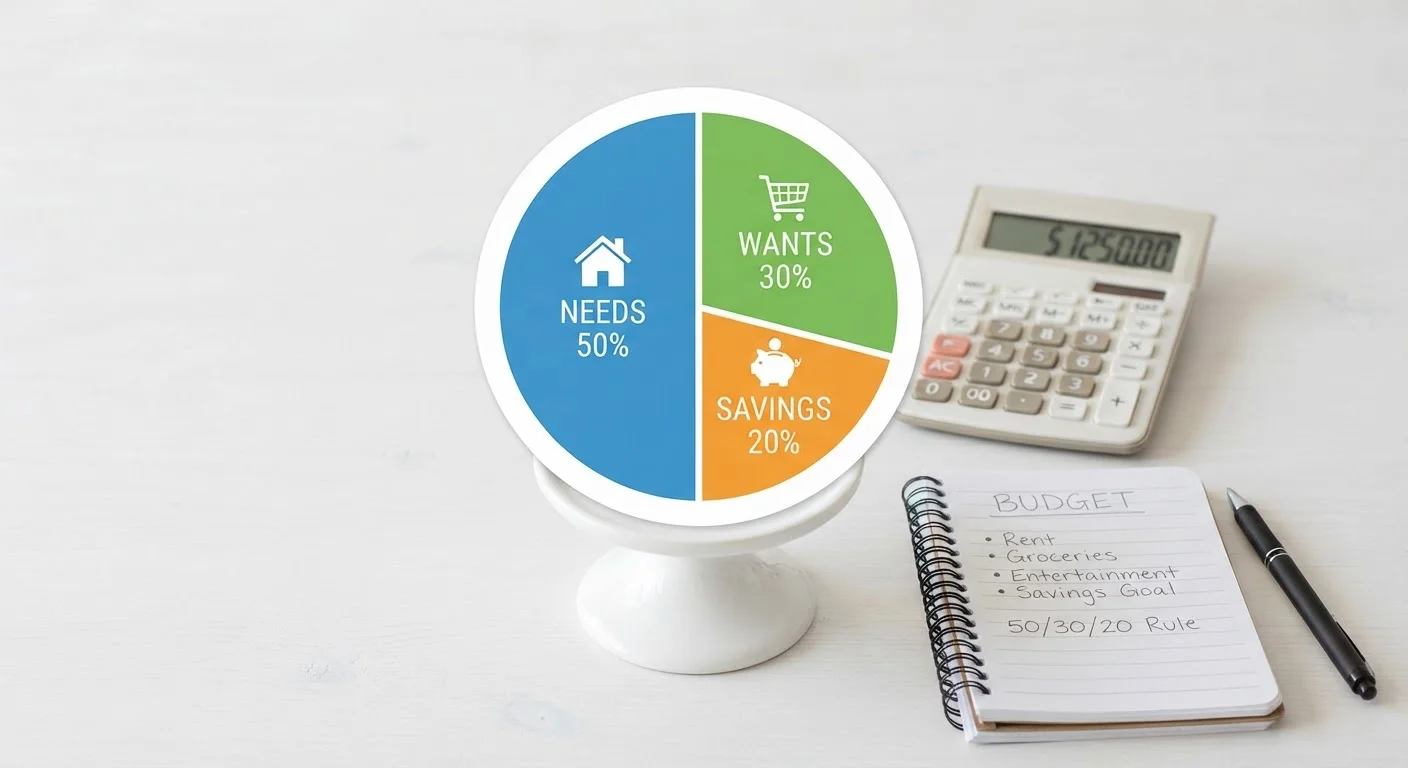
The 50/30/20 rule divides your after-tax income into three categories: 50% toward needs (rent, groceries, utilities, minimum debt payments), 30% toward wants (dining out, subscriptions, hobbies), and 20% toward savings and extra debt repayment. The appeal is simplicity - you don't need a spreadsheet or an app, just a rough sense of where your spending lands. For a deeper look at this framework, see how the 50/30/20 rule works.
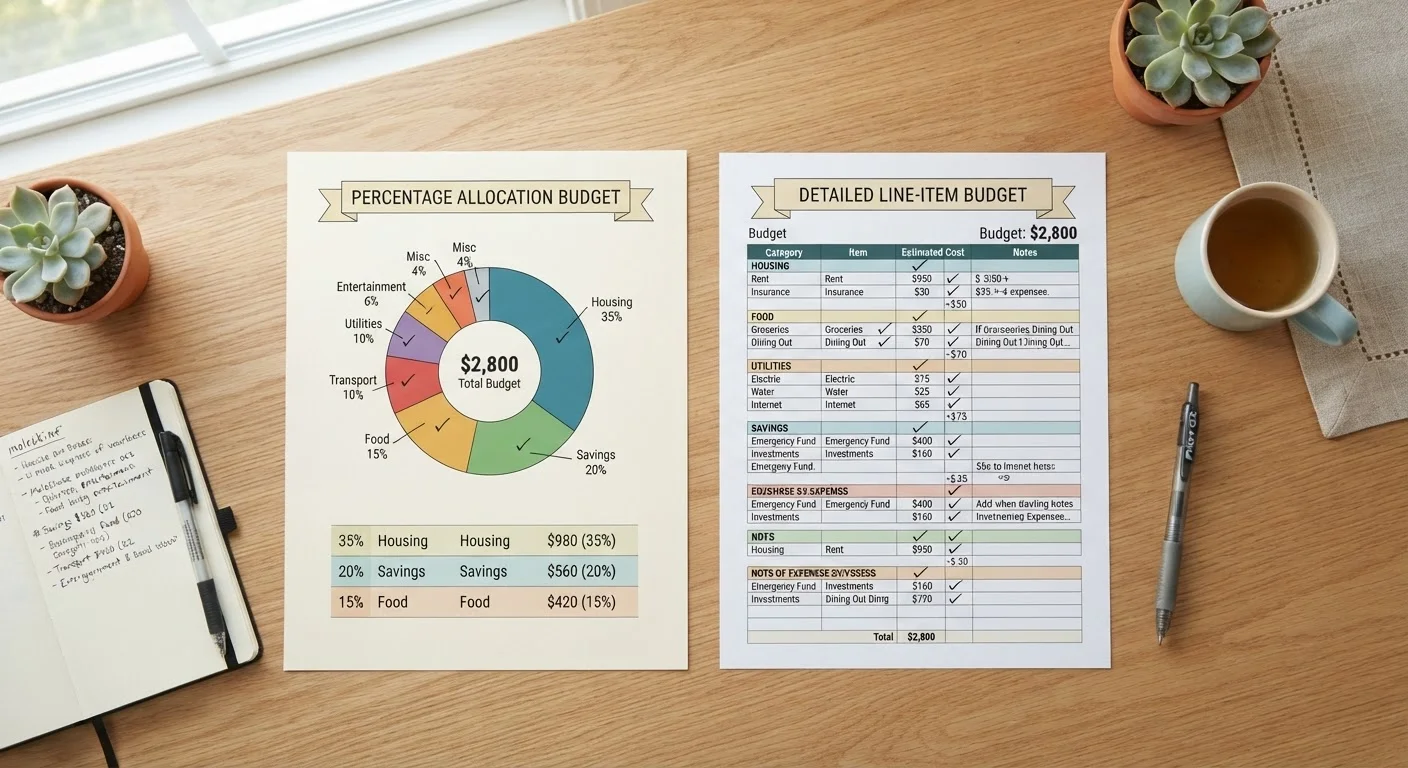
Zero-based budgeting (ZBB) works differently. You start each month at zero and assign every dollar of income to a specific category - rent, car insurance, groceries, eating out, emergency fund, and so on - until income minus expenses equals zero. Nothing is left unaccounted for. This doesn't mean you spend everything; it means every dollar has a designated purpose, including savings.
| Criterion | 50/30/20 Rule | Zero-Based Budgeting |
|---|---|---|
| Setup time | Low - three broad categories | Higher - detailed line items |
| Ongoing maintenance | Minimal, periodic check-ins | Monthly rebuild required |
| Level of spending detail | Broad buckets only | Every dollar accounted for |
| Works with variable income | Less flexible | Well-suited, resets monthly |
| Savings visibility | Fixed 20% target | Savings assigned as a line item |
| Best for | Beginners, busy people | Detail-oriented savers |
Where Each Method Excels
The 50/30/20 rule works best as an entry point. If you've never tracked your spending before, three categories feel manageable rather than overwhelming. It's also forgiving - you don't need to log every coffee or grocery receipt to stay roughly on track. If you're just getting started, building a budget from zero is a practical next step after choosing a method.
Zero-based budgeting shines when you want to find savings you didn't know existed. By naming every expense in advance, you're forced to make conscious decisions - do you really need that streaming service, or would that $15 do more as part of your emergency fund? Research consistently shows that people who track spending at the category level tend to spend less, simply because awareness changes behavior.
1 in 3
Americans who don't use any budget
According to NFCC (National Foundation for Credit Counseling) consumer surveys, a significant share of U.S. adults report having no monthly budget in place.
~$1,000
Average monthly discretionary spending per household
U.S. Bureau of Labor Statistics Consumer Expenditure data shows substantial spending on non-essential categories that structured budgeting can help reduce.
ZBB is also more adaptable for irregular incomes. If your pay changes month to month - freelance work, hourly wages, seasonal income - you can rebuild the budget around what you actually earned rather than working from fixed percentages that may not fit.
The Trade-Offs to Know
Neither method is perfect for everyone, and it's worth being honest about the downsides of each.
The 50/30/20 rule's biggest weakness is that broad categories can hide problems. Spending 29% on wants feels fine - until you realize half of that is impulse purchases you don't actually value. The rule also assumes a 20% savings rate is achievable, which isn't realistic for everyone, especially those with low incomes or high fixed costs like childcare or student loans.
Zero-based budgeting's trade-off is time. Setting up a detailed monthly budget and tracking against it takes real effort. If life gets busy and you fall behind on tracking, the system breaks down quickly. It can also feel rigid, which leads some people to abandon it when an unexpected expense throws off the plan.
When Neither Method Fits Perfectly
Some people find that a hybrid approach works better than either framework on its own. You might use 50/30/20 percentages as guardrails while tracking individual categories within each bucket using zero-based principles. There's no rule requiring you to use one method exclusively - the goal is awareness and intentionality with your money, not adherence to a formula.
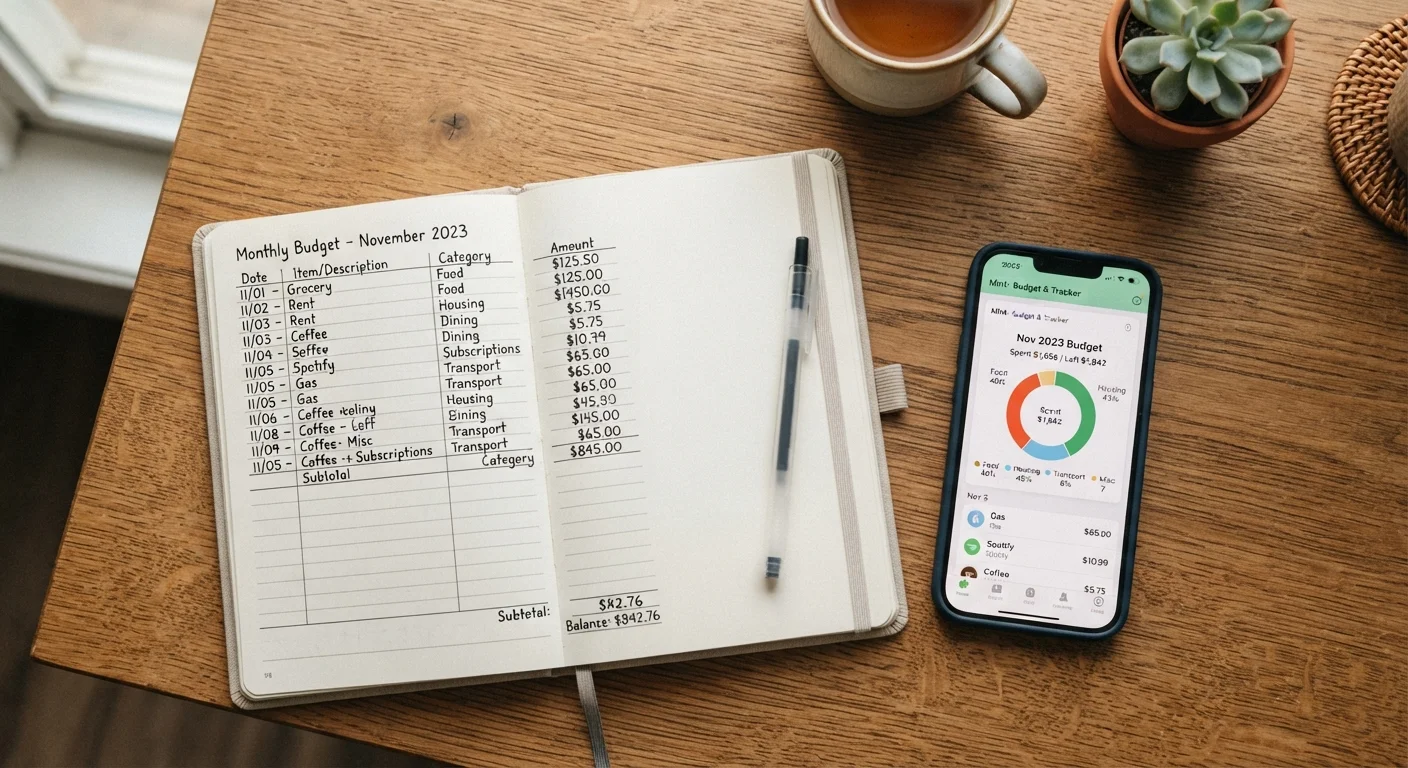
One option: combine both approaches. Use the 50/30/20 rule as a guideline for your overall allocation, then apply zero-based thinking to the categories where you tend to overspend. You can explore how different tools support each style in our overview of budgeting on paper vs. using an app.
Choosing the Right Fit
The honest answer is that the best budget is the one you'll actually maintain. A perfect zero-based budget that you abandon after two weeks does less good than a rough 50/30/20 estimate you check in on every month.
If you're starting out or want something low-effort, the 50/30/20 rule gives you a structure without demanding much ongoing work. If you're trying to aggressively pay down debt, save for a specific goal, or finally understand where your money is going, zero-based budgeting gives you the detail to make real changes. Couples managing shared finances may find ZBB especially useful for aligning priorities - see our guide on budgeting as a couple for more on that. Either way, explore the full range of ideas in the budgeting basics hub to find what fits your situation.
This article is for general informational and educational purposes only and does not constitute personalized financial advice. Consider speaking with a qualified financial professional about your specific circumstances.