
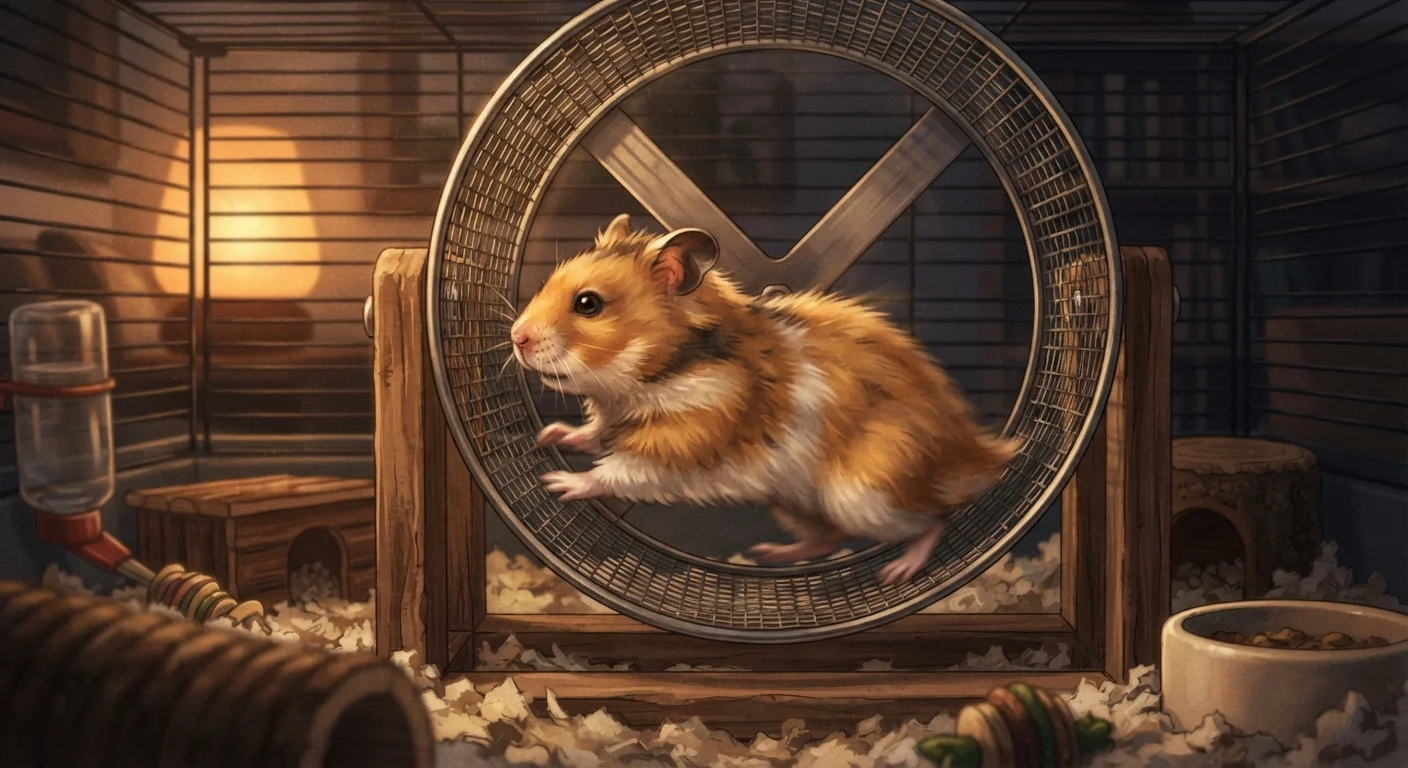
Why Hamsters Are Wired for the Night
In the wild, hamsters native to arid regions of Syria, China, and Central Asia evolved to stay hidden during daylight hours to avoid predators like hawks and foxes. Nighttime offered cooler temperatures and relative safety for foraging. Over thousands of years, this survival strategy became hardwired into their biology.
Domestic hamsters carry that same internal clock. Their bodies produce hormones that promote wakefulness after dark and sleepiness during the day, regardless of what is happening around them. This is governed by their circadian rhythm - the internal 24-hour biological cycle that regulates sleep, feeding, and hormone release.
This instinct explains behaviors that can puzzle new owners: a hamster that ignores you all afternoon, then spends hours running its wheel the moment the lights go out. That's not antisocial behavior - it's a healthy animal doing exactly what its biology demands.
“Animals kept in captivity have the same behavioral needs as their wild counterparts. Ignoring those needs - even with the best intentions - is a common source of stress in small pets.”
— Dr. Temple Grandin, Animal behavior researcher and professor at Colorado State University
How Nocturnality Shapes Cage Setup
A well-designed habitat accounts for a hamster's need to be active at night. A few key considerations:
- Exercise wheel: A solid-surface, appropriately sized wheel (at least 8 inches for Syrian hamsters, 6.5 inches for dwarf breeds) is essential. Hamsters can run 5-8 miles per night in the wild, and captive animals have similar needs.
- Deep bedding: Wild hamsters dig burrows. Providing at least 6 inches of paper-based bedding lets them burrow and nest - activities they perform mostly at night. This reduces stress significantly.
- Quiet environment: Bright lights or persistent noise during nighttime hours can disrupt activity and cause anxiety. Position the cage away from TVs, speakers, or busy hallways.
- Room during daylight: Keep daytime disturbances minimal. Avoid placing the cage in a high-traffic room where activity constantly wakes the hamster.
Choose a Silent Spinner Wheel
Wheel noise at night is one of the most common complaints from hamster owners. Look for wheels designed with low-noise bearings to reduce disruption without limiting your hamster's natural need to run. The wheel itself is non-negotiable - the noise level is the variable worth managing.
Feeding, Handling, and the Sleep Schedule
Timing daily care around your hamster's natural rhythm makes a measurable difference in their wellbeing.
Feeding: Offer fresh food in the early evening, just before or as your hamster wakes. Hamsters are natural hoarders - they'll cache food in their burrow throughout the night. Placing food out in the morning means it may sit for hours before your pet is awake enough to interact with it.
Handling: The best time to handle a hamster is during its active hours - typically early evening onward. Waking a hamster mid-sleep to handle it is stressful and increases the risk of defensive nipping. If you need to interact during daylight, do so gently and briefly, giving the hamster time to fully rouse before picking it up.
Social needs: Most hamster species are solitary by nature, which means nighttime activity happens independently. If you're weighing options for small pet companionship, our article on keeping a single hamster vs. a pair of guinea pigs explains how species differ in their social requirements.
5-8 miles
Distance hamsters may run in a single night
Behavioral studies of wild Syrian hamsters have recorded extensive nightly travel in search of food and mates.
6+ inches
Recommended minimum bedding depth
Animal welfare organizations such as the RSPCA recommend deep substrate to allow burrowing, a core nocturnal behavior.
Signs Your Hamster's Sleep Cycle Is Being Disrupted
A hamster whose routine is regularly disturbed may show signs of chronic stress. Watch for:
- Excessive bar-chewing or repetitive pacing (stereotypic behavior)
- Aggression or biting during handling
- Lethargy or reduced nighttime activity
- Weight loss or changes in eating habits
- Over-grooming or patchy coat
These signs can have multiple causes, and a veterinarian familiar with small animals should be consulted if you notice persistent changes in behavior or health. Disrupted sleep is one manageable factor - but it works best alongside a complete, species-appropriate care routine.
When Daytime Activity Might Signal a Problem
Occasional daytime stirring - to drink water or investigate a sound - is normal. However, a hamster that appears consistently active during the day and inactive at night may be experiencing environmental stress or an underlying health issue. A veterinarian experienced with small mammals can help rule out illness.
This article is for general educational purposes only and is not a substitute for professional veterinary advice. If your hamster shows signs of illness or behavioral distress, consult a qualified veterinarian with experience in small animals.