Why Social Needs Differ So Dramatically Between Species
When choosing a small pet, many first-time owners assume that all pocket-sized animals have similar needs. In reality, hamsters and guinea pigs sit at opposite ends of the social spectrum - and getting this wrong has real consequences for the animal's wellbeing.
Hamsters, particularly the Syrian (or golden) hamster, are obligate solitaries in the wild. Each individual defends its own burrow and foraging territory. When two are forced to share space, the result is almost always chronic stress, resource-guarding, and - especially in Syrians - potentially fatal fighting. Even dwarf hamster species, sometimes marketed as pair-friendly, frequently develop conflict as they mature.
Guinea pigs, by contrast, evolved as prey animals living in social herds. In the wild, living in a group provides predator detection, warmth, and emotional security. A lone guinea pig is a stressed guinea pig. Many European countries, including Switzerland and Austria, have codified this into law, making it illegal to keep a single guinea pig without a companion. The United States has no equivalent law, but veterinary and animal welfare consensus in the US strongly supports the same principle.
Understanding this biology - not just preference or convenience - should be the starting point for any prospective owner. For a broader look at what small pet ownership truly involves, see what ownership actually involves.
What a Single Hamster Needs to Thrive
A hamster housed alone is not a neglected hamster - solitude is the species-appropriate condition. What threatens hamster welfare isn't loneliness in the human sense; it's boredom, inadequate space, and disrupted sleep cycles.
Enrichment Is Non-Negotiable for Solo Hamsters
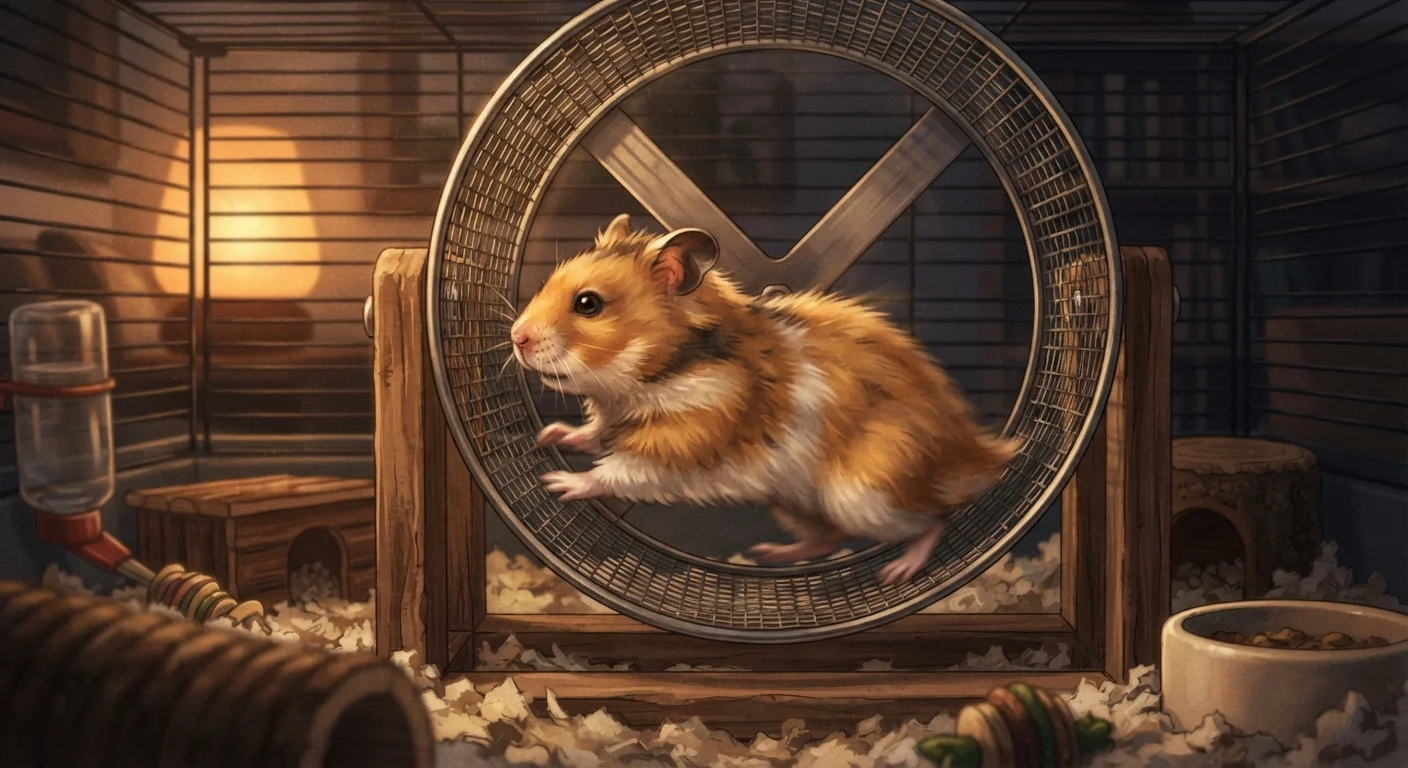
Because a hamster's wellbeing depends entirely on its environment rather than companionship, enclosure quality matters enormously. Prioritize deep substrate (at least 6 inches for burrowing), a large solid-surface wheel, and regular foraging enrichment such as hiding food throughout the bedding. A well-enriched hamster in adequate space is a content hamster - regardless of living alone.
- Enclosure size: The minimum widely recommended by animal welfare organizations is 40 inches × 20 inches of floor space for a Syrian hamster. Smaller cages cause stereotypic behaviors like repetitive bar-chewing.
- Enrichment: A solid-surface wheel (at least 10-11 inches diameter for Syrians), tunnels, deep substrate for burrowing, and foraging opportunities are essential.
- Handling: Hamsters are nocturnal, so handling should occur in the evening when they are naturally awake. Waking a sleeping hamster causes significant stress and can lead to biting. Learn more about their unique schedule in our guide on how their sleep cycle affects care.
Human interaction can supplement a hamster's day, but it will never replace the need for a well-designed enclosure. A bored, under-stimulated hamster in a small cage suffers even if it is handled daily.
What a Pair of Guinea Pigs Needs to Thrive
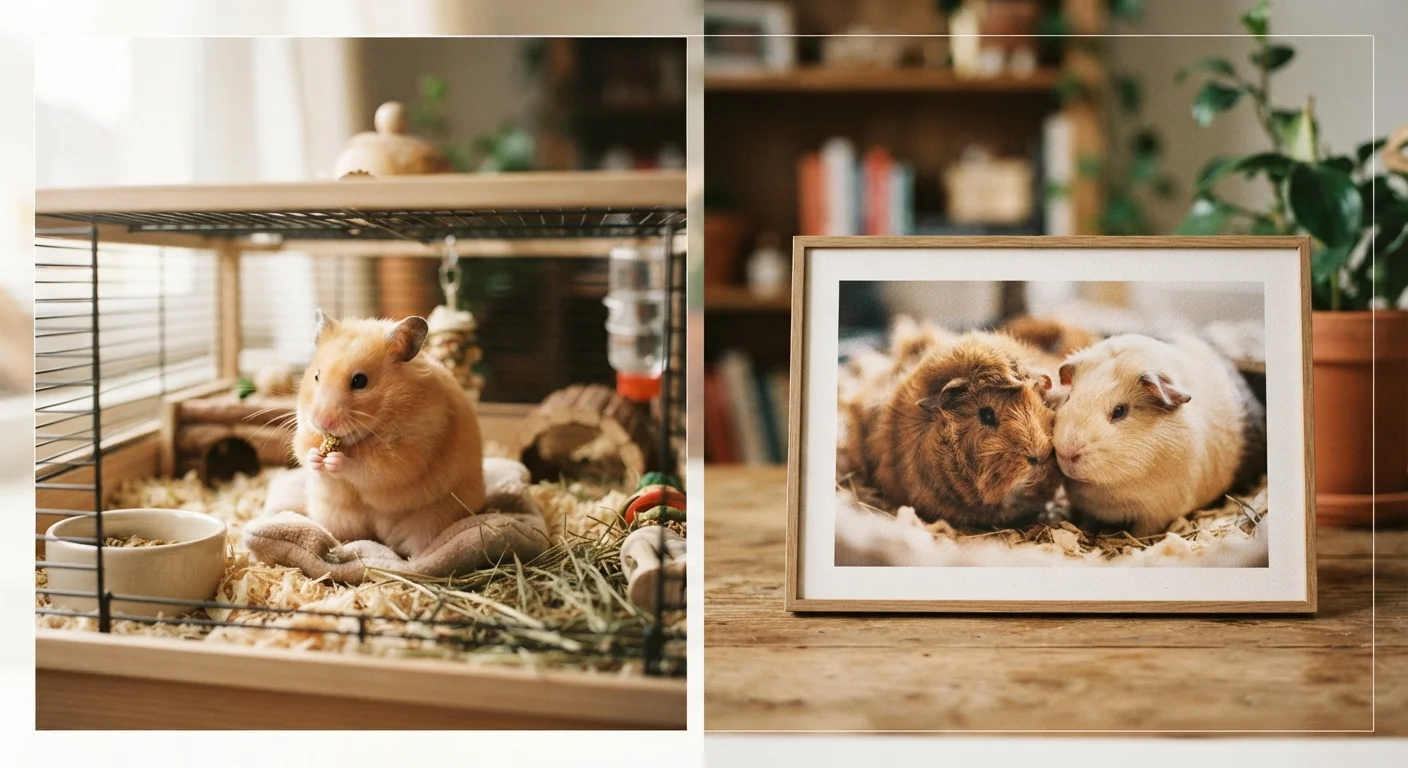
The baseline for guinea pig welfare is at least two guinea pigs. The most straightforward pairings are two females (sows) or a neutered male with one or more females. Two unneutered males (boars) can coexist but require careful introduction and monitoring, as competition often increases with age.
| Single Hamster | Pair of Guinea Pigs | |
|---|---|---|
| Natural social need | Solitary - prefers no companions | Herd animal - requires companionship |
| Minimum space | 40" × 20" floor space recommended | 10.5 sq ft for two animals |
| Active hours | Nocturnal - active at night | Diurnal - active during the day |
| Typical lifespan | 2-3 years | 4-7 years |
| Ongoing cost | Lower (one animal) | Higher (two animals, longer lifespan) |
| Handling tolerance | Variable; builds with evening routine | Generally tolerant with socialization |
| Risk of conflict | High if housed with another hamster | Low in compatible same-sex or neutered pairs |
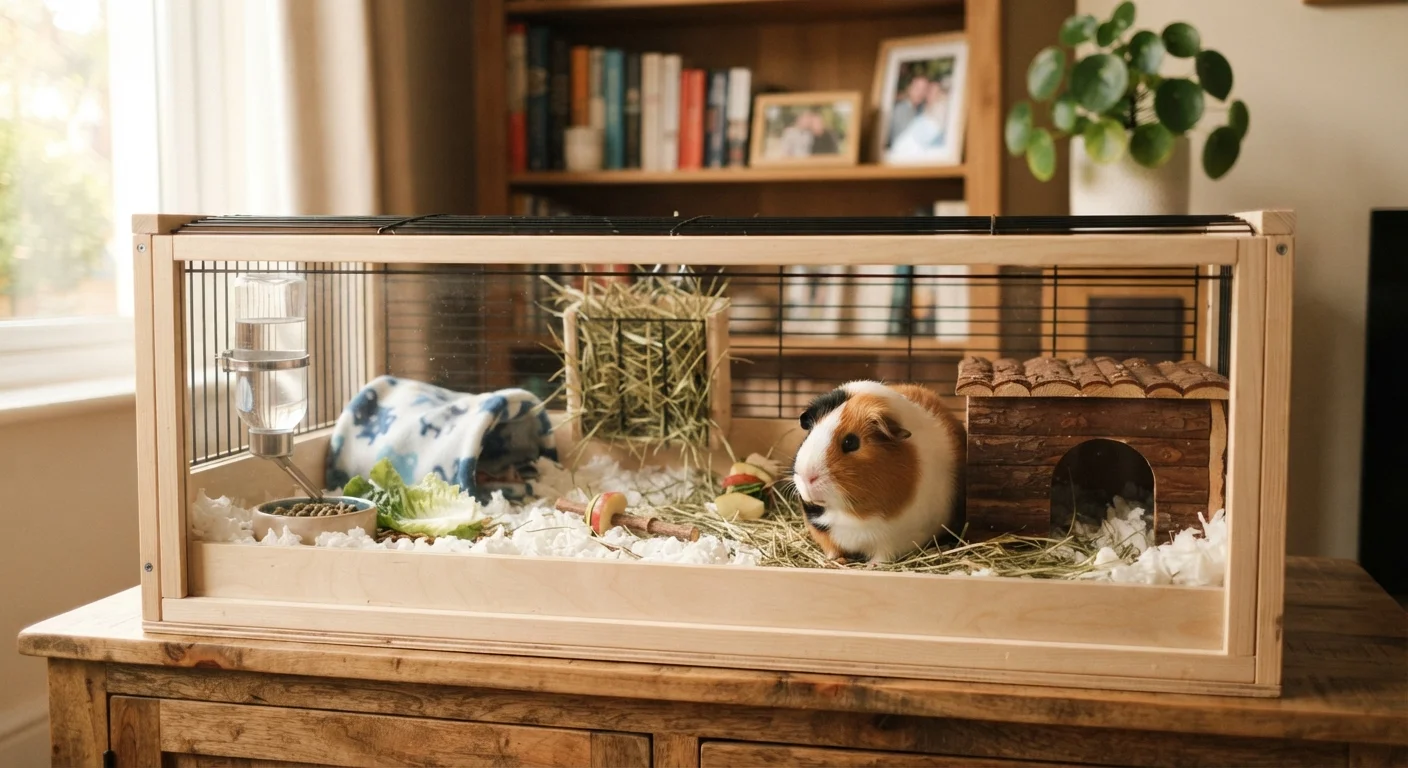
Beyond companionship, guinea pig pairs need significantly more space than most starter cages provide. A minimum of 10.5 square feet of floor space is recommended for two guinea pigs by the Humane Society and many cavy rescue organizations - most pet store cages fall well short of this. Daily fresh hay (which should make up roughly 80% of their diet), vitamin C-rich vegetables, and regular veterinary care for both animals are ongoing commitments.
Signs that a guinea pig is suffering from isolation include repetitive pacing, reduced appetite, and lethargy. If you're ever concerned about changes in eating habits, learn what a loss of appetite usually signals - it can indicate stress as much as illness. For a full breakdown of guinea pig care requirements, see our complete guinea pig care overview.
Comparing the Two Options Side by Side
The table in the previous section outlines the core differences, but a few contrasts deserve extra emphasis for anyone still deciding. Guinea pigs involve a higher ongoing commitment: two animals means roughly double the food costs, veterinary bills, and cage-cleaning frequency. They also live longer - typically 4-7 years compared to a hamster's 2-3 years - meaning the commitment extends further.
Don't Assume Human Interaction Replaces Social Needs
Guinea pig owners sometimes believe that frequent handling compensates for housing a pig alone. It does not - guinea pigs need continuous access to their own kind for grooming, vocalizing, and the baseline security of group living. Similarly, placing two hamsters together because 'they seem to get along at first' is risky; tolerance in young animals often deteriorates into serious fighting once both reach sexual maturity.
However, guinea pigs are active during the day, making them far more visible and interactive companions for families with children. Hamsters, being nocturnal, are largely invisible during waking hours - a source of frequent disappointment for younger owners who expect a playful daytime pet.
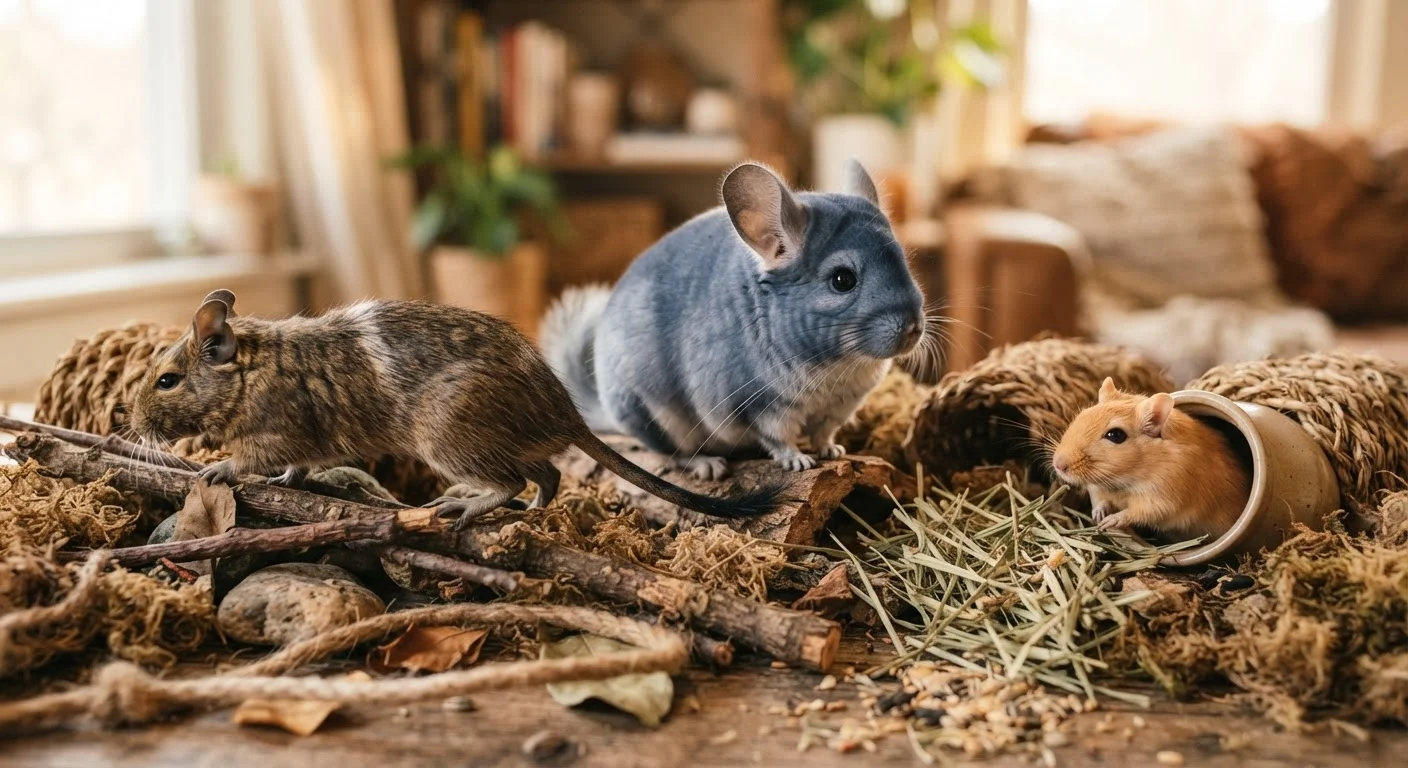
If you're weighing guinea pigs against other social small animals, our comparison of guinea pigs vs. rabbits covers another popular pairing. And if neither species quite fits, other small pets worth considering explores alternatives like degus and chinchillas.