
Why bother checking your own car?
You don't need to be a mechanic to keep your car safer and catch problems early. A handful of basic checks - done regularly, with nothing more than your eyes, your hands, and maybe a penny - can reveal issues before they become expensive repairs or roadside emergencies.
These aren't replacements for scheduled servicing. They're the layer of awareness that sits between service appointments, helping you know when something needs attention now rather than next month. If you want to build these into a broader routine, these habits for keeping a car in good shape are a practical starting point.
The checks below cover the most important basics any driver can realistically do at home, in a driveway or parking lot, in under 20 minutes.
Keep your owner's manual handy
Your car's owner's manual is the single most reliable source for fluid types, capacities, and recommended service intervals specific to your vehicle. If you don't have a physical copy, most manufacturers publish them online as free PDFs - search for your year, make, and model. It takes minutes to find and can save you from using the wrong product.
Seven checks you can do right now
Check your tyre tread depth
Worn tyres are one of the most common causes of poor wet-weather handling and increased stopping distances. The legal minimum tread depth in the US varies by state, but most safety guidance recommends replacing tyres before they reach 2/32 of an inch - and ideally at 4/32 for better wet traction.
A quick way to gauge this without a gauge: insert a penny into the tread groove with Lincoln's head pointing down. If you can see the top of his head, the tread is too low. A quarter gives you a slightly more conservative warning - if you can see Washington's full head, you're getting close to the replacement zone.
Also take a moment to look for uneven wear across the tyre surface. Wear concentrated on one edge often signals an alignment or inflation issue worth mentioning at your next service appointment.
The penny test takes ten seconds and could tell you your tyres are dangerously worn.
Check tyre pressure visually and by feel
A tyre can lose significant pressure and still look fine to the naked eye. The recommended pressure for your tyres is printed on a sticker inside the driver's door jamb - not on the tyre sidewall, which shows the maximum pressure, not the target.
While you genuinely need a tyre pressure gauge (available for a few dollars at any auto parts store or gas station) to get an accurate reading, you can still do a basic visual check: look for any tyre that sits noticeably lower than the others, or feels soft when you press firmly on the sidewall. These are signs to investigate immediately. If your car has a TPMS warning light illuminated on the dash, don't ignore it - check all four tyres.
Correct pressure improves fuel economy, tyre life, and handling. It's worth the two minutes it takes.
The door jamb sticker - not the tyre sidewall - tells you the correct target pressure.
Check engine oil level
Most engines have a dipstick - a long, looped handle near the front of the engine bay, often yellow or orange. Park on level ground, wait a few minutes after shutting off the engine, then pull the dipstick out, wipe it clean with a rag or paper towel, reinsert it fully, and pull it out again. The oil should sit between the two marks near the bottom of the stick.
While you're at it, look at the oil on the stick. Fresh oil is amber-brown and translucent. Very dark, gritty-looking oil or oil with a milky, frothy appearance can signal problems - the latter sometimes indicates coolant mixing with oil, which warrants prompt professional attention.
Check your owner's manual for your car's recommended oil type before topping up. Using the wrong viscosity can cause engine wear. For a broader look at fluids that often get overlooked, see this guide to coolant, transmission fluid, and other critical fluids.
Milky or frothy oil on the dipstick can signal a serious internal problem - don't ignore it.
Check windshield washer fluid and wiper condition
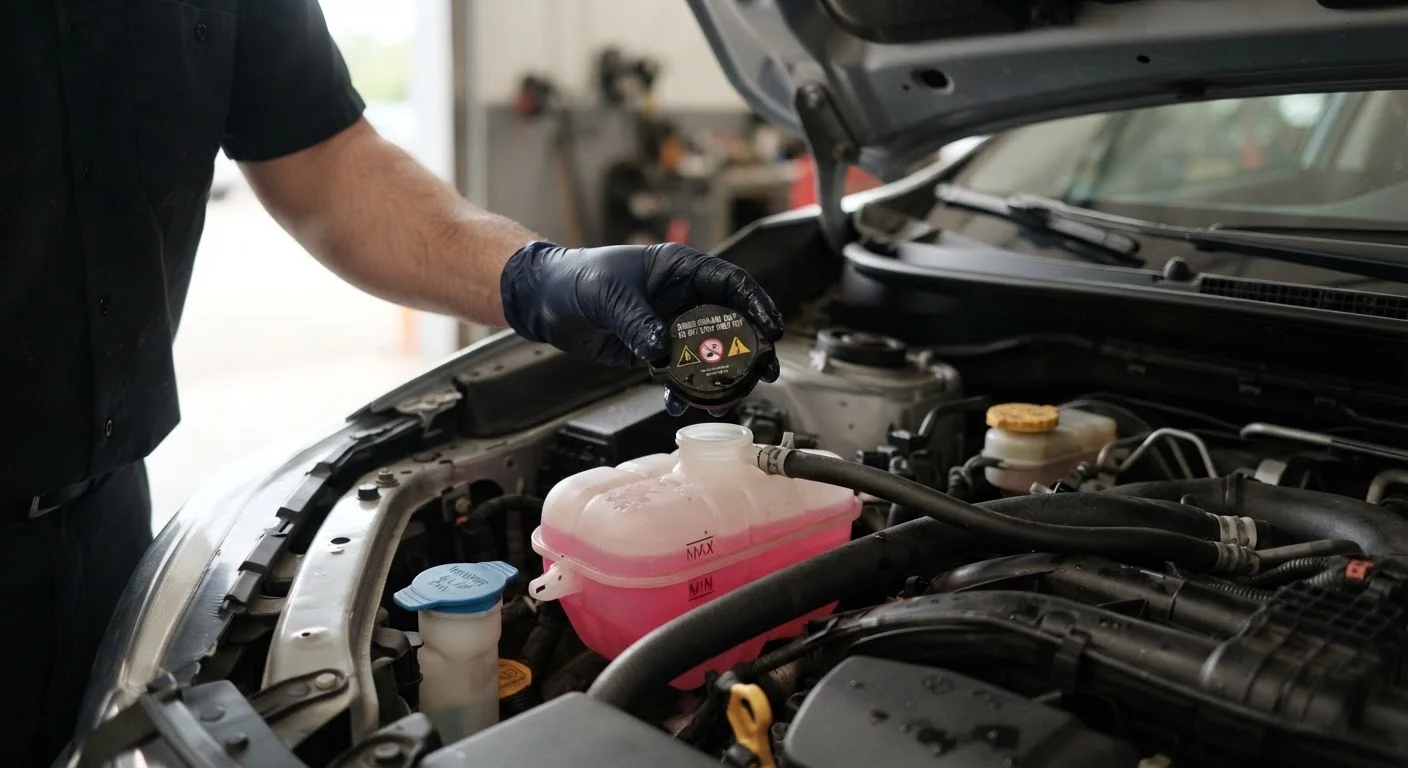
The washer fluid reservoir is a translucent plastic tank in the engine bay - most are clearly marked with a windshield symbol. Topping it off is straightforward. Use a washer fluid formulated for your climate; plain water can freeze in winter and doesn't clean as effectively.
While you're at it, run your wipers and watch how they perform. Streaking, skipping, or squeaking are all signs the rubber blade is degrading. You can also manually lift each wiper arm and run a finger along the rubber edge - cracks, tears, or a stiff, hardened feel mean it's time for a replacement. Wiper blades are one of the most affordable and easiest parts to swap yourself.
Clear visibility in rain is a direct safety issue, and worn wipers can make wet-weather driving significantly more dangerous.
Streaking wipers aren't just annoying - they're a visibility hazard in rain.
Walk around and check all exterior lights
A burned-out brake light or turn signal is easy to miss from the driver's seat but can create real safety risks - and in most states, it's also a ticketable offense. Do a quick walk-around check about once a month.
Turn on your headlights and walk around the car to confirm both low-beam and high-beam lights work. Then switch on your hazard lights and check all four turn signals and brake lights are flashing correctly. For brake lights, park near a garage door, wall, or reflective surface and press the brake pedal - you should see red light reflecting back.
Replacing a bulb is often something you can do yourself, but some newer vehicles make bulb access awkward enough that a shop visit makes more sense. If you notice a dashboard warning light related to your bulbs or brakes, learn what it means before dismissing it.
A burned-out brake light is invisible to the driver but a real hazard for everyone behind you.
Listen and look for brake wear indicators
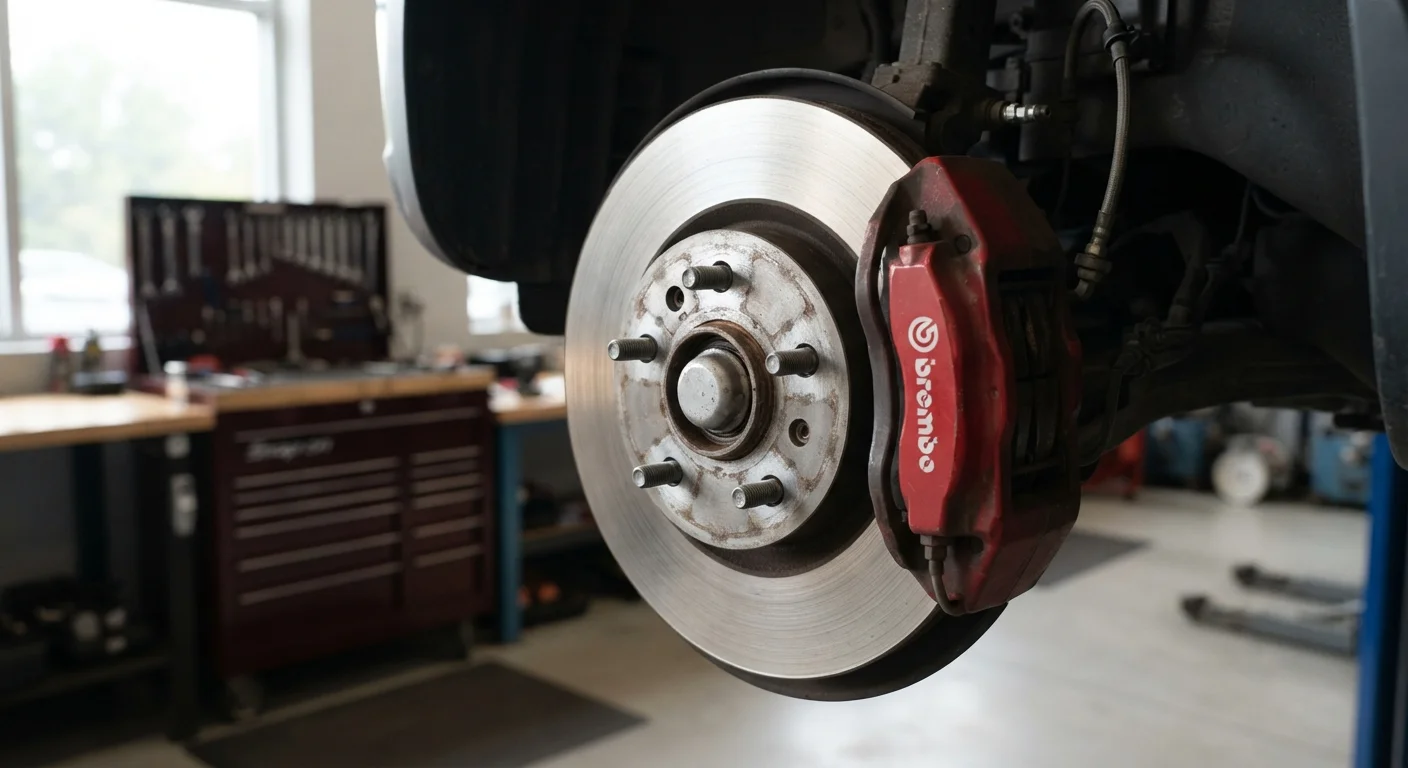
Most modern brake pads include a small metal tab called a wear indicator. When the pad wears thin enough, this tab contacts the rotor and produces a high-pitched squealing or squeaking sound during normal braking. If you hear it consistently, it's a signal the pads are approaching the end of their life.
A grinding or growling sound during braking is more serious - it often means the pad material has worn through completely, and metal is contacting metal. This can damage the rotor and compromise stopping ability. Don't delay getting it checked.
You can often see the pad thickness through the spokes of the wheel without removing anything. If the pad looks very thin - less than a quarter inch - schedule an inspection. Brakes are not a DIY repair for most drivers; a qualified mechanic should confirm their condition. For more context, read about how brakes work and the signs they need attention.
Squealing during normal stops is your brake pads telling you they need attention soon.
Check under the car for leaks
After your car has been parked for a few hours, glance at the ground underneath it. A small puddle or spots on the pavement can tell you a lot - if you know what to look for.
Clear water dripping from beneath is usually condensation from the air conditioning system and is generally harmless. An oily, dark brown or black puddle near the center or front of the car could indicate an engine oil or transmission fluid leak. A bright green or orange liquid is likely coolant (antifreeze) - a leak here should be addressed promptly since low coolant can lead to overheating. Reddish fluid is often power steering or transmission fluid.
If you spot anything other than clear water, describe the color, location, and approximate amount to a mechanic. You don't need to diagnose it yourself - just report what you see.
The color and location of a fluid spot under your car can point directly to its source.
When to stop and call a mechanic
These checks are designed to help you stay informed and spot warning signs early - not to replace professional service. If any check reveals something you're uncertain about, or if a warning light comes on, have a qualified mechanic take a look. Some problems are unsafe to drive on, even briefly. When in doubt, don't guess.
Building these checks into your routine
Most of these checks are worth doing once a month, or whenever something feels slightly off - an unusual sound, a pull in the steering, a light on the dashboard. The more familiar you are with how your car normally looks and sounds, the faster you'll notice when something isn't right.
Seasons matter too. Tyre pressure drops in cold weather, wipers take a beating in winter, and fluids behave differently in extreme heat. For a season-by-season breakdown of what to watch, seasonal car maintenance guidance can help you stay ahead of weather-related issues.
And if you've heard conflicting advice about when to change your oil or whether you need to warm up the engine in winter, it's worth checking the facts - common car maintenance myths can clear up a lot of that confusion.
Regular checks aren't about becoming your own mechanic. They're about being a driver who knows their vehicle well enough to catch problems early - and that knowledge has real value, both for safety and for your wallet.