Where to Find the Right Number
A lot of drivers assume the pressure number stamped on the tyre sidewall is what they should inflate to. It isn't. That figure - often around 50 or 51 PSI - is the maximum the tyre can safely hold, not what your car needs. Your vehicle's recommended pressure is specific to its weight, suspension design, and intended load, and you'll find it printed on a sticker inside the driver's door jamb or in the owner's manual.
Many vehicles list different pressures for the front and rear tyres, and some list a higher pressure for when the car is carrying a full load of passengers or cargo. Take two minutes to look it up if you haven't already - it's the foundation everything else builds on.
Check Pressure When Tyres Are Cold
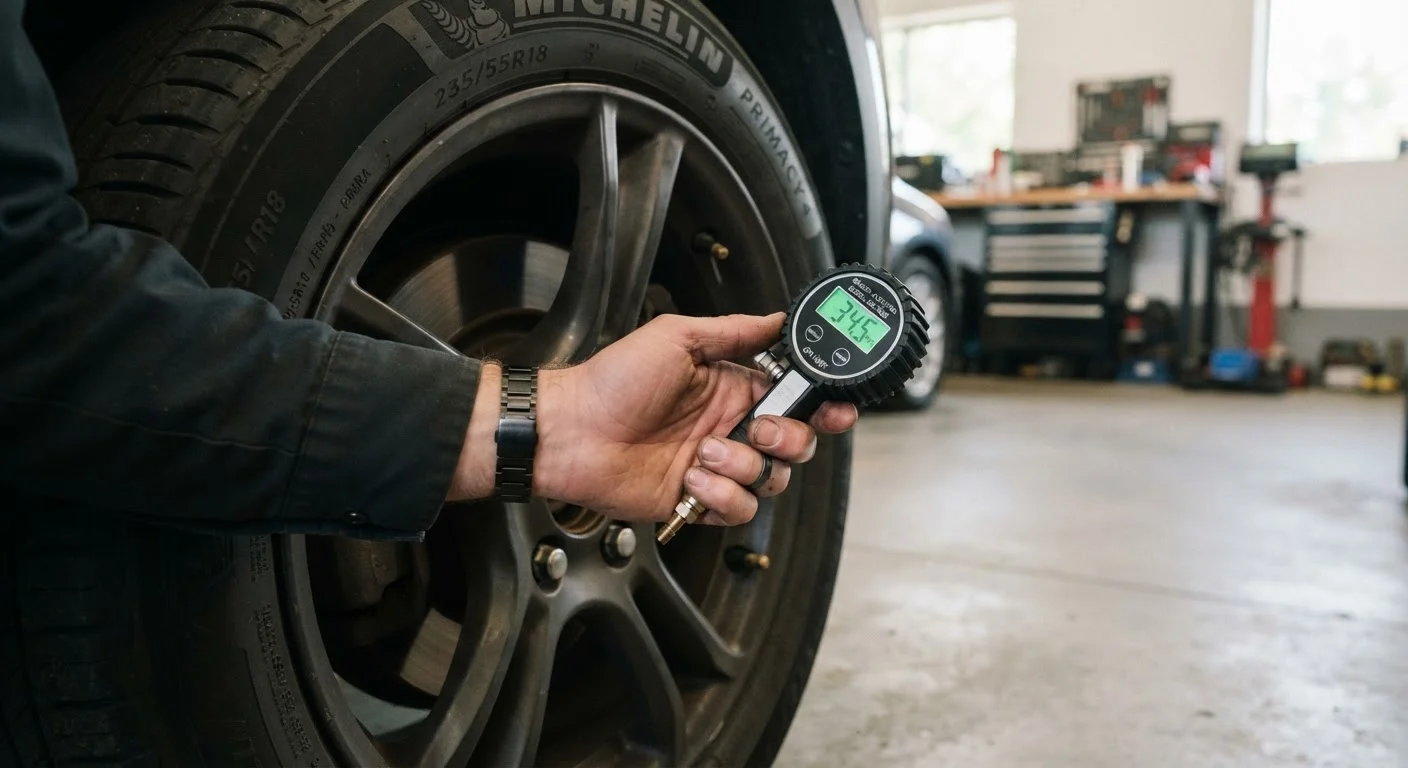
Tyre pressure readings are most accurate when the tyres are cold - meaning the car has been parked for at least three hours or driven fewer than a mile at low speed. Driving heats the air inside the tyre and raises the reading, which can make an under-inflated tyre appear fine. Check first thing in the morning for the most reliable result.
What Under-Inflation Actually Does
Running on tyres that are too soft is the more common problem. An under-inflated tyre flexes more with each rotation, generating extra heat and putting more rubber in contact with the road than intended. Over time, this causes the outer edges of the tread to wear down faster than the center - a pattern that shortens tyre life noticeably.
Handling suffers too. A soft tyre responds more sluggishly to steering inputs, and your stopping distance can increase. There's also a fuel cost: more rolling resistance means the engine burns more gas to maintain speed. It's a small hit per mile, but it adds up across thousands of miles.
~1 PSI
Pressure drop per 10°F temperature fall
A widely cited rule of thumb from tyre industry and automotive safety organizations.
25%
Pressure threshold before TPMS warning triggers
Most factory TPMS systems are calibrated to alert when pressure falls roughly 25% below the vehicle's recommended level.
Up to 10%
Potential tyre life reduction from chronic under-inflation
Estimates from tyre industry sources suggest significantly under-inflated tyres can wear out noticeably sooner than properly inflated ones.
As part of building good car care habits, tyre pressure sits near the top of the list precisely because it's easy to miss and quietly expensive when ignored.
What Over-Inflation Does
Too much air creates the opposite problem. An over-inflated tyre is stiffer than designed, which shrinks the contact patch - the part of the tyre actually touching the road. Less contact means less grip, particularly in wet conditions. Braking distances can increase, and the tyre becomes more vulnerable to damage from potholes or road debris because there's less cushioning.
Tread wear shifts toward the center of the tyre rather than the edges. You'll also feel it in the ride: over-inflated tyres transmit more road vibration into the cabin, making the car feel harsher than it should. See how pressure problems connect to stopping ability in our article on speed limits and stopping distances.
Front and Rear Pressures May Differ
Many vehicles specify different PSI for the front and rear axles, particularly rear-wheel-drive cars, trucks, and vehicles with larger rear engines or towing capacity. Always check the door jamb sticker for your specific vehicle - don't assume both axles use the same number. Using a single pressure for all four tyres when the manufacturer specifies different values can cause uneven wear patterns.
Temperature Changes and Regular Checks
Tyre pressure is not a set-it-and-forget-it number. Air contracts when it gets cold and expands when it gets warm. A tyre that's correctly inflated on a 70°F afternoon can be 4-6 PSI low on a freezing winter morning - enough to affect handling and wear. The general guideline is that pressure drops about 1 PSI for every 10°F drop in ambient temperature.
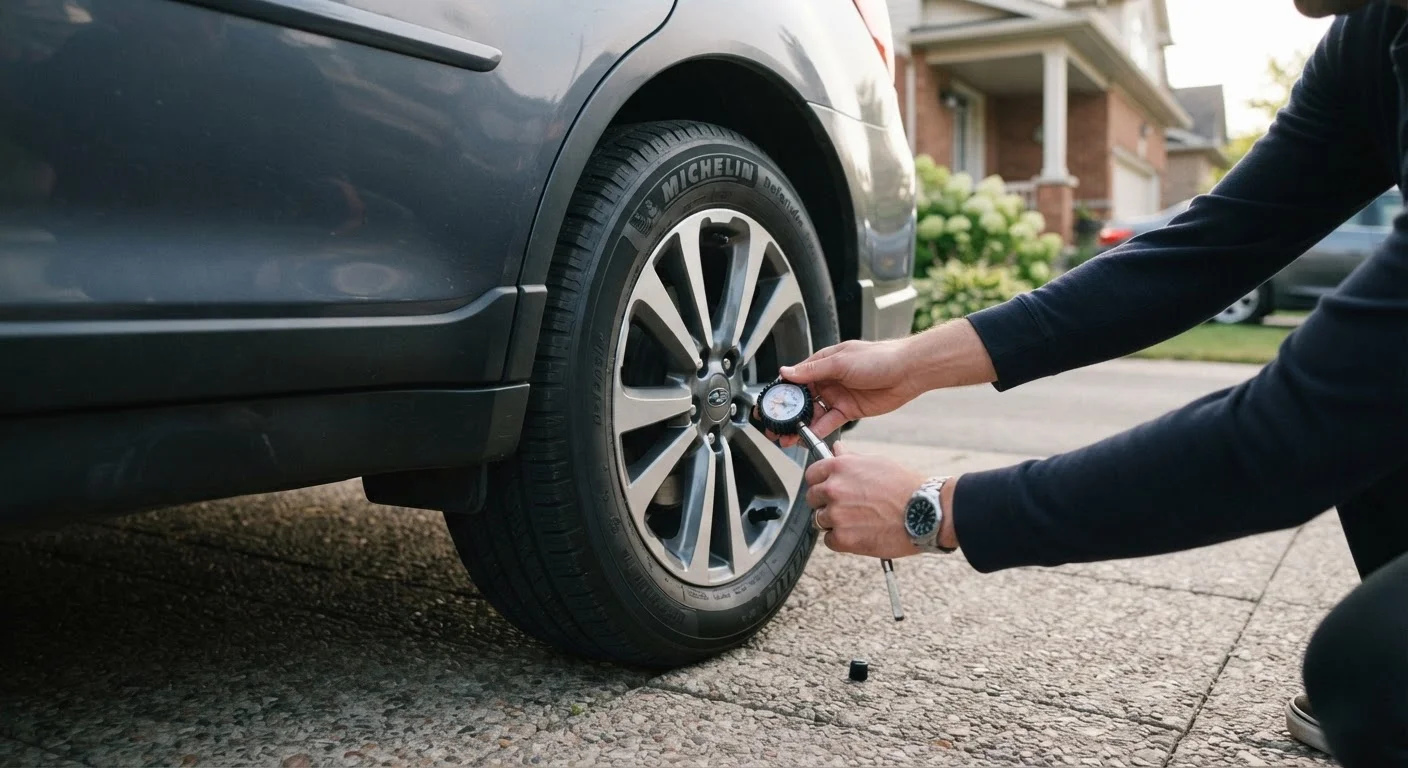
This is why a monthly check makes practical sense, and why the warning light on your dashboard (the TPMS, or Tyre Pressure Monitoring System) shouldn't be your only prompt. TPMS lights typically trigger only when pressure is already significantly low - usually 25% below recommended - by which point you've already been driving on compromised tyres for some time. A simple handheld gauge costs a few dollars and gives you accurate readings anytime.
Neglecting pressure is one piece of a broader maintenance picture. Skipping routine servicing across multiple systems compounds costs in ways that are hard to predict - and tyre wear is no different.
This article is for general informational purposes. Always refer to your vehicle's owner's manual and consult a qualified mechanic for advice specific to your car.