Why First-Time Registration Matters
Registering a vehicle puts it on record with your state as legally belonging to you. Without valid registration, you can't legally drive the car on public roads, and you may run into complications if the car is involved in an accident or needs to be sold later. The process is also how states collect fees and taxes tied to vehicle ownership.
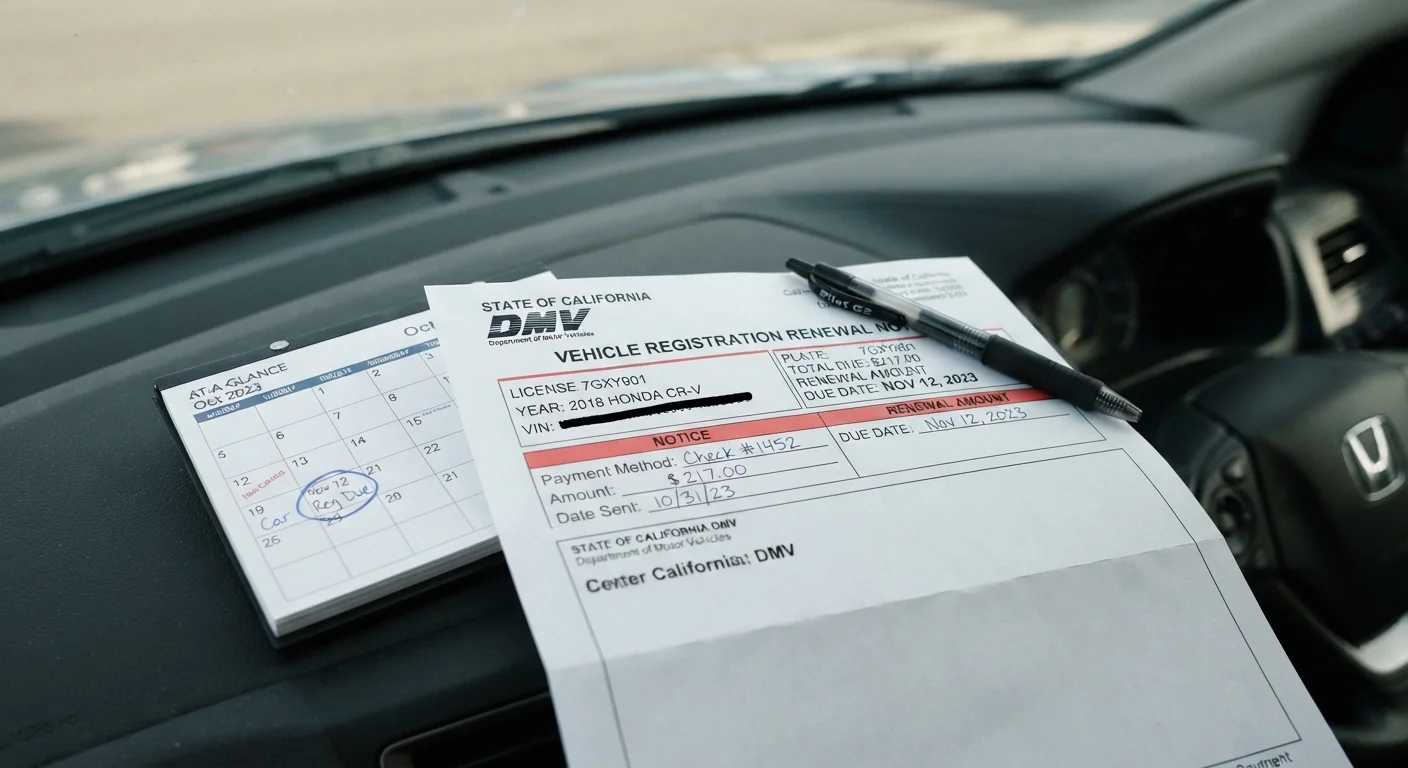
The good news: registration is a one-time paperwork hurdle for each vehicle you own. Once it's done, you simply renew on a schedule - usually annually or every two years. See our guide to what happens when your registration is about to expire for what comes next. And once you're registered and road-ready, our overview of car maintenance for new drivers is a smart next read.
Check Your State DMV Website First
Requirements differ meaningfully from state to state - some states require a vehicle inspection or emissions test before registration, others don't. Spending five minutes on your state's DMV website before you visit can save you a wasted trip. Many states also allow you to start or complete registration online.
What You'll Need Before You Start
Preparation is the most important part of a smooth registration visit. The exact list of required documents depends on your state, but the core items are consistent across most of the country.
What you will need
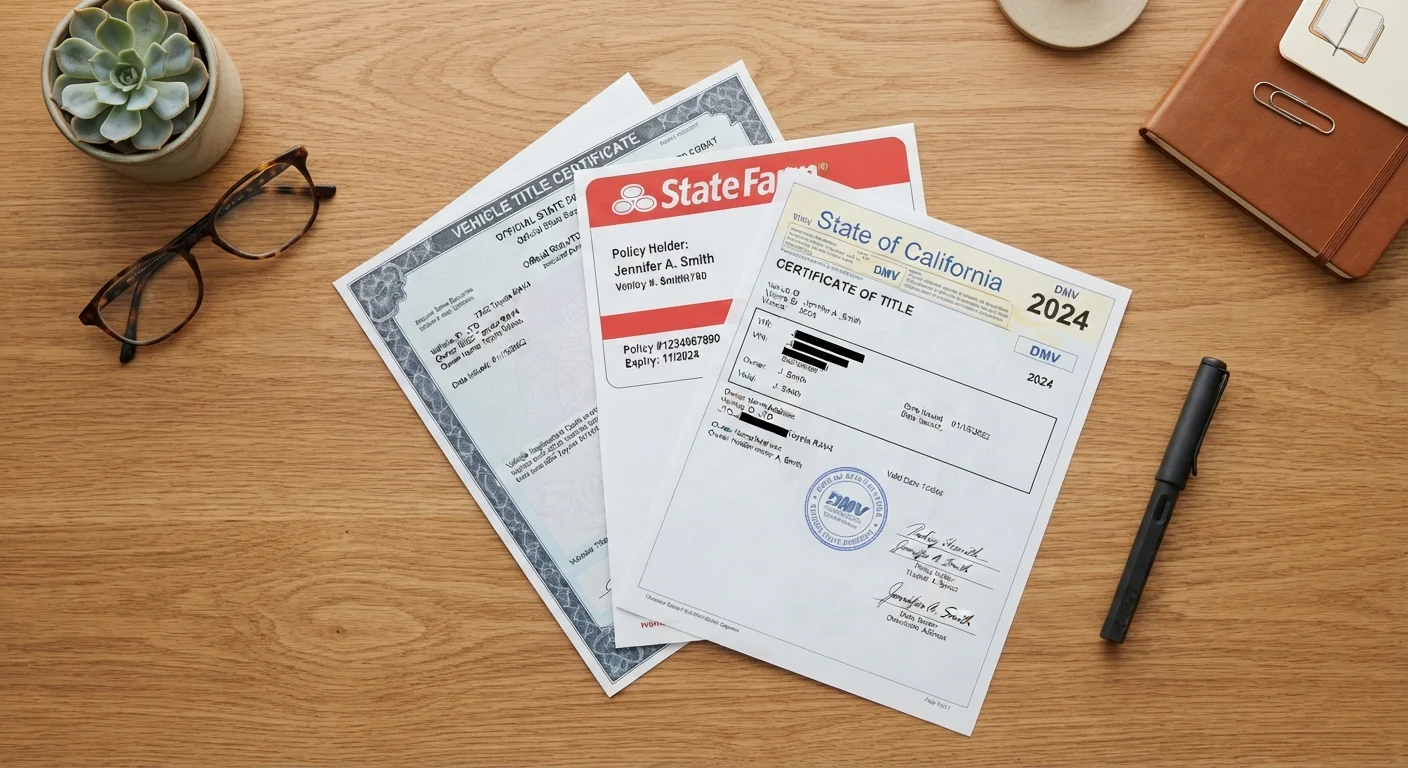
Certificate of Title
Proves legal ownership of the vehicle; must be signed over to you by the previous owner.
Valid Government-Issued ID
Confirms your identity and state residency at the DMV.
Proof of Auto Insurance
Most states require minimum liability coverage before issuing registration.
Odometer Disclosure Statement
Required for most vehicles under 10 years old to record the mileage at time of sale.
Bill of Sale
Documents the transaction details; often needed to calculate sales tax owed.
Payment for Fees and Taxes
Covers registration fees, title transfer fees, and any applicable sales or use tax.
Smog or Emissions Certificate
Required in certain states as proof the vehicle passes local emissions standards.
For a fuller picture of which ownership documents matter and how to store them safely, see The Paper Trail of Car Ownership.
Drive Only After Registration Is Complete
In most states, driving an unregistered vehicle on public roads is illegal and can result in fines, impoundment, or complications with your insurance. If you buy privately and need to drive the car home before registering, check your state's grace period rules - most allow a short window, but it varies. Do not assume you have more time than the law provides.
Step-by-Step: How to Register Your Vehicle
Follow these steps in order. If you're buying from a dealership, some steps may already be handled for you - ask the finance office exactly what they're taking care of before you leave.
Gather All Required Documents
Before you visit the DMV, pull together every document you'll need in one place. This typically includes the signed title, your driver's license, proof of insurance, a bill of sale, and an odometer disclosure statement. If you bought from a dealer, they may have pre-filled some of these forms - double-check before you leave the lot.
Confirm Your State's Specific Requirements
Visit your state DMV's official website and look up first-time registration requirements. Some states require a vehicle safety inspection or emissions test - and you must pass those before the DMV will register the car. Note your state's registration window: most states give you 30 to 60 days from the purchase date, but this varies.
Get the Title Transferred Into Your Name
If the title still shows the previous owner's name, it must be transferred to you first. For dealer purchases, the dealer typically handles this and mails you the new title. For private sales, the seller signs the back of the title over to you, and you bring it to the DMV to complete the transfer. The DMV will issue a new title in your name.
Calculate and Prepare for Fees
Registration fees are set by each state and often depend on factors like the vehicle's weight, age, or purchase price. On top of registration fees, you'll likely owe a title transfer fee and state sales or use tax on the purchase price. Your state DMV website usually has a fee estimator tool - use it so you know exactly how much to bring.
Visit the DMV and Submit Your Application
Bring all your documents and payment to your local DMV office. You'll fill out a registration application form - staff can help if you're unsure about any field. Submit everything together. The clerk will verify your documents, collect fees, and process your application. Wait times vary; making an appointment online is usually faster than walking in.
Receive Your Plates, Sticker, and Registration Card
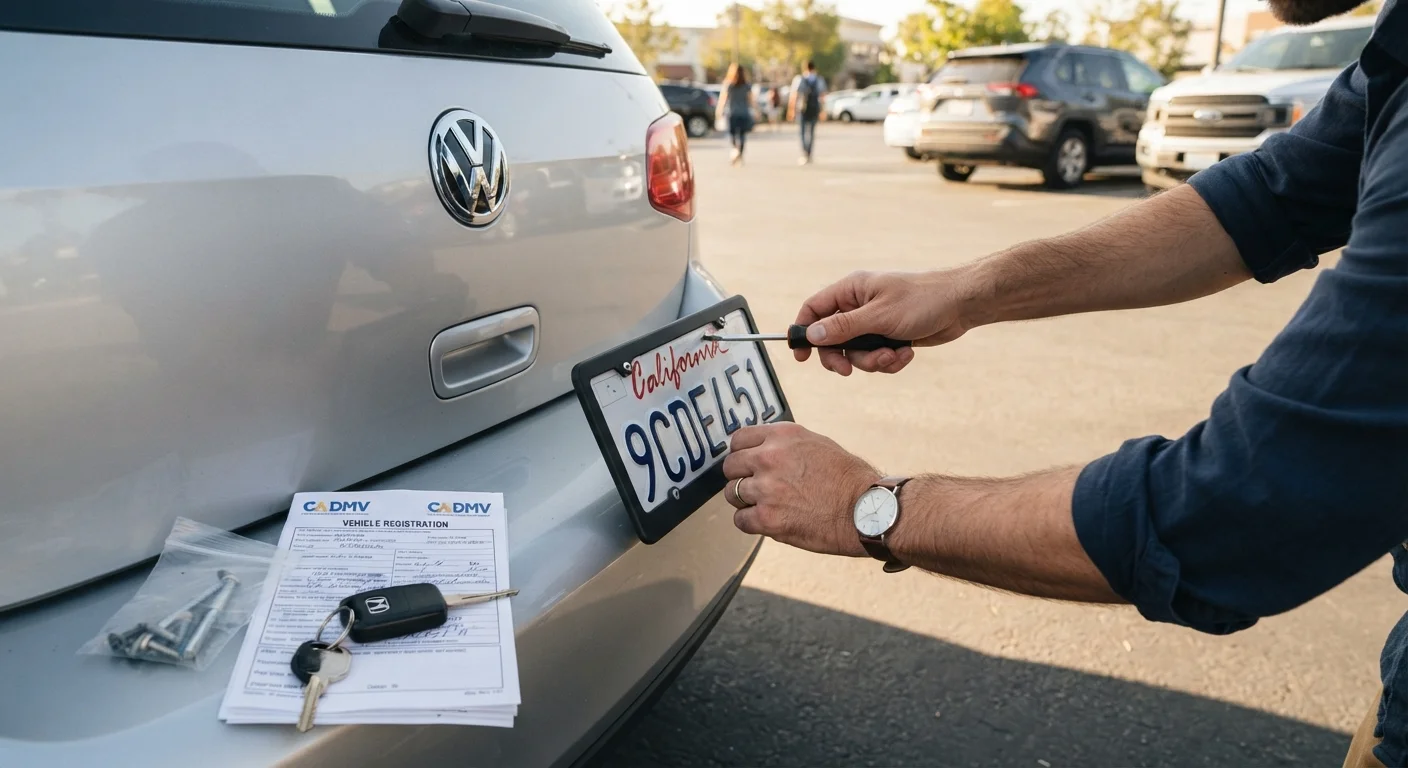
Once approved, you'll receive license plates (or keep existing plates in some states), a registration sticker for the plate, and a registration card. Attach the plates and sticker to your vehicle before driving away. Keep the registration card inside the vehicle - you're legally required to present it if a law enforcement officer asks.
Private-Sale Title Transfers Require Extra Steps
When you buy from a private seller, you are responsible for completing the title transfer yourself - the seller must sign over the title to you, and you must bring it to your DMV. An unsigned or incorrectly completed title can delay registration significantly. Inspect the title carefully before handing over payment.
After Registration: What to Do Next
Once your registration is complete, note the expiration date on your registration card and sticker - and set a reminder a few weeks before it's due. Letting registration lapse, even by a short period, can result in fines. Most states send a renewal notice by mail, but it's your responsibility to renew on time regardless of whether you receive one.
With your car properly registered, you're ready to focus on keeping it in good shape. Our car maintenance hub covers everything from oil changes to tire care. Safe travels.
This article is for general informational purposes only. Registration requirements, fees, and deadlines vary by state. Always verify current requirements directly with your state's DMV before completing any registration transaction.