Why Car Paperwork Actually Matters
Most drivers don't think about their car documents until they desperately need one - at a traffic stop, during a sale, or after an accident. Having the right papers in order isn't just about following rules; it protects your legal ownership, proves your coverage, and makes routine tasks like renewals far less stressful.
This guide walks through the core documents every car owner in the US should keep, explains what each one does, and offers practical tips on where to store them. Think of it as a quick reference you can return to anytime.
| Documents to keep in the car | Registration card, proof of insurance |
| Documents to store at home | Original title, loan/lease agreement, maintenance records |
| Title holds a lien if | You still have an active auto loan |
| Registration renewal frequency | Annually or biannually, varies by state |
| Digital insurance cards | Accepted in most US states; verify your state's rules |
| VIN location | Dashboard (driver's side), door jamb, or title document |
The Six Documents Every Car Owner Needs
1. Certificate of Title
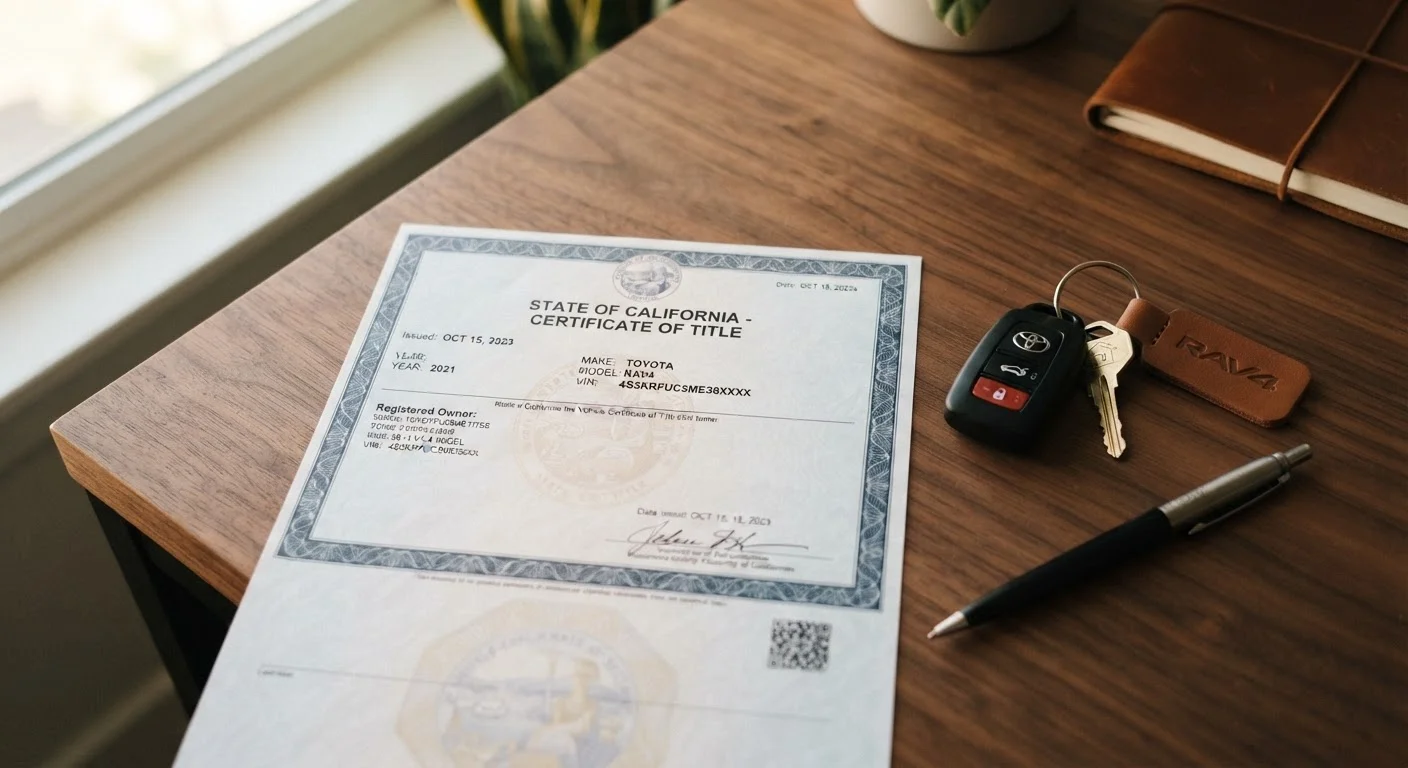
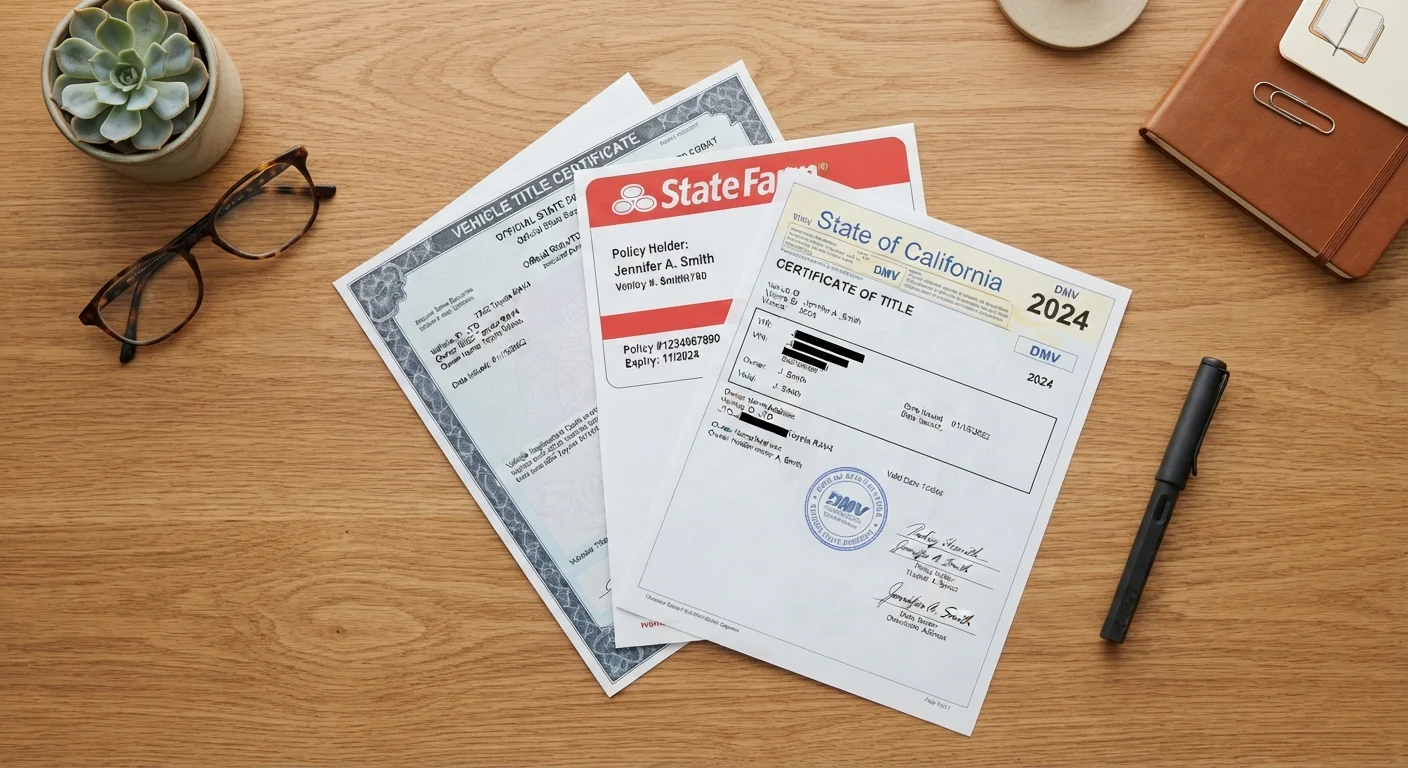
The title is the legal document that proves you own the vehicle. It lists the owner's name, the Vehicle Identification Number (VIN), and any lien (loan) held against it. When you pay off a car loan, the lender removes their name from the title - a step worth following up on. Learn how a car title works and why it matters before your next vehicle transaction.
2. Vehicle Registration
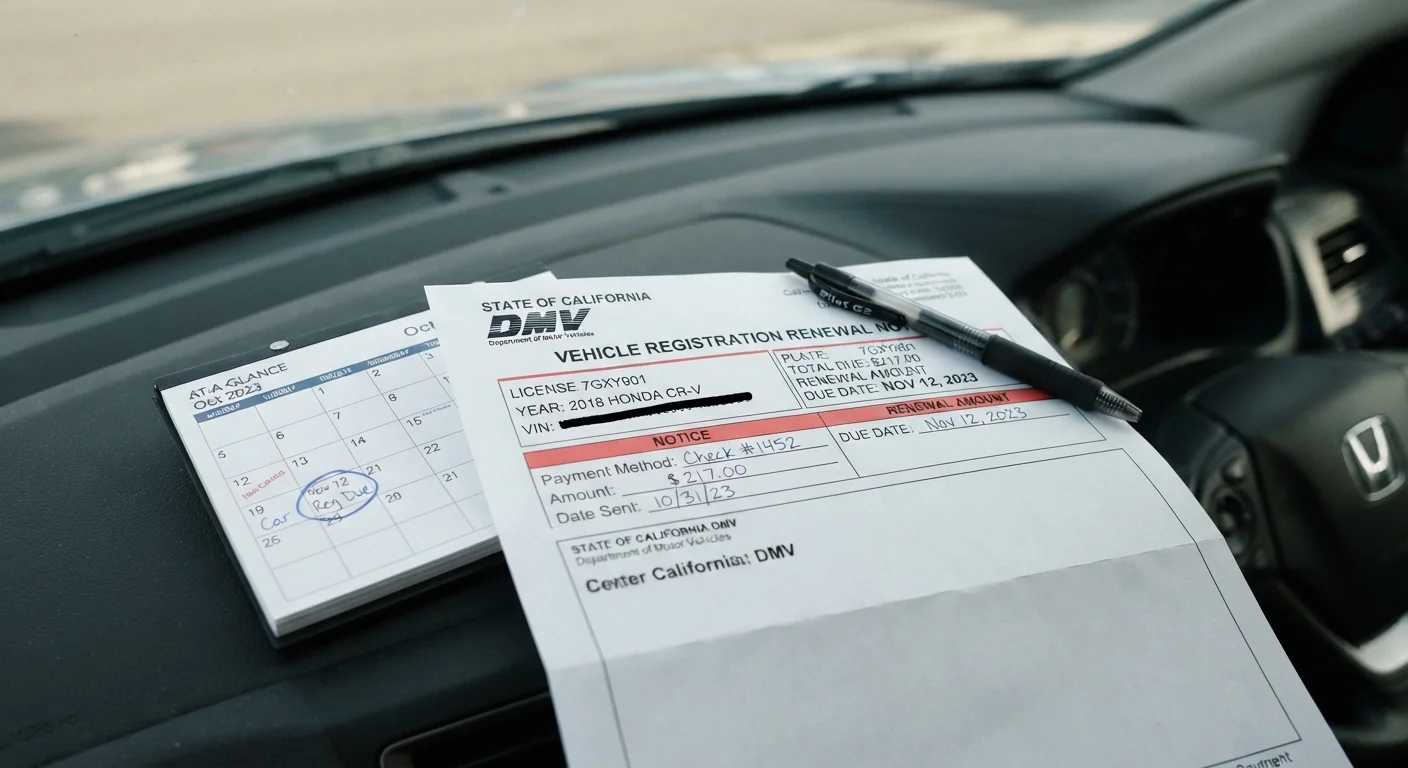
Your registration card confirms the car is legally registered with your state's DMV (Department of Motor Vehicles). It must typically be renewed annually or biannually, depending on your state. Keep the current registration card in your glove box. What to do when your vehicle registration is about to expire covers renewal deadlines clearly.
3. Proof of Insurance
Every state requires drivers to carry at least a minimum level of liability insurance. Your insurance card - paper or digital - is what you present at traffic stops and accident scenes. Check that it shows a current policy period and keep a spare copy at home.
4. Driver's License
Your license travels with you, but it's worth mentioning here because many document mix-ups involve an expired license. Set a phone reminder well before the expiration date on yours.
5. Loan or Lease Agreement
If you financed or leased the car, this contract spells out your payment terms, mileage limits, fees, and what happens if you want to end the agreement early. Store it somewhere you can find it - disputes are much easier to resolve when you have the original terms in hand.
6. Maintenance and Repair Records
Oil changes, brake jobs, recalls addressed - a running log of service work protects you. It helps diagnose recurring issues and adds credibility (and often real value) when you eventually sell the car. Building consistent car maintenance habits makes keeping these records second nature.
Certificate of Title
The official legal document proving vehicle ownership, issued by your state's DMV. It includes the owner's name, VIN, and any lien information.
Lien
A lender's legal claim on a vehicle used as collateral for a loan. The lien is removed from the title once the loan is fully paid off.
VIN (Vehicle Identification Number)
A unique 17-character code assigned to every vehicle at manufacture. It appears on the dashboard, door jamb, title, and registration.
Vehicle Registration
A state-issued document confirming your car is legally registered and road-worthy. It must typically be renewed on a set schedule and kept in the vehicle.
Proof of Insurance
A card or digital document showing your vehicle is covered by an active insurance policy. Required by law in all US states when operating a vehicle.
Where to Store These Documents
Different documents belong in different places. Here's a practical breakdown:
- Glove box: Registration card and proof of insurance. These are the two you'll need to produce quickly at a traffic stop or accident.
- Home file or safe: Title, loan agreement, and copies of everything. Never keep the original title in the car - if the car is stolen, you lose proof of ownership along with it.
- Digital backup: Photograph or scan every document and store copies in a secure cloud folder or encrypted drive. Some states also accept digital insurance cards on your phone - check your state's rules.
Keep the Title Out of the Car
It's tempting to put everything vehicle-related in the glove box, but the title should never live in the car. If the vehicle is stolen, you'd lose the primary document proving you own it. Store the original title at home in a fireproof box or secure file, and keep a photocopy with your other car papers.
For broader tips on managing what car ownership actually costs, see smart habits for managing the financial side of car ownership. And if you're still getting set up with a new vehicle, the first-time vehicle registration walkthrough is worth a read.