Why Registration Renewal Deserves a Spot on Your Calendar
Vehicle registration is one of those recurring car ownership tasks that's easy to forget until the deadline is uncomfortably close - or already past. Unlike an oil change, your registration doesn't send you any warning lights. In most states, you're responsible for tracking the expiration date yourself, even if a renewal notice arrives in the mail.
Driving with an expired registration is a traffic violation in every state. Depending on where you live, the consequences range from a modest fine to your vehicle being impounded. Insurance companies can also complicate claims if your registration was lapsed at the time of an incident. It pays - literally - to stay ahead of this.
This checklist walks you through everything you need to gather, check, and do before your registration expires. If you're dealing with registration for the very first time rather than a renewal, see our step-by-step walkthrough for first-time registration instead.
Before You Start
Documents and Requirements
Completing the Renewal
After Renewal
What You'll Need to Complete the Renewal
Before you sit down to renew - online, by mail, or in person - it helps to have everything in one place. Missing a single document can send you back to square one, especially if you're renewing at a DMV office with a line out the door.
State DMV Website
The official source for your state's renewal process, fee schedules, required documents, and online renewal portal.
Current Vehicle Registration Card
Contains your vehicle identification number (VIN), plate number, and expiration date - required to initiate renewal.
Proof of Current Auto Insurance
Many states require proof of insurance at renewal; your insurance card or digital copy usually suffices.
Emissions or Safety Inspection Certificate
Required in many states before registration can be renewed; you'll receive a certificate after a passing inspection.
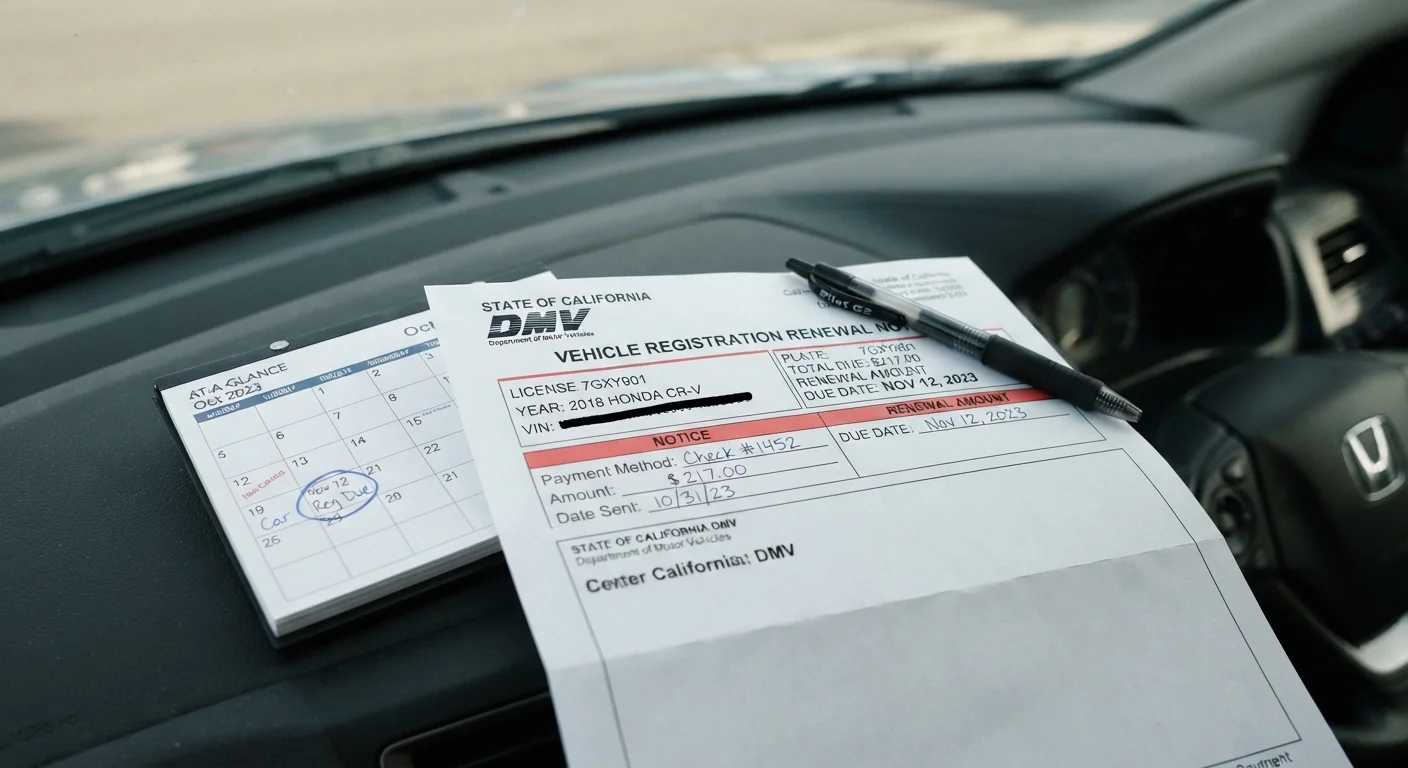
Mailed Renewal Notice
Includes a renewal ID or PIN that simplifies online or mail-in renewal; not required if you renew in person.
Registration fees are a normal part of what it costs to own a car. If renewal fees and other recurring expenses are putting pressure on your budget, our article on balancing the real costs of car ownership offers a grounded look at planning for these predictable expenses.
Mail Delays Can Catch You Off Guard
If you're renewing by mail, allow at least two to three weeks before your expiration date. Processing times and postal delivery are not guaranteed to be fast. Renewing online or in person is safer if your deadline is within two weeks.
Expired Registration Is a Traffic Violation
Officers can issue citations for expired registration even if it lapsed only recently. In some jurisdictions, a significantly expired registration can lead to vehicle impoundment. Don't assume a short lapse won't matter - renew as early as your state allows.
After You Renew: Confirming Everything Is in Order
Completing the renewal process isn't quite the finish line. A few follow-up steps make sure you're fully covered and won't face confusion during a traffic stop or your next renewal cycle.
Keeping registration current is just one part of responsible car ownership. Pairing it with regular upkeep - fluid checks, tire rotations, seasonal preparation - protects both your investment and your safety. Our seasonal car maintenance guide breaks down what to check throughout the year. For a broader look at managing the financial and administrative side of owning a vehicle, see our guide on smart habits for managing car ownership costs.
Always Keep Your Registration Card in the Vehicle
Law enforcement officers may ask to see your registration during a traffic stop. Your digital confirmation email is not a substitute for the physical registration card in most states. Once you receive the new card, swap it into your glove box immediately and discard the expired one.