Why Right of Way Trips Up So Many Drivers
Right of way is one of those rules that seems simple until you're sitting at a junction with another car staring back at you. Many drivers learned the basics for their test and never thought about it again - and that gap in knowledge is behind a surprising number of everyday fender-benders.
The core idea is straightforward: right of way rules tell you whose turn it is to move. They're not about being polite - they're about predictability. When everyone follows the same rules, traffic flows safely. When drivers guess or defer unnecessarily, that's when accidents happen.
For a broader look at habits that keep you safe before you even pull out of the driveway, see our pre-drive safety routine.
State Rules Can Vary
Right of way laws are set at the state level, not federally. While the core principles described here apply across the US, details - such as pedestrian crosswalk rules or roundabout signage requirements - can differ by state. When in doubt, check your state's official driver handbook for the exact rules where you drive.
Roundabouts: Traffic Inside Goes First
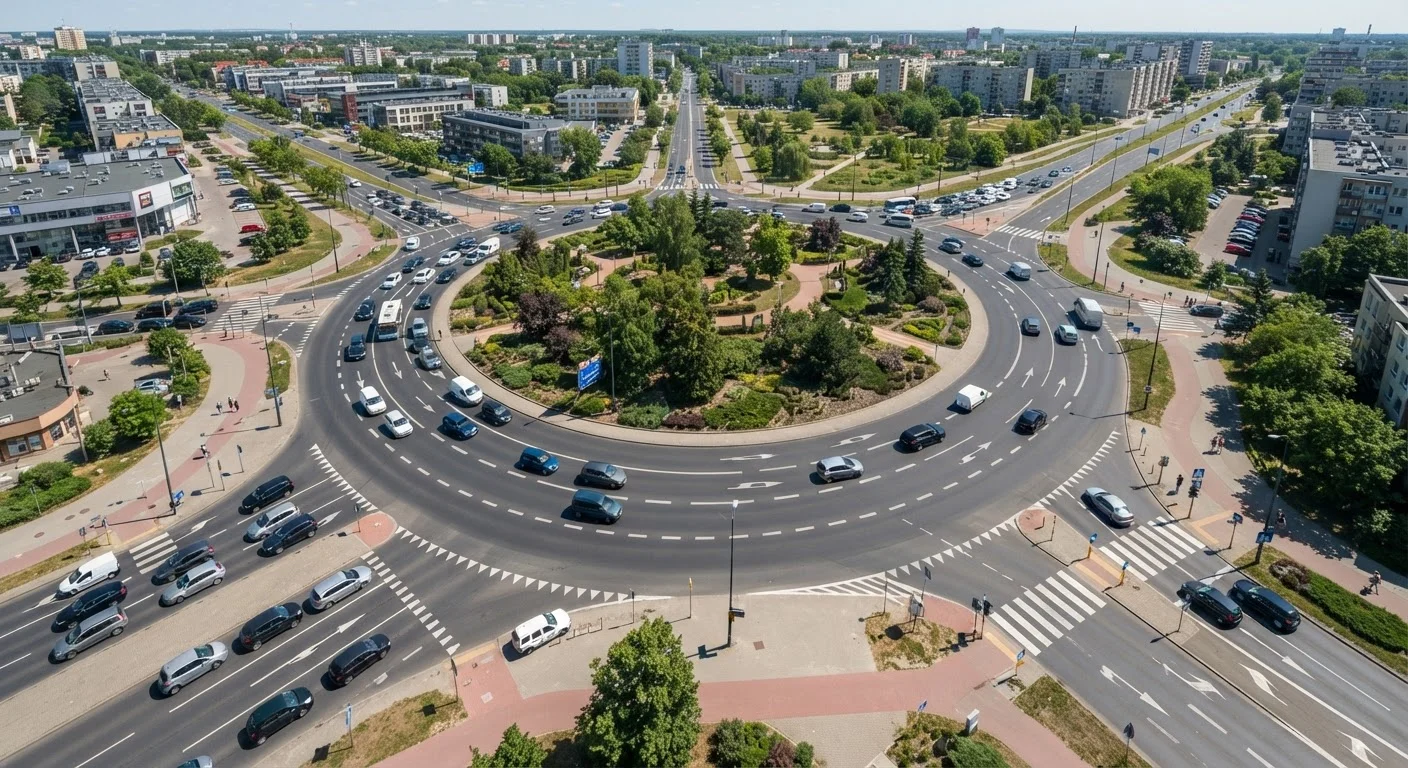
Roundabouts intimidate a lot of drivers, but the rule is actually one of the cleanest in traffic law: if you are entering, you yield to traffic already in the circle. Full stop.
Here's how to handle one confidently:
- Approach slowly and look left - that's where circulating traffic comes from.
- Wait for a gap in the flow before entering. Don't inch out and hope.
- Once inside, maintain your lane and signal your exit before you take it.
- Multi-lane roundabouts: choose your lane before you enter based on your exit. Right lane for exits in the first half of the circle; left lane for exits further around.
One common mistake is stopping inside the roundabout to let someone in. You don't need to - and doing so can cause rear-end collisions. Keep moving once you're in the flow.
~40%
Of all US traffic crashes occur at intersections
According to the Federal Highway Administration, intersection-related crashes account for a large share of total road fatalities and injuries each year.
~75%
Reduction in serious injury crashes at roundabouts vs. signals
The Insurance Institute for Highway Safety (IIHS) has found that converting signalized intersections to roundabouts can substantially reduce serious crashes due to lower vehicle speeds and fewer conflict points.
Four-Way Stops and Uncontrolled Intersections
Four-way stops follow a clear order of priority:
- First to arrive, first to go. If you got there before everyone else, proceed when it's safe.
- Tie goes to the right. If two cars arrive at the same time, the driver on the left yields to the driver on the right.
- Straight traffic beats turning traffic. If you're turning left and someone is going straight, they go first.
At uncontrolled intersections - junctions with no signs or signals - the same right-of-the-right rule applies. These are most common in residential neighborhoods. Slow down, check all directions, and yield to anyone already in or approaching from your right.
When in Doubt, Yield
If you're ever unsure who has the right of way, yielding is the safer choice. Giving up your turn costs you a few seconds; misjudging costs far more. Defensive driving means assuming others may not follow the rules perfectly and leaving yourself room to respond.
Turning Left: Almost Always a Yield Situation
Left turns are one of the most common places drivers get right of way wrong. The rule is consistent: when you turn left, you yield to oncoming traffic going straight and to cyclists or pedestrians in your path.
This applies at:
- Intersections with a green light (not a green arrow)
- Driveways and parking lot exits
- Any point where your path crosses oncoming lanes
A green arrow signal is different - it means oncoming traffic has a red, so you can turn freely. A standard green light does not grant that protection.
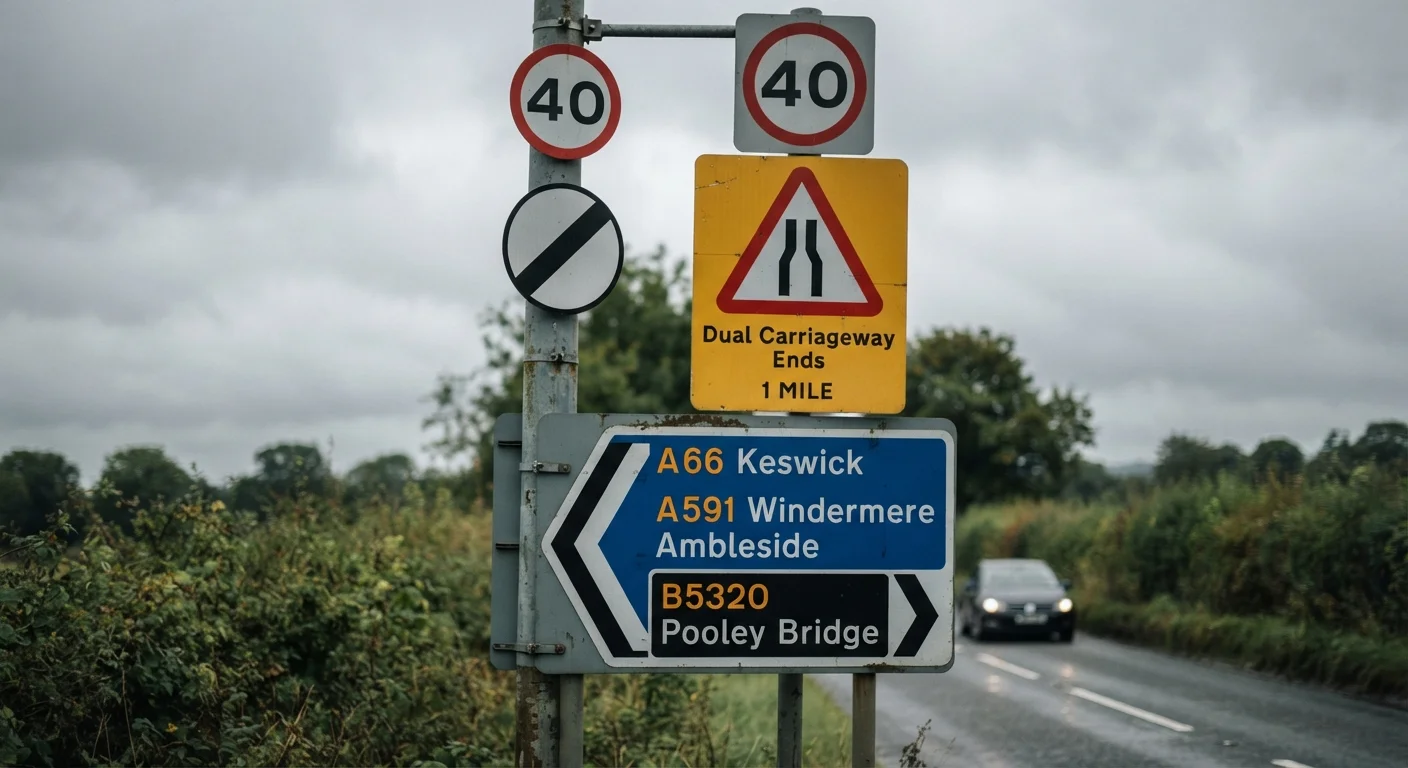
If you're also working on understanding the signs that signal these situations, our guide to road signs that confuse even experienced drivers covers the markings most likely to catch you off guard.
Yield Signs, Merge Lanes, and Pedestrians
Yield signs mean exactly that - slow down, assess, and give the right of way to crossing traffic. You only have to stop if something is actually coming. On highway on-ramps, merging drivers yield to highway traffic; the vehicles already on the highway do not have to make room, though courteous drivers often do.
Pedestrians at marked crosswalks and at intersections with walk signals always have priority over turning vehicles. In most US states, drivers must also yield at unmarked crosswalks - any intersection where a pedestrian steps out to cross, even without painted lines.
This article is for general information only. Always consult your state's official driver handbook or a qualified driving instructor for guidance specific to your location and situation.