
Why Safe Driving Is a Lifelong Practice
Most people treat safe driving as something you learn once and then simply do. Pass the test, get your license, and you're set. In reality, driving safely is closer to a skill you maintain - one that can erode or improve depending on your habits, your awareness, and how willing you are to keep learning.
Statistics from the National Highway Traffic Safety Administration consistently show that crashes aren't random events. They cluster around predictable factors: distraction, impairment, speeding, and fatigue. Most of these are within a driver's control. That's both sobering and encouraging - it means deliberate choices make a real difference.
This guide maps the key areas of driving safety from your first lessons through decades of experience. Think of it as a reference point you can return to at any stage.
94%
Crashes involving human error
The NHTSA estimates approximately 94% of serious crashes involve driver choice or error as a critical factor.
300 ft
Stopping distance at 60 mph
At 60 mph under normal dry conditions, a typical passenger vehicle requires around 300 feet to come to a full stop.
1 in 25
Drivers who have fallen asleep at the wheel
CDC data indicates about 1 in 25 adult drivers report having fallen asleep while driving in the previous 30 days.
Core Skills Every New Driver Needs
New drivers typically focus on mechanics - steering, braking, parking - but the habits formed in the first months of driving tend to stick for a long time. That makes early driving the most important time to build the right foundations.
- Scanning ahead: Look 10-15 seconds down the road, not just at the car in front. This gives you time to react to hazards early.
- Managing space: Maintain a following distance of at least three seconds in normal conditions, more in rain, fog, or heavy traffic.
- Smooth inputs: Abrupt braking and sharp steering increase crash risk. Practice smooth, gradual movements.
- Checking mirrors regularly: Every 5-8 seconds is a reasonable habit - enough to stay aware of what's happening around you without fixating on the mirrors.
Speed management is especially critical early on. New drivers often underestimate how much stopping distance increases at higher speeds. At 60 mph, a car typically needs around 300 feet to stop - the length of a football field.
When learning to judge following distance, pick a fixed roadside marker and count 'one-thousand-one, one-thousand-two, one-thousand-three' after the car ahead passes it. If you reach the marker before you finish counting, you're too close.
The three-second rule is widely taught by driving instructors because it adjusts automatically for speed - unlike fixed distance rules - making it practical in real-world conditions.
Before you check your mirrors, briefly glance at the road ahead to confirm it's clear - then check the mirror, then look forward again. This keeps your eyes on the road the majority of the time.
Instructors call this 'eyes on the road' discipline. Brief mirror checks while also managing what's ahead prevent fixation on any single point - a common factor in rear-end collisions.
Habits That Keep Experienced Drivers Safe
Experience builds confidence, and that's mostly a good thing - but it can also breed complacency. Drivers with years behind the wheel sometimes develop small shortcuts that they don't notice because nothing has gone wrong yet. Our article on habits that quietly make drivers less safe explores these in detail.
Common examples include: rolling through stop signs at familiar intersections, holding a phone while stationary in traffic, or routinely driving slightly above the speed limit on known roads. Each behavior feels low-risk in isolation. In combination - or in an unexpected situation - they reduce your safety margin significantly.
The antidote isn't anxiety; it's periodic self-assessment. Ask yourself honestly whether your driving today looks like your driving on your road test. If the gaps are significant, they're worth addressing.
Familiarity Doesn't Mean Safety
Drivers are statistically more likely to crash close to home than on unfamiliar roads. Familiarity reduces perceived risk and invites lower attention. Treat every trip - even a short one - as requiring the same basic level of focus.
How Your Car's Condition Affects Safety
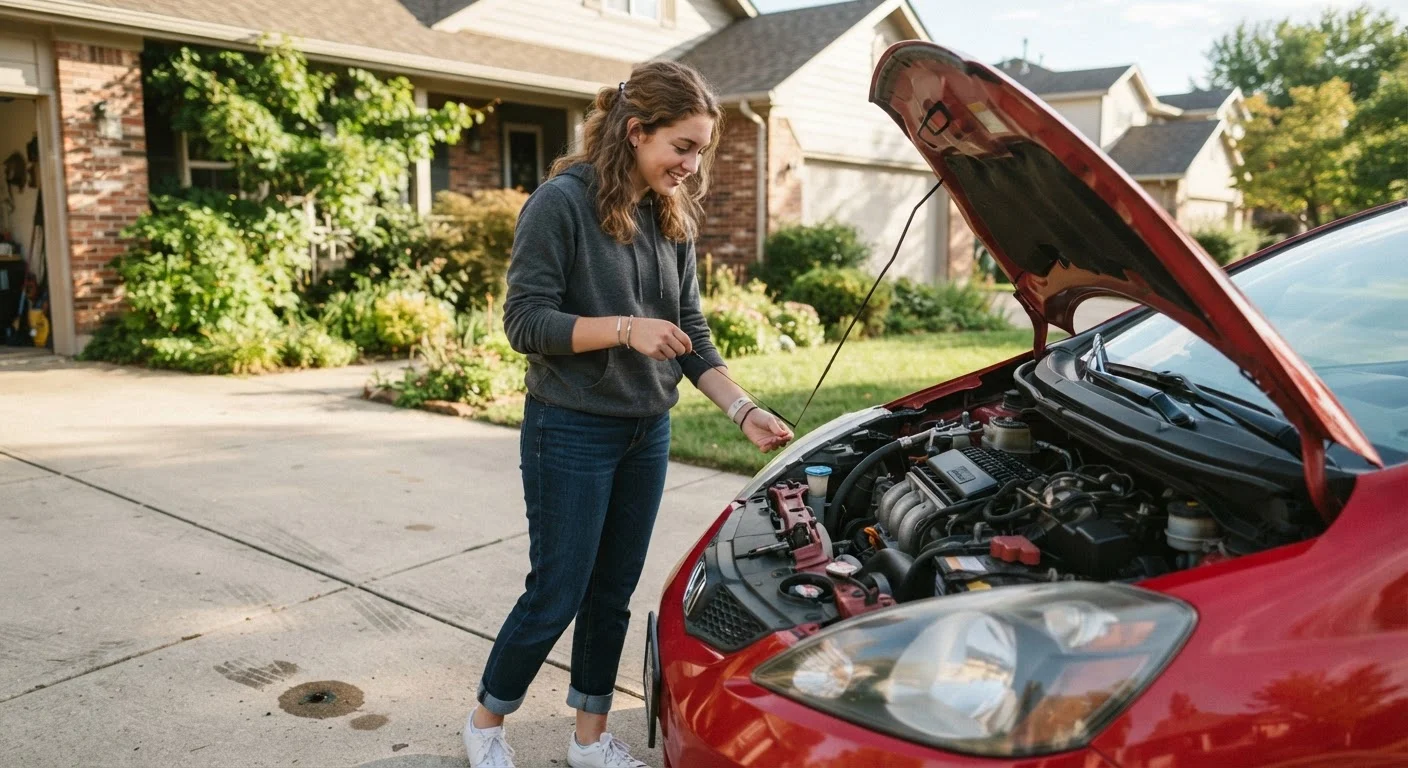
Driving skill can only do so much if the vehicle itself isn't roadworthy. Tires, brakes, lights, and fluid levels all directly affect how a car handles - especially in emergency situations. A car with worn tires needs significantly more distance to stop on a wet road compared to one with tires in good condition.
For a full breakdown of what to check and when, our car maintenance overview for new drivers covers routine upkeep in plain language. Additional resources on vehicle care are organized in our car maintenance hub.
A quick pre-drive visual check - tires, lights, mirrors, and fluid warning lights on the dashboard - takes less than two minutes. Our companion piece on pre-drive safety routines walks through exactly what to look for.
Make Vehicle Checks a Quick Habit
You don't need a full mechanical inspection before every drive. A 60-second walk-around to check tire pressure visually, confirm all lights work, and glance at dashboard warning lights covers the most common issues. Catching a slow-leaking tire or a burned-out brake light early is far easier than dealing with the consequences later.
Long-Haul and Highway Driving Considerations
Driving long distances introduces a specific set of risks that don't apply to short urban trips. The biggest is fatigue. Highway driving is monotonous by design, and that monotony accelerates drowsiness. Research suggests that drowsy driving impairs reaction time in ways comparable to alcohol impairment.
Practical steps that help on long trips:
- Plan stops every two hours or 100 miles - whichever comes first.
- Avoid driving between midnight and 6 a.m. when your body's circadian rhythm naturally pushes toward sleep.
- Travel with another licensed driver when possible and take turns.
- If you feel drowsy, pull off safely and rest. Caffeine can temporarily blunt the feeling of tiredness but does not eliminate the underlying fatigue.
Highway merging, lane discipline, and maintaining consistent speed are also skills worth consciously practicing. High-speed environments reduce the time available to react, so smooth, predictable behavior matters more, not less.
Building Your Personal Safety Routine
The most effective safety practices aren't grand gestures - they're small, consistent habits repeated over thousands of trips. The drivers with the cleanest records tend to be deliberate rather than just experienced.
A practical personal safety routine might look like:
- A 60-second walk-around before longer trips to check tires and lights.
- Phone in the glovebox or on Do Not Disturb before you start the engine.
- A mental note of road and weather conditions as you leave.
- Periodic honest review of your own driving habits - ideally after a close call, not just as an annual resolution.
For drivers navigating the broader responsibilities of vehicle ownership - insurance, registration, and financing - our car ownership basics hub covers the administrative side in straightforward terms.
Safe driving doesn't require perfection. It requires showing up to each trip with the same care you brought to your first one.
Safe Driving Looks Different at Every Stage
New drivers need to build foundational skills and good early habits. Mid-career drivers need to guard against complacency. Older drivers may benefit from periodic refresher courses as reaction times and vision naturally change. There's no single stage at which safety work is 'done.'