Why Safe Driving Habits Slip Without Anyone Noticing
Most drivers don't set out to become less safe. What usually happens is subtler: a habit forms, nobody crashes, and the brain files it away as acceptable. Over months or years, shortcuts that started as one-offs become the default way of driving.
This is sometimes called habituation - the more familiar something feels, the less mental attention we give it. Driving is one of the most familiar things many people do every day, which makes it a prime candidate for this kind of quiet degradation.
The good news is that most of these habits are correctable. Understanding why they form is often enough to break the cycle. For a broader look at building safer routines from the start, see our driving safety overview.
Checking mirrors less frequently as driving experience grows.
Why it happens: New drivers are taught to scan mirrors constantly, but with experience this deliberate habit fades and mirrors get checked only when something feels wrong.
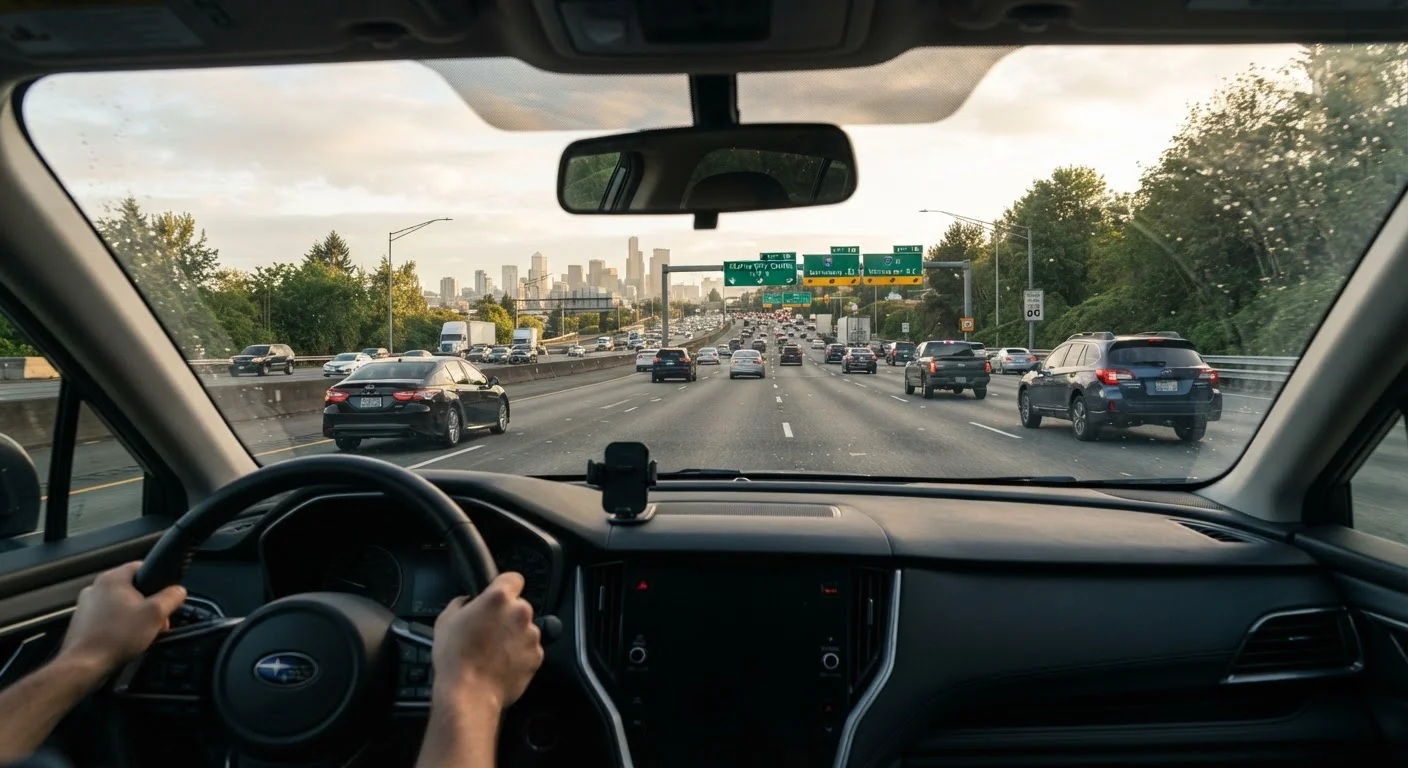
Following the car ahead too closely - known as tailgating.
Why it happens: In heavy traffic, drivers unconsciously match the spacing around them rather than calculating a safe stopping distance, so close following starts to feel normal.
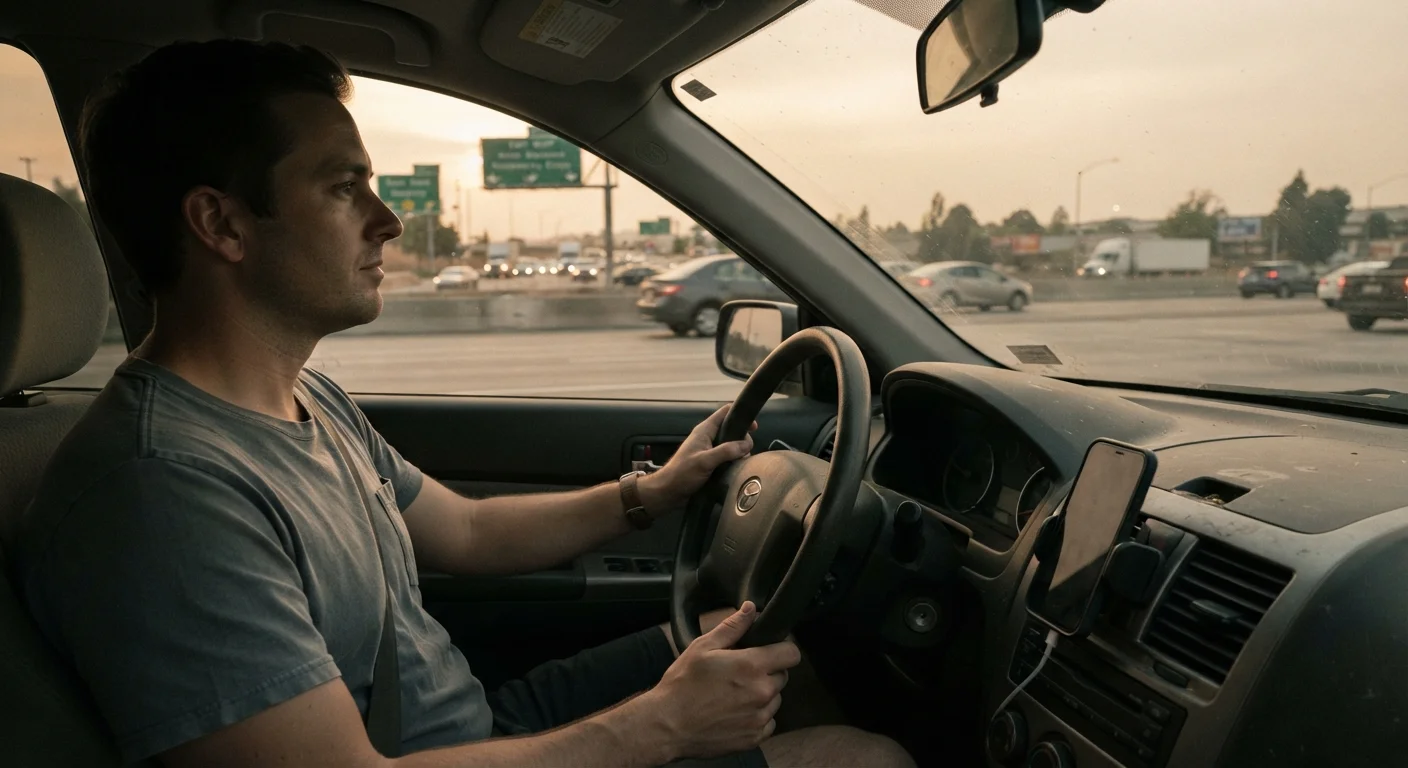
Using a phone at low speeds or in traffic queues, assuming the risk is lower.
Why it happens: Slow-moving traffic feels less dangerous, so the brain relaxes its guard. A quick glance at a notification feels inconsequential - but reaction time is still impaired.
Over-relying on cruise control in situations that demand active speed management.
Why it happens: Cruise control is genuinely useful on open highways, but drivers sometimes engage it in light traffic or variable-speed zones, then mentally disengage from speed management.
Skipping a walkaround check before driving - especially after the car has sat overnight or for several days.
Why it happens: Most of the time, nothing is wrong. So the habit of checking tyres, lights, and mirrors before a trip fades into something drivers mean to do but rarely do.
Driving while drowsy without recognizing the impairment.
Why it happens: Fatigue is gradual and self-concealing - the brain is poor at accurately judging how impaired it is, so drivers often underestimate how tired they really are.
The Habits That Do the Most Damage Over Time
The mistakes below aren't dramatic. That's precisely why they're dangerous - they don't feel like mistakes at all, until something goes wrong.
~20%
Crashes linked to driver fatigue
The National Highway Traffic Safety Administration (NHTSA) has estimated that drowsy driving contributes to a significant share of serious crashes each year in the US.
3 sec
Average eyes-off-road time per text
NHTSA data indicates that sending or reading a text takes a driver's eyes off the road for about three seconds on average - enough to travel the length of a football field at highway speed.
If fatigue is a factor in your driving, it's worth reading our dedicated guide on how fatigue affects driving. And for the mental framework that ties all of this together, defensive driving principles is a practical companion read.
Habit Doesn't Equal Safety
A routine that hasn't caused a problem yet isn't the same as a safe routine. Crash statistics consistently show that experienced drivers are involved in a large share of accidents - not because skill fades, but because familiarity breeds complacency. Treat each drive as its own event, not a repetition of the last.
Conditions on the road also change what safe habits look like day to day - our articles on driving in bad weather and night driving risks cover how to adapt. Keeping your vehicle in good shape is part of the picture too - the car maintenance hub covers the essentials.
Phone Use While Driving Is Illegal in All US States
Handheld phone use while driving is prohibited in most US states, and hands-free rules vary by state and are tightening. Beyond the legal risk, research consistently shows that even hands-free conversations impair driving attention. If a call or message truly can't wait, pull over safely before engaging with your phone.