Hydration Is Bigger Than Your Water Bottle
Most of us think about hydration as a drinking problem - not enough glasses of water ticked off the day's list. But your body draws fluid from everything you consume, including food. Research consistently estimates that food accounts for roughly 20% of total daily fluid intake for many people, sometimes more depending on diet.
This matters because it shifts the conversation away from a single number of glasses per day and toward the bigger picture of what's on your plate. Understanding how food fits into hydration makes it easier to meet your body's needs without overthinking it.
~20%
Daily fluid from food, not beverages
Health nutrition research broadly estimates that food contributes around 20% of total daily fluid intake for most adults on a typical diet.
96%
Water content of cucumber by weight
Cucumber is among the highest-water-content foods commonly available, making it a particularly efficient hydrating food choice.
3+ liters
Estimated daily total fluid needs (adults)
General guidance from health authorities suggests most adults need roughly 2-3+ liters of total fluid daily, varying with size, activity, and climate.
Which Foods Hydrate You Most?
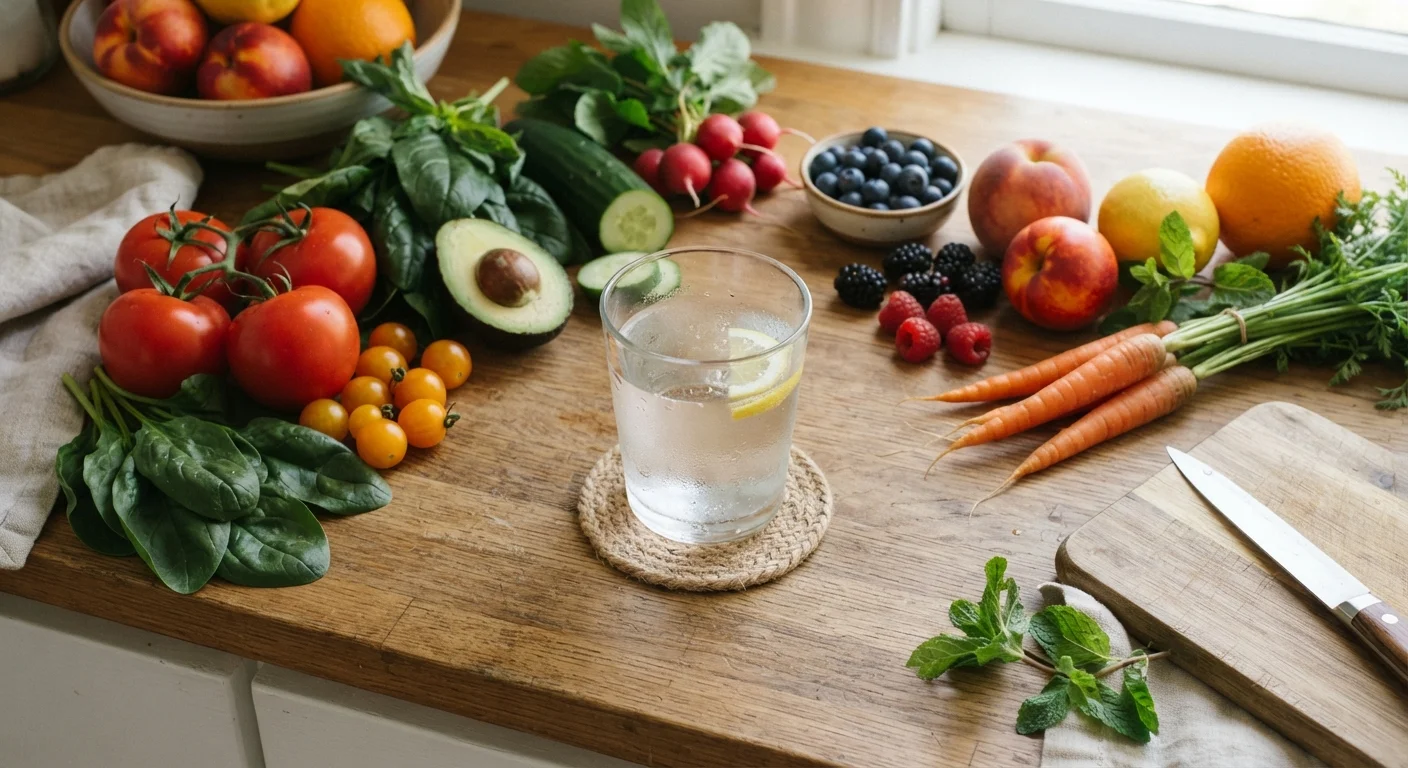
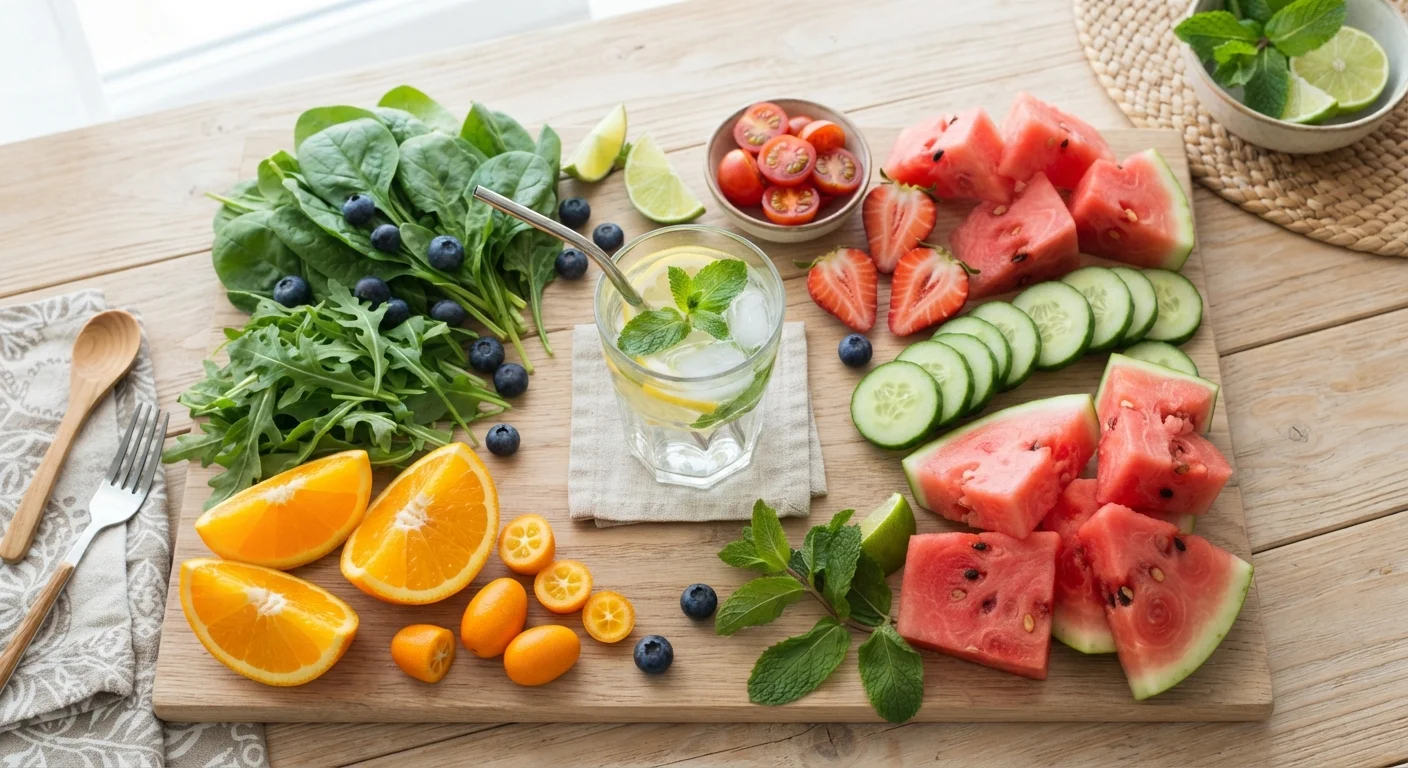
Water content varies enormously across foods. Cucumbers, lettuce, celery, tomatoes, and zucchini are all over 90% water by weight. Watermelon, strawberries, peaches, and oranges aren't far behind. Even foods you might not think of as particularly "wet" - like plain cooked oatmeal or yogurt - contribute meaningful fluid.
On the other end of the spectrum, highly processed snacks, crackers, and cured meats are very low in water. A diet heavy in these foods provides little hydration from food itself, placing more pressure on your beverage intake to keep up.
Easy Ways to Eat More Hydrating Foods
Try adding cucumber, tomatoes, or leafy greens to meals where you'd normally skip vegetables. Swapping a dry snack for a piece of fruit or a small bowl of berries is a simple shift that adds both fluid and nutrients. Small, consistent changes across the day are more sustainable than dramatic overhauls.
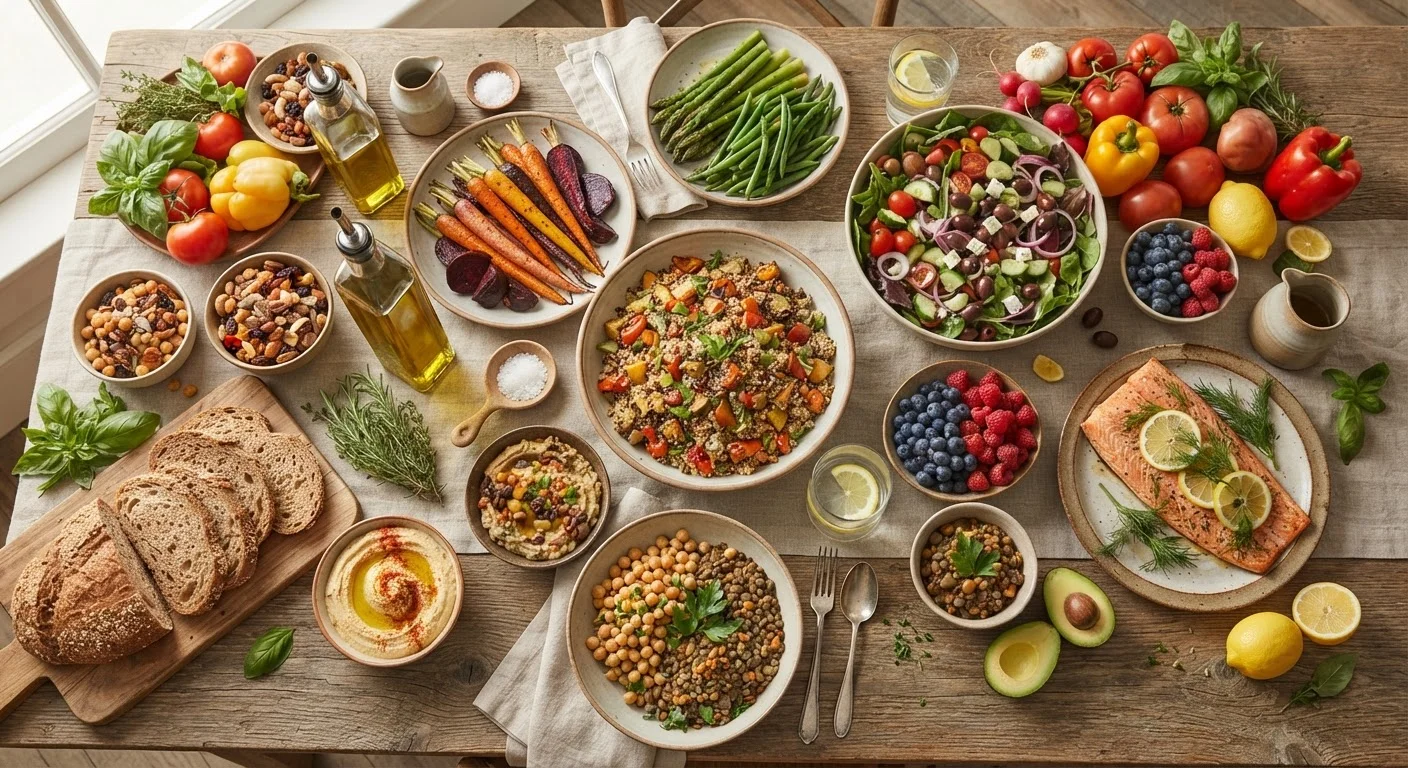
Eating patterns built around whole foods naturally support hydration. The dietary approaches with the most evidence behind them - such as Mediterranean-style eating - tend to be rich in produce, which means they're incidentally hydrating too.
Foods That Increase Your Fluid Needs
Just as some foods support hydration, others increase the amount of fluid your body needs to function well. High-sodium foods are the clearest example: excess sodium prompts the kidneys to work harder, drawing more water into the process of excretion. This doesn't mean salty foods are harmful in reasonable amounts, but pairing them with extra fluids makes sense.
High-protein diets also modestly raise fluid requirements, since the kidneys use water to process nitrogen - a byproduct of protein metabolism. This is worth noting if you've recently increased your protein intake significantly.
High-Fibre Diets and Fluid Balance
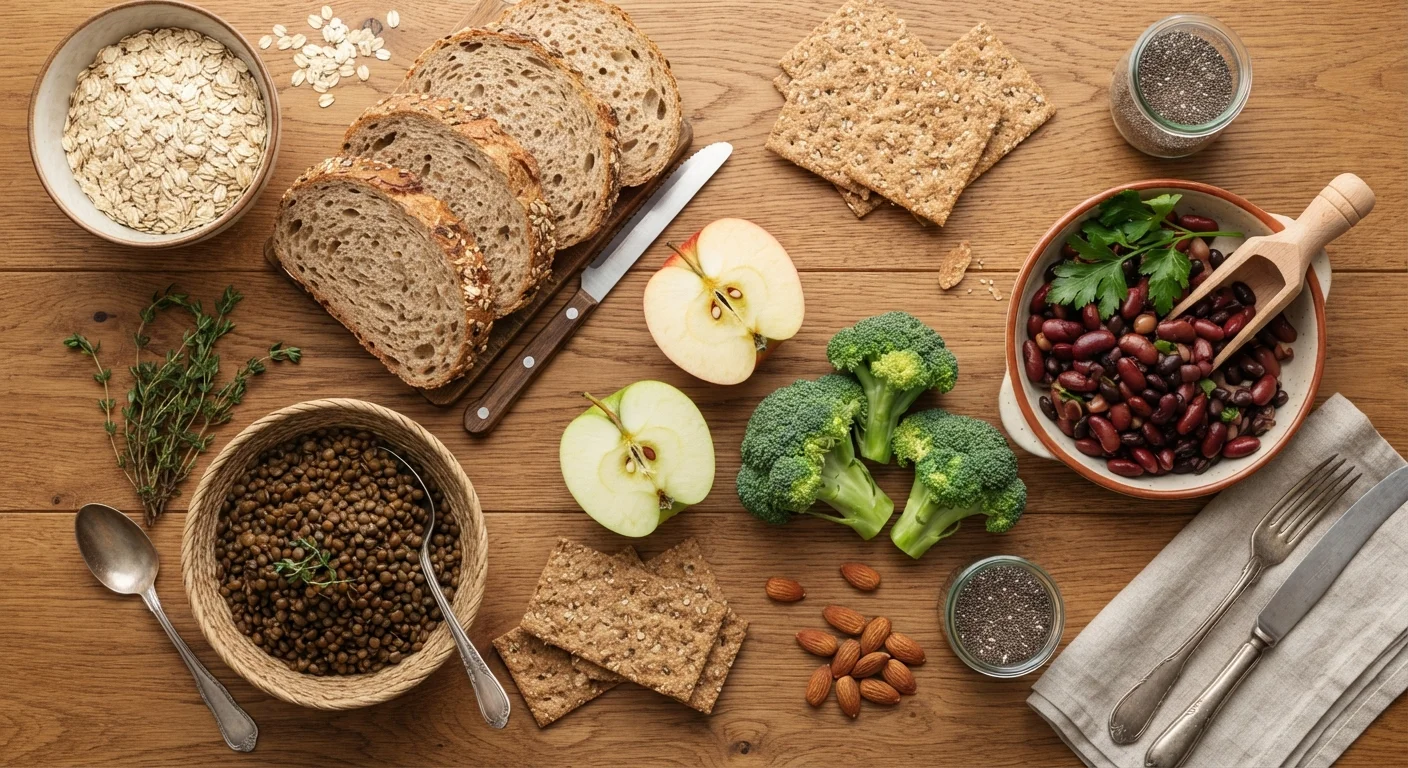
If you're increasing fibre intake - through beans, whole grains, or more produce - it's a good idea to also increase your fluid intake gradually. Fibre needs water to move efficiently through the digestive system, and too little fluid alongside a high-fibre diet can sometimes cause digestive discomfort. Increase both fibre and fluids together for a smoother adjustment.
Dietary fibre is another consideration. Fibre absorbs water in the digestive tract, which is partly why it supports healthy digestion - but it also means adequate fluid intake becomes more important on a high-fibre diet. For more on fibre's role in the body, see how fibre works and why most people don't get enough.
Practical Signals and Simple Adjustments
You don't need to calculate the water content of every meal. A few practical cues work well for most people. Urine color is one of the most accessible: pale yellow generally indicates adequate hydration; dark yellow or amber suggests you need more fluid. Persistent fatigue, headaches, or difficulty focusing can also signal under-hydration, though these have many possible causes.
Building meals around vegetables and fruit naturally increases your food-based fluid intake without any tracking. Soups, stews, and smoothies are other easy ways to consume water alongside nutrients. If you find plain water unappealing, eating hydrating foods throughout the day is a genuinely effective supplement - not just a workaround.
This article is for general informational purposes only and is not a substitute for medical advice. Individual fluid needs differ based on health status, medications, and other factors. Please consult a qualified healthcare professional for guidance specific to your situation.