
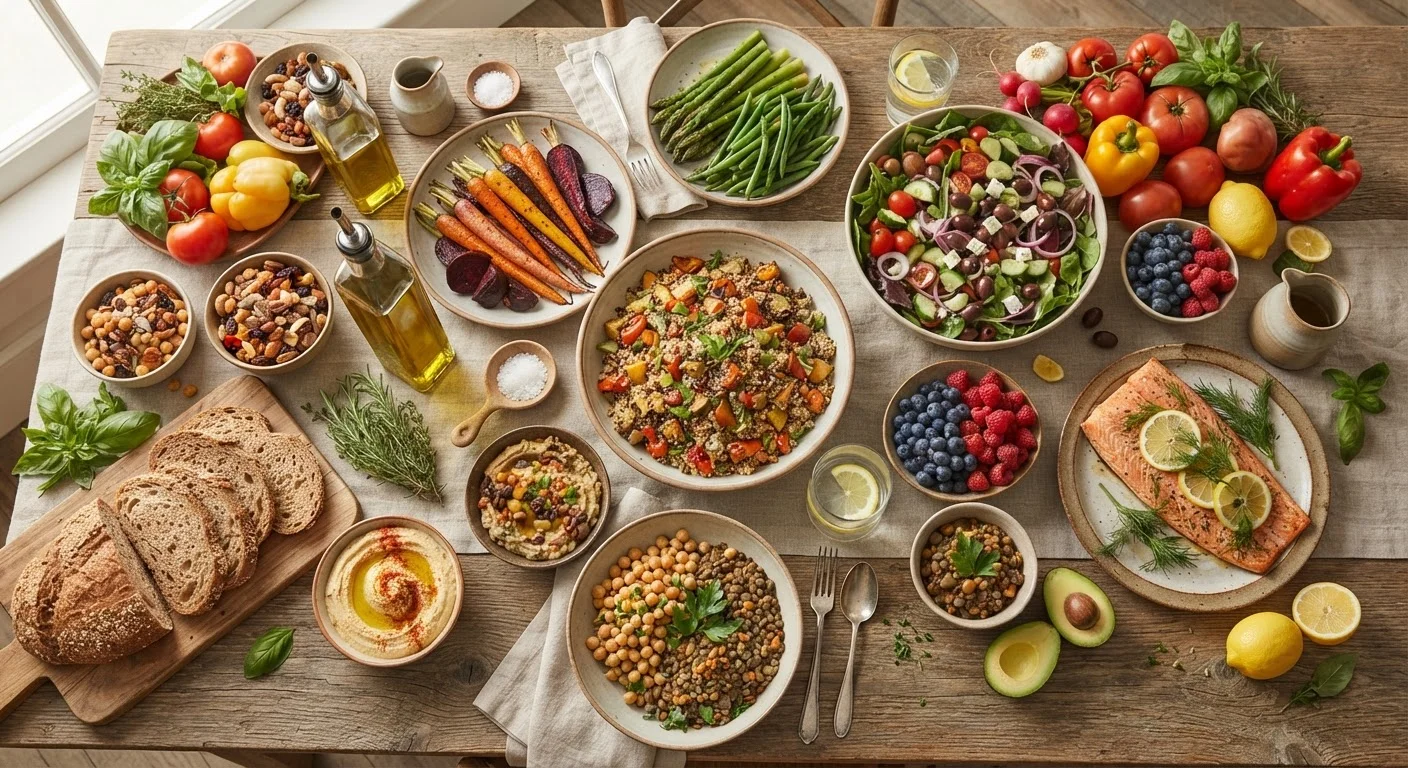
Why Eating Patterns Matter More Than Individual Foods
Nutrition headlines love to spotlight single foods - the superfood of the month, the villain ingredient to avoid. But decades of nutrition science point to something more useful: it's your overall pattern of eating, day after day, that shapes long-term health outcomes more than any single choice.
If you're new to thinking about food this way, the Nutrition from Scratch starter guide is a helpful place to build foundational knowledge before diving into specific approaches. Once you have the basics, comparing well-studied patterns becomes much easier - and far less overwhelming.
This article looks at three of the most researched dietary frameworks - Mediterranean, plant-forward, and DASH - and what distinguishes each one in practice.
| Mediterranean | Plant-Forward | DASH | |
|---|---|---|---|
| Primary focus | Whole foods, healthy fats, variety | Plants at center; less animal food | Blood pressure via low sodium, whole foods |
| Key foods emphasized | Olive oil, fish, vegetables, legumes | Vegetables, legumes, grains, nuts | Fruits, vegetables, low-fat dairy, lean protein |
| Animal products | Fish often; red meat sparingly | Minimal to none | Lean poultry, fish; low-fat dairy |
| Flexibility | High - few hard rules | Moderate - plant-centered but adaptable | Moderate - sodium limits are specific |
| Strongest research area | Cardiovascular & cognitive health | Fibre intake, metabolic markers | Blood pressure reduction |
| Main planning consideration | Fat quality and portion awareness | B12, iron, complete proteins | Sodium tracking on labels |
The Mediterranean Pattern: Variety, Fat, and Flexibility
The Mediterranean eating pattern draws from the traditional food cultures of Southern Europe and is one of the most extensively studied dietary frameworks in the world. It emphasizes vegetables, fruits, whole grains, legumes, nuts, and olive oil as everyday staples, with fish and seafood eaten regularly, and red meat consumed sparingly.
What makes this pattern distinctive is its inclusion of healthy fats - primarily from olive oil and fatty fish - and its relatively relaxed relationship with food enjoyment. Moderate amounts of wine are sometimes noted in research on this pattern, though it's worth noting that alcohol carries its own health considerations, and current guidance from many health authorities suggests any amount of alcohol carries some risk.
Start with additions, not restrictions
If the Mediterranean pattern interests you, a gentle entry point is simply adding more vegetables, legumes, or fish to meals you already enjoy - rather than overhauling everything at once. Most people find that crowding in more whole foods naturally leaves less room for less nutritious options over time. Small, consistent shifts tend to stick better than dramatic overhauls.
Research published in large-scale studies, including the PREDIMED trial, has associated the Mediterranean pattern with reduced cardiovascular risk. It's also been examined in relation to cognitive health and metabolic markers, though researchers continue to study the exact mechanisms. For a closer look at how food quality - not just food type - matters, see The Calorie Isn't the Whole Story.
Plant-Forward Eating: Less Meat, More Variety
A plant-forward (or plant-based) approach doesn't necessarily mean eliminating all animal products. It means placing plants - vegetables, fruits, legumes, whole grains, nuts, and seeds - at the center of most meals, with animal foods playing a smaller, more occasional role.
This pattern has gained attention both for potential health benefits and for its lower environmental footprint. From a nutritional standpoint, plant-forward diets tend to be high in dietary fibre, which most Americans currently fall short of. They can also be lower in saturated fat. One area that warrants attention is protein - specifically, ensuring adequate intake of all essential amino acids. Comparing protein sources across plant and animal foods can help you plan well.
Vitamin B12, iron, zinc, and omega-3 fatty acids are nutrients that require more planning on a fully plant-based diet. If you're making a significant shift in this direction, speaking with a registered dietitian can help you avoid gaps.
95%
Americans not meeting fibre recommendations
According to data cited by the American Society for Nutrition, the vast majority of US adults fall short of the recommended daily fibre intake.
~11 mmHg
Average systolic BP reduction with DASH
Research published in the New England Journal of Medicine found the DASH pattern reduced systolic blood pressure by approximately 11 mmHg in people with hypertension.
The DASH Pattern: Built Around Blood Pressure
DASH stands for Dietary Approaches to Stop Hypertension - a pattern developed specifically to help manage blood pressure through food. It prioritizes fruits, vegetables, whole grains, and low-fat dairy, while encouraging lean proteins like poultry, fish, and legumes. It specifically limits sodium, saturated fat, and added sugars.
Clinical research has consistently shown that the DASH pattern can reduce blood pressure in people with hypertension (high blood pressure), and it has also been associated with improved cholesterol markers. Because it was developed in a clinical research setting, it's one of the more structured frameworks - which can feel helpful for people who prefer clear guidelines, but may feel restrictive to others.
One practical consideration: sodium reduction is central to DASH, which means reading food labels carefully matters. The guide to reading nutrition labels can make that step much more manageable.
What These Patterns Share - and How to Choose
Despite their different emphases, Mediterranean, plant-forward, and DASH patterns share a clear common thread: they all reduce reliance on ultra-processed foods and prioritize whole, minimally processed ingredients. That overlap is likely where much of their benefit comes from.
Choosing between them isn't about finding the objectively superior option - it's about finding the one that fits your life. Think about your food preferences, budget, cultural traditions, and any existing health conditions. The balanced plate framework offers a practical, pattern-agnostic starting point if you're not ready to commit to a specific label.
It's also worth remembering that habits matter more than rigid rules. A weekly eating habits self-check can help you notice patterns and make gradual adjustments - without judgment. And if you notice ways your current approach quietly works against your goals, Where Good Nutrition Habits Actually Break Down is a useful read.
This article is for general informational purposes only and is not a substitute for personalized medical or nutritional advice. Please consult a qualified healthcare professional or registered dietitian before making significant changes to your diet, especially if you have an existing health condition.