
Why Fibre Deserves More Credit
When people think about eating well, protein and vitamins tend to grab the headlines. Fibre quietly sits in the background - associated, at best, with digestive regularity and not much else. That reputation undersells it significantly.
Research consistently links adequate fibre intake to a reduced risk of heart disease, type 2 diabetes, and certain digestive conditions. It feeds the trillions of beneficial bacteria living in your gut, helping them produce compounds that support immune function and reduce inflammation. It slows the absorption of sugar into the bloodstream, smoothing out energy levels after meals. And it contributes to a feeling of fullness that can make eating balanced portions feel more natural rather than effortful.
If you are curious about how other nutrients interact with these effects, our guide on common nutrition myths is a useful companion read.
~15g
Average daily fibre intake for U.S. adults
Dietary guidelines generally recommend 25-38 grams per day depending on age and sex; most Americans consume roughly half that amount, according to national nutrition surveys.
25-38g
Recommended daily fibre for adults
The Dietary Guidelines for Americans suggest 25 g/day for women and 38 g/day for men, with targets adjusting modestly by age group.
90%+
Americans not meeting fibre recommendations
Research published in nutrition literature consistently finds that the vast majority of U.S. adults fall short of recommended fibre intake on any given day.
Soluble vs. Insoluble: Two Kinds of Fibre, Two Roles
Not all fibre works the same way. Understanding the two main types helps explain why variety in your diet matters more than focusing on any single food.
Soluble Fibre
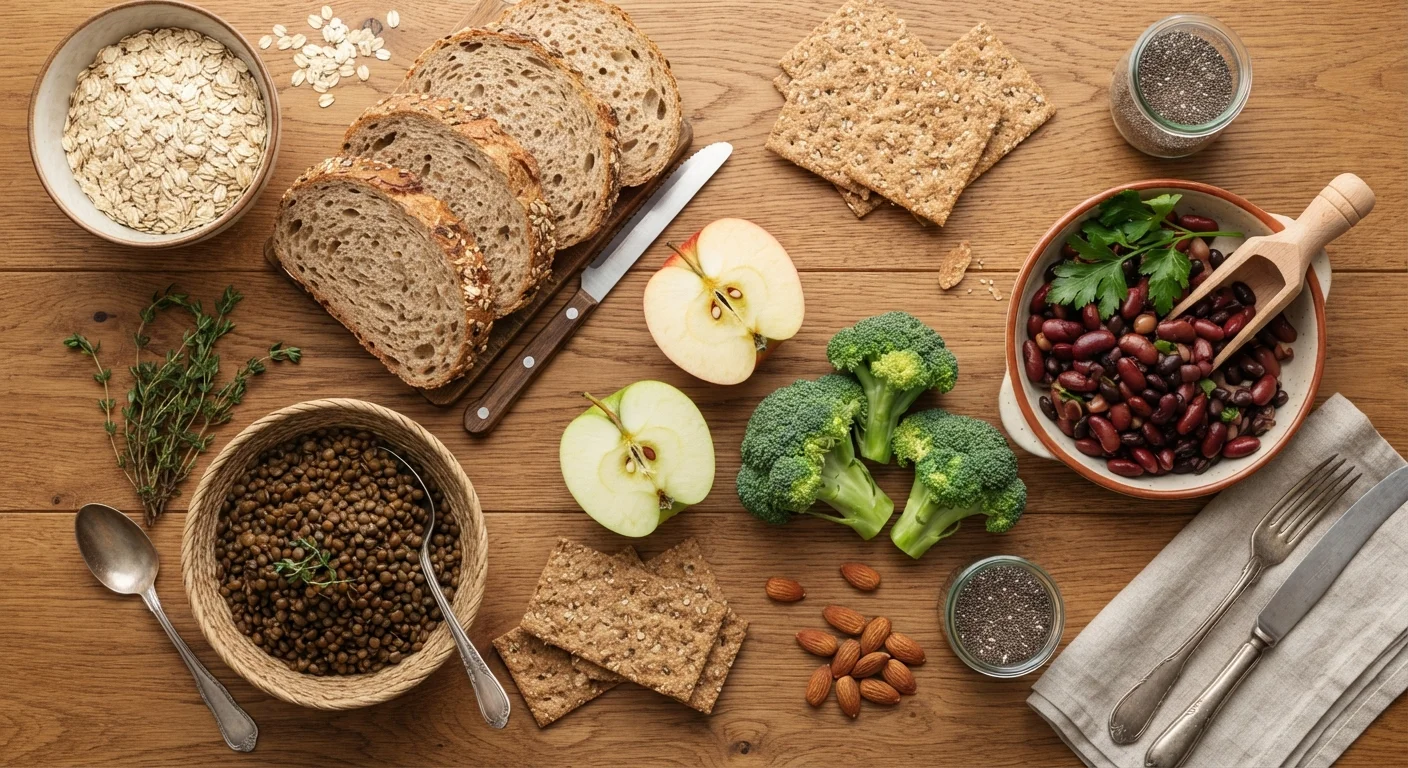
This type dissolves in water to form a thick, gel-like substance in the gut. That gel slows digestion, which helps moderate blood sugar spikes after meals and can bind to cholesterol particles, carrying them out of the body before they are absorbed. Oats, barley, apples, citrus fruits, beans, and flaxseeds are reliable sources.
Insoluble Fibre
Insoluble fibre does not dissolve. Instead, it adds bulk and helps move material through the intestines more efficiently - which supports regularity and may reduce the risk of certain digestive issues over time. Whole wheat, bran, nuts, and most vegetables are good examples.
Practically speaking, you do not need to track which type you are eating at every meal. Eating a wide range of whole plant foods naturally provides a healthy balance of both. For a broader look at how food patterns can support overall wellbeing, see our piece on eating patterns that make nutritional sense.
Add Fibre Gradually to Avoid Discomfort
If your current diet is low in fibre, a sudden large increase can cause bloating, cramping, or gas as your gut bacteria adjust. Aim to add roughly 5 grams per week over a few weeks rather than changing everything at once. Pairing the increase with adequate fluid intake makes the transition noticeably smoother.
Where Most People Fall Short - and How to Bridge the Gap
National dietary surveys consistently show that most American adults consume around 15 grams of fibre per day - well below the generally recommended targets. The primary culprit is a diet that leans heavily on refined grains and processed foods, which have had much of their fibre stripped away during manufacturing.
Closing that gap does not require a dramatic dietary overhaul. Small, sustained swaps tend to work better than sudden changes.
- Choose whole grain versions of bread, pasta, and rice instead of refined white varieties.
- Add legumes - beans, lentils, chickpeas - to soups, salads, or as a side dish a few times per week.
- Eat fruit whole rather than as juice; the skin and pulp hold most of the fibre.
- Leave the skin on vegetables like potatoes, carrots, and zucchini where appropriate.
- Snack on nuts, seeds, or raw vegetables rather than crackers or chips.
One practical note: increase fibre intake gradually over two to four weeks rather than all at once. Rapid increases can cause bloating or gas. Drinking enough water is equally important, since fibre works best when it can absorb fluid. Our article on how food affects hydration explains the connection well.
This article is for general informational purposes only and is not a substitute for personalised medical or dietary advice. Consult a qualified healthcare professional or registered dietitian for guidance specific to your health needs.