Why Insulation Myths Are So Costly
Insulation is one of those home systems that most people never see - and that invisibility breeds misconception. When homeowners act on bad information, they either spend money where it won't help or skip improvements that would pay for themselves. According to the U.S. Department of Energy, air sealing and insulation together can reduce heating and cooling costs by a meaningful margin in many homes, yet a large share of American housing stock remains under-insulated.
The good news: once you separate myth from fact, you can make targeted decisions that genuinely improve comfort and reduce energy bills. The myths below are the ones we hear most often - and the ones most likely to lead beginners astray. For a broader look at small improvements that deliver outsized results, see our guide to high-impact home upgrades.
Common Insulation Myths - Corrected
Work through each myth carefully. Some of these may surprise even experienced DIYers.
Myth
The attic is the only place that needs insulation.
Fact
Walls, crawl spaces, basements, rim joists, and floors over unconditioned garages all require insulation to control heat transfer effectively.
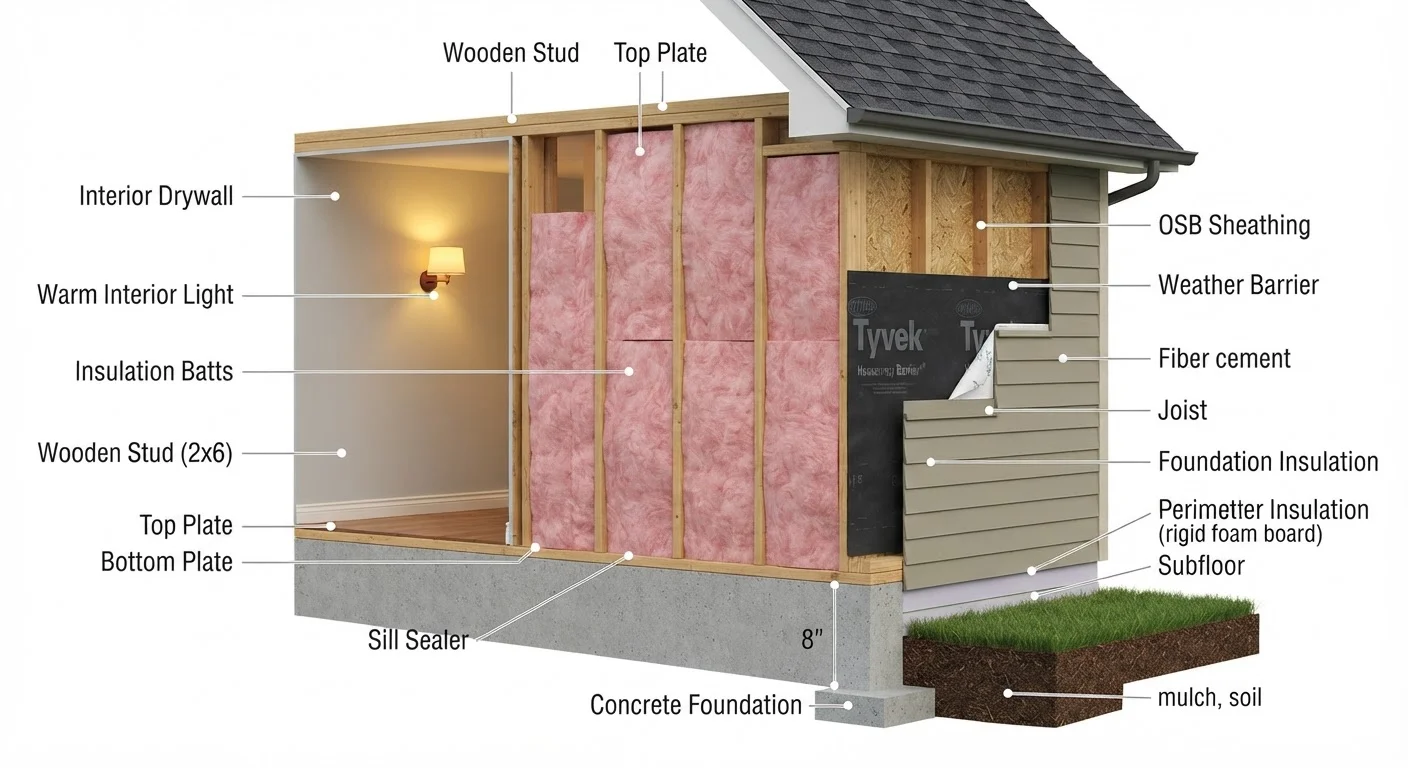
The attic is a logical starting point because heat rises and a poorly insulated attic ceiling is a major energy drain. But heat moves in all directions - not just up. In winter, uninsulated walls bleed warmth into the outdoors. In summer, a hot garage ceiling radiates heat into the living space above it. A whole-house approach treats the building envelope - every surface that separates conditioned space from unconditioned space - rather than just the top of the house.
Myth
More insulation is always better, so the thicker the better.
Fact
Every insulation material has a point of diminishing returns. Adding beyond the recommended R-value for your climate zone yields progressively smaller energy savings.
R-value measures resistance to heat flow - a higher number means more resistance. But the relationship isn't linear. Going from R-19 to R-38 in an attic can cut remaining heat loss roughly in half, but going from R-38 to R-60 yields a much smaller additional gain. The U.S. Department of Energy publishes recommended R-value ranges by climate zone, and matching those recommendations is more cost-effective than simply piling on extra material. Over-insulating also isn't harmless: in some assemblies, it can restrict necessary airflow or create moisture problems.
Myth
Insulation is only useful in winter - it doesn't help with summer cooling.
Fact
Insulation resists heat flow in both directions, keeping hot outdoor air out in summer just as it keeps warm indoor air in during winter.
Think of insulation as a thermal buffer, not a one-way valve. In summer, your attic can reach temperatures well above 130°F on a hot day. Without adequate insulation between that attic and your living space, that heat radiates down into your home, forcing your air conditioner to work harder. Proper insulation reduces this heat gain, which can lower cooling loads and help keep upper-floor rooms at a more comfortable temperature. The energy savings argument for insulation applies equally to both seasons.
Myth
New homes are automatically well insulated.
Fact
Building codes set minimum standards, but new construction frequently has insulation gaps, voids, and installation defects that reduce real-world performance.
Meeting code minimum doesn't mean optimal performance. Studies of new construction have found compressed batts, unfilled cavities around wiring and pipes, and missing insulation near corners and rim joists - all of which reduce effective R-value. Additionally, even correctly installed insulation does little to stop air infiltration; that requires separate air sealing. If you've moved into a newer home and still notice drafts or uneven room temperatures, an energy audit is worthwhile regardless of the home's age.
Myth
Insulation and vapor barriers are the same thing.
Fact
Insulation slows heat transfer; a vapor barrier controls moisture diffusion. They serve different functions and are often both needed.
Confusing these two leads to either missing a vapor barrier where one is needed or over-sealing a wall assembly in a way that traps moisture and causes rot or mold. Vapor barriers (or vapor retarders, as they're sometimes called) limit the movement of water vapor through walls and ceilings. Whether you need one - and which type - depends on your climate zone and wall assembly. In humid climates, the wrong vapor barrier on the wrong side of the wall can do more harm than no barrier at all. Consult a building professional or your local building department when in doubt.
Up to 30%
Potential heating and cooling savings from air sealing and insulation
The U.S. Department of Energy estimates that typical homeowners can reduce heating and cooling costs significantly through proper insulation and air sealing combined.
90%
U.S. homes estimated to be under-insulated
Industry estimates suggest the vast majority of American homes have insulation levels below what current energy codes recommend, leaving significant efficiency potential untapped.
Making Smart Insulation Decisions
Once you've cleared away the myths, practical decision-making becomes much simpler. Start by identifying where your home loses the most conditioned air - common culprits include the attic floor, rim joists (the framing at the very top of your foundation walls), and around recessed light fixtures. A home energy audit, offered by many utility companies at low or no cost, can pinpoint these weak spots with thermal imaging.
Don't Skip Air Sealing Before Adding Insulation
Adding more insulation over existing air leaks is one of the most common and costly mistakes homeowners make. Insulation slows heat transfer through materials, but it does very little to stop air moving through gaps and cracks. Seal penetrations around pipes, wires, recessed lights, and attic hatches before or alongside any insulation upgrade. Skipping this step significantly undermines the investment.
When budgeting for insulation work, remember that improving your home's envelope - its walls, roof, and floor system - is one of the more durable investments you can make. Unlike appliances or finishes, properly installed insulation rarely needs replacing. Thinking about home improvements through a budget lens? Our article on common home organization myths applies a similar myth-busting approach to another area where small misconceptions create real costs.
Electrical and Gas Work Requires a Licensed Professional
When improving attic or wall insulation, you may encounter electrical wiring, recessed light fixtures rated for contact (or not), or gas flues. Improperly insulating around these elements creates fire and carbon monoxide hazards. Always verify fixture ratings before covering them with insulation, and engage a licensed electrician or HVAC contractor for any work involving electrical panels, wiring, or gas appliances.