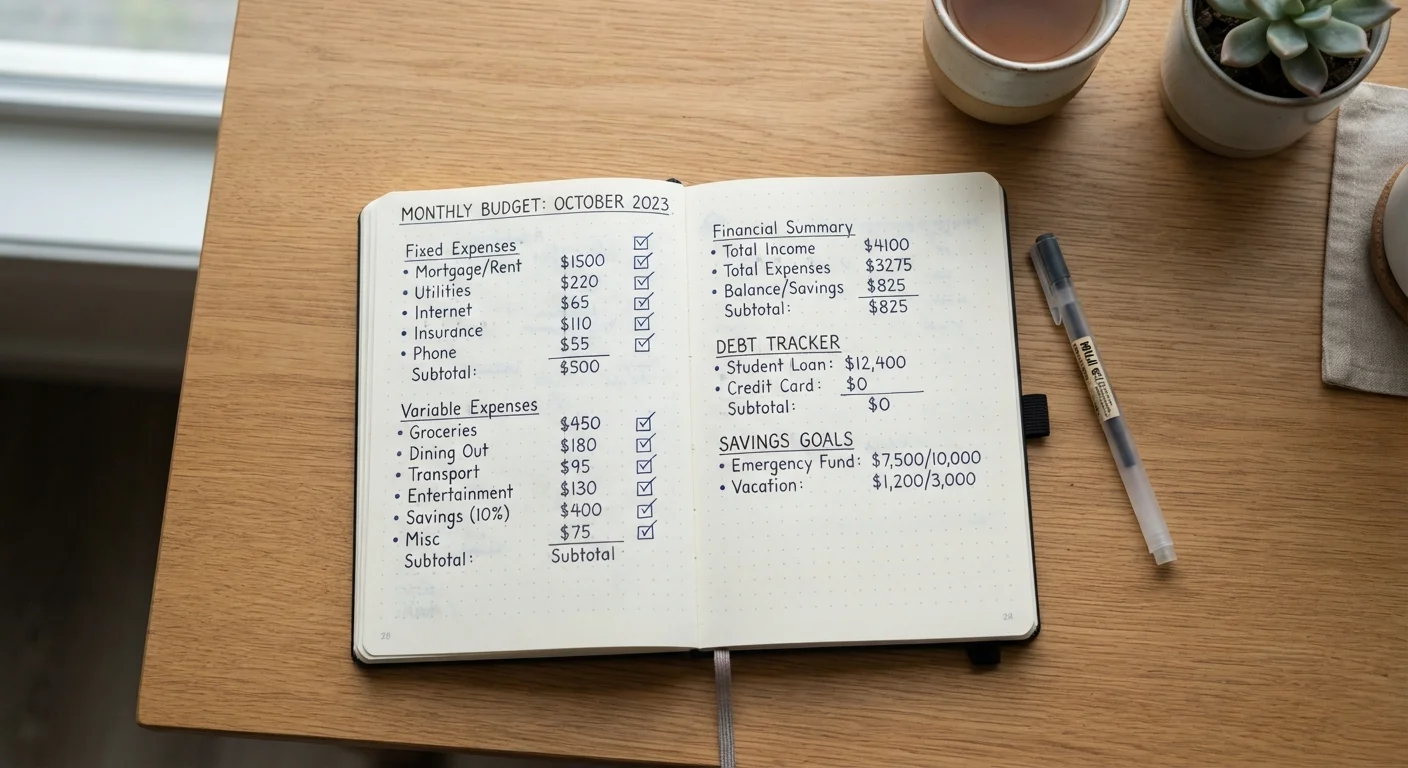
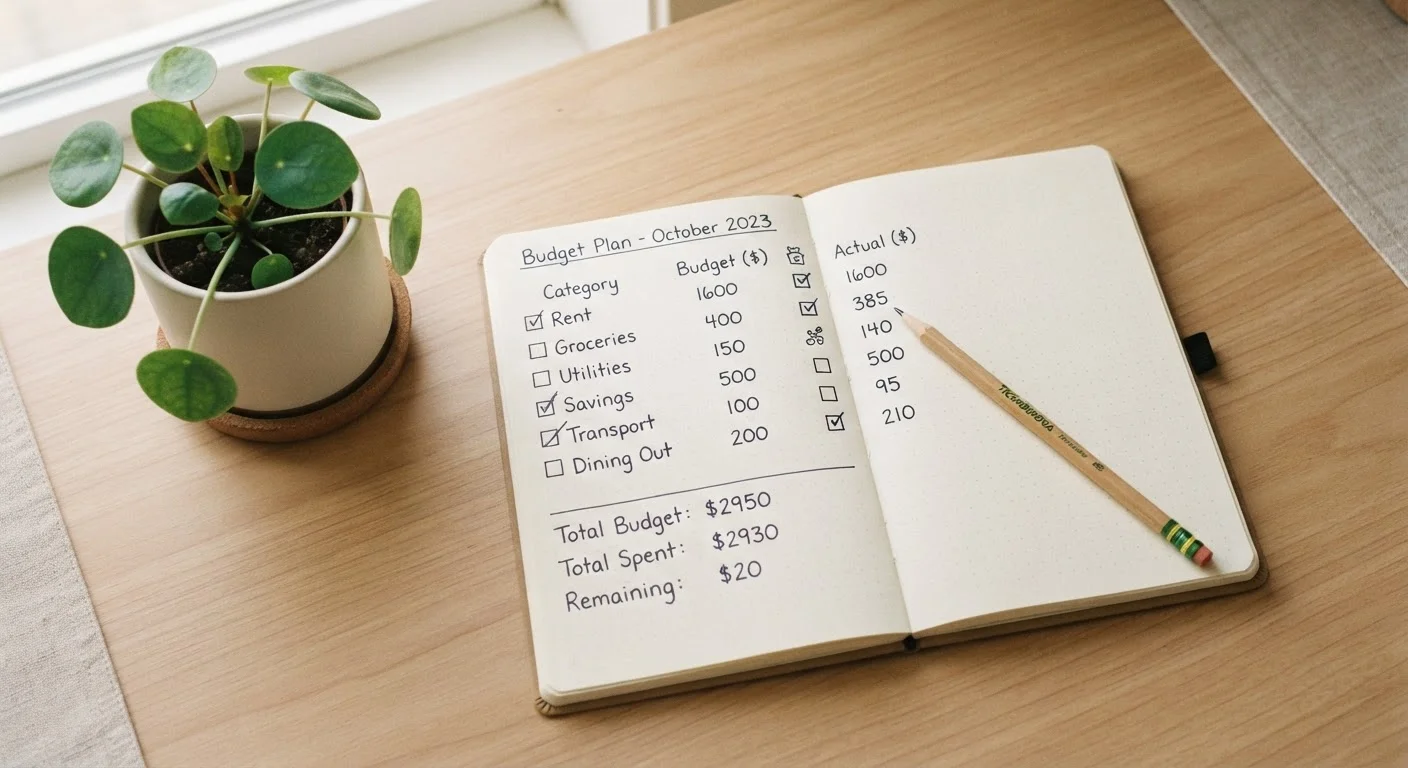
The Simple Version: What a Budget Really Is
Strip away all the spreadsheets and jargon, and a personal budget comes down to one idea: deciding what to do with your money before you spend it.
You estimate how much money you'll bring in - your income - and you decide in advance how much you want to put toward rent, groceries, savings, and everything else. Whatever you plan to do with each dollar is your budget.
That's it. No complicated formulas required. A budget can live in a notebook, a simple spreadsheet, or a free app. The format matters less than the habit of actually making the plan.
See our practical starting guide for first-time budgeters if you're ready to put this into action right away.
Start With One Month's Numbers
If making a budget feels daunting, start by simply writing down your income and your main expenses for a single month. Don't worry about making it perfect. One realistic snapshot is enough to get started, and you can refine it from there. Building a budget from zero is easier than most people expect.
What a Budget Is Not
A lot of people avoid budgeting because of what they think it means. So let's clear up the most common misconceptions.
- A budget is not a punishment. It's not about depriving yourself. A realistic budget includes money for the things you enjoy - eating out, streaming services, weekend trips. If it doesn't, it won't last.
- A budget is not only for people in debt. Budgets help everyone - people building savings, people planning a big purchase, and people who simply want to feel less stressed about money. Budgeting myths like this one hold a lot of beginners back unnecessarily.
- A budget is not a one-time task. Your income changes. Your expenses shift. A budget is a living document you revisit and adjust - usually monthly.
- A budget is not a tracking tool. Tracking records what already happened. A budget is a plan made in advance. Both are useful, but they serve different purposes.
Budgets Look Different for Everyone
There's no single correct way to build a budget. Some people prefer detailed category-by-category tracking; others use a simple three-bucket approach (needs, wants, savings). The right budget is the one you'll actually use. Don't let the search for a perfect system stop you from starting with an imperfect one.
The Core Parts of Any Budget
Every personal budget, no matter how simple or detailed, has two sides:
- Income - The money coming in. This includes your paycheck, freelance earnings, side income, or any other regular source of money. Use your take-home pay (what actually lands in your account after taxes), not your gross salary.
- Expenses - The money going out. These fall into two broad groups: fixed expenses (costs that stay the same each month, like rent or a car payment) and variable expenses (costs that change, like groceries or gas).
The relationship between these two numbers is what matters: when your planned expenses are less than your income, you have room to save or pay down debt. When they're equal - or more - you need to make some adjustments.
For a plain-language explanation of the terms you'll encounter, the budgeting terms reference is a helpful companion. And when you're ready to organize your spending into categories, this guide on spending categories walks you through it without overcomplicating things.
~1 in 3
U.S. adults who report following a budget
Various consumer surveys have consistently found that roughly one-third or fewer American adults maintain a formal budget, suggesting most people manage money reactively.
3-6 months
Recommended emergency fund size
Financial educators widely suggest keeping three to six months of essential expenses saved - a goal that's much easier to work toward with a budget in place.
Why Budgeting Is About Awareness, Not Control
The most useful shift in thinking about budgets is this: a budget gives you control over your choices, not the other way around.
When you don't have a plan, money tends to disappear without much to show for it. A budget makes the invisible visible - you can see whether your spending actually lines up with what you say matters to you.
Someone who says saving is a priority but has no savings category in their plan is operating on hope, not intention. A budget closes that gap. It's also worth noting that building savings and budgeting go hand in hand - one makes the other possible.
“A budget is telling your money where to go instead of wondering where it went.”
— John C. Maxwell, Author and leadership speaker, widely cited in personal finance education
This article provides general financial education and is not personalized financial advice. For guidance specific to your situation, consider speaking with a qualified financial professional.