What Are Fixed Expenses?
A fixed expense is any cost that stays the same amount every billing period - usually monthly. You owe it regardless of how your week went or how much you spent on other things. Common examples include rent or a mortgage payment, a car loan payment, and health or auto insurance premiums.
Because the dollar amount doesn't change, fixed expenses are the easiest part of a budget to plan for. You list them once and they're predictable. That predictability is actually valuable: it means you always know the minimum amount your income needs to cover. Think of fixed expenses as the foundation of your budget - everything else gets built on top of them.
For a plain-language overview of terms like these, see our beginner's guide to budgeting terms.
What Are Variable Expenses?
A variable expense is a cost that changes in amount from month to month. Groceries, gasoline, dining out, clothing, and entertainment all fall into this category. You'll always spend something in these areas, but how much depends on your habits and choices.
Variable expenses are where most people's budgets get loose. Because there's no fixed bill arriving every month, it's easy to underestimate how much these costs add up. Tracking them - even roughly - is one of the most useful habits a beginning budgeter can build.
Variable costs are also where flexibility lives. If you need to free up $100 this month, you're not going to renegotiate your rent on short notice, but you can eat out less or skip a few impulse purchases. For practical ways to organise these costs, see our article on spending categories.
| Criterion | Fixed Expenses | Variable Expenses |
|---|---|---|
| Amount each month | Stays the same | Changes month to month |
| Examples | Rent, car payment, insurance | Groceries, gas, dining out |
| Ease of predicting | Easy - set it and track it | Harder - requires tracking habits |
| Room to cut quickly | Very limited short-term | Often significant |
| Budget planning role | Sets your monthly floor | Where flexibility is found |
The Semi-Variable Middle Ground
Not every expense fits neatly into one bucket. Some costs are semi-variable - they recur every month but the amount shifts. Utility bills are the classic example: your electricity provider sends a bill every month, but the amount depends on how much power you used. Phone data overages, streaming subscriptions with usage tiers, and even some grocery spending can behave the same way.
For budgeting purposes, it helps to estimate a realistic average for semi-variable costs using two or three months of past statements, then treat that average as your planned amount. If you come in under, great - that's a small win. If you go over, you know to look at usage habits.
What About Subscriptions?
Subscription services like streaming platforms or gym memberships can be tricky to classify. If the amount never changes, they're technically fixed. But because they're discretionary - meaning you chose them and can cancel them - they feel more like variable expenses in practice. It's reasonable to keep them in a separate 'subscriptions' category so you can review them periodically and cancel anything you're not using.
If you're planning for a trip and need to sort travel costs the same way, our guide on setting a travel budget walks through the same fixed-vs-variable logic applied to vacation spending.
Why the Distinction Matters When You Build a Budget
Understanding fixed versus variable expenses changes how you approach budgeting from the start. Instead of looking at one big pile of monthly spending, you break it into two meaningful groups.
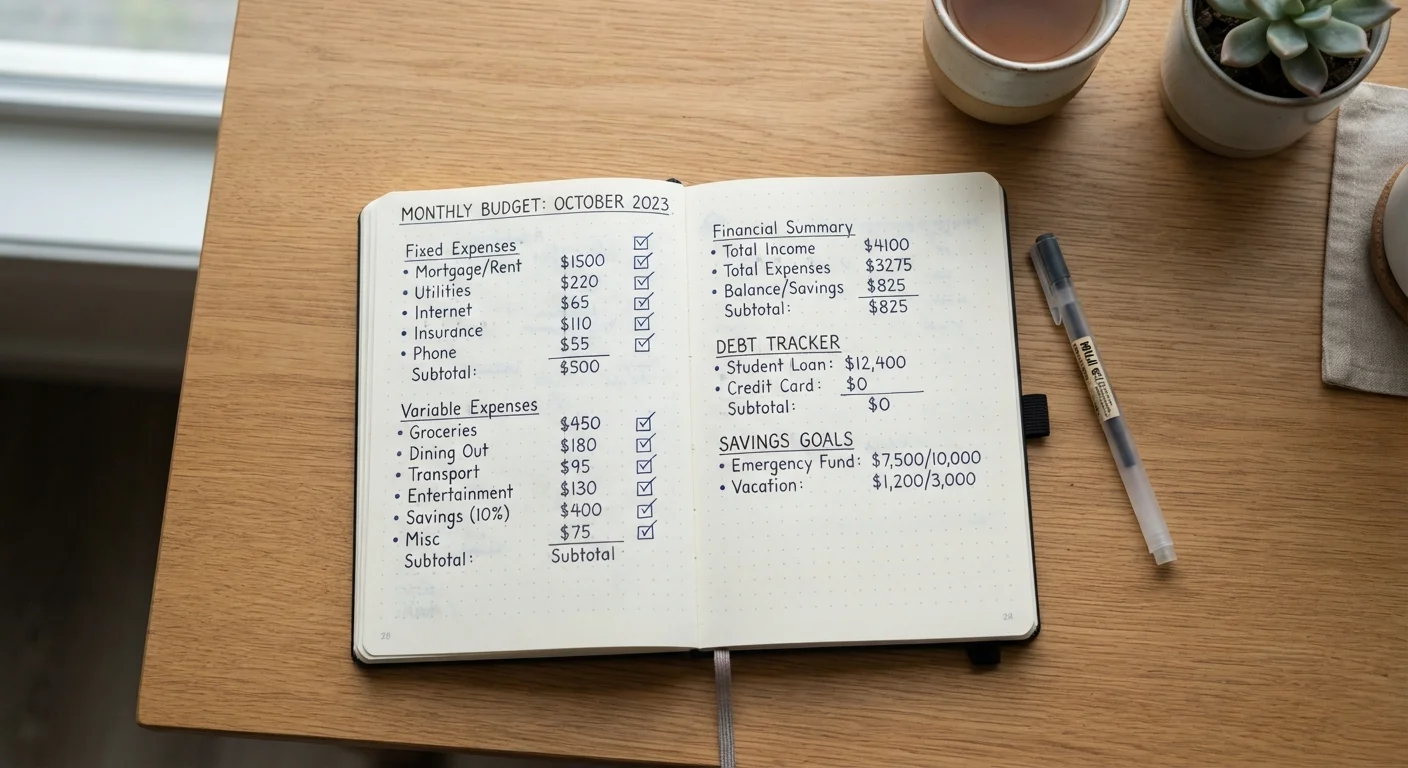
Start by listing every fixed expense and adding them up. That total is your non-negotiable baseline - the amount you must cover before you can do anything else with your money. Next, estimate your variable expenses by category, using past bank or card statements if you have them. The gap between your income and your combined fixed-plus-variable spending tells you how much margin - or how little - you're working with.
From there, the math becomes clearer. Want to save more? Look at variable categories first. Need a quick breakdown of which household costs are fixed and which aren't? Our household cost reference covers common expenses line by line.
This article is for general informational and educational purposes only. It is not personalised financial advice. For guidance specific to your situation, consider consulting a qualified financial professional.