
Why Your Category Setup Makes or Breaks Your Budget
Most people who give up on budgeting don't fail because of willpower - they fail because their system is too complicated to maintain. Tracking 30 micro-categories week after week is exhausting. On the other hand, lumping everything into two or three buckets makes it impossible to spot where money is actually slipping away.
The goal is a middle ground: enough categories to see what's happening, few enough that you'll actually keep it up. If you're completely new to this, your first budget guide is a good place to start before diving into category design.
Start Broad, Then Refine
It's much easier to split one category into two later than to merge a dozen messy ones. Begin with broader groupings and only add specificity where you genuinely need it. Most people find that six to eight categories cover 95% of their spending without creating extra admin.
A good category structure should feel like a light framework, not a surveillance system. You're looking for patterns, not perfection.
What You'll Need Before You Start
What you will need
Bank or credit card statements
Reveals where your money has actually been going, giving you real data to build categories from.
Spreadsheet or notebook
Used to list, group, and total your spending categories during setup.
Budgeting app
Automates transaction sorting and helps you track categories month to month.
You don't need anything fancy to get started. A pen and paper works. So does a basic spreadsheet. If you're weighing manual tracking against using an app, budgeting on paper vs. using an app walks through the real trade-offs.
How to Set Up Your Spending Categories
Pull together your last month of spending
Log in to your bank and credit card accounts and download or print your last full month of transactions. Don't rely on memory - what you think you spend and what you actually spend are often very different. If you want a deeper look at where your money goes, see where your money actually goes each month.
List every expense type you can find
Go through your transactions and write down every type of purchase - rent, groceries, streaming subscriptions, gas, restaurants, gym membership, clothing, and so on. Don't group anything yet. Just get everything on the page.
Separate fixed expenses from variable ones
Fixed expenses are amounts that stay the same every month - rent or mortgage, car loan payments, insurance premiums. Variable expenses change month to month - groceries, fuel, entertainment, dining out. This distinction matters because you'll manage them differently. For a deeper explanation, see fixed vs. variable expenses.
Group similar expenses into broad categories
Now collapse your list into broader buckets. Aim for six to ten categories total. A practical starter set for most households looks like this:
- Housing - rent or mortgage, renters/homeowners insurance, property tax
- Transportation - car payment, fuel, insurance, parking, public transit
- Food - groceries and dining out (or split them if one is a problem area)
- Utilities & Bills - electricity, water, phone, internet
- Health - insurance premiums, co-pays, medications
- Personal & Lifestyle - clothing, personal care, gym, subscriptions
- Savings & Debt Repayment - emergency fund contributions, credit card payments, student loans
- Everything Else - a catch-all for things that don't fit neatly elsewhere
You don't have to follow this exactly. If you spend very little on dining out, fold it into a single Food category. If you work from home and have a significant home office spend, add a category for it.
Assign a realistic monthly amount to each category
Using your actual spending data from Step 1, total up what you spent in each category last month. That real number is your starting baseline - not what you wish you spent. From there, decide whether the actual amount is something you want to keep, reduce, or adjust.
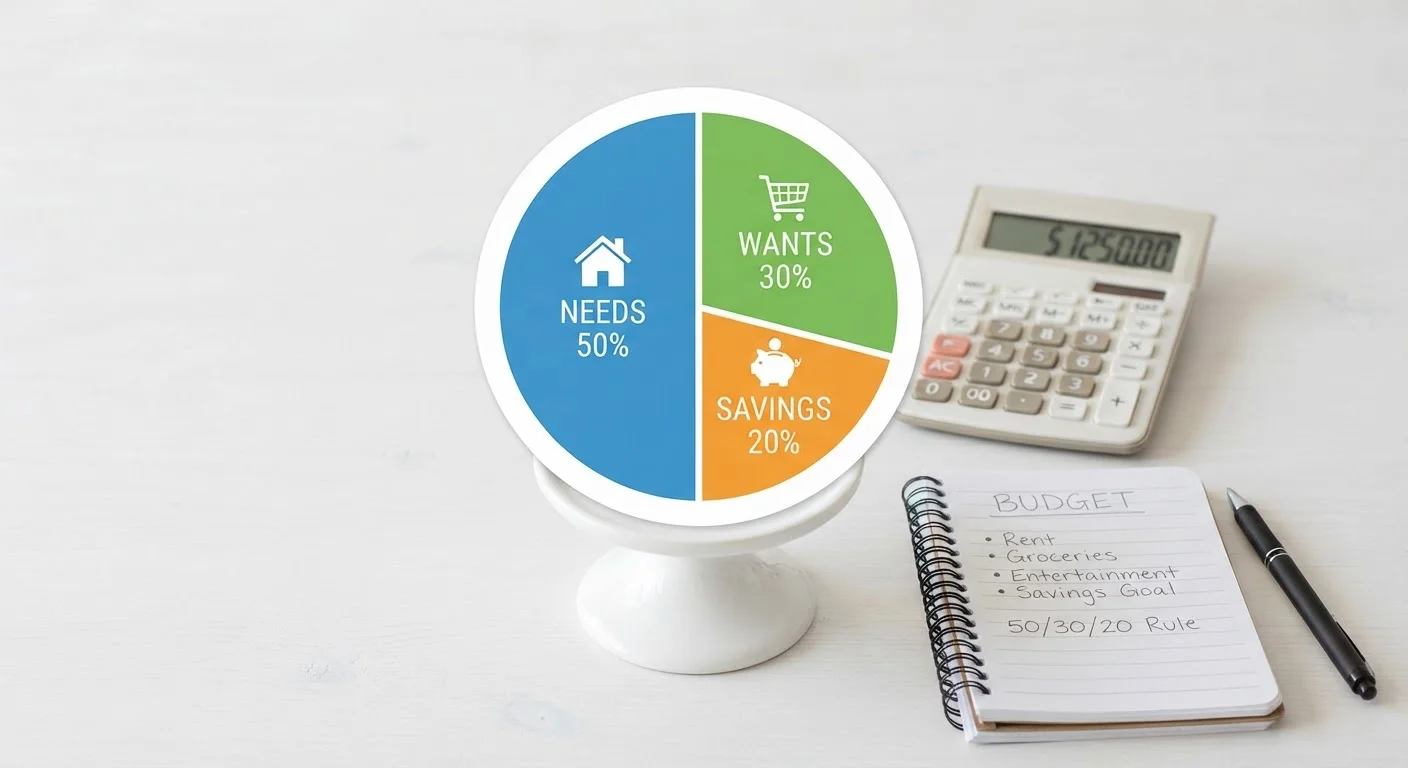
If you're new to this process, the 50/30/20 rule offers a simple framework for dividing your income across needs, wants, and savings.
Review and adjust after the first month
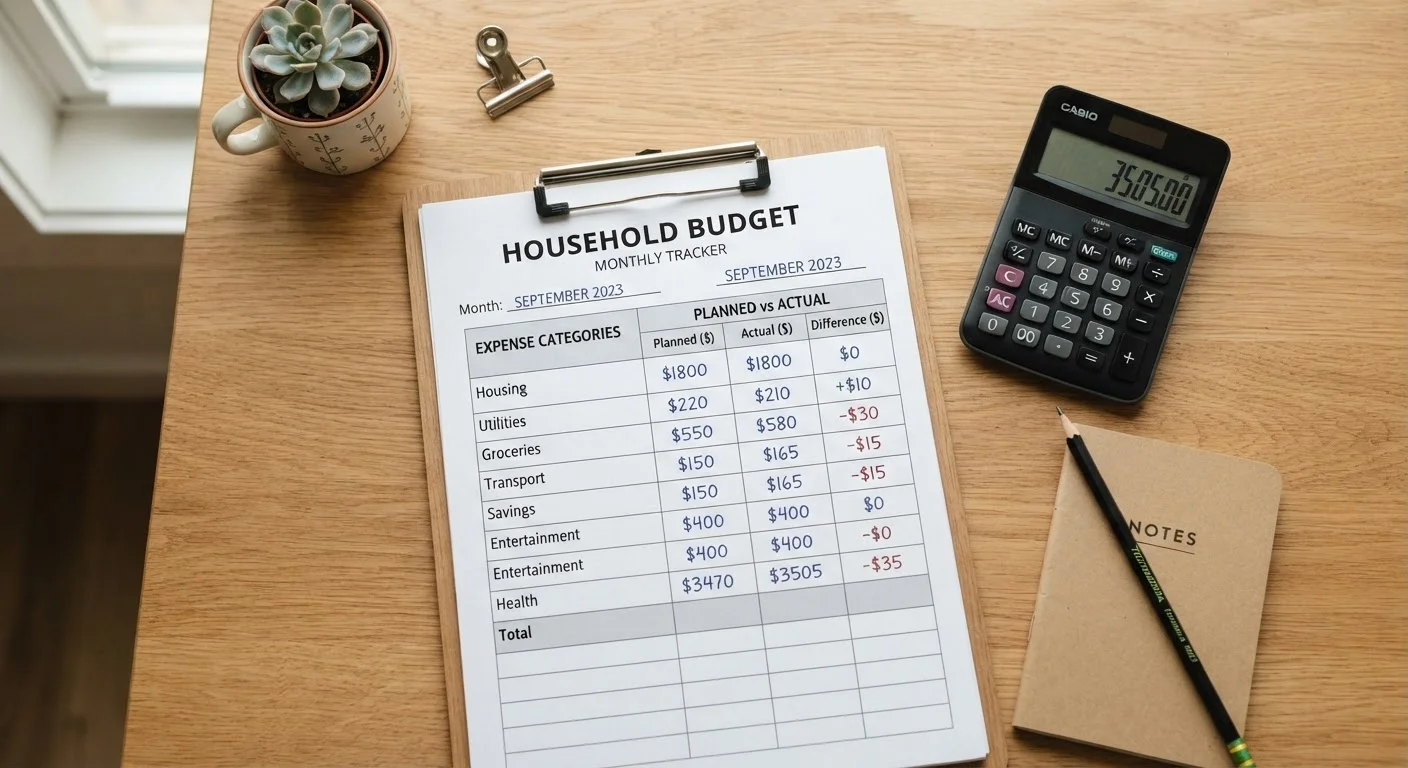
Your first set of categories and amounts is a draft, not a final document. After a full month, compare what you planned to what you actually spent. Some categories will need to shift. Others may prove unnecessary. A monthly review keeps the whole system honest and useful - a monthly budget reset checklist can help you build that habit.
Savings Is a Category, Not a Leftover
A common mistake is treating savings as whatever remains after everything else is spent. That approach usually means nothing gets saved. Give savings its own category with a planned monthly amount - even a small one - and treat it like any other essential bill. This applies equally to debt repayment: both belong in your category structure from day one.
Once your categories are working for a standard month, you can start thinking about irregular spending - things like holidays, annual subscriptions, or car repairs. These often get forgotten until they blow the budget. Consider adding a Irregular or Annual Expenses category funded with a small monthly contribution so surprises feel less sudden.
If you ever expand your budgeting to trips or travel, the same category logic applies - see setting a travel budget for how to adapt this approach.
Common Mistakes to Avoid
Even with a simple setup, a few patterns trip people up consistently:
- Creating categories you feel you should have rather than ones that match your life. If you never buy books, you don't need a Books category.
- Mixing savings with spending. Savings - including debt repayment - should sit in its own category so you can see clearly whether you're on track.
- Forgetting irregular expenses. Annual fees, seasonal costs, and one-off purchases exist. Plan for them or they'll derail your monthly totals.
- Abandoning the system after one bad month. An overspend in one category doesn't mean the budget failed - it means you have information to work with.
If overspending feels like a recurring pattern regardless of the category structure, it's worth exploring the psychology behind why we overspend - sometimes the obstacle isn't the system.
This article is for general informational purposes only and does not constitute personalised financial advice. For guidance tailored to your specific situation, consider speaking with a qualified financial professional.