
Why Standard Budget Advice Doesn't Quite Fit
Most budgeting guides start with a simple assumption: you know how much money is coming in each month. For salaried employees, that's easy. For freelancers, gig workers, seasonal employees, commissioned salespeople, and shift workers, it isn't. Your income can swing by hundreds - or thousands - of dollars from one month to the next.
That unpredictability doesn't mean budgeting is impossible. It means the standard template needs some adjustments. If you've never built a budget before, Your First Budget is a good place to start before tackling the irregular-income version.
The core challenge with variable income is planning around uncertainty. The strategies below flip the usual approach: instead of starting with income and subtracting expenses, you start by locking down your expenses and then managing how income flows to meet them - regardless of the month-to-month variability.
This Is General Education, Not Financial Advice
The strategies in this article are general budgeting concepts, not personalized financial advice. Everyone's income situation is different. For guidance tailored to your specific circumstances, consider speaking with a licensed financial counselor or adviser.
What You'll Need Before You Start
Gathering the right information upfront saves a lot of rework later. The most important input is your income history - you need real numbers to establish a realistic floor, not estimates based on memory.
What you will need
Past income records (bank statements, invoices, pay stubs)
Used to calculate your income floor - the baseline minimum you can reliably count on each month.
Spreadsheet or budgeting notebook
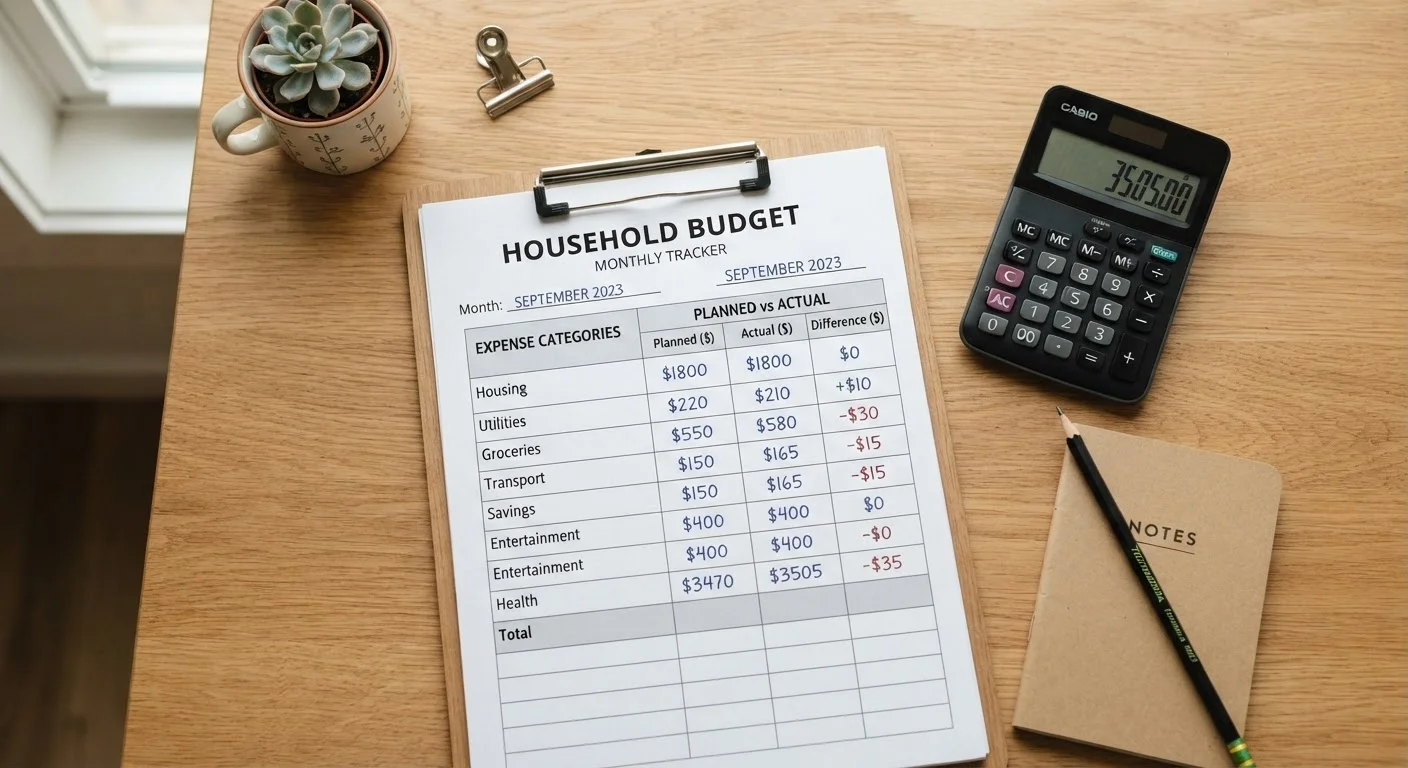
Tracks your monthly income, essential expenses, and any surplus or shortfall.
Budgeting app
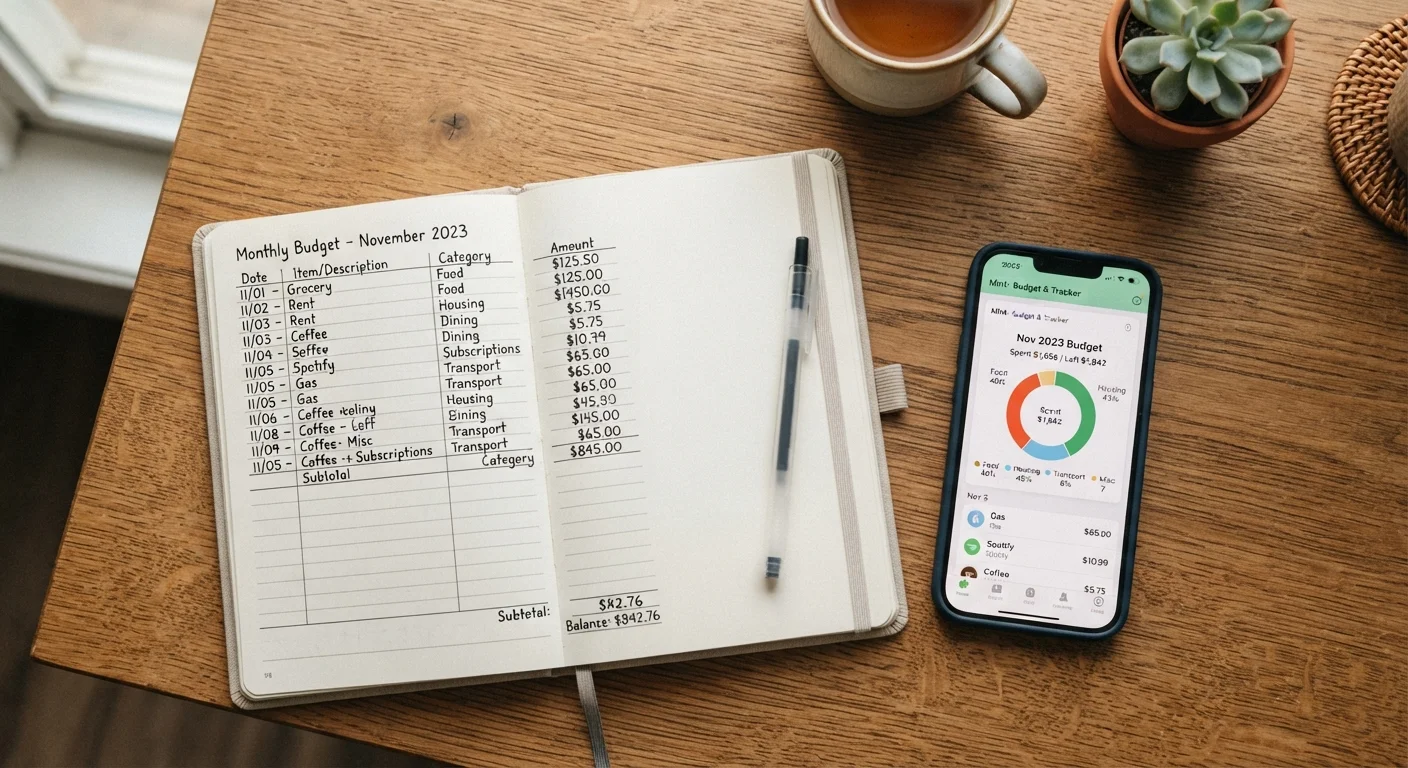
Automates expense tracking and can categorize transactions - useful if manual tracking feels tedious.
Separate savings or buffer account
Holds surplus income from high-earning months to cover gaps in slower months.
Not sure which terms like 'discretionary income' or 'net pay' mean? The Budgeting Terms Every Beginner Should Know is a plain-language reference worth bookmarking.
Step-by-Step: Building Your Irregular Income Budget
Follow these steps in order. Each one builds on the last, so skipping ahead tends to create gaps that show up as confusion or shortfalls later.
Avoid Budgeting From Your Best Month
It's tempting to plan around a high-earning month, but doing so almost always leads to shortfalls. Freelancers and shift workers often experience significant swings between their best and worst months. Building your baseline from a low-income month protects you from the most common budgeting trap.
Calculate your income floor
Pull your last 6-12 months of income records and identify your lowest earning month. That number becomes your income floor - the conservative baseline you'll build your budget around. Using your average or best month feels good on paper but sets you up for shortfalls when slower months arrive.
If you have fewer than 6 months of history, estimate conservatively. You can always adjust upward as your record grows.
List all essential fixed expenses
Write down every expense that stays roughly the same each month and that you genuinely cannot skip: rent or mortgage, utilities, minimum debt payments, insurance premiums, and groceries at a realistic baseline amount. Add these up. This is your minimum monthly number - the amount you must cover no matter what.
For a broader breakdown of which household costs are typically fixed versus flexible, see this household cost reference.
Build an income buffer fund
An income buffer (sometimes called an income smoothing fund) is a separate savings pool you fill during high-earning months and draw from during slow ones. Aim to build it up to one to two months' worth of essential expenses over time.
Even small surpluses - $50 or $100 in a good month - grow this cushion. It transforms an irregular income stream into something that feels much closer to a predictable paycheck.
Pay yourself a consistent 'salary'
Deposit all income into a holding account, then transfer a fixed amount to your spending account each week or month - ideally equal to or slightly below your income floor. This is the same amount regardless of what you earned that pay period.
In strong months, the surplus stays in the holding account, building your buffer. In weak months, your buffer covers the gap. The result: your daily spending account behaves like it receives a regular paycheck. Budgeting on paper vs. using an app explores which tracking method makes this easiest to manage.
Allocate variable and discretionary spending last
Once your essentials are covered and your buffer is funded, look at what's left. Variable expenses - dining out, clothing, entertainment, subscriptions - get funded from any remaining amount. In a tight month, these are the categories you trim. In a strong month, you can loosen up or direct extra funds toward savings goals.
This 'essentials first' order of operations keeps you protected in slow periods without requiring you to live restrictively when income is strong.
Review and reset every month
Unlike a fixed-salary budget, an irregular income budget needs a monthly check-in. At the start (or end) of each month, tally what you actually earned, update your buffer balance, and confirm your transfer amount for the coming month. Adjust your discretionary spending based on current reality.
This monthly reset prevents small drift from becoming a large problem. Think of it as a short financial meeting with yourself - 15 to 20 minutes is usually enough.
Use a Separate Account as a Holding Tank
Consider depositing all irregular income into a dedicated account, then transferring a fixed weekly or monthly amount to your spending account. This 'pay yourself' approach creates a sense of predictability even when your actual earnings vary. Many free checking accounts work perfectly for this setup.
Staying on Track Over Time
The biggest difference between a fixed-salary budget and an irregular income budget isn't the setup - it's the ongoing maintenance. Your income floor may shift as you gain more clients, change jobs, or move into a different season. Revisit it every few months and update accordingly.
Building the monthly review habit is what separates people who make this work long-term from those who give up after a bad month. A slow month isn't a system failure; it's exactly the scenario your buffer fund exists for. For more ideas on growing your savings alongside your budget, see saving money strategies for practical tips.
If you share finances with a partner, irregular income adds another layer of coordination. Budgeting as a Couple covers how to structure shared finances when one or both incomes are variable.
This article is for general informational and educational purposes only. It does not constitute personalized financial, tax, or legal advice. Consult a qualified financial professional for guidance specific to your situation.