
What a Budget Actually Is (and Isn't)
A budget is a written plan that matches your spending to your income. That's it. It's not a spreadsheet that judges you, a sign that you're struggling, or something only people in financial trouble need. If you've ever felt nervous about budgeting, you're not alone - but many of those worries are based on misconceptions. See our guide to common budgeting myths for a plain-language breakdown of what holds people back.
Think of a budget like a map. You're going somewhere (a financial goal, or just more peace of mind about money). The map doesn't stop you from taking detours - it just shows you where you are and what's ahead. Before diving in, it helps to get familiar with a few core terms. Our budgeting terms reference explains concepts like net pay, discretionary income, and fixed vs. variable expenses in plain English.
Take-home pay
The amount of money you actually receive after taxes and other deductions are removed from your paycheck. This is the figure you should base your budget on.
Fixed expense
A cost that stays the same every month, such as rent or a loan payment. These are easy to plan for because the amount doesn't change.
Variable expense
A cost that changes from month to month, like groceries or gas. These need a spending limit in your budget because they can creep up without you noticing.
Discretionary income
Money left over after paying for essentials like housing, food, and utilities. This is what you have available for wants and savings.
50/30/20 rule
A simple budgeting guideline suggesting you put 50% of take-home pay toward needs, 30% toward wants, and 20% toward savings or debt repayment. It's a starting framework, not a strict requirement.
Step 1: Find Out What You Actually Earn
Your budget starts with your take-home pay - the amount deposited into your account after taxes and other deductions. This is your real starting number, not your salary figure on paper.
If your income varies month to month - for example, if you freelance, work hourly shifts, or earn tips - use a conservative estimate based on your lowest recent months. This approach gives you a budget that holds up even when income dips. For a deeper look at planning around unpredictable earnings, see our article on budgeting with irregular income.
Write down every income source: your main job, any side work, child support, or regular transfers you reliably receive. Add them up. That total is your monthly budget ceiling - you cannot sustainably spend more than this over time.
Step 2: List What You Spend
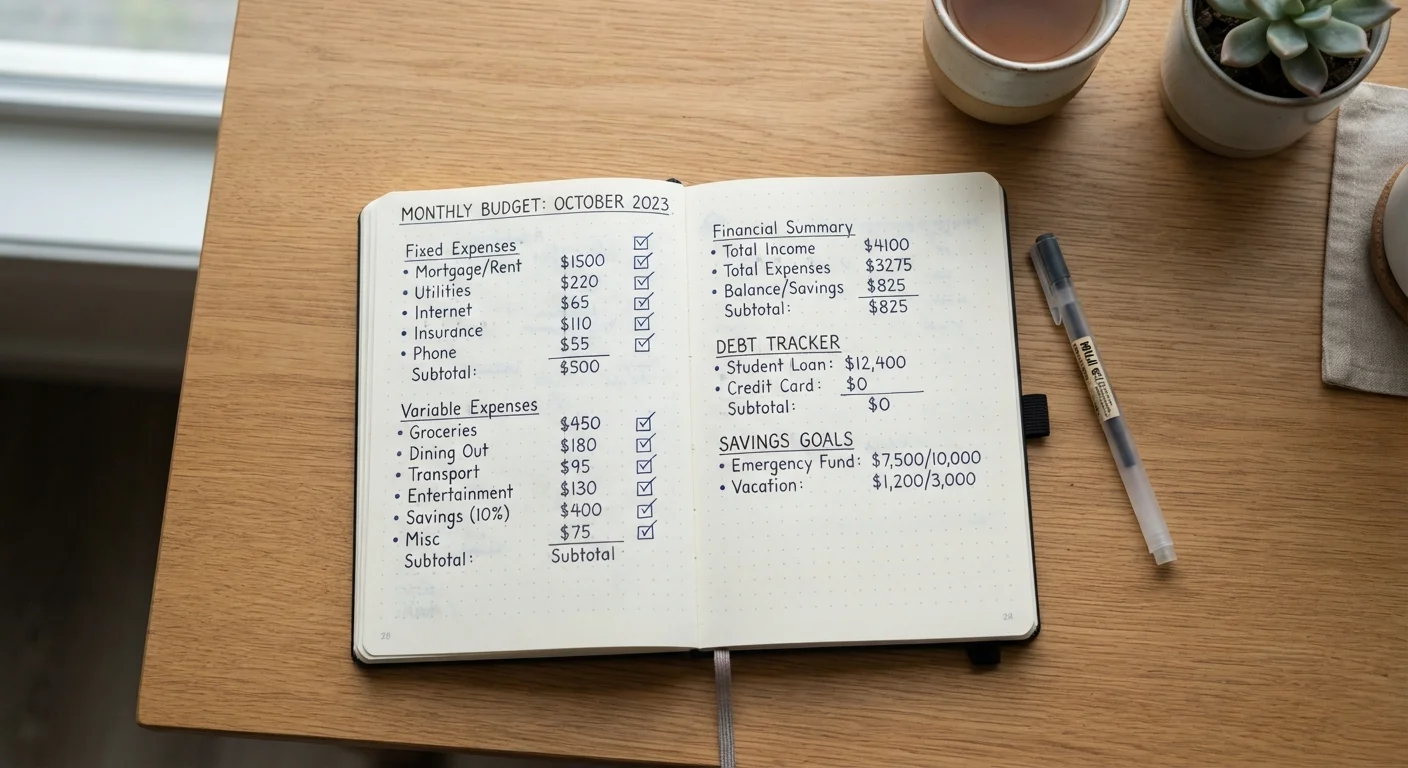
Pull up two or three months of bank or credit card statements and write down every expense. Group them into two categories:
- Fixed expenses - costs that are the same each month, like rent, a car payment, or a phone bill.
- Variable expenses - costs that change month to month, like groceries, gas, dining out, or clothing.
Don't forget irregular expenses that don't appear every month - car registration, annual subscriptions, back-to-school shopping. Divide those annual totals by 12 and add the monthly equivalent to your list. These are easy to forget and often the reason a budget feels like it's failing.
Once your list is complete, add up both columns. Seeing the real total can be surprising - that's normal, and it's useful information, not a reason to feel bad. If you're unsure how to group your expenses without going overboard on categories, our guide on organising spending categories walks through a manageable approach.
Check Three Months, Not Just One
One month of spending data can be misleading - an unusually slow or expensive month will skew your picture. Looking at two or three months and averaging the results gives you a far more accurate baseline to budget from.
Step 3: Set Spending Limits That Fit Your Life
Now compare your income to your total spending. If spending is lower, you have room to direct money toward savings or debt repayment. If spending is higher, you've identified a gap that needs attention.
A simple framework many beginners find helpful is the 50/30/20 rule: allocate roughly 50% of take-home income to needs (rent, utilities, groceries), 30% to wants (entertainment, dining out, hobbies), and 20% to savings or paying down debt. Treat these percentages as a starting point, not rigid rules. Your real numbers may look quite different - especially if you live in a high-cost area or are carrying significant debt.
Set a limit for each spending category based on what's realistic, not what's ideal. An unrealistically tight budget is one you'll abandon by week two. Aim for a plan you can actually follow, then tighten it gradually as the habit builds. When your budget is working, you can start thinking about stretching it further - our saving money hub covers practical strategies for doing exactly that.
Don't Set an Unrealistic Budget
A common beginner mistake is cutting spending limits so aggressively that the budget is impossible to follow. If your grocery limit is half of what you actually spend, you'll likely give up within weeks. Start with honest, realistic numbers - you can always tighten categories gradually once the habit is established.
Choosing How to Track Your Budget
The best tracking method is the one you'll actually use. Common options include:
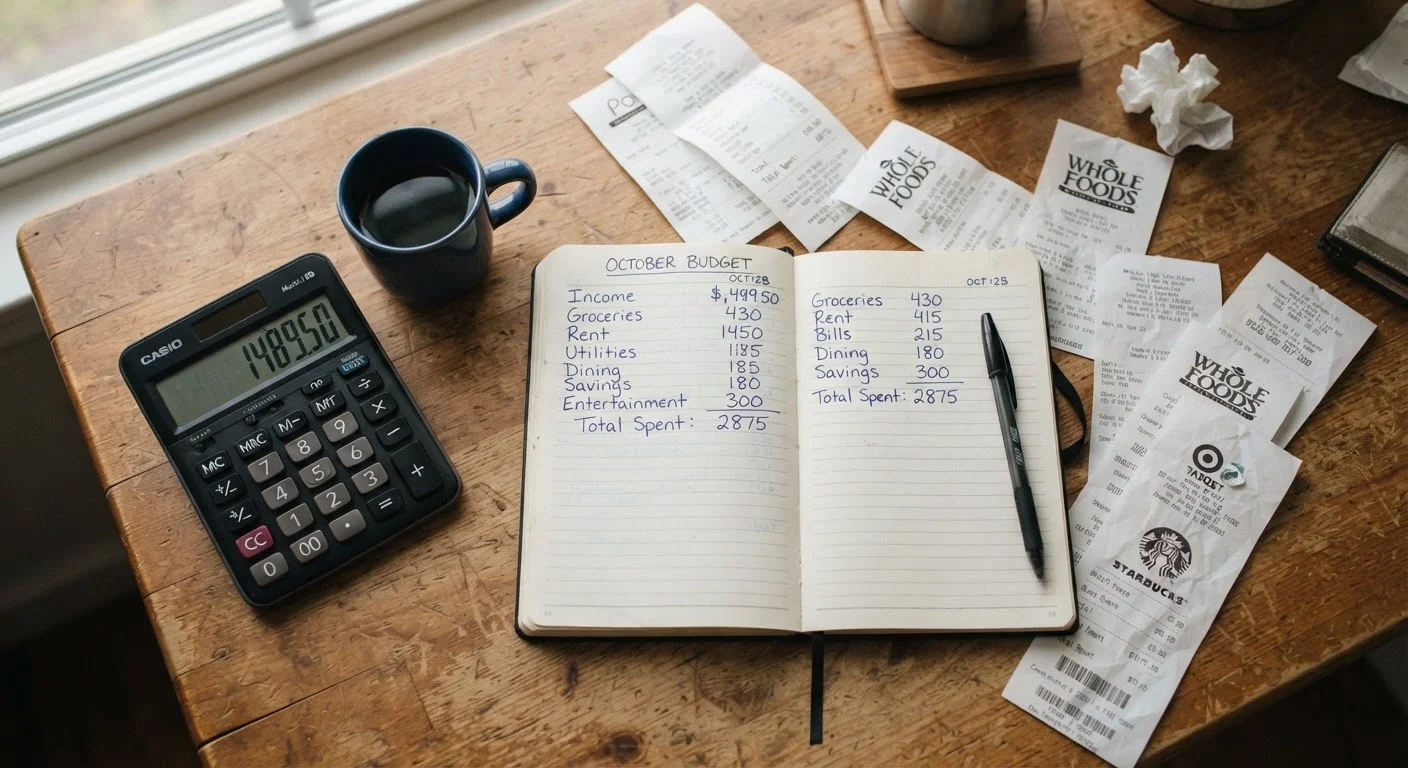
- Pen and paper - low friction, no setup, works for people who prefer writing things down.
- A spreadsheet - flexible and free; a basic template with income, expense, and balance columns is enough to start.
- A budgeting app - many apps can link to bank accounts and automatically categorize transactions, reducing manual entry.
Each approach has real trade-offs. Our article on budgeting on paper vs. using an app compares them honestly so you can pick what fits your style - not just what sounds most impressive.
Making Your Budget Stick
A budget written once and never looked at again won't help much. Building a short monthly review into your routine is what transforms a one-time exercise into a lasting financial habit.
Set aside 15-20 minutes at the end of each month to compare what you planned to what you actually spent. Did any category run over? Was there a surprise expense? Use what you learn to adjust next month's plan. Budgets are meant to evolve - your first version is a draft, not a final document.
If you find the review habit hard to maintain, you're not alone. The mindset skills that help with budgeting overlap with broader habit-building strategies - our guide to building healthy habits offers a practical framework that applies here too. Once your budget is running smoothly, you may find you're ready to set a specific savings goal - like a trip. Our travel budgeting guide is a natural next step.
This article is for general informational and educational purposes only. It is not personalized financial advice. For guidance specific to your situation, consider speaking with a qualified financial professional.