
Why Some People Save Consistently - and Others Don't
Saving money isn't a personality trait reserved for naturally disciplined people. Research in behavioral economics consistently shows that the gap between those who save regularly and those who don't comes down to systems and habits, not character.
Most people intend to save what's left over at the end of the month. Consistent savers flip that script: they set money aside first and live on what remains. That single structural shift explains a lot. It's less about motivation and more about removing the decision from your monthly routine.
If you've struggled to make saving stick, the practices below aren't a lecture - they're practical patterns that tend to work across a wide range of income levels and life situations. You don't need a high salary or perfect financial history to start using them.
This article is for general informational and educational purposes only. It is not personalized financial advice. For decisions specific to your circumstances, consider consulting a licensed financial professional.
The Core Habits of Consistent Savers
These practices aren't secrets. They're repeatable behaviors that, done consistently over time, produce meaningful results. Pick one or two to start - you don't need to implement everything at once.
Pay yourself first - move savings before you spend
When saving is the last step, it rarely happens. Money earmarked for savings gets absorbed by everyday spending. Treating your savings transfer like a fixed bill - due on payday - removes the temptation to skip it.
Automate your savings transfers
Willpower is unreliable. Automation isn't. When a transfer happens without you actively initiating it, it sidesteps the mental friction that causes most people to delay or cancel saving. Consistency compounds over time, even with small amounts.
Start with a percentage, not a fixed dollar amount
A fixed dollar target can feel arbitrary and discouraging when income varies. Saving a percentage (even 3-5%) scales naturally with what you earn and feels proportionate rather than punishing.
Give every dollar of savings a specific purpose
Abstract savings goals are easy to raid. When you know that $400 is specifically your car repair fund, you're far less likely to spend it on something else. Named savings goals also make progress visible and motivating.
Treat windfalls as savings opportunities, not spending money
Tax refunds, overtime pay, or small bonuses are opportunities to move ahead on savings goals without changing your regular budget. Without a plan, these amounts disappear into everyday spending quickly.
Want to understand how the money you save can grow over time? Compound interest rewards patience - and starting earlier, even with small amounts, gives it more time to work.
Quick Actions You Can Take This Week
Reading about good habits is useful. Actually starting one this week is better. The actions below are low-effort entry points - each one can be done in under 30 minutes and sets a foundation you can build on.
If you're also looking at ways to free up more money to save, spending habits that quietly undermine saving goals is a useful companion read - it covers common patterns that erode progress without feeling dramatic in the moment.
Making It Stick Over the Long Term
The hardest part of saving isn't starting - it's continuing through months when life gets expensive or motivation dips. A few structural choices make that easier.
“The secret to getting ahead is getting started. The secret to getting started is breaking your complex overwhelming tasks into small manageable tasks, and then starting on the first one.”
— Mark Twain, American author, widely cited in personal finance and productivity contexts
Review your budget monthly. A quick 15-minute check-in at the end of each month helps you catch subscription creep, irregular expenses, and category overruns before they become habits. This is also when you can adjust your savings amount if your income or expenses have changed.
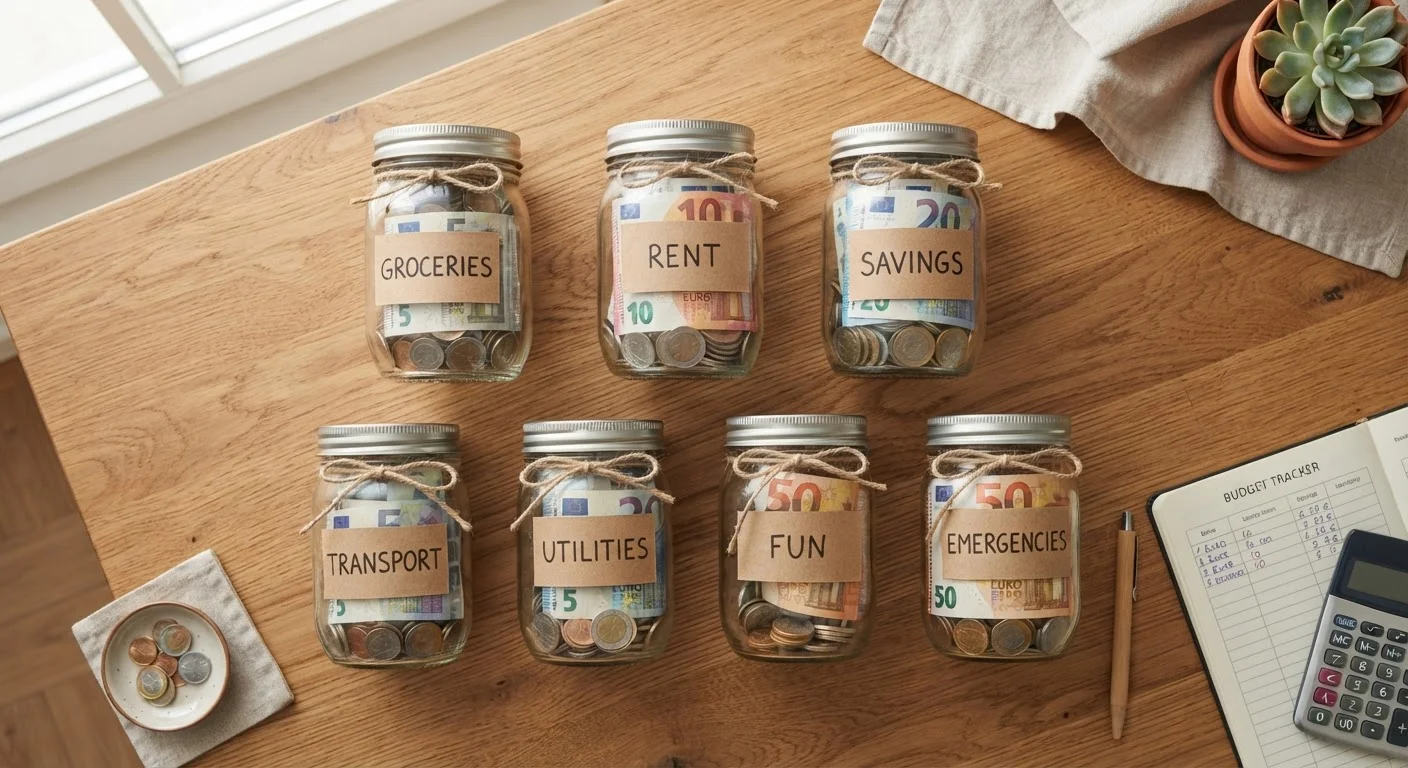
Use labeled savings buckets. Rather than one general savings account, many consistent savers keep separate accounts or sub-accounts for different goals - emergency fund, vacation, car repair. Clarity about what you're saving for makes the money feel purposeful rather than abstract. Sinking funds are one practical way to structure this, especially for known future costs.
Celebrate small milestones. Reaching your first $500 in savings is worth acknowledging. Positive reinforcement - even if it's just noting the progress in a journal - helps reinforce the behavior. For a broader look at building these patterns from scratch, see principles that hold across income levels.
For more strategies on growing what you save, the Money Basics: Saving Money hub covers everything from account types to savings milestones in plain language.
Where You Keep Savings Matters Too
Once you build a consistent saving habit, the account you use can affect how much your savings grow over time. A standard checking account typically earns little to nothing. High-yield savings accounts generally offer higher interest rates, though rates vary and change over time. This isn't investment advice - it's worth understanding your options and comparing what's available to you.