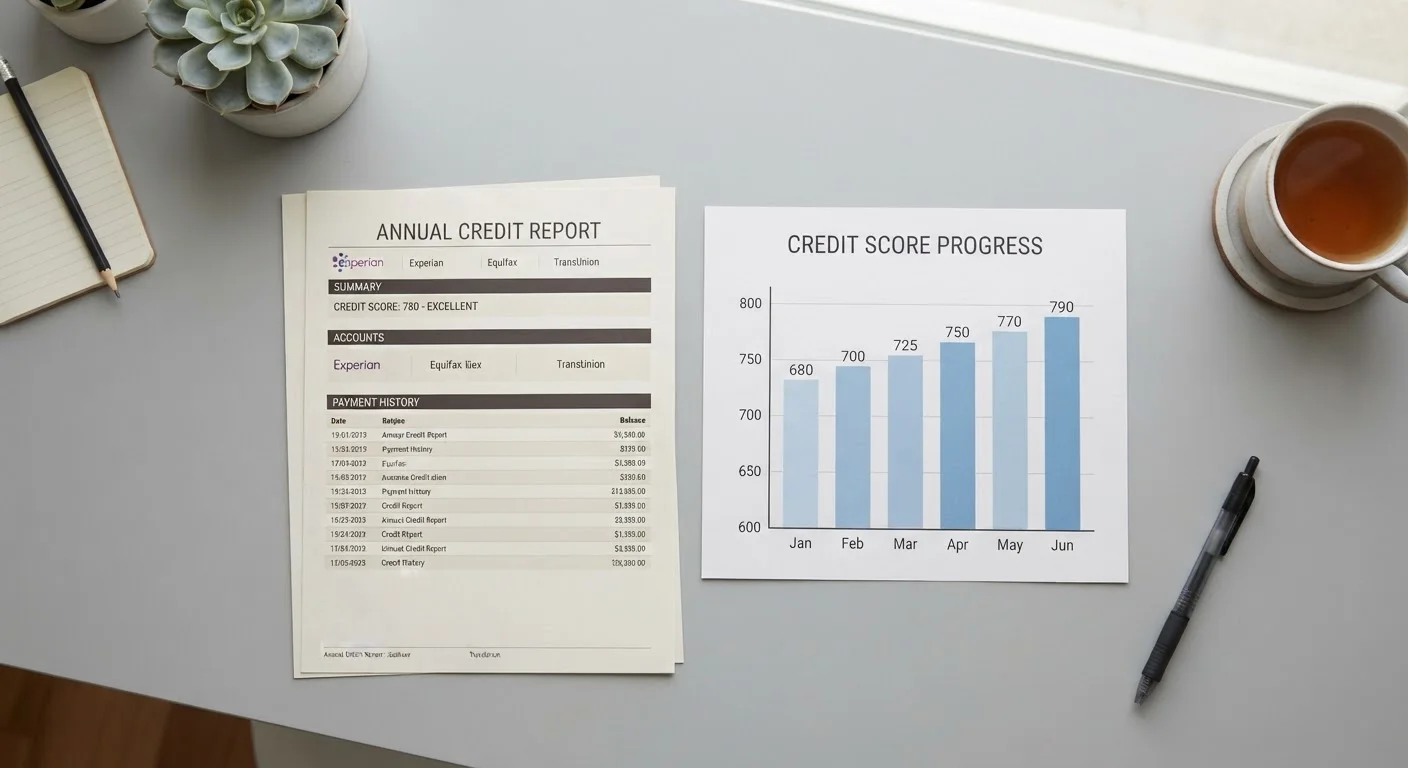

Why Monthly Habits Matter More Than One-Time Fixes
Credit scores are not changed by a single dramatic action - they respond to patterns of behaviour repeated over time. Most of the factors that make up your score, such as payment history and how much of your available credit you're using, are updated monthly as lenders report to the credit bureaus. That means your habits in any given month are actively shaping the score lenders will see weeks later.
The good news: you do not need to overhaul your entire financial life. A handful of consistent monthly behaviours, practiced reliably, tend to produce steady, compounding improvement. For a fuller picture of how your score is calculated, see what actually moves your credit score up or down.
“The secret to getting ahead is getting started. The secret to getting started is breaking your complex overwhelming tasks into small manageable tasks, and then starting on the first one.”
— Mark Twain, American author and humorist
The Core Monthly Practices
The following habits are grounded in how credit scoring models actually work. None require special tools or large sums of money - just consistency.
Pay every bill by its due date, every month - set up autopay for at least the minimum.
Payment history is typically the largest single factor in credit scoring models, often accounting for around 35% of a FICO score. A single missed payment can remain on your credit report for up to seven years and may cause a noticeable score drop. Autopay removes the risk of a forgotten due date.
Keep your credit card balances well below your credit limit each month.
Credit utilisation - the percentage of your available revolving credit that you are currently using - is another major scoring factor. High utilisation signals financial stress to lenders. Keeping balances below 30% of any card's limit, and lower if possible, generally helps your score.
Pull your free credit reports monthly and check them for errors.
Errors on credit reports - such as accounts you did not open, payments incorrectly marked late, or debts that have already been paid - are more common than many people realise. Each error can quietly suppress your score. Catching and formally disputing them is one of the few ways to improve your score without changing your spending at all.
Avoid applying for new credit unless you genuinely need it.
Each time you apply for a credit card or loan, the lender typically performs a hard inquiry on your report, which can temporarily lower your score by a few points. Applying for multiple accounts in a short window signals financial strain to scoring models. Space out applications and only pursue credit with a clear purpose.
Set aside a small cash buffer each month before it can be spent elsewhere.
Having even a modest savings reserve reduces the likelihood that an unexpected bill forces you onto a credit card. Carrying emergency expenses on revolving credit raises your utilisation and, if the balance lingers, adds interest costs. A buffer breaks the cycle before it starts.
Quick Actions You Can Take This Month
If you are just getting started, focus on the basics rather than trying to do everything at once. These actions can be completed in an afternoon and set the foundation for everything else.
It is also worth being aware of habits that work against you in less obvious ways. Less obvious credit-building strategies can accelerate progress once the fundamentals are in place.
Connecting Credit Habits to Your Broader Financial Routine
Credit health does not exist in isolation. The same monthly behaviours that protect your score - paying on time, keeping balances low, avoiding impulsive borrowing - also support better saving and debt repayment outcomes overall.
Credit Myths Can Derail Good Habits
Many common beliefs about credit - such as needing to carry a balance to build your score, or that checking your own report hurts it - turn out to be false. Acting on bad information can undo the progress that consistent habits create. Credit score myths that quietly cost people money is worth reading alongside this guide to make sure you are working with accurate assumptions.
If you notice your spending patterns making it hard to keep balances under control, it may help to look at where the pressure is coming from. Spending habits that quietly undermine long-term saving goals covers some of the patterns worth examining. Building a savings buffer is equally valuable - even a modest reserve means you are less likely to lean on credit cards during a rough month. The budgeting basics hub is a useful starting point for structuring that side of your finances.
This article is for general informational and educational purposes only. It is not personalised financial or credit advice. For guidance specific to your situation, consider speaking with a qualified financial professional.