Why Solo Cats Need Active Enrichment
Cats are often described as solitary and self-sufficient, but that reputation masks a more complex reality. Domestic cats are cognitively active animals with hunting instincts that don't disappear just because food appears in a bowl twice a day. Without stimulation, a solo cat can develop genuine behavioral and emotional problems - not out of spite, but out of unmet need.
Boredom in cats can manifest as over-grooming, increased aggression, destructive scratching, and compulsive behaviors. Stress-related illness, including urinary issues, has also been associated with environmental monotony. Understanding this helps reframe enrichment not as a luxury but as a core part of responsible cat ownership. For a broader look at building a supportive home, see our guide to creating a home your cat will thrive in.
~60%
Indoor cats showing signs of boredom
Animal welfare researchers estimate that a significant proportion of indoor-only cats experience under-stimulation, contributing to behavioral and stress-related health issues.
2x
Engagement boost from toy rotation
Behavioral studies on domestic cats have found that novelty significantly increases play engagement, with rotated toys consistently outperforming permanently available ones.
Best Practices for Keeping a Solo Cat Engaged
The following practices draw on veterinary behavioral science and animal welfare guidance. Implement as many as fit your cat's personality and your living space - variety itself is part of the benefit.
Schedule two short interactive play sessions daily using a wand or feather toy
Cats are natural predators whose hunting drive needs an outlet. Regular play mimics the hunt-catch-kill-eat cycle that keeps cats mentally satisfied and physically active. Short sessions of 10-15 minutes are more effective than one long weekly session because they match a cat's natural energy bursts.
Introduce puzzle feeders or food-dispensing toys at mealtimes
Eating from a bowl requires almost no cognitive effort. Puzzle feeders slow down eating, reduce boredom-related overeating, and give cats a problem to solve - meeting their need for mental challenge. Animal welfare researchers often describe this as 'contrafreeloading,' the tendency of animals to prefer earned food over free food.
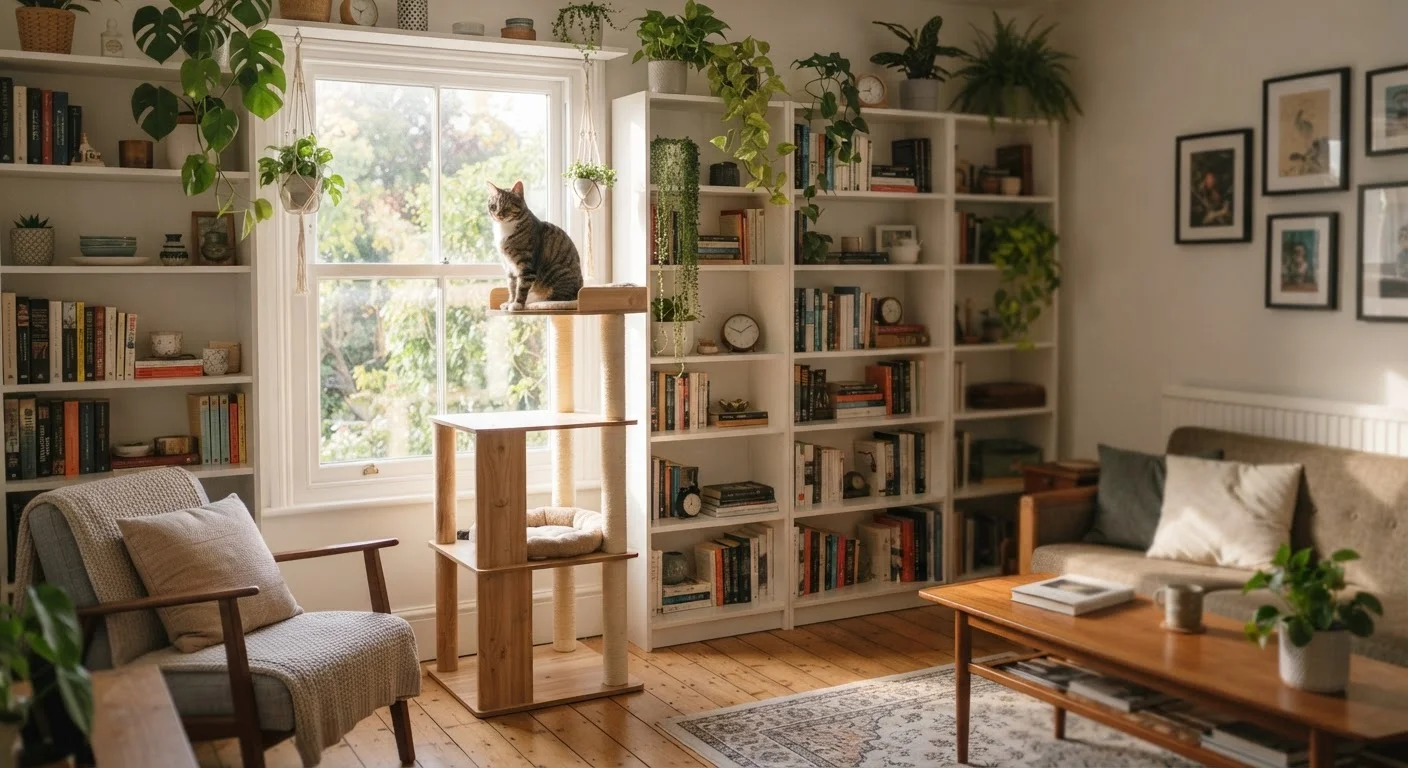
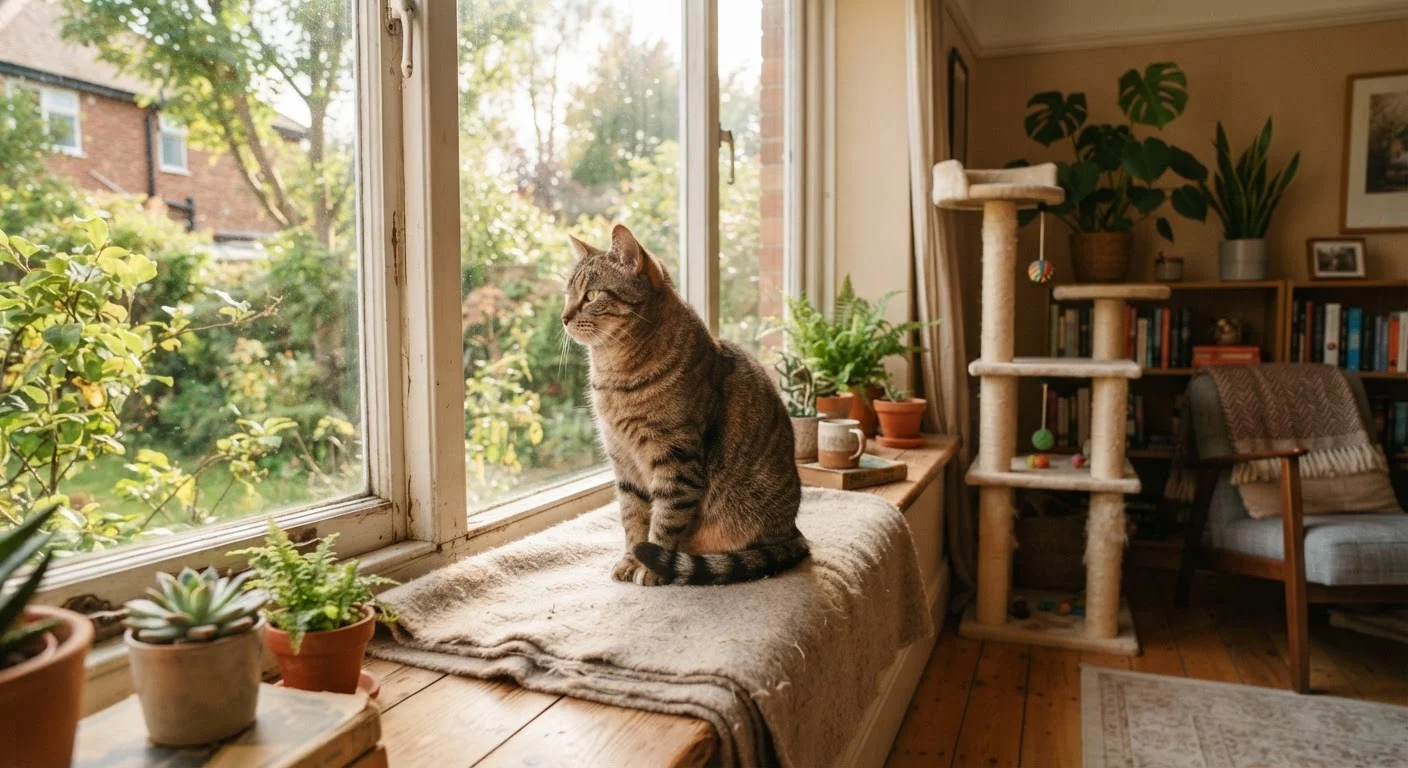
Create vertical territory with cat trees, shelves, or window perches
Height gives cats a sense of security and control over their environment. Cats who can survey a room from above tend to show lower stress indicators than those limited to floor level. Vertical space also adds navigable territory without requiring additional square footage.
Rotate toys on a weekly basis rather than leaving all toys out permanently
Cats habituate quickly to constant stimuli - the same toy left out for weeks becomes invisible. Rotating toys on a regular schedule reintroduces novelty, making familiar objects interesting again without requiring constant new purchases.
Offer sensory variety through safe indoor herbs, bird feeders outside windows, and varied textures
Cats process the world through multiple senses simultaneously. Scent, sound, and texture all contribute to a stimulating environment. Safe plants like valerian or silver vine can provide scent-based enrichment, while a bird feeder placed outside a window creates natural 'cat TV.'
Build structured grooming sessions into your routine as bonding time
For many cats, gentle grooming by a trusted person mimics social bonding behaviors seen between cats in the same group. It provides physical contact, predictability, and calm interaction - all of which support a solo cat's emotional wellbeing. Our guide to grooming routines cats actually tolerate offers practical tips for building this habit.
Quick Enrichment Wins You Can Start Today
You don't need to overhaul your home overnight. These actions take minutes to set up and can make a noticeable difference in your cat's daily experience.
Consistency Matters More Than Complexity
You don't need expensive equipment to enrich a solo cat's life - you need reliable daily interaction. Even 15 minutes of focused play and a puzzle feeder at breakfast creates a routine your cat can anticipate and benefit from. Predictability itself is a form of enrichment for cats, who are highly attuned to the rhythms of their environment.
Reading Your Cat's Signals
Enrichment isn't one-size-fits-all. A senior cat will need gentler, lower-impact activities than a young adult. A shy cat may prefer solitary puzzle toys over wand play with a person in the room. Learning to read your cat's engagement - ears forward, tail loosely upright, pupils normal-sized - versus their disinterest or stress signals helps you tailor activities over time.
Cats also change across life stages. Our guide to how cats age explains how needs shift from kittenhood through senior years, which is especially useful for adjusting enrichment routines over time. And if you're ever considering whether a companion might help - weigh that carefully. Introducing a second cat isn't always the answer, but if you do explore it, our step-by-step introduction guide can help you do it right.
“Environmental enrichment is not an optional extra for cats - it is a fundamental component of their welfare. The domestic cat retains the cognitive and sensory needs of a predator, and those needs require daily outlets.”
— American Association of Feline Practitioners, Veterinary professional organization specializing in feline medicine and welfare