Why Your Home Setup Matters More Than You Might Expect
Cats are often described as low-maintenance pets, and in some ways that's true - they don't need daily walks or constant attention. But the physical environment you provide has an outsized effect on their health, behavior, and happiness. A poorly arranged space can leave a cat chronically stressed, bored, or anxious, which often shows up as unwanted behavior: inappropriate scratching, litter box avoidance, or aggression.
The good news is that getting the setup right doesn't require expensive renovations. It's mostly about understanding how cats experience space - and arranging resources to meet those needs. If you're also weighing the broader financial picture, our breakdown of cat ownership costs helps put setup expenses in context.
Think Like a Cat, Not a Human
When setting up your space, get low and look at the room from floor level, then scan upward. Cats evaluate territory in three dimensions. A bare room with no perches, no hiding places, and exposed sightlines can feel stressful rather than safe. Adding even one elevated surface and one enclosed spot makes a meaningful difference.
For households adding a cat where other pets already live, the physical setup plays a critical role in a smooth introduction. See our guide on introducing a new cat to a multi-pet household for how space management reduces conflict.
What You'll Need Before You Begin
Before working through the steps below, do a quick assessment of your current setup and gather the essentials.
What you will need
Cat tree or wall-mounted shelves
Provides vertical territory for climbing, resting, and observing - essential for a cat's sense of security.
Scratching posts (at least two)
Gives cats a sanctioned outlet for scratching, which is a natural behavior for claw maintenance and stress relief.
Litter boxes (one per cat, plus one extra)
Ensures cats always have access to a clean toilet option, reducing elimination problems.
Covered hiding box or igloo bed
Provides a safe retreat where your cat can decompress away from noise and activity.
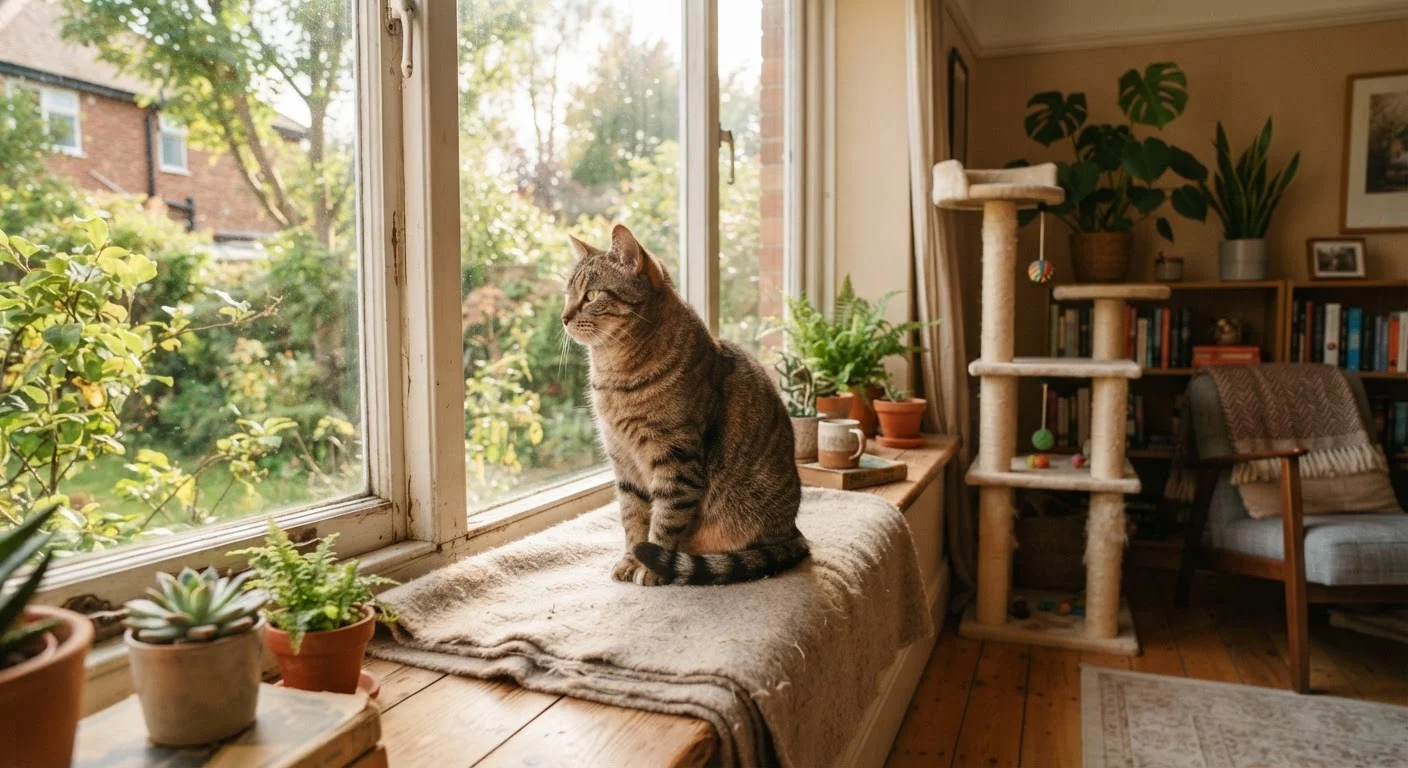
Window perch or secured shelf near a window
Allows cats to watch outdoor activity, which serves as passive mental enrichment.
Childproof cabinet latches
Keeps cats out of cabinets containing cleaning products, medications, or toxic foods.
Toxic Hazards Are Everywhere
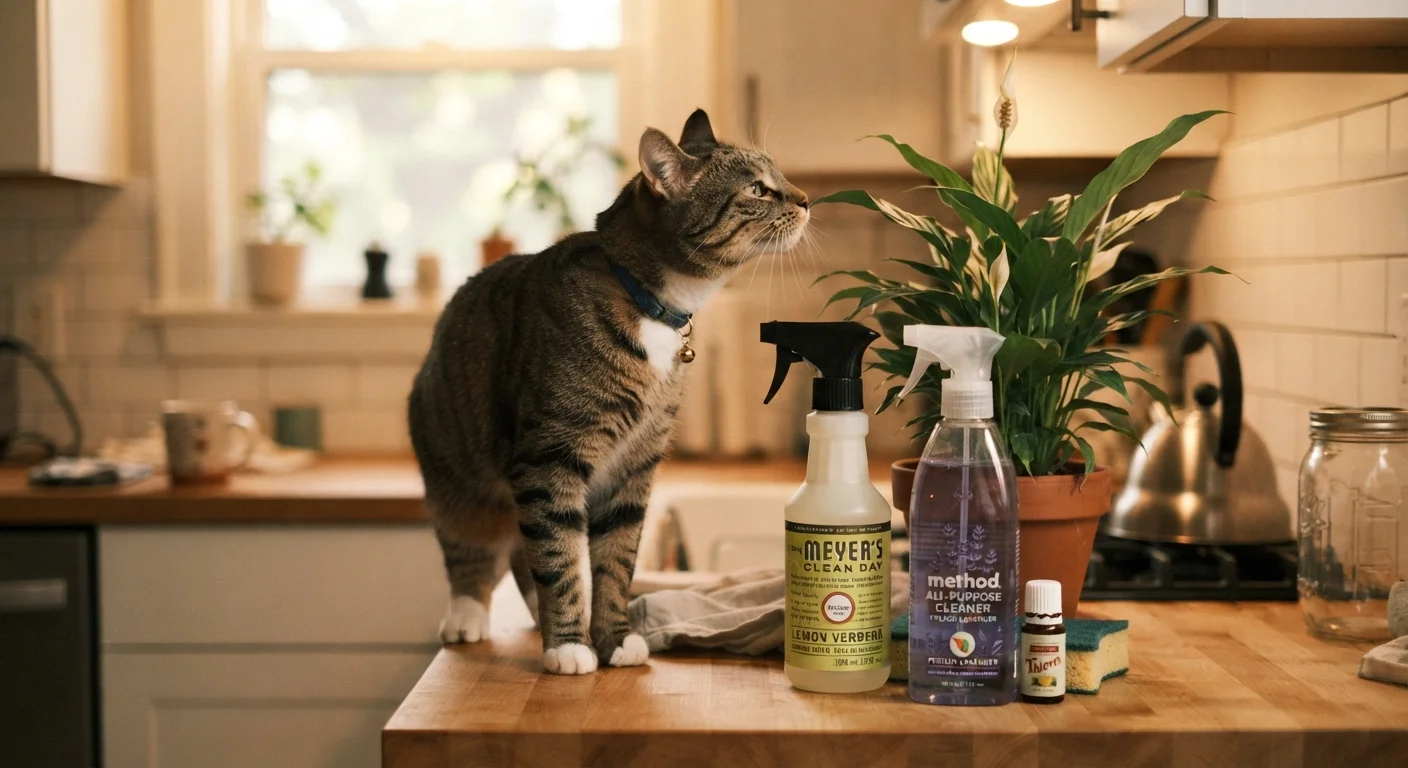
Many everyday items - including lilies, certain cleaning sprays, onions, and some essential oils - are seriously dangerous to cats. Before your cat comes home, audit every room. See our guide to common household toxins for a detailed checklist. If you suspect your cat has ingested something toxic, contact a veterinarian or animal poison control immediately.
Step-by-Step: Setting Up Your Cat-Friendly Home
Audit every room for hazards before your cat arrives
Walk through your home with a critical eye before your cat gets free access. Remove or secure toxic plants (lilies in particular are extremely dangerous to cats), store human medications in latched cabinets, and move household cleaners out of low cabinets. Tuck away loose electrical cords and block gaps behind large appliances where a curious cat could become trapped.
Pay particular attention to the kitchen and bathroom, where hazards tend to concentrate. Foods like onions, garlic, grapes, and raisins are harmful to cats, so counter access matters. A full list of household toxins to remove is a useful reference during this process.
Set up vertical space and territorial zones
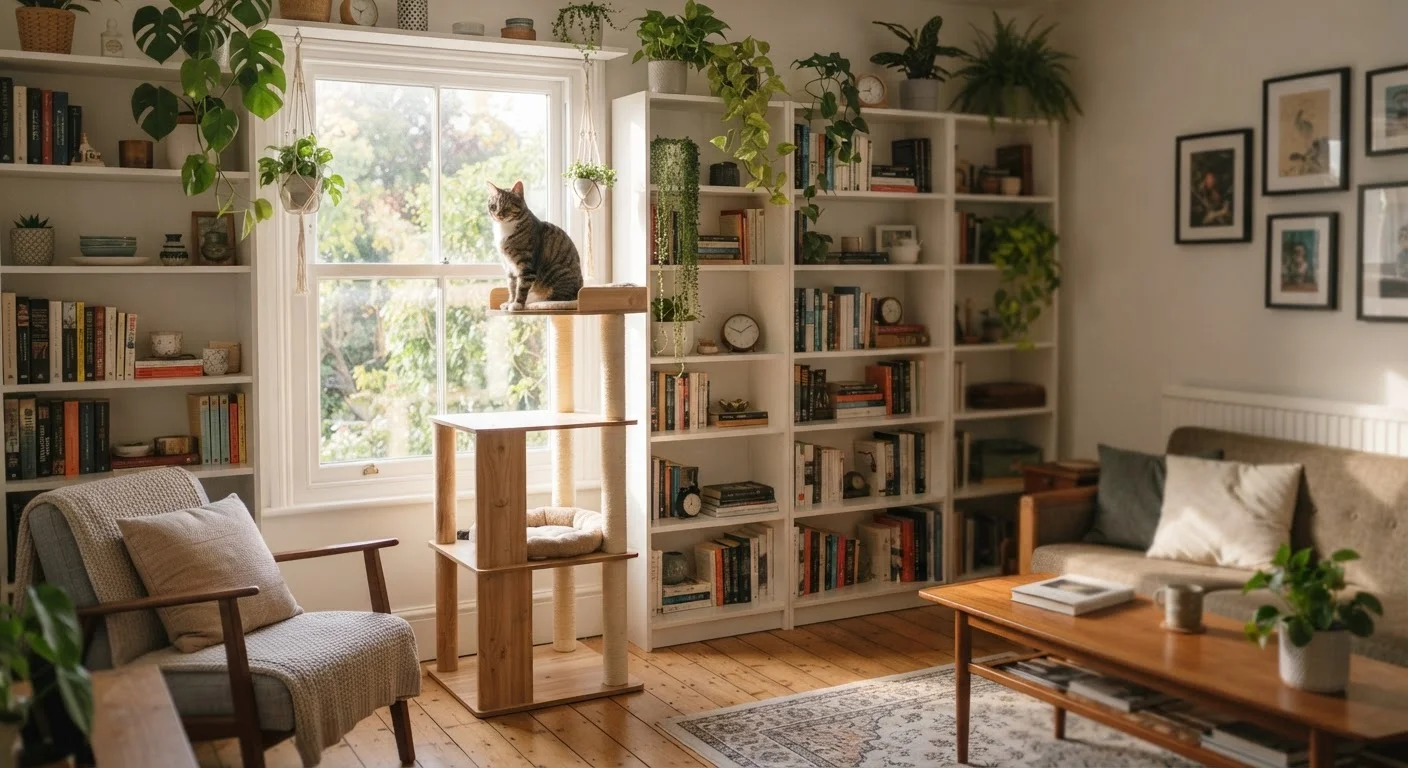
Cats are vertical animals by nature. A room with only floor-level options feels exposed and stressful. Install a cat tree, wall-mounted shelves, or clear off a sturdy bookcase shelf to create elevated resting spots. Aim for at least one high-up perch in any room where your cat will spend significant time.
Spread resources across different zones rather than clustering everything in one corner. This gives your cat choices - an important factor in reducing stress, especially in a new environment.
Provide hiding spots in multiple rooms
Every cat needs a place to retreat when they feel overwhelmed. A covered igloo bed, a box lined with a soft blanket, or even a cleared low shelf with a curtain works well. The hiding spot should be somewhere the cat chooses - avoid placing it in a high-traffic area where it won't actually feel safe.
This is especially important during the first weeks in a new home, but remains valuable long-term. Cats don't outgrow the need for a private retreat.
Place litter boxes thoughtfully
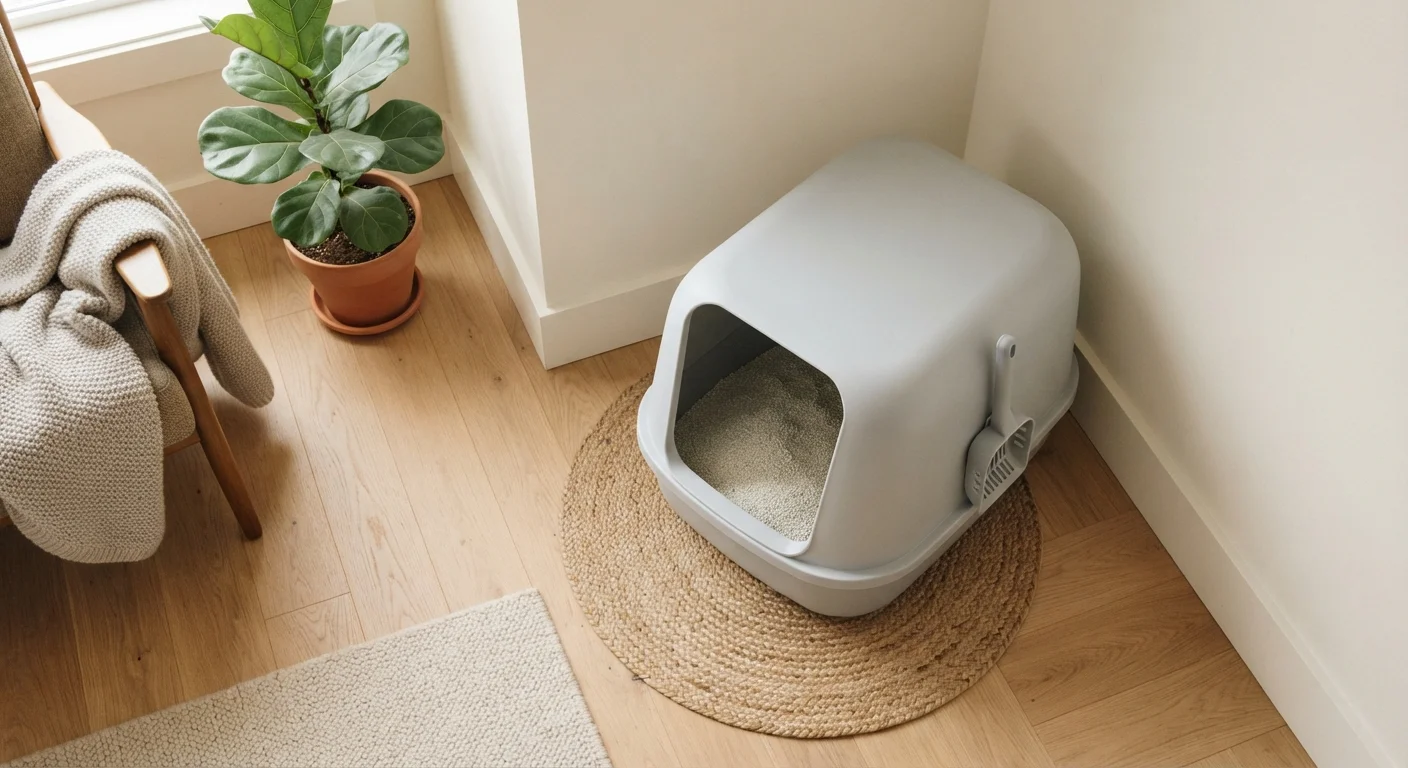
A commonly cited guideline from veterinary behaviorists is one litter box per cat, plus one additional. So one cat needs at least two boxes. Place them in quiet, accessible locations - not next to noisy appliances, not in a remote corner of the basement that the cat rarely visits.
Avoid placing food and water bowls near litter boxes; cats strongly prefer to keep eating and elimination areas separate. If you're troubleshooting existing problems, our guide to litter box issues covers the most common causes and fixes.
Install scratching surfaces throughout the home
Scratching is not misbehavior - it's a biological need cats have for claw maintenance, muscle stretching, and scent marking. If you don't provide appropriate surfaces, your furniture becomes the default. Offer a mix of tall vertical posts (at least as tall as your cat fully stretched) and horizontal cardboard scratchers. Place them near sleeping areas, since cats often scratch after waking.
Plan for ongoing enrichment and routine
Physical setup matters, but so does daily routine. Interactive play sessions - even 10-15 minutes twice daily - help indoor cats burn energy and stay mentally sharp. Rotate toys to prevent boredom. For cats living alone, enrichment becomes especially important; our article on keeping a solo cat mentally engaged offers practical strategies.
As your cat ages, their needs shift. Senior cats may need lower-entry litter boxes and easier access to resting spots. Our overview of cat life stages can help you anticipate those changes before they become problems.
Secure Cords, Gaps, and Openings
Cats can squeeze into surprisingly small spaces and chew through thin electrical cords. Before giving your cat access to any room, cover or bundle loose cords, block gaps behind appliances, and check that windows have secure screens. A brief hazard walk-through now can prevent a serious injury later.
Maintaining the Setup Over Time
A cat-friendly home isn't a one-time project. Revisit the setup periodically - especially as your cat ages, if you move, or if you bring in new pets or furniture. Keep an eye on what your cat actually uses versus what goes ignored, and adjust accordingly. Grooming needs also become part of the home routine; our guide to grooming routines covers how to build that habit gradually and with minimal stress for both of you.
The goal isn't a picture-perfect home - it's a home your cat genuinely feels comfortable living in every day.