Why a Reusable Kit Changes Everything
Most packing stress comes from starting from scratch every single time. You hunt for your adapter, restock your toiletry bag, wonder where you put that travel umbrella - and suddenly a fun trip feels like a logistics project. A dedicated, reusable travel kit solves this by giving you a stable foundation that works for a weekend escape and an international adventure alike.
Think of it less as a bag and more as a system. Once built, your kit lives in a designated spot at home, gets restocked after each trip, and is ready to go the next time inspiration - or obligation - calls. Check out our travel tips hub for more ideas on making every journey smoother from the start.
The Four Zones of a Smart Travel Kit
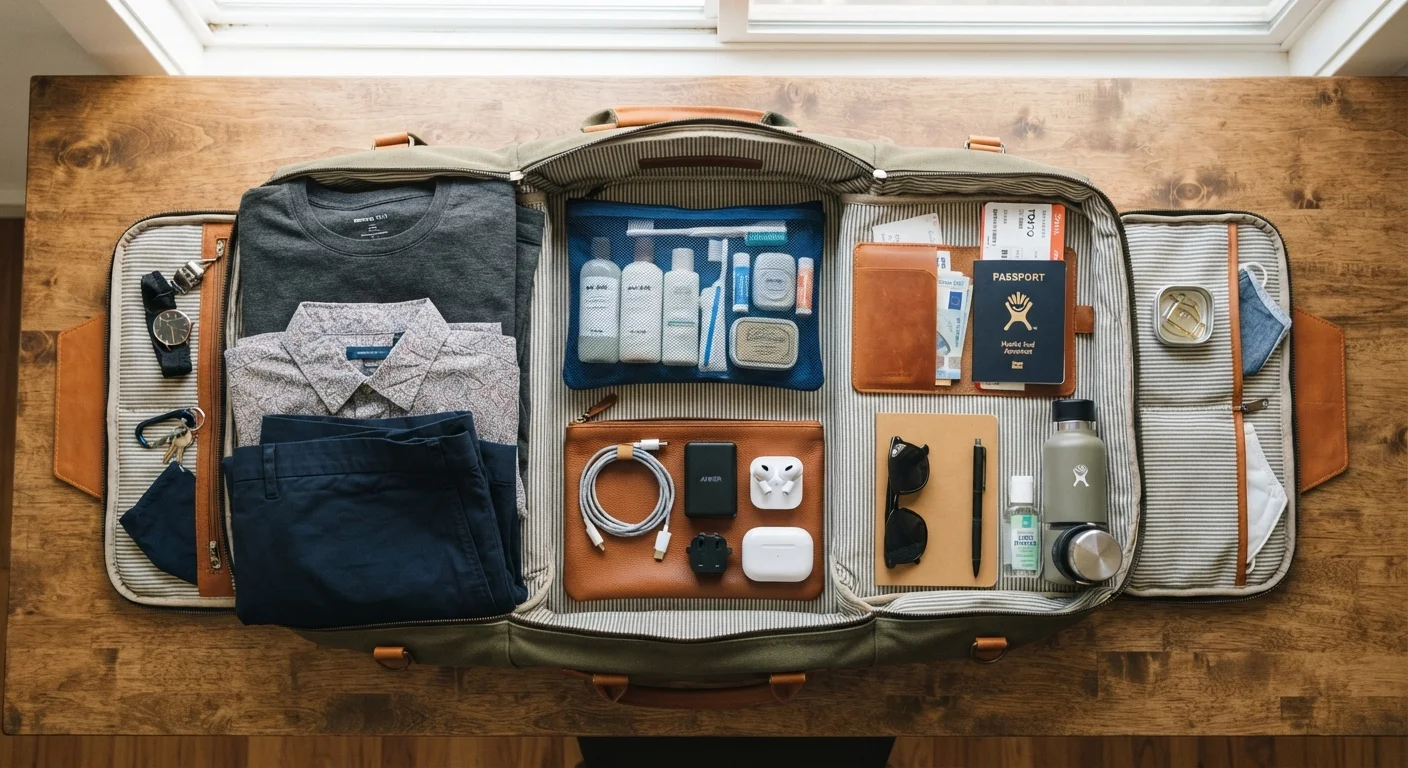
Organizing your kit into four clear zones prevents the chaos of dumping everything into one bag. Each zone serves a distinct purpose and can be packed or checked independently.
Zone 1: Documents & Cards
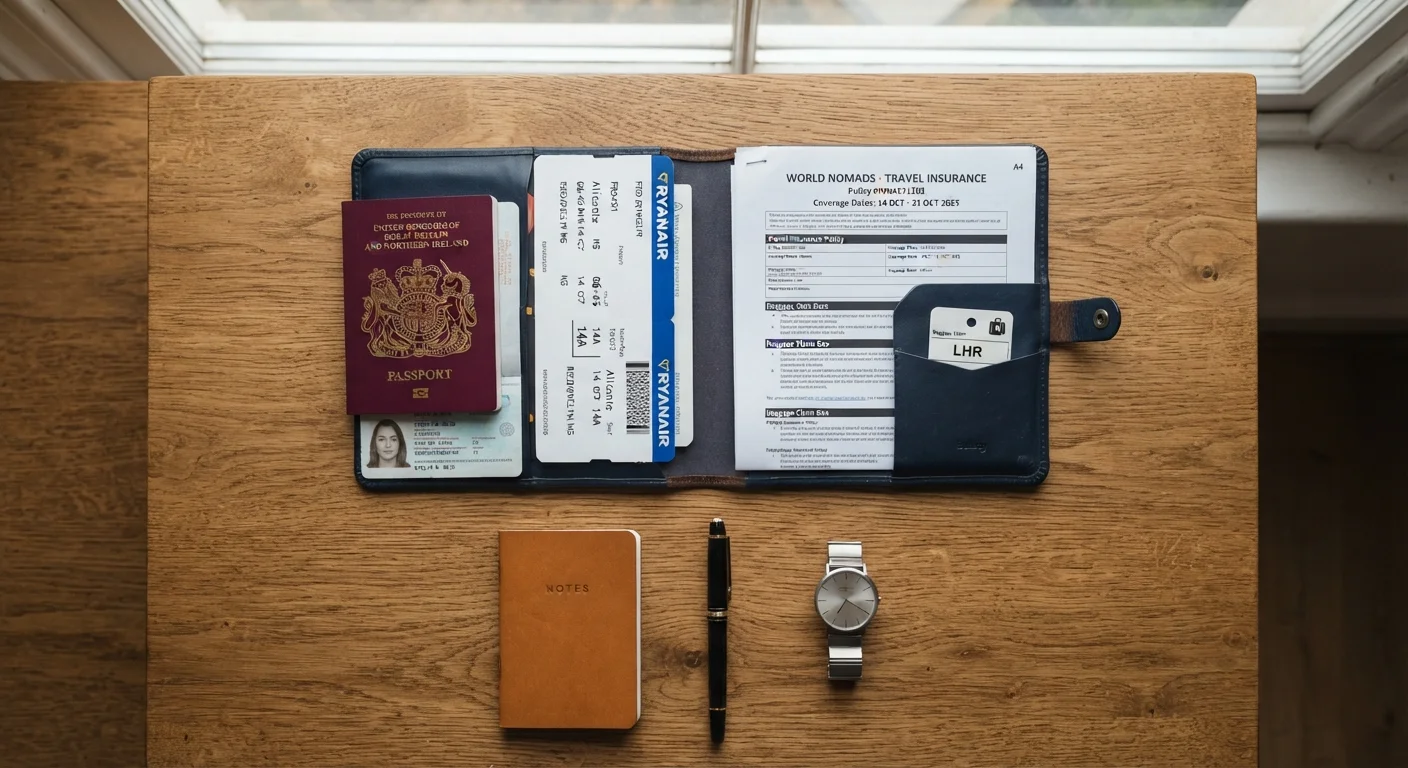
This is your most critical zone. Keep a small travel wallet or pouch dedicated to your passport, ID, travel insurance info, and a printed itinerary backup. For tips on organizing these safely, see our guide on organizing travel documents.
Zone 2: Tech & Power
Dedicate a small pouch to your universal power adapter, a portable charger, charging cables, and earbuds. Label cables with small tags if you carry more than two - it saves real time at airport security.
Zone 3: Toiletries
Use a hanging toiletry bag stocked with travel-sized essentials: toothpaste, shampoo, a basic first-aid kit (adhesive bandages, pain reliever, antacids), and any prescription medications you regularly take. Restock immediately after returning home so it's ready next time.
Zone 4: Comfort & Utility Gear
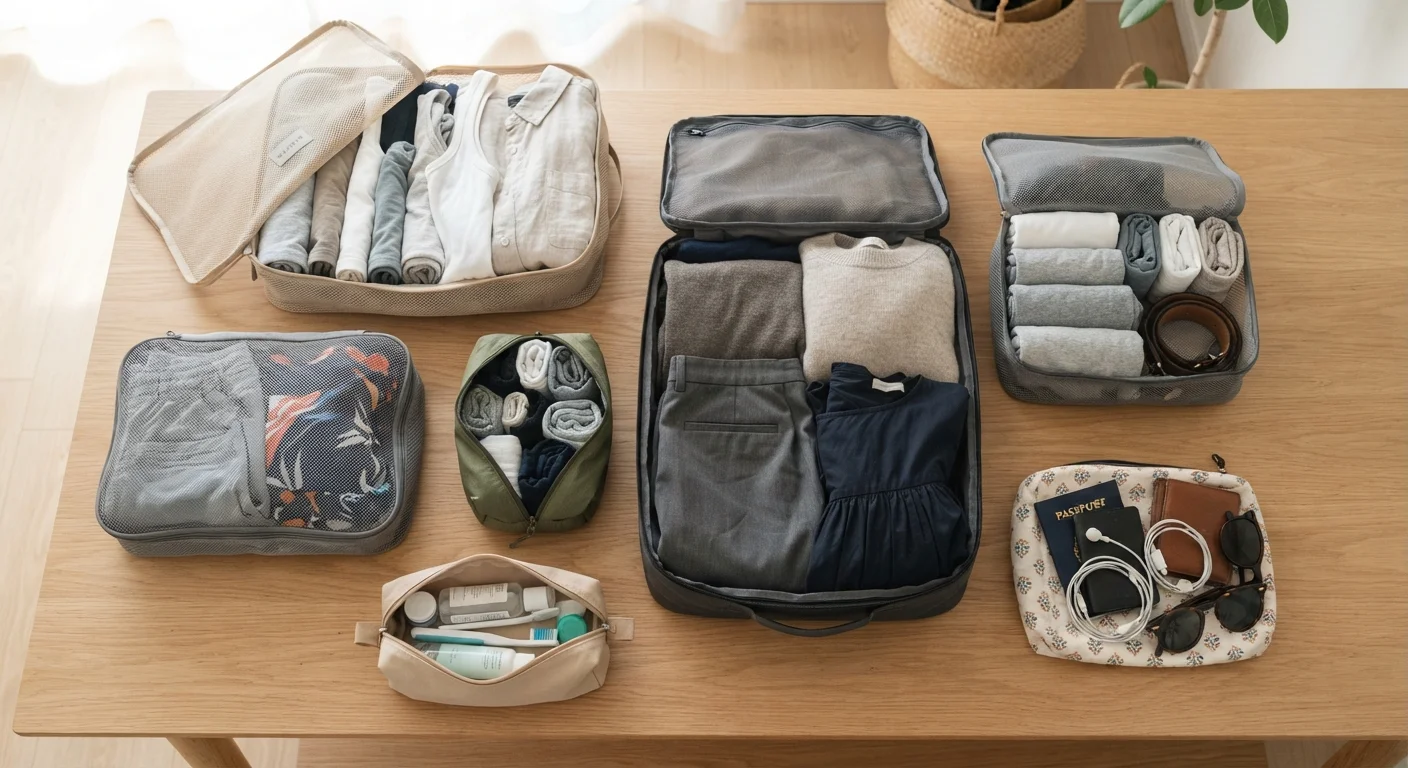
This zone holds the items that consistently make trips better: a compact travel umbrella, a reusable tote, a sleep mask, earplugs, and a pen (always needed for customs forms). Packing cubes and organizers can help keep all four zones tidy inside any bag.
Keep your travel kit in one dedicated physical spot at home.
When your kit has a fixed home, you never waste time hunting for components before a trip. Consistency also makes it easier to notice when something is missing or needs restocking.
Choose travel-sized versions of everyday toiletries and replace them immediately after a trip.
Running out of a toiletry mid-trip is a minor but avoidable frustration. Restocking right when you unpack ensures the kit is ready before you've even booked your next trip.
Consolidate all tech accessories into a single labeled pouch.
Loose cables and adapters scattered through a bag waste time at security and create anxiety when something seems missing. One pouch means one check.
Include a basic first-aid selection in every kit, no matter the trip length.
Minor issues like headaches, blisters, or upset stomachs can derail a trip if you're unprepared. Having basics on hand keeps small problems small.
Do a two-minute kit review the night before every departure.
Even a well-maintained kit can have gaps after multiple trips. A quick check catches low batteries, missing documents, or depleted supplies before you're rushing to the airport.
Adapting the Kit to Any Trip Length
Your core kit stays the same - what changes is what you add on top of it. For a weekend trip, you're adding two or three clothing changes and you're done. For two weeks abroad, you layer in more clothing choices and destination-specific items. Our international travel packing checklist covers the extra layers needed for crossing borders.
The key is treating your core kit as non-negotiable and your clothing and destination-specific items as variables. That mental separation alone removes a significant chunk of packing anxiety.
Kit Size Doesn't Have to Be Fixed
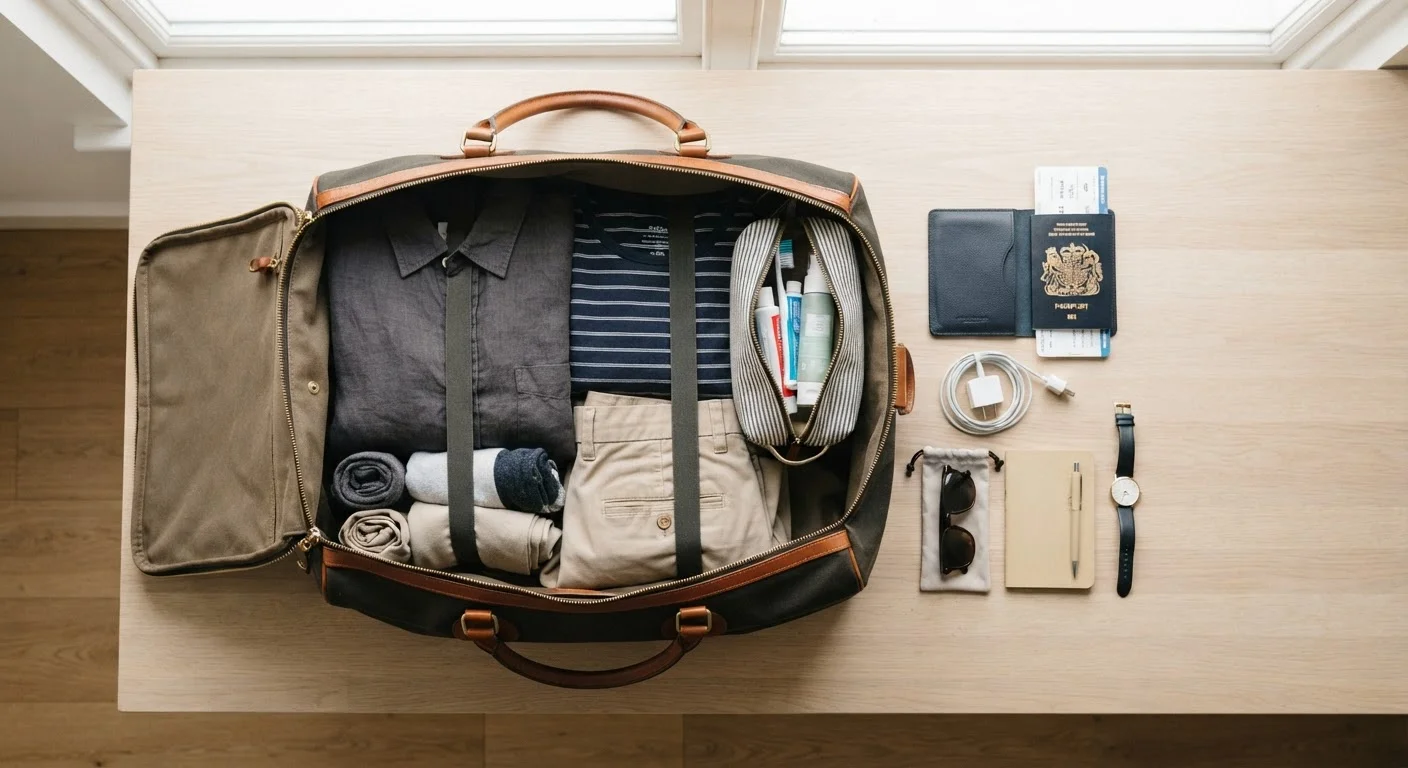
Your reusable core kit doesn't need to live in one specific bag. Many travelers keep their four zone pouches organized independently and drop them into whatever bag suits the trip - a carry-on, a backpack, or a checked bag. The pouches are the kit; the outer bag is just the vessel.
One more thing worth doing before any trip: review our list of things travelers routinely forget - your kit covers what you pack, but there are pre-departure tasks that no bag can handle for you.
Maintaining Your Kit Between Trips
The real power of a reusable travel kit comes from the habit of maintaining it. After every trip, spend 15 minutes: replace any used toiletries, recharge the portable battery, return documents to the wallet, and note anything that was missing. Keep a small sticky note inside the kit to jot down items to add before the next trip.
15 min
Time to restock your kit after a trip
Travel organizers and frequent flyers commonly cite a short post-trip reset as the single habit that keeps them consistently ready to travel.
4 zones
Core categories in a reusable travel kit
Breaking a travel kit into documents, tech, toiletries, and comfort gear creates a structure that scales from overnight trips to multi-week international travel.
If you want to travel lighter overall, the principles behind packing light for longer trips apply equally to building a lean, efficient kit - favor versatile items, minimize duplicates, and question anything you haven't actually used on a trip.