Why Two Weeks in a Carry-On Is More Achievable Than It Sounds
The idea of squeezing 14 days of clothing into a single carry-on triggers anxiety for most travelers - but the anxiety is usually based on a flawed assumption: that each day needs a fresh, dedicated outfit. It doesn't. The real goal is building a small collection of pieces that work in rotation, stay fresh between wears, and don't demand much from you in return.
If you're new to this kind of packing, our complete starter guide to packing your first big trip is a great foundation to read alongside this one. And if you're worried about leaving something important behind, packing light without leaving behind what you need addresses that concern directly.
The sections and steps below walk you through a practical system - from fabric selection to a test-pack routine - that makes carry-on travel for two weeks genuinely doable, even on a first attempt.
What you will need
What You'll Need Before You Start Packing
Gather your tools before you start building your clothing list. Having the right organizers and fabric choices in place before you pack makes the whole process faster and the result more reliable.
Packing cubes (set of 3-4)
Compress and organize clothing categories so the bag stays tidy and space-efficient throughout the trip.
Merino wool or synthetic performance tops
Odor-resistant, quick-drying fabrics that can be worn multiple days without smelling or losing shape.
Slim travel towel (microfiber)
Dries in minutes after sink-rinsing laundry; doubles as a beach or gym towel.
Small mesh laundry bag
Keeps worn items separate from clean clothes inside the bag without needing multiple stuff sacks.
Portable travel steamer or wrinkle-release spray
Refreshes wrinkled clothes so they look worn-once even after days in a bag.
The 5-4-3-2-1 Framework as a Starting Point
A popular light-packing rule of thumb is 5 tops, 4 bottoms, 3 shoes, 2 layers, 1 formal piece - though you can adapt the numbers to your destination and activities. Pair this with performance fabrics and the math works comfortably for two weeks without daily washing.
Step-by-Step: Building and Packing Your Two-Week Carry-On
Follow these steps in order. Each one builds on the last, so skipping ahead - especially past the fabric and capsule-building steps - tends to result in a bag that's heavier than it needs to be.
Audit your itinerary for activity types
Before touching a single piece of clothing, list the types of activities on your trip: city walking, hiking, beach days, business dinners, or a mix. Each activity type needs roughly one outfit formula, not one outfit per day. A casual daytime look that transitions to dinner with a swap of shoes and a layer covers two situations in one slot.
Choose the right fabrics before choosing pieces
Fabric is everything when re-wearing is the plan. Look for:
- Merino wool - naturally odor-resistant, temperature-regulating, and wrinkle-resistant. Expensive upfront but remarkably versatile.
- Synthetic blends (polyester-nylon) - quick-drying and durable; good for active days.
- Linen-cotton blends - breathable in warm climates but wrinkle easily; use for one or two statement pieces only.
Avoid heavy cotton as your primary fabric - it absorbs sweat, dries slowly, and takes up disproportionate bag space.
Build a neutral-toned capsule wardrobe
Every item should work with at least three others in your bag. Stick to two or three colors that mix freely - navy, white, and tan is a classic example. A practical two-week carry-on clothing list might look like this:
- 5-6 tops (mix of short-sleeve and one long-sleeve)
- 2-3 bottoms (pants or jeans that pair with everything)
- 1 dress or versatile jumpsuit (optional)
- 1 lightweight layer (packable jacket or cardigan)
- 4-5 pairs of underwear (merino or performance fabric)
- 3-4 pairs of socks
- 2 pairs of shoes (one walking, one dressier)
Use packing cubes and roll, don't fold
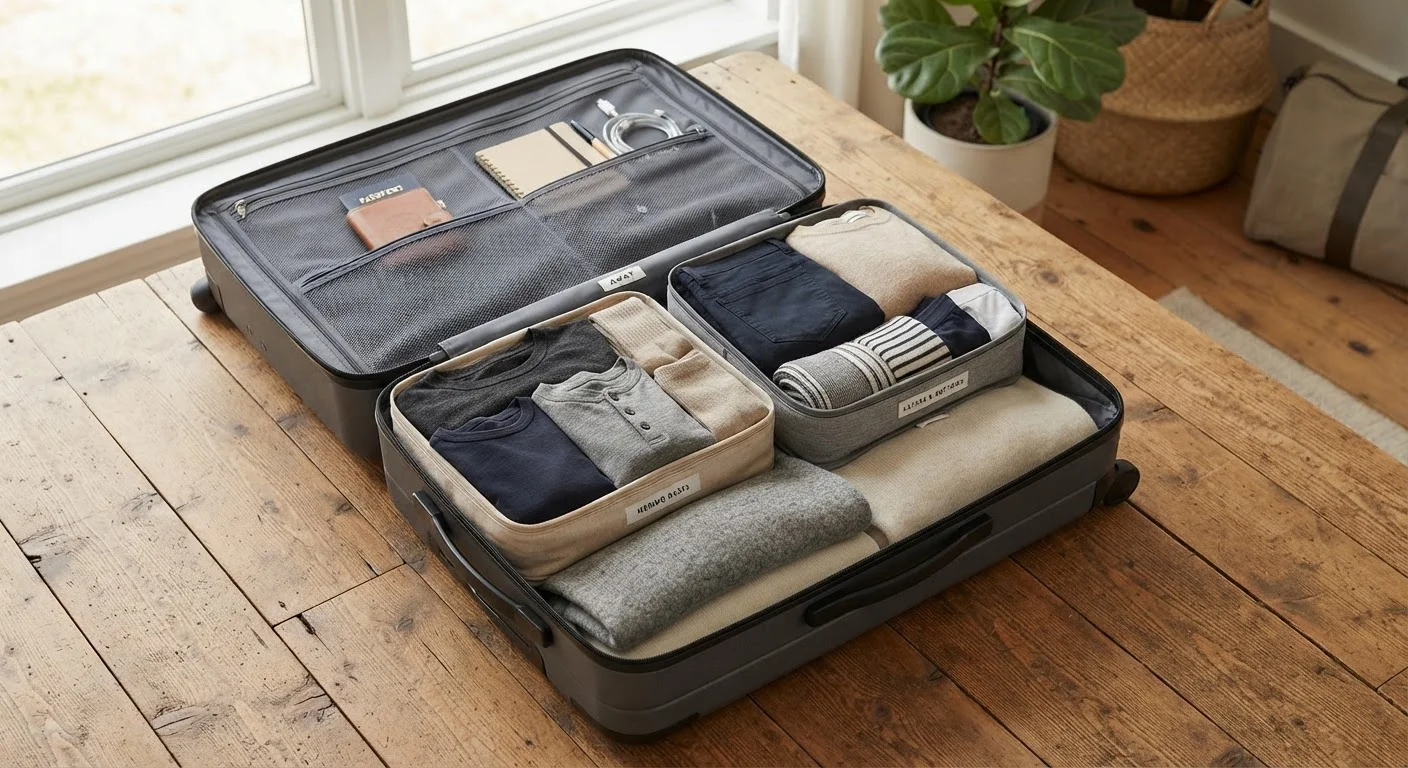
Rolling clothes instead of folding them reduces wrinkles and saves roughly 20-30% more space in most bags. Place rolled items vertically in packing cubes so you can see everything at a glance without unpacking. Use one cube per category: tops, bottoms, layers. A separate small pouch for underwear and socks keeps the system clean throughout the trip.
Refresh clothes with spot-cleaning and sink-rinsing
Avoiding daily laundry doesn't mean ignoring hygiene - it means being strategic. Spot-clean stains immediately with a damp cloth and a drop of hand soap. For items that need a deeper refresh, a quick sink-rinse and hang-dry overnight works well for underwear, socks, and performance tops. Hang clothes in the bathroom while showering - steam relaxes wrinkles and refreshes fabric between wears.
Do a test pack 48 hours before departure
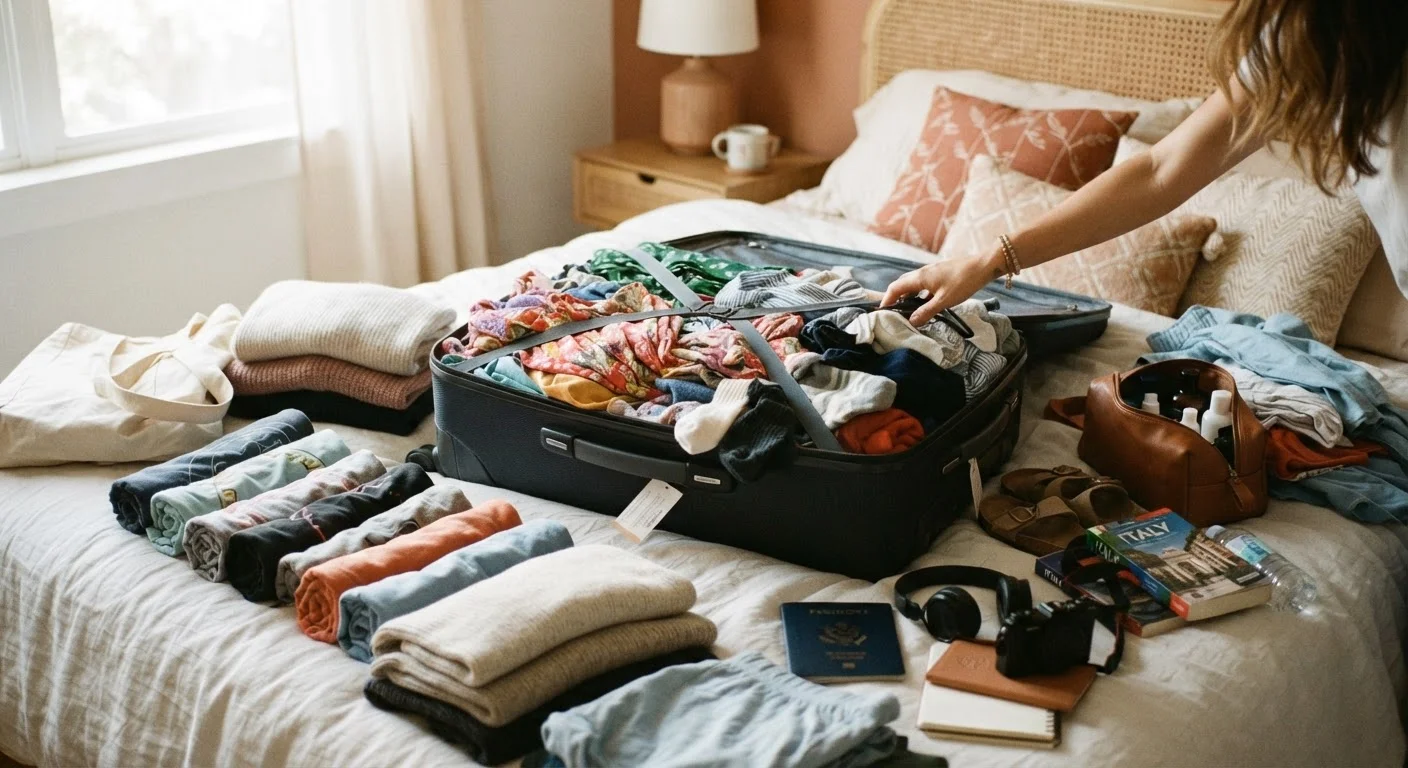
Pack the bag completely, then lift it. If you can't comfortably carry it for 10 minutes, something goes. Leave it packed overnight and look at it with fresh eyes in the morning - anything you didn't think about in 24 hours probably isn't essential. This buffer also gives you time to swap out items rather than panic-packing the night before.
Verify Carry-On Size Before You Fly
Airline carry-on size limits vary - sometimes significantly - between carriers and even cabin classes. Always check your specific airline's current size and weight allowances before you pack. Showing up at the gate with an oversized bag can mean unexpected fees or forced check-in.
Troubleshooting Common Packing Pitfalls
Even with a solid plan, a few situations tend to trip people up:
- "I might need it" thinking - If you haven't used it on a trip in the past two years, leave it. You can almost always buy or borrow something locally in a genuine pinch.
- Shoes taking too much space - Wear your bulkiest pair on travel days rather than packing them. Two pairs in the bag is usually the maximum.
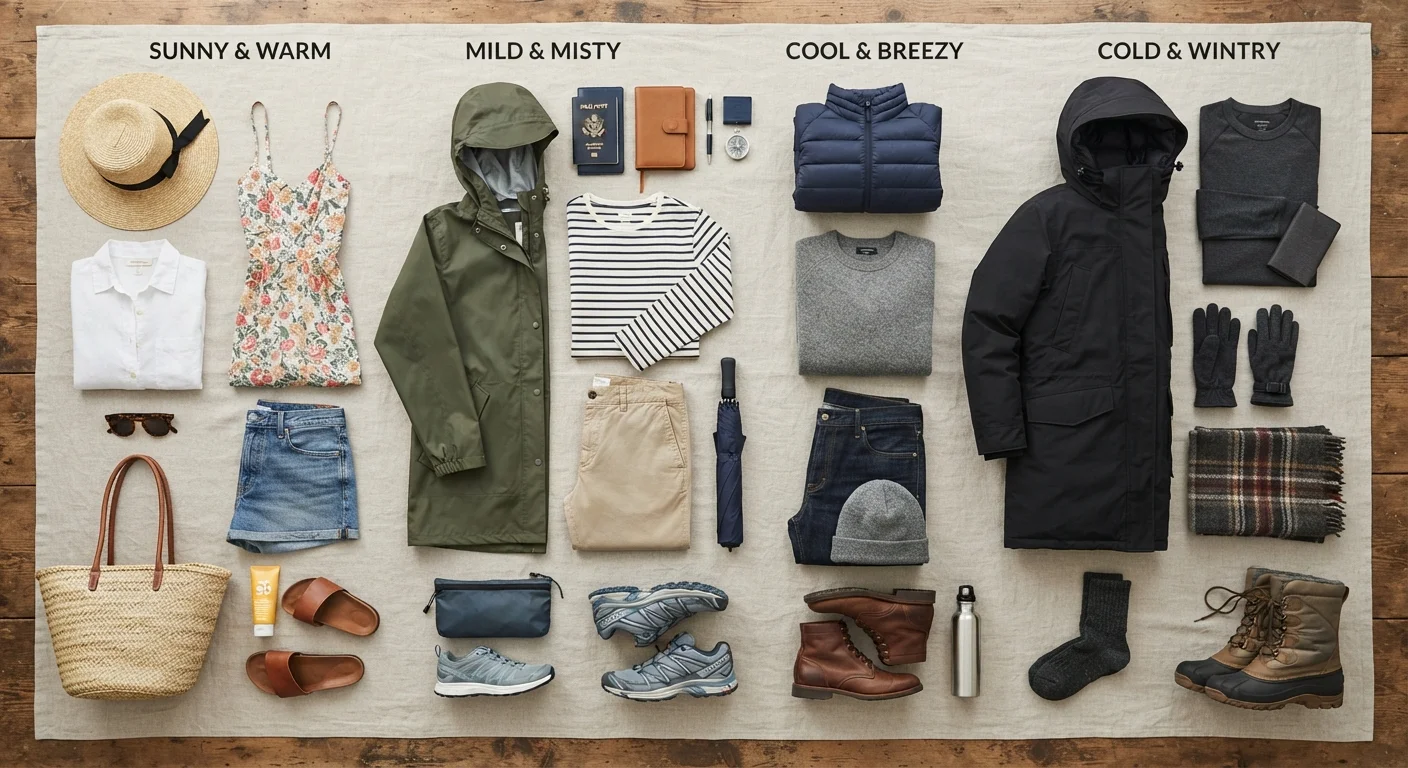
- Forgetting about climate shifts - A layering system (one packable jacket, one light layer) handles most temperature variation without adding bulk. See our piece on packing for different climates if your itinerary spans multiple weather zones.
Dark Colors Hide Wear - Light Colors Don't
Light-colored fabrics show sweat, food stains, and general wear far more visibly than dark or mid-toned neutrals. If you're trying to re-wear items across multiple days, build your core pieces around navy, olive, charcoal, or tan rather than white or pale gray.
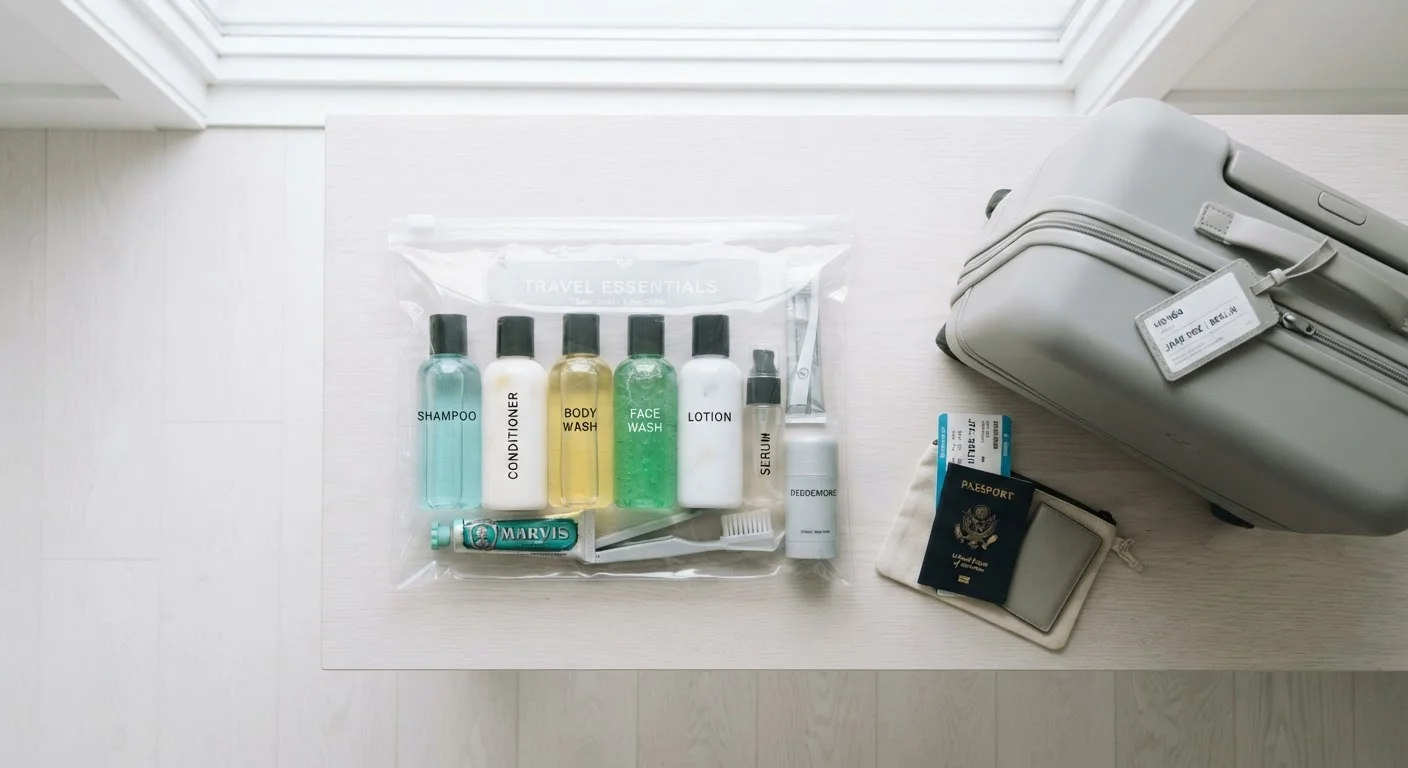
Once you've mastered carry-on packing for a longer trip, you'll find the system transfers easily to shorter getaways too. Our weekend trip packing checklist adapts the same principles to a two- or three-night bag. And for building a travel kit that stays ready between every trip, building a reusable travel kit covers documents, tech, and toiletries in one place.