Why Climate-Specific Packing Changes Everything
Most packing mistakes don't happen because someone forgot something obvious - they happen because the packing list didn't match the actual weather. Showing up to a humid coastal city with a suitcase full of heavy jeans, or landing in a cold mountain town with nothing but summer dresses, turns a great trip into an uncomfortable scramble.
The good news: once you match your list to your climate, packing becomes far less stressful. You're not guessing anymore - you're solving a defined problem. Whether you're heading somewhere hot, cold, wet, or a combination of all three, the tips below give you a practical starting point. For a broader pre-trip overview, see our complete starter guide to packing your first big trip.
Hot and Dry Climates (Deserts, Mediterranean Summers)
Heat without humidity is deceptively manageable - but only if your clothing reflects sunlight and breathes well. Cotton feels comfortable at first but soaks up sweat and takes a long time to dry. Linen and moisture-wicking synthetics are far better choices for desert and dry-heat destinations.
- Lightweight, loose-fitting tops in light colors (reflects heat better than dark fabrics)
- A wide-brim hat for sun protection - especially important at high altitudes or on open terrain
- Sunscreen and lip balm with UV protection; reapplication is essential in dry air
- A refillable water bottle - hydration needs increase significantly in dry heat
- One light layer for air-conditioned spaces, which can feel surprisingly cold
Light colors and breathable fabrics make dry-heat destinations genuinely comfortable to navigate.
Hot and Humid Climates (Tropics, Coastal Summer Destinations)
Humidity is the real challenge here. Fabrics that trap moisture become uncomfortable fast, and mold can develop on clothing left damp in a bag. Pack less than you think you need - laundry services are widely available in most tropical destinations, and wearing the same quick-dry shirt twice beats hauling a heavy bag.
- Quick-dry, moisture-wicking fabrics over cotton - look for polyester or bamboo blends
- Sandals or breathable shoes that can handle getting wet
- A compact umbrella or packable rain layer for afternoon downpours common in tropical regions
- Anti-chafe products - humidity increases friction-related discomfort significantly during long walking days
- A dry bag or zip-lock pouches to protect electronics and documents from sweat and surprise rain
Quick-dry fabrics and minimal clothing make humid destinations far more comfortable and manageable.
Cold Climates (Winter Cities, Mountain Destinations)
The instinct when packing for cold destinations is to grab the thickest, warmest items available - but bulk is the enemy of efficient travel. Layering is far more effective: a moisture-wicking base layer, an insulating mid-layer, and a windproof outer shell give you more warmth control than one heavy coat and takes up less space.
- Moisture-wicking thermal base layers (top and bottom) - merino wool is especially effective and odor-resistant
- An insulating mid-layer such as a fleece or light down jacket
- A windproof and water-resistant outer shell that fits over your other layers
- Warm accessories: gloves, a hat that covers ears, and a neck gaiter or scarf
- Wool or thermal socks - cold feet are one of the fastest ways to become miserable outdoors
Three functional layers outperform one heavy coat every time in cold-weather packing.
Wet and Rainy Climates (Monsoon Season, Pacific Northwest, Tropical Rainy Seasons)
Rain gear is not optional here - it's the centerpiece of your packing strategy. A cheap plastic poncho is a last resort; what you actually need is a packable, waterproof jacket with sealed seams that you can reach quickly without digging through your bag. Everything else on your list should be chosen with the assumption that it may get wet at some point.
- A waterproof jacket with a hood - packable styles fold into their own pocket and save significant space
- Waterproof footwear or water-resistant shoes with quick-dry socks
- Quick-dry clothing throughout - cotton jeans are a particularly bad choice in consistently wet conditions
- Waterproof covers or dry bags for your daypack and electronics
- A microfiber towel - compact, fast-drying, and useful for wiping down gear as well as yourself
A quality waterproof jacket with sealed seams is the single most important item for rainy destinations.
Mixed-Climate Itineraries (Multiple Countries, Varied Altitudes, Shoulder Season Travel)
Mixed-climate trips are genuinely the hardest to pack for - and the most common scenario for multi-week or multi-country travel. The temptation is to pack for every possible condition, which leads directly to an overloaded bag. Instead, build around a versatile core of neutral, layerable pieces and accept that you may need to purchase one item locally if conditions shift dramatically.
- Neutral-colored basics that mix and match easily across different outfits and contexts
- A packable down jacket that compresses small and handles both cool evenings and cold regions
- A light waterproof shell that works as both a wind and rain layer
- Convertible pants (zip-off styles) for destinations that transition from warm days to cool nights
- Versatile footwear: one pair of walking shoes that handles varied terrain, plus sandals if weight allows
For deeper help trimming a mixed-climate list without losing flexibility, the article on common packing myths challenges the "pack it just in case" mindset head-on.
A versatile core wardrobe with two packable layers handles most mixed-climate trips with room to spare.
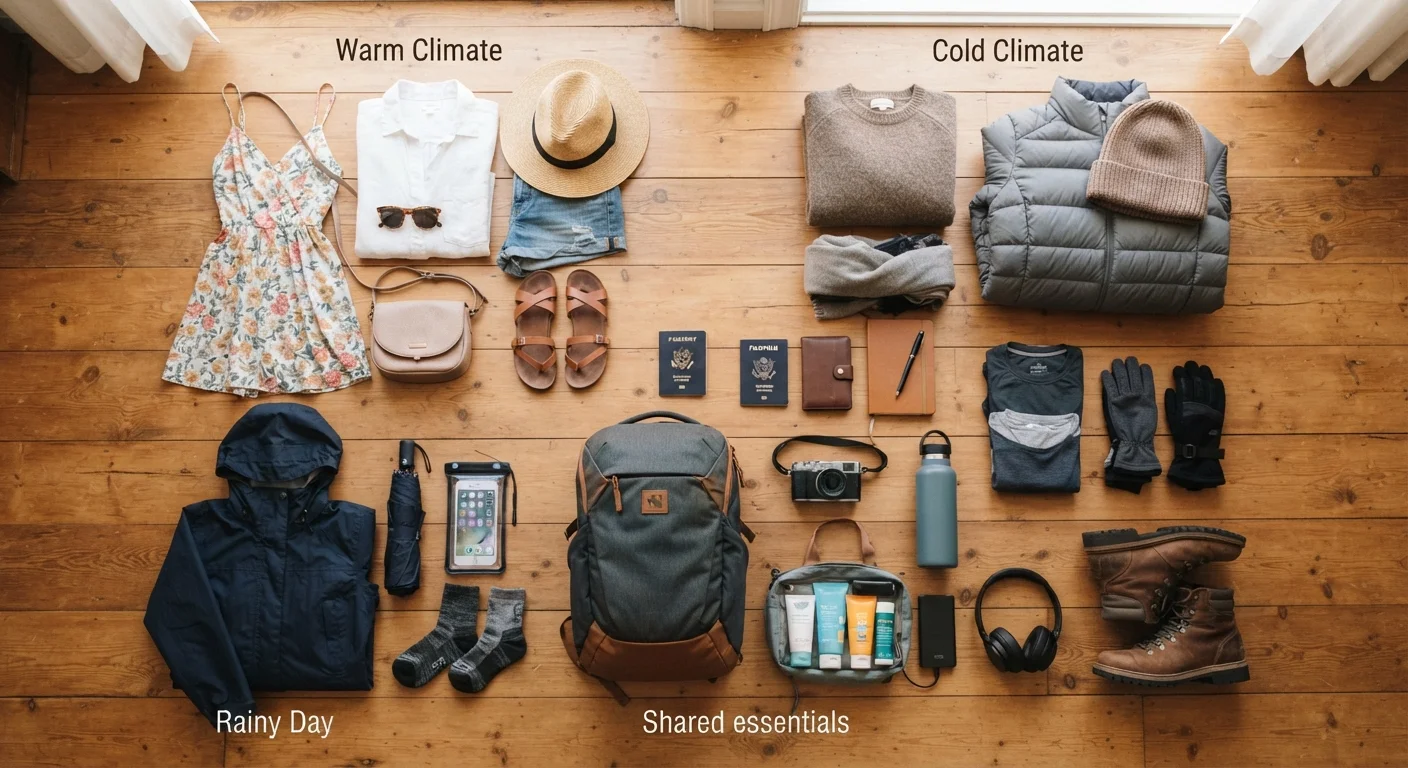
Build Your Climate-Ready Kit
The climate categories above cover most scenarios, but real trips often blend two or more. A Southeast Asia itinerary might mix tropical heat with air-conditioned buses and temples requiring covered shoulders. A winter trip to a major city might involve both indoor warmth and below-freezing outdoor time. When in doubt, choose pieces that layer and transition well.
Test Your Layers Before You Leave
Do a quick dress rehearsal at home before your trip: put on every layer you've packed and check whether the outer shell actually fits over all of them. Many travelers discover on arrival that their coat won't zip over a thick sweater, or that their rain jacket is too short to cover their waistband. Five minutes at home prevents a real problem abroad.
For more on simplifying your bag regardless of destination, our guide to packing light without leaving essentials behind walks through the exact decisions to make. And if you're heading abroad, cross-reference your climate list with our international travel packing checklist to make sure documents, adapters, and health items are covered too.
Above all, check actual forecasts and local travel reports before you finalize anything. Climate patterns shift seasonally, and conditions within a single country can vary dramatically. The breakdown of how different climates affect what you pack is a helpful companion read for understanding those nuances more deeply.